Table of Contents >> Show >> Hide
- What “Undercut” Means (and Which Type You Should Choose)
- Tools & Setup Checklist (Don’t Skip This Part)
- Quick Guard Size Cheat Sheet
- The 11 Steps to Do an Undercut Haircut for Women
- Step 1: Pick the exact placement (and set a “no-regrets” boundary)
- Step 2: Decide on a shape you can actually replicate
- Step 3: Start with clean, dry, detangled hair
- Step 4: Set up mirrors and lighting like you’re filming a makeover show
- Step 5: Section your hair like a professional (because this is the whole game)
- Step 6: Choose your starting guard (go longer than you think)
- Step 7: First passclip with a steady direction and a light touch
- Step 8: Second passrefine the length and even out the panel
- Step 9: Clean up the perimeter with a detail trimmer
- Step 10: Blend the top edge so it grows out better (and looks intentional now)
- Step 11: Wash off loose hair, soothe the scalp, and plan maintenance
- Aftercare: Prevent Irritation, Ingrowns, and “Why Is My Neck Angry?”
- Styling Ideas That Make an Undercut Look Expensive (Even if You Did It in Pajamas)
- Growing It Out Without Losing Your Mind
- Common Mistakes (So You Don’t Become a Cautionary Tale)
- FAQ
- Real-World Experiences & Lessons (The Stuff People Only Tell You After They’ve Done It)
- 1) The “I went too high” story is the most common one
- 2) Most people are happier starting longer (even if they thought they wanted “super short”)
- 3) The “hidden undercut” becomes a secret confidence boost
- 4) Athletes and hot-weather folks swear by it (and not just for aesthetics)
- 5) Grow-out is easier when you plan your “awkward stage styles” ahead of time
- 6) The best DIY results come from patience, not talent
- Conclusion: Your Undercut, Your Rules
An undercut is basically the hair version of a secret trapdoor: business on top, party underneath.
You keep your length (or your pixie), but remove bulk, heat, and “why does my neck feel like a wool scarf?” energy
from the nape or sides. It can be subtle (a neat little nape panel) or loud (a side undercut that practically introduces itself).
This guide walks you through doing a women’s undercut at home in 11 clear stepsplus guard sizes, blending tips,
aftercare (because irritated scalp is not the vibe), and what to do if you eventually want to grow it out.
If you’re nervous, want a design, or you’re aiming for a super-clean fade: a pro stylist is worth it.
But if you’re ready to DIY with patience and a steady hand, let’s go.
What “Undercut” Means (and Which Type You Should Choose)
An undercut is when you clip or shave a section underneath longer hairusually at the nape, behind the ear,
or along one sideso the top layer can drape over it. People love it because it can reduce thickness and speed up
drying/styling while still looking polished when the top hair is down.
Common undercut placements for women
- Nape undercut: Hidden when hair is down, dramatic when hair is up. Great for thick hair and heat relief.
- Side undercut: Edgy and visibleoften paired with a bob, pixie, or long hair swept to one side.
- Behind-the-ear undercut: A “peekaboo” option that’s easier to conceal than a full side.
- Temple/partial undercut: Small, strategic bulk removal (often for very dense hair).
Tools & Setup Checklist (Don’t Skip This Part)
The fastest way to turn “cool undercut” into “abstract art” is to start cutting without the right setup.
Gather your tools, set up lighting, and make it easy to see what you’re doing.
- Hair clippers with guard attachments (a cordless clipper is nice, not mandatory)
- Detail trimmer (for edges) or a small precision trimmer
- 2 mirrors (or a 3-way mirror) so you can see the back of your head
- Sectioning clips (the stronger, the better)
- Comb (fine-tooth + standard is ideal)
- Hair cutting shears (optional but helpful for blending; don’t use kitchen scissors unless you enjoy chaos)
- Neck duster brush or towel, plus a cape/shirt you don’t love
- Disinfectant spray/wipes for tools, and clipper oil if you have it
- Good lighting (bathroom lighting can lieadd a lamp if needed)
Quick Guard Size Cheat Sheet
Guard numbers can feel like a secret barber code, but here’s the basic idea: higher number = longer hair left behind.
If you’re unsure, start longer. You can always go shorter; you cannot un-cut hair (tragic but true).
| Guard | Approx. Length Left | Best For |
|---|---|---|
| #1/2 | 1/16″ (very close) | Very tight undercuts; higher risk of irritation if your scalp is sensitive |
| #1 | 1/8″ | Short, clean undercut with some cushion |
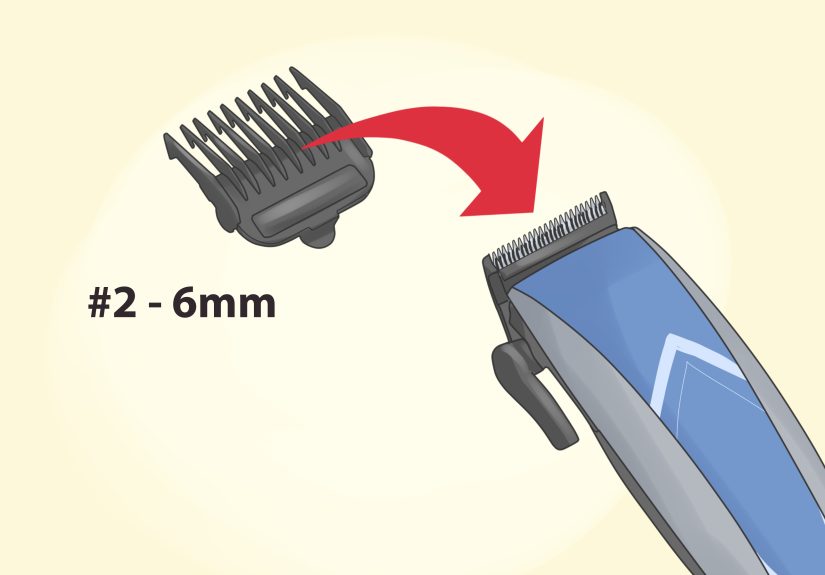
| #2 | 1/4″ | A safer “first undercut” length that still reduces bulk |
| #3 | 3/8″ | Soft undercut that blends easier and grows out smoother |
| #4 | 1/2″ | Subtle bulk removal; great for thick hair you still want to look plush |
| #5–#8 | 5/8″–1″ | Longer undercuts, gentle transitions, and extra grow-out friendliness |
The 11 Steps to Do an Undercut Haircut for Women
Step 1: Pick the exact placement (and set a “no-regrets” boundary)
Decide whether you want a nape undercut, side undercut, or behind-the-ear undercut. Then choose how high it goes.
Pro tip: keep the undercut lower than you think for your first time. A low nape panel can feel dramatic without
messing with how your hair falls when it’s down.
If you want to be extra cautious, mark the top boundary with a comb and take a selfie. If your future self looks at
that photo and says, “Who approved that height?”lower it.
Step 2: Decide on a shape you can actually replicate
Straight line? Slight curve? V-shape? Choose something you can mirror on both sides.
A softly curved nape line often looks more natural than a ruler-straight edgeespecially if your hairline is already curved.
Step 3: Start with clean, dry, detangled hair
Clippers generally behave better on dry hair (wet hair can clump and look longer, which can lead to uneven results).
Wash if needed, dry thoroughly, and comb out tangles so the clipper glides instead of snagging.
Step 4: Set up mirrors and lighting like you’re filming a makeover show
You need to see the back of your head clearly. Use a wall mirror plus a handheld mirror, or a 3-way mirror.
Stand where you have strong, even light. Shadows can make your undercut look “uneven” even when it isn’tuntil you step
into daylight and reality speaks.
Step 5: Section your hair like a professional (because this is the whole game)
Sectioning is what prevents “cute undercut” from becoming “surprise second haircut.”
- Use the end of a comb to draw your boundary line where the undercut will start.
- Clip ALL hair above that line securely up and away.
- If you’re doing a side undercut, clip the opposite side completely out of the danger zone.
Now double-check: run your fingers around the boundary. If you feel loose strands hanging near the clipper zone, clip again.
Step 6: Choose your starting guard (go longer than you think)
If this is your first undercut, a #3 or #4 is a friendly starting point. You can always switch to #2 or #1 after you see the shape.
If you’re aiming for a very close undercut, work down gradually rather than jumping straight to “scalp reveal.”
Step 7: First passclip with a steady direction and a light touch
Turn the clipper on and let it do the work. Keep the clipper relatively flat against the head and move slowly.
Start at the bottom of the section (near the hairline) and move upward toward your boundary line.
Use small strokes and lift away gently as you approach the top edge so you don’t carve a harsh line into the longer hair.
For a nape undercut, work from the center outward. For a side undercut, work from the bottom up and back toward the ear.
If the clipper sounds like it’s chewing, you’re moving too fast or you’ve got tanglespause and comb again.
Step 8: Second passrefine the length and even out the panel
Comb the undercut area down, then do another pass in the same direction to catch missed bits. Hair lies in different directions,
especially at the nape. Don’t fight the swirlapproach it from different angles with the same guard until it looks uniform.
Want it shorter? Drop one guard size at a time (example: #4 → #3 → #2). The goal is controlled change, not a dramatic plot twist.
Step 9: Clean up the perimeter with a detail trimmer
Switch to a trimmer to sharpen the edges: along the bottom hairline, around the ear (carefully), and the sides of the panel.
Use gentle pressure and short taps. If you have sensitive skin, avoid going too aggressive or too closeirritation and razor bumps
are more likely when skin is shaved harshly.
Step 10: Blend the top edge so it grows out better (and looks intentional now)
The undercut’s top edge is where “home haircut” is most likely to show. You have two easy blending options:
- Soft edge with a longer guard: Use a longer guard (like #5 or #6) and do a very light pass just at the top 1/4–1/2 inch of the undercut,
flicking out as you reach the boundary. - Scissor-over-comb: Hold a comb at the boundary and snip only the longest hairs that spill over the undercut edge.
Small snips. Think “gardening,” not “deforestation.”
If you’re wearing your hair down most of the time, a softer blended edge helps the top layer lie smoothly.
If you want a bold, disconnected look, keep the line crispbut know it will require more frequent touch-ups.
Step 11: Wash off loose hair, soothe the scalp, and plan maintenance
Rinse or shower to remove tiny clipped hairs (they itch like glitter, and they will appear at bedtime if you ignore them).
If you shaved very close or your skin gets irritated easily, use a gentle, fragrance-free moisturizer or soothing product after.
Avoid heavy fragranced products right away if you’re prone to bumps.
Maintenance schedule: Most undercuts look freshest with a touch-up every 1–3 weeks depending on how short you went
and how fast your hair grows. If you chose a longer guard (#4+), you can often stretch it longer and still look intentional.
Aftercare: Prevent Irritation, Ingrowns, and “Why Is My Neck Angry?”
If your undercut is very close to the skin, your scalp can react similarly to shaving. Gentle technique and basic skin care help a lot:
- Warmth helps before cutting: Cutting after a warm shower can soften hair and reduce tugging.
- Go with the grain: When you’re doing very close work, following hair growth direction can reduce irritation.
- Don’t pick at bumps: If you develop ingrown hairs, a warm compress can help calm and release them over time.
- Keep tools clean: Dirty blades can irritate skin and increase the chance of inflammation.
Styling Ideas That Make an Undercut Look Expensive (Even if You Did It in Pajamas)
For long hair
- High ponytail or bun: Instant reveal. Bonus: your neck finally gets fresh air.
- Half-up style: Lets you peek the undercut without full commitment.
- Braids: Braids + undercut = texture party. Great for showing off the shape cleanly.
For short hair (pixies, bobs)
Undercuts pair beautifully with pixies and short crops because the contrast reads intentional. For styling, keep it simple:
a texturizing spray, pomade, or wax can add definition and let you switch between sleek and messy without much effort.
Growing It Out Without Losing Your Mind
If you decide to grow out your undercut, you’ll have a few awkward weeks where the undercut is long enough to stick out,
but too short to behave. That’s normal. The easiest strategy is to style the top hair in ways that conceal regrowth:
low buns, ponytails, or side-swept looks that cover the area while it catches up.
You can also ask a stylist to “shape the grow-out” by softening the transition, trimming the longer hair strategically,
or adding subtle layers so the regrowth looks like part of a plan, not a surprise guest.
Common Mistakes (So You Don’t Become a Cautionary Tale)
- Going too high, too fast: Start lower than you think. Height is the hardest thing to undo.
- Starting with a short guard: Begin longer, then work down gradually.
- Skipping sectioning: One loose strand can turn into an unplanned “face-framing” moment.
- Rushing the top edge: Blend lightly or keep the line crisp on purposeeither way, make it deliberate.
- Using dull or dirty blades: This can snag hair and irritate skin. Clean tools = cleaner results.
FAQ
Is an undercut good for thick hair?
Yesespecially a nape undercut. It can reduce bulk and make styling feel lighter without sacrificing length.
How often should I redo my undercut?
Many people refresh every 1–3 weeks depending on how short the undercut is and how sharp they like the edges.
Longer guards usually let you go longer between touch-ups.
Will an undercut damage my hair?
Cutting hair doesn’t “damage” the hair follicle, but very close shaving can irritate sensitive skin.
Use gentle technique, keep tools clean, and soothe the scalp if it reacts.
Can curly hair, coils, or textured hair do an undercut?
Absolutely. Just remember that shrinkage can make the contrast look more dramatic. Start with a longer guard first,
then adjust after you see how your texture behaves.
Real-World Experiences & Lessons (The Stuff People Only Tell You After They’ve Done It)
If you ask a room full of undercut wearers how it went the first time, you’ll hear a surprisingly consistent theme:
“I loved it… after I stopped staring at the back of my head like it owed me money.” The undercut is one of those cuts
that feels bold in the moment, then oddly practical once you live with it. Below are experience-based patterns that show up
again and againuse them to make smarter choices than the average impulsive bathroom makeover.
1) The “I went too high” story is the most common one
People rarely regret the undercut itselfthey regret the height. A first-time DIY undercut often starts with a reasonable
nape panel, then the logic goes: “If a little is good, more is better.” Ten minutes later, the undercut is flirting with the
occipital bone and the top layer suddenly doesn’t cover it the way it used to. The fix is simple: pick a boundary, clip the top
hair up, and treat that line like a strict fence. If you want higher later, you can always raise it at your next touch-up when you’ve
had time to live with the shape.
2) Most people are happier starting longer (even if they thought they wanted “super short”)
A lot of first-timers imagine a dramatic, close undercutthen discover their scalp is sensitive, their hair grows fast, or they’d
prefer something more blendable for work. Starting with a #3 or #4 gives the undercut look while keeping it softer, less prickly,
and easier to grow out. Many people eventually go shorter once they understand how their hairline and skin respond. It’s the haircut
equivalent of trying the sauce before dumping the whole bottle on your fries.
3) The “hidden undercut” becomes a secret confidence boost
People who choose a low nape undercut often describe it as the perfect balance of fun and control. Hair down? It looks like your normal
hairstyle, just less bulky and faster to dry. Hair up? Surprisethere’s an edgy detail that makes even a basic ponytail look styled.
It’s especially popular with people who want to experiment without committing to a visible side shave.
4) Athletes and hot-weather folks swear by it (and not just for aesthetics)
Undercuts quietly solve practical problems: sweaty necks, heavy hair during workouts, or thick hair that takes forever to blow-dry.
Many people report their styling routine gets shorter because there’s simply less hair underneath holding heat and moisture.
If you live in a humid climate or you’re constantly tying your hair up, an undercut can feel like installing air conditioningon your head.
5) Grow-out is easier when you plan your “awkward stage styles” ahead of time
The grow-out phase is where people either feel fine… or feel personally attacked by their own hair. The difference is planning.
Those who already have go-to styleslow buns, claw clips, side parts, headbandstend to breeze through regrowth. People who wear their
hair one way every day sometimes get frustrated when the undercut starts poking out. If you think you might grow it out someday, choose a
lower placement and a slightly longer guard now. You’ll thank yourself later.
6) The best DIY results come from patience, not talent
The most “salon-looking” undercuts done at home usually aren’t created by someone with magical clipper skillsthey’re created by someone
who goes slowly, checks symmetry frequently, and makes changes in small increments. They do a pass, comb it down, do another pass, step into
better light, and only then decide whether to go shorter. That boring, methodical approach is exactly what keeps an undercut crisp instead of chaotic.
Conclusion: Your Undercut, Your Rules
A women’s undercut can be sleek, punk, practical, artistic, or quietly confidence-boostingsometimes all in the same week.
The keys to a great DIY undercut are: conservative placement, clean sectioning, starting with a longer guard, and taking your time on the top edge.
Finish with gentle aftercare, maintain it on a simple schedule, and you’ll have a cut that looks intentional whether it’s hidden or on full display.