Table of Contents >> Show >> Hide
- Why Learn to Dry Clothes Without a Dryer?
- 1. Supercharge the Spin Cycle
- 2. Classic Clothesline or Balcony Drying
- 3. Indoor Drying Rack Done Right
- 4. Hang Clothes on Hangers Around the House
- 5. Flat Dry Heavy Knits and Delicates
- 6. Use a Towel to Speed Things Up
- 7. Bring in Extra Airflow: Fans and Dehumidifiers
- 8. Low-Tech Heat Helpers: Radiators, Space Heaters, and Sunny Spots
- 9. Emergency Quick Fixes: Hair Dryer, Iron, and the Freezer Trick
- Safety Tips When Drying Clothes Indoors
- How to Choose the Best Method for You
- Real-Life Experiences: Drying Without a Dryer Day to Day
- Conclusion
No dryer? No problem. Whether you’re saving on electricity, living in a small
apartment, or your dryer just gave up mid-laundry day, you can still get
fresh, dry clothes without a big metal box blasting hot air at them. Learning
how to dry clothes without a dryer is part science (airflow, humidity,
evaporation) and part creativity (shower rods, door frames, and that one sunny
patch on your floor).
Below you’ll find nine practical, low-tech (and mostly low-cost) ways to dry
clothes without a dryer, plus real-world tips and experiences to help you
build a routine that actually works in your home and climate.
Why Learn to Dry Clothes Without a Dryer?
Before we get into the methods, it helps to know why air-drying clothes is
worth your time:
- You save money: Clothes dryers are among the most energy-hungry appliances in the house.
- Your clothes last longer: Less high heat means less shrinking, fading, and fabric wear.
- It works in small spaces: Apartment dwellers, this is your moment. With a compact drying rack and smart airflow, you can dry a full load in one room.
- It’s a great backup plan: Power outage, broken dryer, or shared laundry room? Air drying keeps you from showing up in damp jeans.
Effective air drying boils down to three things: air movement, low humidity, and surface area.
The more you can increase airflow, reduce moisture in the air, and expose more of your fabric to that air, the faster your clothes will dry.
1. Supercharge the Spin Cycle
The fastest “no dryer” trick actually happens in your washing machine. A high-speed spin cycle removes a surprising amount of water before your clothes ever leave the drum. Laundry experts often recommend running an extra spin cycle for heavy items like towels, jeans, and hoodies to cut drying time dramatically.
How to do it
- Use the highest spin speed your fabric care labels allow.
- For bulky loads (towels, bedding, jeans), run an extra spin cycle.
- Take out smaller delicate items that don’t need the extra spin if you’re worried about wear.
The payoff: clothes come out feeling damp, not dripping, which makes every
other drying method on this list work faster.
2. Classic Clothesline or Balcony Drying
If you have outdoor space, line drying is the gold standard. A simple
clothesline or a folding line on a balcony takes advantage of nature’s best
dryer: sun plus breeze. Consumer testing and home guides consistently point
out that direct airflow and sunshine are the two biggest drying accelerators
outdoors.
Tips for outdoor line drying
- Pick a breezy spot: Airflow matters even more than blazing sun.
- Use proper clothespins: This keeps clothes from sagging, dragging, or flying into the neighbor’s yard.
- Hang by thickness: Thick items (jeans, towels) on the outer edges where they get the most air; lighter items can sit closer together.
- Protect colors: Turn dark clothes inside out to avoid fading from UV exposure.
Bonus: sunlight has a mild bleaching and deodorizing effect, helping white
clothes look brighter and musty smells disappear.
3. Indoor Drying Rack Done Right
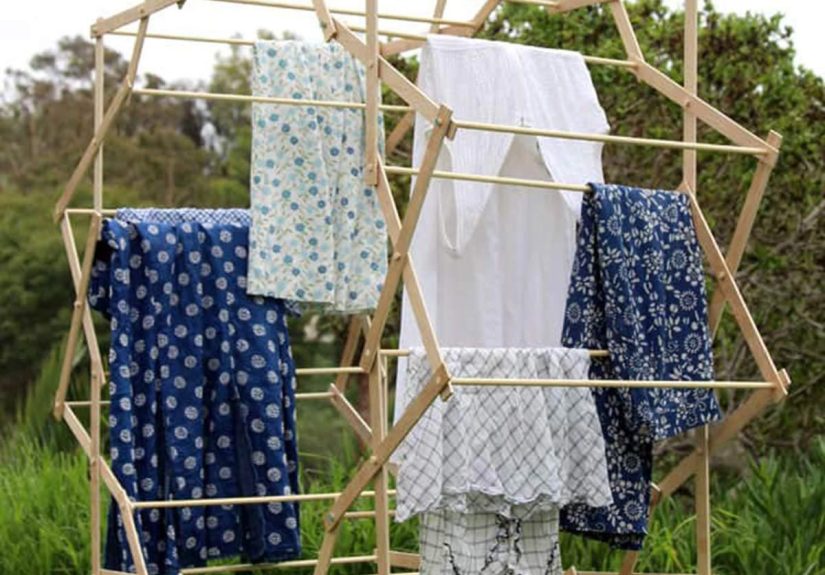
For many households, a folding drying rack is the everyday workhorse
for drying clothes without a dryer. But how and where you set it up makes a
big difference.
How to make a drying rack actually work
- Location: Place the rack in a well-ventilated room, near an open window or under a ceiling fan if possible.
- Airflow: Add a small fan pointed at the clothes to keep air moving and prevent that heavy, damp feeling in the room.
- Spacing: Don’t overlap items. Each piece should have some space around it so air can circulate.
- Rotate thick items: Flip jeans, hoodies, and towels halfway through drying so the inner layers get exposed to the air.
A good-quality drying rack with sturdy bars and multiple levels can comfortably
handle a full load and fold away when you’re done.
4. Hang Clothes on Hangers Around the House
No room for a rack? Grab your hangers. Hanging clothes on hangers lets you
use vertical space instead of floor space, and it’s especially handy for
shirts, blouses, dresses, and lightweight pants.
Smart places to hang-dry on hangers
- Shower rod or tension rod in the bathroom (with an exhaust fan or open window).
- Door frames or the upper edge of open closet doors.
- Sturdy curtain rods (as long as they’re properly installed).
- Closet rails for single garments, with the closet door open for ventilation.
Because each garment hangs freely, air can move all around it, which often
dries tops faster than layering them across a rack.
5. Flat Dry Heavy Knits and Delicates
Some fabrics hate gravity. Sweaters, cardigans, and heavy knits can stretch
and warp if you hang them while wet. For these, flat drying is your friend.
Many clothing care guides recommend laying knitwear flat in its original shape
on a rack or towel to prevent stretching and sagging.
How to flat-dry safely
- Lay a clean, dry towel on a flat surface or on the top level of a drying rack.
- Place the sweater or knit item on top and gently reshape it to the right size.
- Flip the garment after a few hours so the underside can dry.
- For very thick knits, change out the towel once it gets damp.
This method takes a little longer but keeps your favorite sweater from turning
into a dress.
6. Use a Towel to Speed Things Up
If you’ve ever grabbed a shirt from the washer and thought, “There is no way
this will be dry by tonight,” the towel trick is for you. Fabric experts often
suggest using an absorbent towel to pull out extra water before hanging.
The towel roll method
- Lay a large, dry towel on a flat surface.
- Place the damp garment flat on top.
- Starting at one end, roll the towel and garment together into a tight tube.
- Press or kneel on the roll to squeeze out moisture (no twisting).
- Unroll and hang or flat-dry the garment as usual.
You’re not trying to fully dry the clothes with the towel just to remove the
worst of the moisture so the air-drying step goes faster.
7. Bring in Extra Airflow: Fans and Dehumidifiers
If you live in a humid climate or dry clothes indoors a lot, a fan and/or
dehumidifier can be game changers. Indoor drying advice from laundry and home
experts often centers on air movement and humidity control as the keys to
faster, healthier drying.
Fans
- Point a pedestal or box fan directly at the drying rack or hanging clothes.
- Use a ceiling fan on low to keep air circulating.
- Create a cross-breeze by opening two windows slightly on opposite sides of the room.
Dehumidifiers and AC
- Place a dehumidifier in the same room as your drying rack, in an open, central spot.
- Avoid tucking it into corners or right under dripping laundry, which can reduce performance.
- If you have an air conditioner with a “dry” or dehumidify mode, run it while clothes are drying indoors.
Lower humidity means the air can “hold” more moisture, so water leaves your
clothes more quickly instead of just hanging around and making the room feel
swampy.
8. Low-Tech Heat Helpers: Radiators, Space Heaters, and Sunny Spots
Heat alone doesn’t dry clothes heat plus air movement does. That said,
gentle heat can help especially in cold weather.
Safe ways to use heat
- Near, not on, radiators or heaters: Keep a safe distance so clothes don’t overheat or create a fire hazard.
- Sunny floor spots: Move your drying rack to that sunny rectangle on the floor for a free mini “solar dryer.”
- Bathroom with exhaust fan: Hang clothes in the bathroom and run the fan to pull out moist air.
Always pay attention to ventilation. Too many wet clothes and too little air
movement can lead to condensation and eventually mold on walls or windows.
9. Emergency Quick Fixes: Hair Dryer, Iron, and the Freezer Trick
Need one shirt dry in an hour for a last-minute dinner or Zoom call? These
quick-dry hacks focus on single items and small areas, not full loads.
Hair dryer spot-drying
- Lay the garment flat or hang it.
- Hold the dryer a safe distance away and keep it moving to avoid overheating any one spot.
- Focus on high-moisture areas like collars, cuffs, and waistbands.
Iron plus towel
- Place a clean towel on an ironing board, then lay the damp garment on top.
- Press (don’t drag) with a warm iron to steam out and evaporate moisture.
- Check the care label first skip this for heat-sensitive fabrics.
The “freezer then air-dry” trick
Some home guides mention popping a damp item in a plastic bag in the freezer,
then letting it air-dry. The cold helps water crystallize, and as the fabric
comes back to room temperature, moisture can evaporate more quickly. It’s not
a magic bullet, but it can help with thin fabrics when you’re desperate and
short on time.
Safety Tips When Drying Clothes Indoors
- Watch humidity: Too much indoor moisture can encourage mold. Use fans, open windows, and dehumidifiers.
- Don’t block heaters: Never drape clothes directly on heaters or cover vents.
- Keep air paths clear: Don’t dry clothes in tiny, closed rooms with no ventilation.
- Mind allergies: If someone has pollen or dust allergies, indoor drying may be better than outdoor drying during peak seasons.
How to Choose the Best Method for You
You don’t need to use all nine methods every time think of them as tools to
mix and match. Here’s a quick way to choose:
- Small apartment, no outdoor space: High spin cycle + indoor rack + fan or dehumidifier.
- House with yard or balcony: High spin cycle + outdoor line or balcony drying for most loads, indoor rack for bad weather.
- Humid climate: Extra spin + dehumidifier + good spacing on the rack is key.
- Cold but dry climate: Rack near a heat source (but not touching it) plus a fan works well.
- Last-minute emergencies: Towel roll + hanger + hair dryer or iron for one or two pieces.
Real-Life Experiences: Drying Without a Dryer Day to Day
Drying clothes without a dryer isn’t just about techniques it’s about
routines that fit your space, climate, and lifestyle. Here are some
experience-based setups that show how these methods work in real life.
1. The Small Apartment Routine
Picture a one-bedroom apartment with no balcony, one window that actually
opens, and a laundry day that always seems to fall on the rainiest afternoon.
Here’s a realistic, low-drama routine:
- Run clothes on a high-spin setting and, for towels and jeans, hit the “extra spin” button.
- Set up a folding drying rack in front of the best-placed window.
- Put shirts, dresses, and lightweight pants on hangers and hook them along the top of open door frames.
- Turn on a small fan to blow across the rack and toward the open window.
- Flip jeans and heavy sweatshirts once in the evening.
With this setup, lightweight items can be dry by evening, and even heavier
pieces are typically ready by the next morning no dryer required, and no
permanent laundry clutter in the living room.
2. The Busy Family Weekend Strategy
For families, laundry rarely shows up in polite, manageable amounts. It shows
up in mountains. Parents who line-dry often swear by a “divide and conquer”
approach:
- Start with towels and bedding early in the day so they can go outside or on the biggest line first.
- Use an outdoor clothesline or rotary line for the bulk of the load shirts, uniforms, jeans.
- Reserve indoor racks for delicate items or clothes that must stay out of the sun.
- As soon as one batch feels mostly dry, bring it in and reload the line with the next round.
Many families also keep one “emergency” drying spot like a bathroom with an
exhaust fan and a tension rod for last-minute items that need to dry
overnight before school or work.
3. Drying in Cold or Humid Weather
Drying clothes in winter or in humid regions can feel impossible, but people
make it work with a few adjustments. In colder climates, the challenge is
temperature; in humid climates, it’s the moisture-laden air.
In cold areas, people often:
- Use a rack in the warmest room of the home (often the living room).
- Position the rack near, but not on, a radiator or heater.
- Run a fan on low to keep the warm air moving past the clothes.
In humid regions, the focus shifts to dehumidifying and ventilation:
- Dry clothes in a smaller, closed room with a dehumidifier running.
- Open windows briefly when the outside air is drier than indoors.
- Space clothes extra widely so moist air doesn’t get trapped between items.
- Use natural moisture absorbers like a bowl of rock salt or uncooked rice placed near (not touching) the drying area to help draw moisture out of the air.
It might take a little longer than on a perfect breezy day, but it’s still
very doable without a tumble dryer.
4. Common Mistakes People Make (and How to Fix Them)
Even with the right tools, a few classic mistakes can sabotage your no-dryer
routine:
- Overloading the rack: If clothes are piled on top of each other, they’ll stay damp in the middle. Fix: use more hangers, spread loads out, or do smaller loads.
- No airflow: A rack in a closed, stuffy room dries slowly and can smell musty. Fix: add a fan, crack a window, or move the rack.
- Skipping the extra spin: Starting with sopping-wet clothes makes everything harder. Fix: always use the highest spin your fabrics can handle.
- Drying only in bedrooms: This can raise humidity where you sleep. Fix: use a hallway, living room, or bathroom with an exhaust fan whenever possible.
- Forgetting to flip thick items: Jeans and towels may feel dry on the outside but stay damp inside. Fix: flip or turn them inside out halfway through.
Once you tweak these habits, drying clothes without a dryer starts to feel
routine instead of like a never-ending science experiment.
Conclusion
Drying clothes without a dryer doesn’t require fancy gadgets just a smart
combination of spin power, airflow, and a little strategy. By mixing and
matching these nine methods, you can build a setup that works for your home,
your climate, and your schedule.
You’ll save money, treat your clothes more gently, and always have a backup
plan when the dryer is busy, broken, or simply not in the budget. With a good
spin cycle, a drying rack, some hangers, and a bit of creativity, you’re fully
capable of running a no-dryer laundry operation that actually works and
leaves you with dry clothes, not damp regrets.