Table of Contents >> Show >> Hide
- First: What “Bigger” Really Means (And What You Can Control)
- How Glutes Actually Grow: The 3 Things That Matter Most
- Glute Anatomy (Quick, Useful, Not Boring)
- The Best Exercises for a Bigger Butt (The “Main Course”)
- Accessory Moves That Make the “Booty Plan” Work Better
- Two Simple Glute Workouts (Gym + Home Options)
- Warm-Up and “Glute Activation” That Isn’t a 45-Minute Side Quest
- Nutrition for Glute Growth (No Weird “Bulking Rituals” Required)
- Recovery: The Most Ignored Glute-Growth Tool
- What Not to Do (Because the Internet Loves Chaos)
- How Long Until You See Results?
- Quick FAQ
- Putting It All Together: Your Bigger-Butt Game Plan
- Real-World Experiences: What People Learn While Building Stronger Glutes (About )
Let’s be real: the internet has turned “booty goals” into a whole personality. But your glutes aren’t a trendthey’re powerful muscles that help you run,
jump, climb stairs, and keep your hips and back happy. The cool part? Training your glutes can make them stronger and often rounder over time.
The not-so-cool part? There’s no magic “grow-a-butt-by-Friday” hack (sorry, late-night ads).
This guide breaks down what actually works for building bigger, stronger glutessafelyespecially if you’re a teen or a beginner. You’ll get the science in
normal-person English, the best exercises, smart training plans, and realistic strategies you can stick with.
First: What “Bigger” Really Means (And What You Can Control)
Your butt shape comes from a mix of muscle, body fat, bone structure, and genetics.
You can’t pick your genetics like a character in a video game, but you can absolutely improve your glutes by building muscle.
Muscle vs. fat: the difference matters
- More glute muscle = usually firmer, higher, rounder look and more power for sports and daily life.
- More body fat can change size too, but fat distribution is mostly geneticyou can’t “send” fat to your butt on purpose.
If you’re a teen: safety + patience wins
During puberty, your body is already changing fast. That’s normal. Instead of chasing a “perfect shape,” aim for performance goals you can control:
getting stronger at hip thrusts, doing cleaner lunges, or adding reps with great form. A healthier approach usually produces better results
and way less stress.
How Glutes Actually Grow: The 3 Things That Matter Most
Glute growth (muscle hypertrophy) isn’t complicated, but it is specific. You’re basically sending your glutes a message: “Hey, you’re needed. Please adapt.”
The clearest messages come from these three keys:
1) Progressive overload (the secret sauce)
If you keep doing the same workout with the same weight forever, your muscles get comfy… and stop changing. Progressive overload means gradually increasing
the challenge over time. You can progress by:
- Adding weight (even 2.5–5 pounds can matter).
- Adding reps (e.g., 8 reps → 10 reps with the same weight).
- Adding sets (2 sets → 3 sets).
- Improving control (slower lowering, better range of motion).
2) Enough weekly volume (but not “every day forever”)
Your glutes grow from training + recovery. Most people do best training glutes about 2–3 times per week, with at least a day between
hard sessions. More isn’t automatically betterbetter is better.
3) Effort close to fatigue (without sloppy form)
Growth happens when sets feel challenging. A good target is finishing most working sets with about 1–3 reps left in the tank
(meaning you could maybe do a couple more reps, but your form would start to wobble). If every set feels “easy,” your glutes won’t get the memo.
Glute Anatomy (Quick, Useful, Not Boring)
Your glutes are mainly three muscles:
- Gluteus maximus: the biggestdrives hip extension (standing up, sprinting, hip thrusting).
- Gluteus medius: side glutestabilizes your pelvis (single-leg balance, preventing knee collapse).
- Gluteus minimus: assists mediusstability and hip control.
A “bigger butt” plan should train all of thembecause a strong side-glute helps your main glute work harder, and it can improve the overall look and feel
of your hips and butt.
The Best Exercises for a Bigger Butt (The “Main Course”)
If you only remember one thing: choose glute exercises that let you progressively overload with good form. These are the big winners.
1) Hip thrusts (or glute bridges)
Hip thrusts are famous for a reason: they load the glutes hard near full hip extension. If you’re new, start with bodyweight glute bridges,
then progress to weighted bridges, then hip thrusts.
- Form cues: ribs down, chin tucked, push through mid-foot/heel, squeeze glutes at the top.
- Common mistake: over-arching the lower back to “get higher.” If your back is doing it, your glutes aren’t.
2) Squats (glute-friendly variations)
Squats build the whole lower body. For glutes, use a variation that allows depth and control. Many people feel glutes best with goblet squats,
front squats, or high-bar squatsplus a stance that feels natural.
- Form cues: control down, knees track over toes, keep your torso braced, stand up by “pushing the floor away.”
3) Romanian deadlifts (RDLs)
RDLs are a top-tier glute builder because they train hip hinging and put the glutes/hamstrings under tension while lengthened (a big driver of growth).
- Form cues: soft knees, hips move back, back stays neutral, feel a stretch in glutes/hamstrings, then drive hips forward.
- Common mistake: turning it into a squat (too much knee bend) or rounding the back.
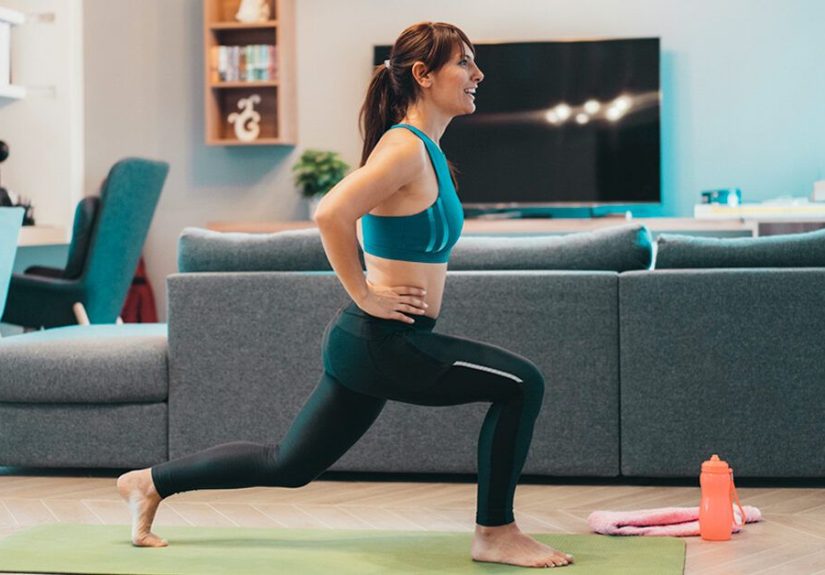
4) Split squats and lunges
Single-leg work is glute gold. It builds strength, balance, and helps fix side-to-side imbalances. Reverse lunges and Bulgarian split squats are favorites.
- Form cues: slight forward torso lean, control the descent, push through the front foot, keep pelvis level.
5) Step-ups (the underrated glute builder)
Step-ups train hip extension in a very “real life” way. Use a box/bench height that keeps your knee around hip height or slightly lower.
- Form cue: drive through the working leg; don’t bounce off the back leg like it’s a pogo stick.
Accessory Moves That Make the “Booty Plan” Work Better
Accessories won’t replace the big lifts, but they help you target smaller glute muscles, improve mind-muscle connection, and add volume without destroying
your whole body.
Side-glute builders (glute med/min)
- Clamshells (banded if needed)
- Side-lying leg raises
- Band walks (lateral/monster walks)
- Hip abductions (machine or band)
Glute isolation
- Cable kickbacks or band kickbacks (controlled reps, no wild swinging)
- Frog pumps (high reps for a burn, not as your only glute move)
Two Simple Glute Workouts (Gym + Home Options)
Use these as plug-and-play templates. Do them 2–3 times per week, leaving a rest day between hard lower-body sessions.
Warm up first, then hit working sets.
Workout A: “Thrust + Squat” (Gym or Home-Adaptable)
- Hip thrust (or weighted glute bridge): 3–4 sets of 6–12 reps
- Goblet squat (or barbell squat): 3–4 sets of 6–12 reps
- Reverse lunge: 2–3 sets of 8–12 reps per side
- Band walks or hip abductions: 2–3 sets of 12–20 reps
Workout B: “Hinge + Single-Leg”
- Romanian deadlift (dumbbell or barbell): 3–4 sets of 6–12 reps
- Step-ups: 2–3 sets of 8–12 reps per side
- Bulgarian split squat (or split squat): 2–3 sets of 8–12 reps per side
- Clamshells or side-lying raises: 2–3 sets of 12–20 reps
How to progress week to week
- Pick a rep range (example: 8–12). When you hit 12 reps on all sets with clean form, add a small amount of weight next time.
- If you don’t have heavier weights at home, add reps, slow the lowering, add a pause at the top, or add another set.
Warm-Up and “Glute Activation” That Isn’t a 45-Minute Side Quest
You do not need a museum-length warm-up routine. You need your hips ready to move and your glutes turned on. Try this 5–8 minute warm-up:
- 1–2 minutes of easy movement (walk, cycle, jump rope)
- 10 bodyweight squats (slow)
- 10 hip hinges (practice the RDL pattern)
- 15 glute bridges + 10-second hold on the last rep
- 10–15 banded abductions or clamshells per side
Nutrition for Glute Growth (No Weird “Bulking Rituals” Required)
Muscle is built from training + recovery + enough nutrients. If you’re still growing (teen years), your body needs fuel for school, sports, sleep,
and… being a human. So keep nutrition sane, balanced, and consistent.
Protein: make it easy
You don’t need to live inside a shaker bottle. Aim to include a protein source at most meals/snacks: eggs, yogurt, chicken, fish, beans, tofu, lean meats,
or milk/soy milk. Spread it across the day instead of trying to “save” all protein for dinner.
Carbs and fats aren’t the enemy
Carbs help you train hard (which helps glutes grow). Healthy fats support hormones and overall health. A “bigger butt” plan that’s secretly a
“never eat anything fun again” plan usually fails.
Hydration and micronutrients matter, too
Water helps performance. Fruits and veggies help recovery. Calcium and vitamin D support bone healthespecially important during teen years.
Recovery: The Most Ignored Glute-Growth Tool
Sleep = growth support
If you’re getting 5 hours of sleep and wondering why your workouts feel terrible… your body has already answered your question. Teens generally need
more sleep than adults. Aim for a consistent schedule whenever you can.
Rest days are not “being lazy”
Your glutes don’t grow during the set. They grow after, when your body repairs and adapts. If your glutes are still sore, heavy glute day again might
be more punishment than progress.
What Not to Do (Because the Internet Loves Chaos)
1) Don’t max out all the time
Testing one-rep-max lifts constantly is not necessary for glute growth, and it can increase injury riskespecially for younger lifters.
Train with controlled weights you can handle with excellent form.
2) Don’t do 300 kickbacks and call it “science”
High reps can be useful, but if your plan is only light band work forever, you’ll hit a ceiling. Glutes respond best to a mix of heavier compound lifts
and targeted accessories.
3) Don’t chase “spot fat gain” myths
You can’t choose where your body stores fat. Focus on muscle-building training and overall healthy habits instead of trying to hack your genetics.
4) Be cautious with supplements
Many supplements are poorly regulated, and teens often don’t need them. If you’re considering anything beyond basic food and maybe a standard multivitamin,
talk to a parent/guardian and a healthcare professionalespecially if you have medical conditions or take medications.
How Long Until You See Results?
You can feel stronger within a few weeks. Visible changes often take longerthink 8–12+ weeks of consistent training, eating, and sleep.
The timeline depends on your starting point, genetics, program quality, and consistency.
Signs you’re on the right track
- Your hip thrust, squat, or RDL numbers are slowly increasing.
- You feel glutes working more and lower back taking over less.
- Your balance improves on lunges and split squats.
- You recover better (less “wrecked,” more “ready”).
Quick FAQ
Can I build a bigger butt at home?
Yes. Bodyweight and bands can work at first, but you’ll need a way to progress (heavier dumbbells, a backpack with books, single-leg variations, slower
tempos, more sets). Progress is the requirementnot fancy equipment.
Do I need to feel a burn for it to work?
Not always. A burn can happen with higher reps, but growth is driven mostly by tension and progressive overload. Focus on solid sets and steady progression.
Is it safe for teens to strength train?
Generally, strength training can be safe when it’s properly designed, supervised, and focused on technique (not maximal lifting). If you’re unsure,
get coachingone good trainer can save you months of guesswork.
Putting It All Together: Your Bigger-Butt Game Plan
- Train glutes 2–3x/week with a rest day between hard sessions.
- Base your workouts on hip thrusts/bridges, squats, hinges (RDLs), and single-leg work.
- Add accessories for side glutes and extra volume.
- Progress gradually (more reps, weight, sets, or better control).
- Eat enough, include protein regularly, and don’t demonize carbs.
- Sleep and recover like it’s part of trainingbecause it is.
Your glutes don’t need a “detox tea.” They need smart training, food, and time. Keep it consistent, keep it safe, and let your results show up the
old-fashioned way: by earning them.
Real-World Experiences: What People Learn While Building Stronger Glutes (About )
Here’s what tends to happen when someone starts a “bigger butt” plan in real life (not in a perfectly lit fitness montage where nobody ever sweats).
Week one, motivation is sky-high. People do glute bridges, band walks, and maybe a few lunges. They wake up sore and think, “Yes. It’s working.”
Then week two arrives and the soreness disappearsand suddenly they worry the exercises “stopped working.” This is one of the biggest mindset traps:
less soreness doesn’t mean less progress. It usually means your body is adapting. The better progress signals are strength increases,
cleaner technique, and better control.
Another common experience: people discover their lower back is trying to steal the job. On hip thrusts, they arch like they’re auditioning for a limbo contest.
On RDLs, they round forward because the weight is too heavy. When they fix itribs down, neutral spine, controlled repsthey suddenly feel the glutes
doing the work. It’s almost like your butt is saying, “Oh, now you want me involved?”
Many beginners also learn that “booty workouts” aren’t supposed to be 100% glute isolation. Yes, kickbacks and bands can help. But the real changes often
show up when someone commits to the big basics: a hip thrust that gets slightly heavier over time, a squat variation that improves week to week,
lunges that stop looking like a baby giraffe learning to walk, and hinges that feel strong instead of scary.
Consistency is where the real stories live. People who get the best results usually aren’t doing anything extreme. They’re doing the same handful of
effective exercises, tracking them, and progressing slowly. They train glutes two or three times a week, not seven. They eat real meals, not random “protein”
candy bars for breakfast. And they sleep morebecause they finally realize that staying up late scrolling “before and after” videos is the least useful
part of the process.
There’s also a confidence shift that sneaks up on people. Not the “I must look like someone else” kindthe “my body feels capable” kind.
Stronger glutes make running and jumping feel easier. They can improve posture and hip stability. Some people notice their jeans fit differently,
but many are more excited about everyday wins: less wobble on stairs, better balance, stronger sprinting, fewer aches after sitting all day.
The glow-up becomes less about chasing a body standard and more about building a body that works well.
The best “bigger butt” experience is usually the one where someone stops hunting shortcuts and starts stacking small wins:
one extra rep, one cleaner set, one better night of sleep, one more week of showing up. Over time, those wins add up to stronger glutesand often
the shape changes people wanted in the first place.