Table of Contents >> Show >> Hide
- What Is a Ghost Plant?
- Why Ghost Plant Is So Popular
- Best Light for Ghost Plant
- The Right Soil and Pot for Ghost Plant
- How Often to Water Ghost Plant
- Temperature and Humidity Needs
- Does Ghost Plant Need Fertilizer?
- Pruning, Grooming, and General Maintenance
- How to Propagate Ghost Plant
- Common Ghost Plant Problems and Fixes
- Growing Ghost Plant Indoors vs. Outdoors
- Simple Design Ideas for Ghost Plant
- of Real-World Experience With Ghost Plant
- Conclusion
- SEO Tags
Ghost plant is the kind of succulent that makes even beginner gardeners feel suspiciously talented. It looks fancy, throws around dreamy shades of silver, blue, pink, and lilac, and somehow manages to survive the occasional bout of “I totally meant to water that yesterday… or last Thursday.” Officially known as Graptopetalum paraguayense, ghost plant is a rosette-forming succulent native to Mexico that is loved for its powdery, pearly leaves and easygoing nature.
If you want a houseplant that behaves more like a chill roommate than a needy diva, this is a strong contender. Ghost plant thrives in bright light, prefers lean, fast-draining soil, and would very much like you to stop hovering with the watering can. In return, it rewards you with elegant trailing stems, starry spring flowers, and a color show that changes depending on its growing conditions.
This guide covers everything you need to know about how to grow and care for ghost plant, from light and watering to propagation, troubleshooting, and real-world growing experiences that make this succulent so satisfying to keep.
What Is a Ghost Plant?
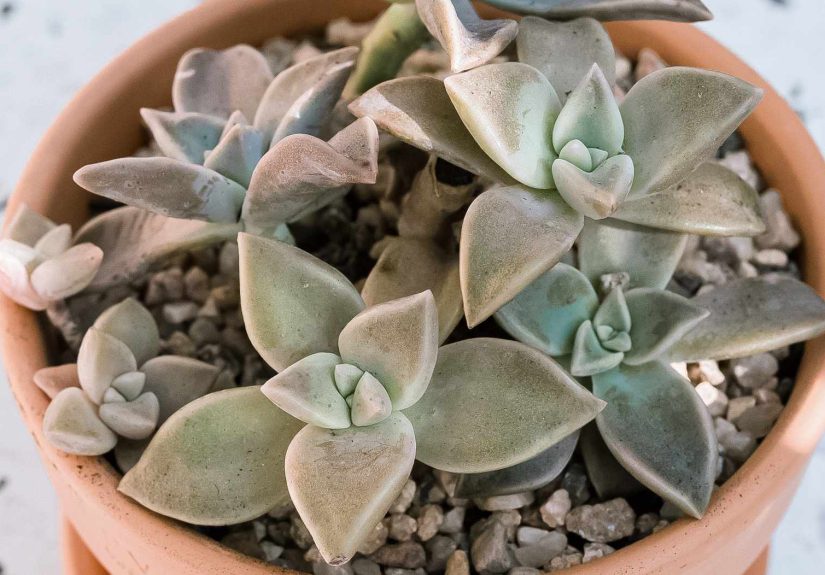
Ghost plant is a low-maintenance succulent in the Crassulaceae family. It forms fleshy rosettes that are usually about 3 to 6 inches across, while the plant itself may grow roughly 6 to 12 inches tall and spread 2 to 3 feet wide as stems elongate and trail. That trailing habit is part of its charm: young plants stay tidy and compact, while mature ones become slightly wild in the best possible way, cascading over pot edges or weaving through rock gardens like they own the place.
The leaves are thick, flat, and pointed, with a soft, frosted coating often called farina. That coating gives ghost plant its signature ghostly glow and helps protect the foliage. In part shade or indoors, leaves often lean blue-gray or silvery green. In hotter, sunnier conditions, they can blush pink, peach, yellow, or lavender. In other words, it is one of the few plants that can look different every month and still never have a bad photo angle.
In spring, healthy plants may produce clusters of small star-shaped flowers, usually white with red speckling. The blooms are lovely, but the foliage is the real main character here.
Why Ghost Plant Is So Popular
There are plenty of reasons gardeners keep coming back to ghost plant. First, it is forgiving. Second, it is easy to propagate. Third, it looks like someone dusted it with moonlight. That is a strong résumé.
Ghost plant works well as an indoor succulent, a patio container plant, a drought-tolerant accent, or a spreading ground cover in warm climates. It also fits beautifully into mixed succulent arrangements because its pale tones soften brighter greens and deeper purples. If your container garden is feeling a little too loud, ghost plant is the stylish neutral that pulls the whole outfit together.
Best Light for Ghost Plant
Light is where ghost plant’s personality really shows up. Give it full sun to partial sun outdoors, or a very bright window indoors. A south-facing or east-facing window is often ideal for indoor plants. The more bright light it receives, the more compact and colorful it tends to stay.
In lower light, ghost plant usually stretches, producing longer stems and looser rosettes. This is called legginess, and it is the succulent version of a plant standing on tiptoe trying to find the sun. The leaves may also lose some of their pastel vibrancy and become a flatter gray-green.
Outdoors, aim for several hours of direct sun, especially in the morning. In very hot regions, a little afternoon protection can help prevent stress, but ghost plant generally appreciates strong light more than many tender houseplants do. If you move an indoor plant outside for the season, acclimate it gradually so the leaves do not scorch from a sudden blast of intense sun.
Quick light rule
If your ghost plant is compact and colorful, you are probably doing great. If it is stretched out, dropping lower leaves, or looking dull, it is asking for more light without using its indoor voice.
The Right Soil and Pot for Ghost Plant
Ghost plant needs one thing from its soil above all else: fast drainage. This is not a plant that wants rich, soggy, moisture-retentive potting mix. Its roots prefer airy conditions, and heavy soil is one of the fastest ways to invite root rot.
A cactus or succulent mix is a good starting point. You can improve it even further with extra pumice, perlite, coarse sand, or grit. If you are planting outdoors in the ground, rocky or sandy soil is ideal. In clay soil, raised beds are a safer bet.
Choose a pot with a drainage hole. Yes, really. No, a decorative bowl with “good vibes” does not count as drainage. Terracotta is especially helpful because it dries faster than plastic or glazed ceramic, which can be useful if you tend to overwater. Ghost plant also looks fantastic in shallow, wide containers because its root system is relatively shallow and its stems eventually spill outward.
Repotting tips
Repot only when the plant truly needs it. Ghost plant is a slow to moderate grower and does not demand constant upgrades. When you do repot, avoid grabbing the leaves as much as possible because the powdery coating rubs off easily. Hold the plant gently near the base and move it into fresh, dry mix.
How Often to Water Ghost Plant
If there is one ghost plant care rule worth taping to your watering can, it is this: let the soil dry out thoroughly before watering again. Ghost plant stores moisture in its leaves, so it does not need frequent drinks.
Outdoors in hot summer weather, an established plant in full sun may appreciate a weekly watering if rain is scarce. Indoors, watering every other week is often enough, and in winter it may need even less. The exact schedule depends on pot size, temperature, airflow, light, and soil mix, which is why watering on a rigid calendar is not the best approach.
Instead, check the soil. If it is dry well below the surface, water deeply and let the excess drain away. If it is still even a little damp, wait. Succulents would rather be slightly thirsty than chronically soggy.
How to water properly
Water the soil, not the rosette. Pouring water directly into the center of the plant can leave moisture trapped around the crown and increase the chance of rot. A slow, thorough soak is better than frequent sips. Then let the plant dry out again before repeating the process.
Signs of overwatering
Overwatered ghost plants may develop mushy leaves, drooping stems, yellowing foliage, or signs of rot near the base. Succulents can also develop corky or swollen damage when moisture levels stay too high, especially in cool, low-light conditions.
Signs of underwatering
An underwatered ghost plant usually looks less dramatic. Leaves may wrinkle, flatten, or look thinner than usual. The plant may seem dull and tired, but if the roots are healthy, a proper soak usually perks it back up quickly.
Temperature and Humidity Needs
Ghost plant is happiest in warm, dry conditions with good airflow. It grows especially well during the milder parts of the year, including spring and fall, and tolerates summer heat well when its roots stay dry between waterings.
In the ground, it is best suited to USDA Zones 9 to 11. With protection, it can survive brief dips to around 15°F, but prolonged freezing weather is another story. In colder regions, treat it as a container plant and move it indoors before frost arrives.
Humidity is not its favorite. High humidity combined with poor drainage is a recipe for trouble. If you grow ghost plant indoors, skip the pebble trays and tropical spa treatment. This plant wants bright light, dry air, and a pot that does not hold onto moisture like a grudge.
Does Ghost Plant Need Fertilizer?
Not much. In fact, too much fertilizer can do more harm than good. Ghost plant naturally grows well in lean conditions, so heavy feeding is unnecessary and may lead to weak, overly soft growth.
If you want to fertilize, use a diluted cactus fertilizer once during the growing season or apply a very light feeding in spring. That is plenty. This is not a tomato plant trying to win a county fair. Modesty suits it.
Pruning, Grooming, and General Maintenance
Ghost plant is about as low-maintenance as succulents get. You usually only need to remove dead lower leaves, trim leggy stems, or shape the plant if it gets too sprawling for its container.
Pruning can actually improve its appearance. If stems become long and bare near the base, snip healthy rosettes from the ends and replant them to refresh the container. The original base may branch again, and the cuttings usually root with very little drama. That means one pruning session can turn one plant into several, which is either exciting or a slippery slope depending on your shelf space.
How to Propagate Ghost Plant
This is where ghost plant earns its reputation as a beginner-friendly superstar. It is extremely easy to propagate from leaves, stem cuttings, offsets, or division.
Leaf propagation
Gently twist off a healthy leaf so it comes away cleanly from the stem. Let it dry for a few days so the wound calluses, then place it on top of dry succulent mix. Do not bury it deeply. After roots and a baby rosette begin to form, water lightly only when the mix is fully dry.
Stem cuttings
Take a healthy rosette with a bit of stem attached. Let the cut end dry and callus for several days, then place it into dry or barely moist succulent mix. Within a few weeks, it will usually begin rooting. Stem cuttings are often the fastest way to get a full-looking new plant.
Offsets and divisions
Mature ghost plants often produce extra growth that can be separated and replanted. If your plant is clustering or sprawling across the soil surface, you may find several ready-made starts just waiting for their own pot.
Common Ghost Plant Problems and Fixes
Leggy growth
Cause: not enough light.
Fix: move the plant to a brighter location and prune stretched stems.
Mushy or translucent leaves
Cause: overwatering or poor drainage.
Fix: let the soil dry completely, inspect the roots, and repot in a grittier mix if needed.
Leaf drop
Cause: often low light, sudden stress, or excess moisture.
Fix: improve light, correct watering habits, and avoid abrupt environmental changes.
Rot at the crown or base
Cause: water sitting in the rosette, heavy soil, or cold wet conditions.
Fix: remove affected parts and propagate healthy stems if necessary.
Faded color
Cause: insufficient light.
Fix: gradually increase exposure to brighter light.
Also remember that the powdery coating on the leaves is delicate. Touching, rubbing, or repeatedly handling the foliage can leave marks. The plant will survive, but the pristine “frosted pastry” look may take time to recover on new growth.
Growing Ghost Plant Indoors vs. Outdoors
Indoors: Keep ghost plant in your brightest window, use a gritty soil mix, and water sparingly. Rotate the pot every week or two if it leans toward the light. Indoor plants often stay a little more silver-blue, especially if the light is bright but filtered.
Outdoors: Use ghost plant in containers, rock gardens, gravel beds, or warm-climate borders. It performs especially well where rainfall is limited and soil drains quickly. Outdoor specimens often color up more dramatically, especially when they receive strong sun and experience dry conditions between waterings.
Simple Design Ideas for Ghost Plant
Ghost plant is not just easy to grow; it is easy to style. Try it in a shallow terracotta bowl with other drought-tolerant succulents, or let it spill over the edge of a wall planter where the trailing stems can show off. It also looks striking against dark gravel, concrete planters, weathered wood, or black ceramic pots.
Because of its pale, opalescent coloring, ghost plant pairs well with nearly everything: chartreuse sedums, burgundy echeverias, blue chalk sticks, and spiky aloes all play nicely with it. Think of ghost plant as the neutral blazer of the succulent world. It goes with everything and makes the whole arrangement look more expensive than it was.
of Real-World Experience With Ghost Plant
One of the most interesting things about growing ghost plant is that it teaches patience in a way that feels rewarding instead of punishing. At first, many people buy one because it looks neat in a tiny nursery pot, all tidy rosettes and cool-toned leaves. Then they take it home, set it on a windowsill, and wait for something dramatic to happen. Ghost plant’s answer is usually, “Relax, I’m working on it.” A few weeks later, subtle changes start to show. The leaves look plumper after a proper soak. The color shifts when the light changes. A stem that seemed static suddenly begins trailing over the edge of the pot like it is making an escape plan.
Growers often say ghost plant becomes more beautiful with time rather than instantly. That feels true in practice. A young plant may look cute, but a mature one looks sculptural. As stems lengthen, rosettes form at the tips and create a layered, cascading effect that makes the plant feel far more dynamic than a standard upright succulent. This is especially noticeable in shallow pots or hanging planters, where the growth habit gets to do its thing without being cramped.
Another common experience is learning just how little water this plant actually wants. Many beginners start out by treating ghost plant like a thirsty tropical houseplant, and the plant responds with soft leaves or droopiness that makes everything worse because then the instinct is to water again. Once you switch strategies and begin watering only after the soil dries thoroughly, the plant usually becomes much easier to manage. In that sense, ghost plant is a great teacher. It helps growers understand that succulent care is often about restraint, not effort.
Propagation is another part of the ghost plant experience that surprises people. Leaves fall off, and instead of signaling disaster, they often become opportunity. Set a healthy leaf on dry soil, forget about it for a bit, and before long there may be roots and a tiny baby rosette forming at the base. It feels mildly magical. Stem cuttings are even more satisfying because they root so readily. Many gardeners start with one plant and end up with an entire collection because ghost plant is absurdly generous that way.
Then there is the color. Indoor growers often notice cooler silver and blue tones, while outdoor growers see pink, peach, or lavender blush appear with stronger sun and drier conditions. This shifting palette makes ghost plant feel interactive, almost like it is giving feedback about its environment. You start paying attention in a new way: more light equals richer color, less light equals looser growth, too much water equals trouble. Over time, the plant becomes easy to “read.”
Perhaps the best real-world experience with ghost plant is that it builds confidence. It does not demand perfection. Miss a watering? Usually fine. Trim it back? It bounces back. Snap off a stem? Congratulations, you now have a propagation project. For many people, ghost plant is the succulent that turns them from someone who “tries to keep plants alive” into someone who actually enjoys growing them.
Conclusion
Ghost plant is proof that a low-maintenance succulent does not have to be boring. With bright light, gritty soil, and a sensible watering routine, this pearly rosette-forming plant can thrive indoors or out and look better with age. It is adaptable, easy to propagate, and dramatic in the quiet, stylish way that makes other plants seem a little overdressed.
If you want a succulent that forgives beginner mistakes, rewards observation, and multiplies faster than your excuses, ghost plant is an excellent choice. Give it sun, give it drainage, and most importantly, give it less water than your instincts may suggest. It will take it from there.