Table of Contents >> Show >> Hide
- Why a Plan Matters Before You Hang a Single Light
- Pick the Right Outdoor Christmas Lights
- Gather the Tools Before You Start
- Safety First, Because No One Wants a Trip to the ER for Holiday Spirit
- How To Hang Christmas Lights Outside Step by Step
- Step 1: Lay out and test the lights
- Step 2: Start near the power source
- Step 3: Secure roofline lights with clips
- Step 4: Outline windows and doors
- Step 5: Wrap columns, railings, and porch posts
- Step 6: Light shrubs and bushes
- Step 7: Wrap outdoor trees the smart way
- Step 8: Protect the connections
- Step 9: Add a timer
- Best Places To Hang Outdoor Christmas Lights
- Common Mistakes To Avoid
- How To Make Your Outdoor Christmas Lights Look Better
- What To Do When the Season Ends
- Real-World Experiences Hanging Christmas Lights Outside
- Conclusion
- SEO Tags
There are two kinds of people in December: the ones who casually toss up a single wreath and call it a day, and the ones who look at their house and think, “This place could use a little more North Pole energy.” If you’re in the second group, welcome. Hanging Christmas lights outside is one of the fastest ways to make your home feel cheerful, cozy, and gloriously overqualified for neighborhood admiration.
But let’s be honest: outdoor Christmas lighting can go from magical to mildly chaotic in about seven minutes. One minute you’re dreaming of a tasteful roofline glow. The next, you’re wrestling a tangled bundle of lights that seems to have been tied by tiny holiday raccoons. The good news is that hanging Christmas lights outside does not have to be hard, dangerous, or messy. With the right plan, the right clips, and a little patience, you can create a display that looks polished without turning your Saturday into a slapstick ladder documentary.
This guide walks you through exactly how to hang Christmas lights outside, from planning and measuring to clipping, plugging in, and making everything look intentional. Whether you want a classic white roofline, colorful bushes, or the full “yes, we are that house” treatment, here’s how to do it safely and beautifully.
Why a Plan Matters Before You Hang a Single Light
The biggest mistake people make with outdoor Christmas lights is starting too early in the process. Not too early in the season. Too early in the actual hanging. Before you climb a ladder or plug anything in, make a plan. A simple sketch of your home saves time, money, and the annual last-minute realization that you are somehow twelve feet short on the left side of the garage.
Choose your lighting zones
Start by deciding where the lights will go. Popular areas include the roofline, gutters, peaks, windows, doors, porch railings, columns, shrubs, tree trunks, pathways, and fence lines. You do not need to light every square inch of your property. In fact, the best displays usually have a focal point. Maybe it’s the roofline and front porch. Maybe it’s the windows and two shrubs. Maybe it’s one spectacular tree in the yard doing all the heavy lifting like a holiday intern who deserves a raise.
Measure everything
Measure each section you plan to decorate. Measure the length of the roofline, the outline of windows and doors, the height and circumference of trees, and the distance from the nearest outdoor power source. Add a little extra length for corners, peaks, and slack. Guessing almost always leads to one of two outcomes: not enough lights or way too many lights on the driveway while you insist you “totally planned it this way.”
Decide on the look
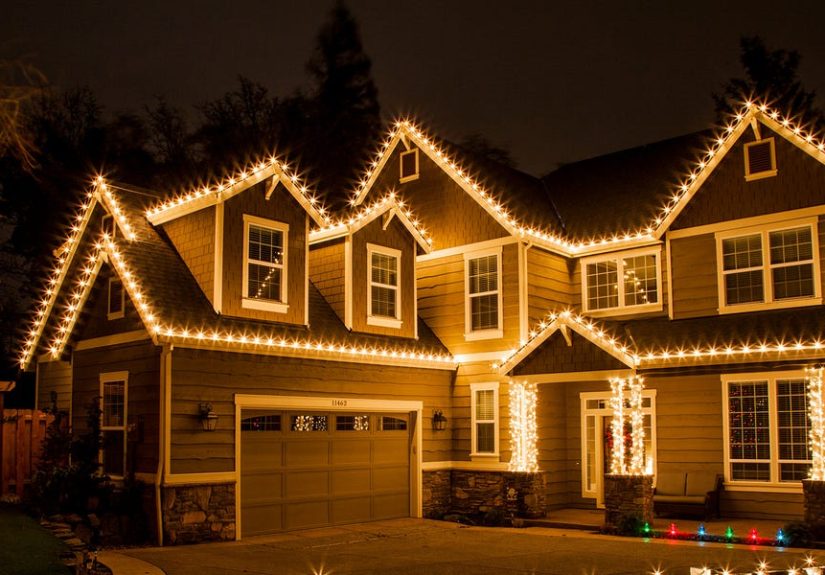
Think about style before you buy. Warm white lights create a classic, elegant look. Multicolor lights feel nostalgic and playful. C7 and C9 bulbs make bold outlines on rooflines and peaks, while mini lights work well for bushes, railings, and wrapping tree trunks. Net lights are a great shortcut for shrubs if you prefer decorating over performing tiny wire gymnastics at dusk.
Pick the Right Outdoor Christmas Lights
Not all holiday lights are made for outdoor use, and this is not the moment to get adventurous. Always choose lights clearly labeled for outdoor use. Outdoor-rated lights and extension cords are designed to handle moisture, temperature swings, and the general indignities of winter weather better than indoor products.
LED vs. incandescent
For most homes, LED Christmas lights are the smarter pick. They use less electricity, last longer, run cooler, and usually let you connect more strands than older incandescent sets. They also hold up well when you want a large display without worrying that your electric meter is quietly filing a complaint. Incandescent lights can still give a warm, traditional glow, but they use more energy and typically have stricter connection limits.
Inspect every strand
Before hanging anything, test every strand on the ground. Check for cracked sockets, frayed wires, missing bulbs, loose connections, or sections that flicker like they are trying out for a ghost story. Replace damaged strands instead of hoping for the best. Hope is festive, but it is not an electrical strategy.
Gather the Tools Before You Start
A smooth installation depends on having the right supplies ready. Here’s the basic toolkit for hanging Christmas lights outside:
- Outdoor-rated light strands
- Outdoor-rated extension cords
- Plastic light clips for gutters, shingles, or siding
- Adhesive outdoor hooks for certain flat surfaces
- A sturdy ladder in the proper height
- Work gloves
- A timer or smart outdoor plug
- Weather-resistant cord covers or connection protectors
- A measuring tape
- A storage bin or reel for extra strands
Avoid using nails, tacks, or metal staples to secure light strings. They can damage the wire insulation and create safety hazards. Plastic clips are inexpensive, easier to remove, and much kinder to both your house and your blood pressure.
Safety First, Because No One Wants a Trip to the ER for Holiday Spirit
Yes, Christmas lights are fun. No, they are not worth an injury. The safest outdoor lighting displays are the ones designed with both electrical safety and ladder safety in mind.
Use GFCI-protected outlets
Outdoor lights should be plugged into a GFCI-protected outlet. These outlets are designed to cut power quickly if moisture or a fault is detected. If your outdoor receptacle already has built-in protection, great. If not, use a GFCI adapter approved for outdoor use.
Keep cords dry and elevated
Keep extension cords and plug connections away from puddles, snow, and standing water. Use weather-resistant covers for cord connections and position them where melting snow or runoff is less likely to collect. Do not run cords through doors or windows where they can be pinched.
Respect load limits
Do not overload outlets, power stakes, or extension cords. Follow the manufacturer’s instructions for how many strands can be connected end to end. If you are using incandescent sets, be especially conservative. When in doubt, use fewer strings per circuit and spread the load across multiple outlets.
Use the ladder wisely
Set the ladder on firm, level ground. Never overreach to the side like you’re auditioning for a holiday-themed action movie. Move the ladder instead. It is slower, yes, but still faster than explaining a sprained ankle at urgent care. A helper on the ground is incredibly useful for handing up supplies, steadying the ladder, and telling you when the roofline looks straight instead of “artistically enthusiastic.”
How To Hang Christmas Lights Outside Step by Step
Step 1: Lay out and test the lights
Untangle your strands and plug them in on the ground. This is the easiest moment to replace a bad bulb, swap out a damaged strand, or realize that the warm white set you bought is actually “aggressively blue white.” Lay the strands out in the order you plan to install them.
Step 2: Start near the power source
Begin at the outlet side whenever possible. This makes it easier to manage cord length and avoid awkward last-minute rerouting. Plan where the extension cord will run so it stays neat and does not become a tripping hazard across walkways or steps.
Step 3: Secure roofline lights with clips
For gutters or shingles, use purpose-made light clips. Attach the clips first or clip the bulbs as you go, depending on the clip style. Keep spacing even so the roofline looks clean and intentional. A wavy light line can make even an expensive display look like it was installed during a caffeine emergency.
If you are outlining peaks or eaves, step back every few minutes to check the symmetry from the street. What looks even from two feet away may look oddly droopy from the curb.
Step 4: Outline windows and doors
Use smaller clips or outdoor adhesive hooks around trim where appropriate. Frame windows and doors with mini lights or C7 bulbs for a classic look. Keep the spacing consistent and hide slack at corners when possible. Neat edges make a modest display feel much more professional.
Step 5: Wrap columns, railings, and porch posts
Wrap strands in a spiral pattern from top to bottom or bottom to top. Keep the distance between each pass as even as possible. If you want a fuller look, tighten the spacing. If you want a lighter, more airy effect, leave a bit more room between wraps. The same principle works for porch railings and fence posts.
Step 6: Light shrubs and bushes
Net lights are the easiest option for bushes, especially rounded foundation shrubs. For more control, weave mini lights in and out of the branches, working from the base upward. Avoid piling all the lights on the outer shell. Tucking some lights slightly inside the branches creates depth and makes the shrub glow instead of merely sparkle.
Step 7: Wrap outdoor trees the smart way
For tree trunks, start at the base and spiral upward with consistent spacing. For a dense, dramatic look, wrap tightly. For taller trees, focus on the trunk and larger lower branches that are most visible from the street. On evergreen trees, you can wrap around the outside much like an indoor Christmas tree. On deciduous trees, tracing larger branches creates a sculptural effect that looks especially good at night.
Step 8: Protect the connections
Once the lights are in place, secure plug connections with weather-resistant covers designed for outdoor use. Keep them off the ground when possible. This step is not glamorous, but neither is troubleshooting a dark roofline because one connection sat in slush all week.
Step 9: Add a timer
A timer or smart outdoor plug makes your display easier to manage and more energy efficient. Set the lights to turn on around dusk and off before bedtime. Your home still looks festive, and you avoid forgetting them until sunrise when the neighbors know your schedule better than your family does.
Best Places To Hang Outdoor Christmas Lights
If you want a balanced display, focus on these high-impact areas first:
- Roofline: clean, classic, and visible from far away
- Front entry: instantly welcoming and easy to decorate
- Windows: adds structure and symmetry
- Shrubs: fills in dark areas near the base of the house
- Tree trunks: dramatic and elegant, especially in the front yard
- Walkways and railings: helpful for visibility and curb appeal
If you are decorating for the first time, start with the roofline and entryway. That combination gives you the biggest visual payoff without requiring an entire weekend, a spreadsheet, and a support group.
Common Mistakes To Avoid
Using indoor lights outside
It sounds obvious, yet it happens every year. Indoor lights are not made for outdoor conditions. Keep them inside where they belong, preferably nowhere near the rain.
Skipping the ground test
Testing lights after they are already clipped to the roofline is the seasonal version of assembling furniture and then noticing you forgot the screws. Always test first.
Ignoring the manufacturer’s connection limits
Even if the plugs physically fit together, that does not mean the setup is safe. Read the tag or box and follow the limit for each light set.
Using the wrong fasteners
Do not punch holes in your trim or staple through wires. Use the right plastic clips or weather-rated hooks for the surface you are decorating.
Making the design too busy
More lights do not always mean a better display. A clear, consistent pattern often looks more expensive and polished than a chaotic mix of colors, shapes, and blinking speeds that seems to have been arranged by a sugar-fueled committee.
How To Make Your Outdoor Christmas Lights Look Better
Good lighting design is part safety, part planning, and part restraint. Keep one color palette across the display. Repeat the same bulb style on major features. Use symmetry where your house already has strong lines. If you want a playful look, let one area do the talking, like multicolor bushes paired with a simple warm white roofline.
Also, step into the street and look back at the house a few times during installation. This is the perspective that matters most. Tiny adjustments on the ladder can make a big difference from the curb.
What To Do When the Season Ends
Taking lights down carefully is just as important as hanging them well. Unplug everything first. Remove clips gently so you do not damage shingles, gutters, or siding. Wind each strand neatly around a reel, piece of cardboard, or dedicated storage spool. Label strands by location, such as “front roofline” or “left window,” so next year’s you can feel deeply grateful instead of dramatically betrayed.
Store lights in a dry bin away from moisture, pests, and extreme heat. Replace broken clips and toss damaged strands before packing everything away. That way, next season starts with decorating, not detective work.
Real-World Experiences Hanging Christmas Lights Outside
One of the most common experiences homeowners talk about is underestimating how long outdoor Christmas lights take. On paper, outlining the roofline sounds like a quick Saturday afternoon project. In real life, it often starts with fifteen minutes of decorating and forty-five minutes of untangling. The lesson most people learn after the first year is simple: prep work is not optional. Measuring, testing, and sorting by location can cut the stress in half.
Another familiar experience is discovering that the best-looking display is rarely the biggest one. Many people start out wanting every tree, every bush, every window, and every railing lit up like a holiday airport runway. Then they step back and realize the prettiest houses on the block often have just a few well-executed features: a crisp roofline, a glowing wreath, and a couple of wrapped shrubs. Outdoor Christmas lights look more elegant when they follow the architecture rather than compete with it.
Weather is also a major teacher. A display that looks perfect on a dry afternoon can become a problem after rain, wind, or a freezing night. Homeowners quickly learn to appreciate weather-resistant clips, covered connections, and outdoor-rated cords after a single soggy evening of troubleshooting. People who have decorated for several seasons usually say the same thing: spend a little more on reliable lights and the right accessories, because cheap clips and mystery-brand strands have a special talent for failing exactly when guests arrive.
There is also the ladder experience, which deserves its own chapter in the holiday memory book. Most people begin with confidence and end with a new respect for stable footing, level ground, and moving the ladder more often than seems necessary. Nearly everyone who has hung lights outside for a few years becomes evangelical about not overreaching. It is one of those lessons that sounds fussy until you are halfway up, holding a clip in your teeth, trying to convince yourself that leaning six more inches is a brilliant idea. It is not.
Families also tend to build small traditions around outdoor lighting. Some assign jobs: one person measures, one tests strands, one hands up clips, and one stands in the driveway offering deeply unhelpful design opinions. Kids often remember the lights going up as part of the start of the season, right alongside hot cocoa and the first holiday movie. Even when the process is mildly chaotic, it often becomes a favorite ritual. The imperfections are part of the charm.
Finally, many homeowners discover that timers are life-changing. Forgetting to switch the lights on means missing the best evening glow. Forgetting to switch them off means waking up to a display that has been blazing away since midnight like it is trying to guide aircraft. A timer solves both problems and makes the whole setup feel smarter, easier, and far more enjoyable. In the end, the best outdoor Christmas light experience is not about making your house the brightest on the street. It is about creating a warm, festive scene that makes you smile when you pull into the driveway. If the neighbors smile too, that is just a bonus.
Conclusion
Hanging Christmas lights outside is one of those projects that rewards a little strategy. Measure first, choose outdoor-rated lights, use plastic clips, protect the connections, and keep the design clean and consistent. A thoughtful display can make your home feel festive without overwhelming your budget, your schedule, or your circuit breaker. Whether you go for a classic warm white roofline or a colorful front-yard glow-up, the goal is the same: make your home look inviting, cheerful, and ready for the season.
And remember, holiday decorating does not need to be perfect to be beautiful. Sometimes the best part is simply seeing the lights come on for the first time, stepping back to admire the view, and thinking, “Yep, this was worth every minute of wrestling that one impossible strand.”