Table of Contents >> Show >> Hide
- Step 1: Start With the “Purebred Reality Check”
- Step 2: Pick Up the Cat (Yes, Really) and Notice the “Hidden Weight”
- Step 3: Check the Body ShapeCompact, Rounded, and Athletic
- Step 4: Look at the HeadRounded, Not Wedge-Shaped
- Step 5: Inspect the Muzzle and ProfileShort, Broad, With a Gentle “Stop”
- Step 6: Check the EyesBig, Wide-Set, and Usually Gold-to-Yellow
- Step 7: Look at the EarsMedium, Rounded Tips, Slight Forward Tilt
- Step 8: Feel the CoatShort, Fine, Close-Lying, and Glossy
- Step 9: Confirm the ColorAnd Don’t Get Tricked by Kittens
- Step 10: Check the DetailsPaws, Legs, and Tail
- Step 11: Watch the Personality“Velcro Cat” Energy
- Step 12: Compare Lookalikesand Then Verify With Proof
- Real-Life Experiences: How Burmese Cats Give Themselves Away (500+ Words)
- Final Takeaway
Burmese cats have a reputation for being equal parts “tiny athlete” and “professional cuddle consultant.” They’re medium-sized, surprisingly heavy for their look, and built like they do squats between naps. But here’s the catch: lots of domestic shorthairs can resemble a Burmese at first glance. So this guide helps you do two things: (1) spot strong Burmese traits with confidence, and (2) avoid accidentally labeling every shiny brown cat as “definitely purebred.”
Below are 12 practical, real-world stepsno microscope required, just your eyes, hands, and a little patience. (Treats are optional, but highly recommended by your cat’s legal team.)
Step 1: Start With the “Purebred Reality Check”
Before we zoom in on cheekbones and coat sheen, set expectations: most cats you meet (especially rescues and neighborhood royalty) are not documented purebreds. That doesn’t mean your cat can’t look Burmeseit means appearance alone rarely proves pedigree.
Use this guide as a “Burmese-likeness checklist.” If your cat hits many points, you may have: a Burmese, a Burmese mix, or a domestic shorthair who simply woke up gorgeous. The final step covers how to confirm lineage if you truly need certainty.
Step 2: Pick Up the Cat (Yes, Really) and Notice the “Hidden Weight”
Burmese cats are famous for feeling heavier than they appearcompact, muscular, and solid. A typical Burmese doesn’t feel delicate or bony; it feels like a small, athletic cat with good muscle tone. Many owners describe the sensation as “a brick wrapped in silk,” which is oddly specific and also… accurate.
What to look for
- Medium size (not lanky, not huge), but with a sturdy, substantial feel
- Firm bodymuscle you can feel under the short coat
- Balanced build rather than a thin, fine-boned frame
Step 3: Check the Body ShapeCompact, Rounded, and Athletic
Burmese bodies tend to read “compact” and “put together.” The chest looks rounded, the back appears level, and the overall silhouette is smooth rather than angular. They’re not extreme in any directionjust well-built.
Quick comparison: If your cat looks long and tubular with a very narrow waist, you’re drifting away from classic Burmese type. If your cat looks plush and round like a teddy bear with a thick undercoat, you may be looking at a different shorthaired breedor a very confident domestic shorthair.
Step 4: Look at the HeadRounded, Not Wedge-Shaped
The Burmese head is one of the biggest giveaways. Many Burmese standards describe a pleasingly rounded head without flat planes, with a full face and broadness between the eyes. In plain English: the face looks sweet, soft, and roundednot sharp, long, or triangular.
Mini checklist
- Rounded head when viewed from the front
- Full face, often with noticeable cheekiness
- Shorter muzzle that keeps the rounded look
Step 5: Inspect the Muzzle and ProfileShort, Broad, With a Gentle “Stop”
Burmese muzzles are typically short and broad, blending into the face rather than jutting out. In profile, many Burmese have a visible nose break (sometimes called a “stop”), but it shouldn’t look extreme. Think “soft curve,” not “ski slope.”
If the muzzle looks long and narrow, forming a wedge-like head shape, that’s less Burmese. If the face looks very flat (brachycephalic), that’s also not the goal for a healthy, well-structured Burmese-type cat.
Step 6: Check the EyesBig, Wide-Set, and Usually Gold-to-Yellow
Burmese eyes are typically large and set well apart, giving them an alert, open expression. Eye color is often described as gold, yellow, or amber. Lighting can play tricks, and some cats may look slightly different depending on age and environment, but bright “golden” eyes are a classic Burmese hallmark.
What’s a red flag?
- Bright blue eyes (more typical of pointed breeds and mixes)
- Strong aqua eyes (often seen in Tonkinese-type cats)
- Clear green eyes (commonly considered a fault in some Burmese standards)
Step 7: Look at the EarsMedium, Rounded Tips, Slight Forward Tilt
Burmese ears are usually medium in size, set well apart, broad at the base, and rounded at the tips. Many have a slight forward tilt that contributes to an alert, friendly looklike the cat is listening to your secrets. (It is. And it will judge them.)
Very large, tall, pointed ears can suggest a more “oriental” type. Very small, thick, plush-eared cats can suggest a different shorthaired look entirely.
Step 8: Feel the CoatShort, Fine, Close-Lying, and Glossy
Coat texture is a Burmese signature. The coat is typically short, fine, and lies very close to the body with a glossy, satin-like finish. There usually isn’t a thick undercoat, so the fur can feel sleek and warm rather than fluffy.
Easy test
- Pet from head to tail: it should feel smooth and sleek.
- Look in bright light: it often appears shiny (like the cat is freshly polished).
- Check for “puff”: heavy fluff suggests a different coat type.
Step 9: Confirm the ColorAnd Don’t Get Tricked by Kittens
In many U.S. standards, Burmese are most commonly associated with four classic solid colors: sable (rich brown), champagne (warm honey-beige), blue (warm gray-blue), and platinum (pale silvery gray with warm undertones). Some registries also accept additional colors and tortoiseshell variations.
Two important notes: (1) Kittens can show faint “ghost” tabby markings that fade with age. (2) The overall look is usually a solid, even color that may shade subtly lighter on the underparts. Strong striping or dramatic patterning is less consistent with Burmese type.
Step 10: Check the DetailsPaws, Legs, and Tail
Burmese cats tend to have legs proportionate to the body and feet that look rounded rather than elongated. The tail is generally straight and medium in lengthneither extremely long nor noticeably short.
Quick detail list
- Paws: typically rounded, tidy-looking
- Legs: balanced with the body (not stilt-like, not tiny)
- Tail: straight, medium length, clean taper
One odd-but-helpful tip: if you notice an obviously kinked tail, that can happen in any cat, but it’s generally not associated with ideal Burmese structure.
Step 11: Watch the Personality“Velcro Cat” Energy
Burmese cats are famously people-oriented. They often follow their humans from room to room, climb into laps like it’s their job, and “help” with everything (including tasks that do not require help, like breathing). Many are playful, smart, and social, and they typically dislike being ignored for long stretches.
Common Burmese-style behaviors
- Lap-seeking: if there’s a lap, they’ll audition for it
- Playfulness: interactive toys, games, and general mischief
- People focus: wants to be near you, not just near food
- Vocal but “softer”: chatty in a sweeter tone than some very loud breeds
Personality isn’t a perfect ID tool (cats are individuals), but if your cat behaves like a friendly shadow with gym muscles, you’re in the right neighborhood.
Step 12: Compare Lookalikesand Then Verify With Proof
The fastest way to avoid misidentifying a Burmese is to compare with common “lookalikes”:
Burmese vs. Bombay
Bombays are typically jet black with striking copper-to-gold eyes and a sleek, satiny coat. They can share the “surprisingly heavy” feel, but the all-black coat (often right down to the roots) is the big clue.
Burmese vs. Tonkinese
Tonkinese often have aqua-toned eyes and can show patterns like mink or pointed coloration. Burmese usually present as more solid-colored with gold-to-yellow eyes.
Burmese vs. Siamese-type cats
Siamese-type cats often have a long, angular body, a wedge-shaped head, and blue eyes with point coloration. Burmese are generally more compact with a rounded head and golden eyes.
How to confirm for real
- Pedigree papers: the clearest proof of a purebred Burmese
- Reputable breeder records: documentation, health testing, and lineage
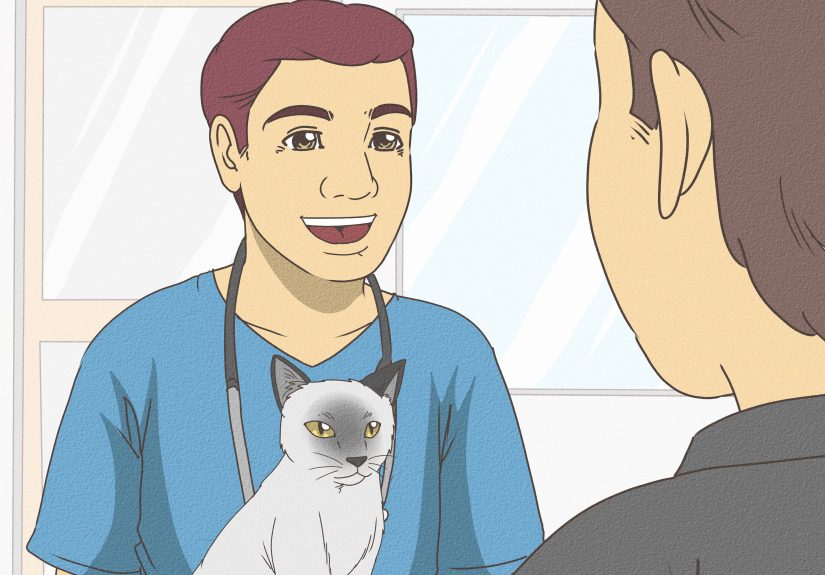
- Veterinary input: a vet can’t certify pedigree by sight, but can help you assess traits and health considerations
- DNA testing: can suggest breed ancestry, especially for mixes (useful, but not always definitive)
If you’re adopting and the rescue labeled your cat “Burmese,” treat it as a best guess unless documentation exists. The good news: your cat can still be 100% perfect without being 100% purebred.
Real-Life Experiences: How Burmese Cats Give Themselves Away (500+ Words)
If you live with a Burmese (or a very convincing Burmese lookalike), the “identification process” often becomes less about measuring ear angles and more about observing your daily life slowly being reorganized around a small, glossy supervisor. People who share homes with Burmese-style cats commonly describe the same pattern: the cat doesn’t merely exist in the house; the cat actively participates in the household like a tiny roommate who never pays rent but somehow still runs the place.
One of the first real-world giveaways is the way a Burmese-type cat handles attention. Many cats tolerate affection on their terms. Burmese cats, on the other hand, often seem to treat affection as a shared hobbylike you both signed up for a class. Sit down to answer emails? You may suddenly have a warm, compact weight in your lap, purring like an engine that just got a promotion. Get up to make coffee? Your shadow stands up too. Move to the couch? Congratulations, your escort has arrived. It’s not clingy in a nervous way; it’s more like the cat is genuinely convinced your day is a team sport.
Another common experience is the “surprise heft” becoming a running joke. People will say, “She’s not that big,” and then pick her up and immediately recalibrate their understanding of physics. Burmese cats often feel sturdy and muscular, and that body type shows up in small moments: the confident hop onto a counter, the strong push of a head-butt for attention, the way they launch into play and stop on a dime. That athletic build pairs with a coat that, in many homes, becomes impossible not to touch. Owners talk about absentmindedly petting their cat like it’s a stress ball made of satinbecause the short, glossy coat makes every pet feel smooth and “clean,” even after the cat has sprinted through the hallway like a tiny tornado.
Behavior during play can be especially telling. Burmese cats are often described as playful well past kittenhood. That doesn’t always mean chaosit often means they want interactive fun. They may carry toys around, invent games, or insist you participate by dropping something at your feet with the seriousness of a business proposal. Some households even notice a dog-like vibe: following, greeting at the door, learning routines quickly, and sometimes mastering simple tricks when motivated. If your cat seems happiest when you’re actively involvedwand toys, puzzle feeders, a quick training session for treatsBurmese traits are a strong possibility.
And then there’s the voice. Not every Burmese is chatty, but many are communicators. The “tell” isn’t just volumeit’s the purposeful timing. Burmese-style cats often talk like they’re making a point: a greeting when you walk in, a comment while you cook, a small announcement before jumping into your lap as if to say, “Scheduling update: you are now seated with cat.” When you combine that social nature with the classic physical traitsrounded head, golden eyes, sleek coat, compact muscleyou start to recognize a pattern that feels less like guesswork and more like, “Okay… you’re probably at least part Burmese.”
Final Takeaway
To identify a Burmese cat, focus on the whole package: a compact, muscular “heavy for its size” body; a rounded head with a short, broad muzzle; big, wide-set eyes typically in gold-to-yellow tones; a sleek, satin-like short coat; and an affectionate, people-forward personality. The more boxes your cat checks, the more likely you’re seeing Burmese traitsespecially if you can confirm with documentation.