Table of Contents >> Show >> Hide
- Before You Start: Know What Public Comment Is (and Isn’t)
- Step 1: Find the Agenda and Identify the Exact Moment You’re Allowed to Speak
- Step 2: Learn the Local Rules (Time Limits, Sign-Ups, and What You Can Bring)
- Step 3: Sign Up the Right Way (Yes, This Step Matters More Than You Think)
- Step 4: Write a “Three-Minute” Statement That Doesn’t Feel Like a Three-Hour Essay
- Step 5: Bring Evidence Without Turning It Into a Science Fair Board
- Step 6: Practice Like You’re Rehearsing for the “Three Minutes or Less” Olympics
- Step 7: Deliver Your Comment With Good Meeting Manners (and Maximum Impact)
- Step 8: Follow Up After the Meeting (Because “On the Record” Is Only Step One)
- Frequently Asked Questions
- Real-World Experiences: What It Feels Like to Speak Up (and What People Wish They’d Known)
- Conclusion: Your Voice, Your City, Your Three Minutes
So you’ve decided to speak at a city council meeting. Congratulationsthis is how democracy gets its cardio.
Whether you’re fired up about a new apartment complex, a suspiciously crater-like pothole, or that crosswalk that
feels like a real-life game of Frogger, public comment is your chance to put your issue on the record.
The good news: you don’t need a law degree, a megaphone, or a dramatic cape. The even better news: once you learn
the rhythm of public meetings (and the mysterious power of the “speaker slip”), you’ll be able to show up prepared,
sound credible, and avoid the classic trap of using your entire three minutes on “Um… hi… so… basically…”
Important reality check: the rules for public comment can vary by city (and sometimes by meeting type), but most
councils follow a familiar patternan agenda, a sign-up process, a time limit, and decorum rules to keep meetings
moving. Many cities also allow written comments and remote participation options. Your goal is to work with the
process, not wrestle it on live TV.
Before You Start: Know What Public Comment Is (and Isn’t)
Most city council meetings include at least one public comment period. Sometimes there’s a general comment time for
issues not on the agenda, and sometimes there’s comment on specific agenda items or public hearings (like zoning,
budgets, or ordinances). Some agenda items allow speakers; others may be informational or handled quickly as “consent.”
Also: councils often can’t have a full back-and-forth conversation with you in the moment, especially on topics not
listed on the agenda. In some states, open meeting rules limit what elected officials can discuss or respond to
during meetings unless the topic has been properly noticed. That can feel frustrating, but it’s usually a legal
guardrailnot a personal snub.
Step 1: Find the Agenda and Identify the Exact Moment You’re Allowed to Speak
Start by locating the meeting agenda on your city’s website (often under “City Council,” “Agendas & Minutes,” or
the City Clerk’s page). The agenda tells you:
- When the meeting is, where it is, and whether it’s in-person, hybrid, or virtual.
- Which items are being discussed and in what order.
- Where public comment happens (general comment, public hearing, and/or per-item comment).
Pro move: identify the agenda item number and title you want to address. “Item 7BTraffic Calming on Maple Street”
is much stronger than “the thing about cars going fast… you know the one.”
Quick tip
If your issue is not on the agenda, look for a section labeled “Public Comment,” “Oral Communications,” or
“Non-Agenda Public Comment.” Some cities limit non-agenda comments to a specific time or require requests in advance.
Step 2: Learn the Local Rules (Time Limits, Sign-Ups, and What You Can Bring)
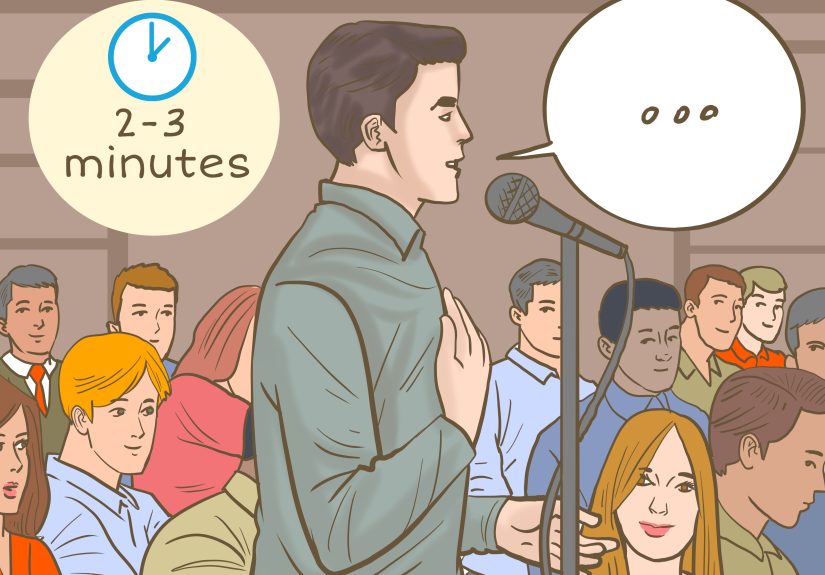
Most councils limit individual remarks to a short windowoften around two to three minutesso more people can be heard
and the meeting doesn’t turn into a trilogy. Many cities also limit speaking more than once on the same item, or require
separate speaker slips for separate items. If the room is packed, the chair may shorten time per speaker.
Look for a “Public Comment” or “How to Participate” page. It usually covers:
- How to sign up (online form, phone call, email, or in-person speaker card)
- When sign-ups close (sometimes before the meeting begins, sometimes before the item is called)
- Whether you can speak remotely and what platform is used
- Rules about signs, displays, handouts, and slides (if allowed)
- Decorum rules (no yelling, no personal attacks, no disruptions)
If you’re unsure, call or email the City Clerk’s office. City staff can’t coach your message, but they can tell you
exactly how the speaking process works.
Step 3: Sign Up the Right Way (Yes, This Step Matters More Than You Think)
Many meetings require you to submit a speaker slip (also called a speaker card) to be recognized.
This can be as simple as writing your name, the agenda item, and whether you support or oppose something. Some cities
let you sign up online, some by phone, and some require in-person submission before the comment period begins.
Here’s how to avoid the most common heartbreak in municipal government:
don’t assume you can just raise your hand and wing it.
Common sign-up formats
- In-person speaker card: Fill it out and hand it to the clerk before the comment period or item starts.
- Online comment card: Submit a web form before the deadline and wait to be called.
- Remote queue: Log in during a specific window and be present when your name is called.
If you have accessibility needs (like hearing assistance or extra time to get to the podium), ask the clerk’s office
ahead of time. Meetings often include ADA accommodation info in the agenda or on the participation page.
Step 4: Write a “Three-Minute” Statement That Doesn’t Feel Like a Three-Hour Essay
Your mission is clarity, not quantity. A tight public comment is usually more persuasive than a passionate but
meandering monologue. Use this simple structure:
- Who you are (name + neighborhood, or your connection to the issue)
- What you want (a specific action or decision)
- Why it matters (one or two key facts + one real-world impact)
- A clear close (repeat your ask in one sentence)
Example (pothole edition)
“My name is Jordan Lee. I live on Pine Street near the middle school. I’m asking the council to prioritize repairs
on Pine between 3rd and 6th. The potholes have damaged multiple cars and force drivers to swerve into oncoming traffic.
This is a safety issueespecially during school drop-off. Please direct staff to schedule repairs and share a timeline
with residents.”
Notice what’s missing? A 12-minute origin story, three unrelated grievances, and a dramatic reading of your tire
replacement receipt (save that for your group chat).
Step 5: Bring Evidence Without Turning It Into a Science Fair Board
The best public comments combine human impact with concrete details. You don’t need a binder thick enough to bench-press,
but you should bring something that makes your point easier to understand:
- One or two key numbers (e.g., “average response time,” “crash reports,” “rent increase”) if reliable
- A short written summary you can submit for the record
- A photo (printed or referenced) if allowed
- Specific examples (dates, locations, intersections, item numbers)
If the city allows written comment submissions, send yours even if you plan to speak. Written comments can be easier for
staff and councilmembers to review later, and they become part of the meeting record.
What to avoid
- Wild claims you can’t support (“Everyone agrees!” is not data.)
- Personal information you don’t want on the public record
- Attacks on private individuals
Step 6: Practice Like You’re Rehearsing for the “Three Minutes or Less” Olympics
Time limits are real. Meeting chairs often use visible timers, and when the buzzer hits, your sentence may become a
choose-your-own-adventure ending.
Practice out loud with a timer. Aim for about 80–90% of your allotted time so you have breathing room if you stumble,
get nervous, or need to pause. If you’re allowed three minutes, write for about two minutes and 30 seconds.
A quick confidence trick
Highlight your “must-say” sentencethe one that includes your clear ask. If nerves hit, you can still land the plane.
Step 7: Deliver Your Comment With Good Meeting Manners (and Maximum Impact)
When your name is called: walk up, adjust the microphone, and speak slowly. Address the council as a body (“Mayor and
Councilmembers” or “Chair and Members of the Council”)not like you’re in a reality TV reunion episode.
Delivery rules that make you sound instantly more credible
- Start with your ask if the issue is urgent or complicated.
- Use plain languagecouncil meetings are not a vocabulary competition.
- Stay on topic (especially if it’s agenda-item comment).
- Keep it civileven when you’re frustrated.
Many cities enforce decorum rules to prevent disruptions and keep meetings orderly. That doesn’t mean you have to be
boringit means your message should be forceful without being hostile.
If you’re speaking remotely
- Log in early and test your audio.
- Mute until called.
- Be ready when your name is announced (some cities will move on if you’re not present).
Step 8: Follow Up After the Meeting (Because “On the Record” Is Only Step One)
After you speak, your next step is to turn a good comment into real progress. Within 24–48 hours:
- Email your comment (or a shorter version) to the council and relevant department.
- Include the agenda item number and meeting date.
- Ask for the next step (“When will this return to council?” “Who is the staff contact?”).
- Organize respectfullyneighbors, community groups, and stakeholders matter.
If your issue is long-term (like housing policy, traffic safety, or budgeting), show up more than once. Consistency is
powerful. City decisions often move slowly, but repeated, well-structured public input can shape what staff prioritize
and what councilmembers feel confident championing.
Frequently Asked Questions
Do I have a legal right to speak at every meeting?
It depends on your state and the meeting type, but many public bodies provide a public comment period as part of the
meeting process. Even when comment is allowed, governments can typically enforce reasonable, viewpoint-neutral rules
like time limits and sign-up requirements. If you think rules are being applied unfairly, document what happened and
consider contacting a civil liberties organization or local attorney for guidance.
Can I comment on something that isn’t on the agenda?
Often yesduring a general public comment periodbut some councils limit non-agenda comment or restrict how officials
can respond. If your topic is complex, submit a written comment and ask how to request that the issue be added to a
future agenda.
What if there’s a crowd and I don’t get called?
Submit written comments. Some councils cap total comment time or shorten individual time when many speakers are present.
Written comments help ensure your message still reaches the record.
Real-World Experiences: What It Feels Like to Speak Up (and What People Wish They’d Known)
Let’s talk about the part guides rarely admit: making a public comment is weird the first time. Even confident people
get that “why are my hands suddenly made of helium” feeling when they approach the microphone. The room is formal, the
rules are specific, and the clock is… aggressively honest.
One common experience is realizing how fast three minutes actually goes. People often show up with a heartfelt speech
and discover they can’t finish the second paragraph before the timer starts blinking like it has places to be. The
folks who feel best afterward usually did one thing: they practiced. Not because they wanted to sound robotic, but
because they wanted to keep their message intact when adrenaline kicked in. A calm pace makes you sound in control,
and “in control” is persuasiveeven when you’re talking about a dumpster that’s been auditioning for a horror movie.
Another real-life pattern: you may not get an immediate response. Many first-time speakers interpret silence as
dismissal. But in a lot of cities, councilmembers can’t fully engage in unscheduled debate during public comment, and
sometimes they’re trying to follow open meeting requirements. That’s why follow-up matters. People who email a short
recap afterwardmeeting date, agenda item, specific requestoften feel more traction than people who treat the comment
as a one-and-done moment. It’s not glamorous, but civic wins are frequently built out of boring emails.
If you attend a few meetings before speaking, you’ll notice something else: the most effective speakers don’t always
sound the angriest. They sound the clearest. They name the problem, connect it to impact (“kids crossing here,” “seniors
losing access,” “local businesses losing foot traffic”), and then ask for one concrete next step. That’s the sweet spot
where councilmembers can actually act: “Please direct staff to evaluate,” “Please schedule a study session,” “Please
include this in the next budget workshop,” or “Please vote no on this item as written.”
You’ll also see how helpful it can be to coordinate with others. When multiple neighbors speak, it’s tempting to repeat
the same points, but councils respond well to organized teamwork: one person shares a personal story, another shares a
timeline or facts, another asks for the specific action. It feels less like a rant parade and more like a community
presenting a case. Bonus: it’s less pressure on any one person to carry the whole argument.
Finally, a lot of people walk away surprised by how human the process can be. Yes, the meetings can be bureaucratic.
Yes, the microphone occasionally makes everyone sound like a robot ordering tacos. But showing upcalm, prepared, and
specificoften changes how you see your city. You stop thinking of “the government” as a distant thing and start seeing
it as a set of rooms, agendas, and decisions that regular people can influence. Not always quickly. Not always easily.
But more than you’d think, especially when you keep showing up and keep your ask crystal clear.
Conclusion: Your Voice, Your City, Your Three Minutes
Making a public comment at a city council meeting isn’t about giving the “perfect speech.” It’s about participating in
a process that shapes daily lifestreets, safety, housing, parks, budgets, and the rules that decide what your city
becomes next.
Show up with a clear ask. Respect the rules. Use your time well. And follow up like someone who expects things to
improvebecause that mindset is contagious. The microphone is not just a mic. It’s a lever. Pull it thoughtfully.