Table of Contents >> Show >> Hide
- Start Here: The “Deposit-Protecting” Rules of Rental Kitchen DIY
- Pick a Makeover Goal (So You Don’t End Up With Five Half-Projects)
- The Best Upgrade Order (Fastest Impact First)
- Step 1: Deep Clean Like You’re Prepping for a Cooking Show
- Step 2: LightingThe Upgrade Renters Underestimate
- Step 3: Hardware That Instantly Modernizes Cabinets
- Step 4: Peel-and-Stick Backsplash (Your Rental’s New Best Friend)
- Step 5: Peel-and-Stick Countertop CoversWorth It or Not?
- Step 6: Cabinet Refresh Without Painting Everything
- Step 7: FloorsRugs First, Peel-and-Stick Second
- Step 8: Storage and Organization Upgrades That Feel Like a Remodel
- Step 9: The Finishing Touches That Make It Feel “Done”
- Budget Breakdown Examples (So This Doesn’t Become a “Luxury Rental”)
- Common Mistakes (And How to Avoid Them)
- of Real-World Experience: What It Actually Feels Like to DIY a Rental Kitchen Makeover
- Conclusion
Confession: rental kitchens have a special talent for making you feel like you’re cooking inside a beige spreadsheet. The good news? You don’t need a sledgehammer (or a security-deposit sacrifice) to make your kitchen feel warmer, brighter, and actually yours. With renter-friendly materialsthink peel-and-stick everything, lighting upgrades, and smart stylingyou can create a “wait, you rent this?!” makeover that reverses cleanly when you move.
This guide walks you through a realistic, step-by-step rental kitchen makeover DIYHometalk-community energy, but with a practical plan: what to upgrade first, what’s worth the money, what’s risky, and how to avoid the classic mistakes (like sealing your cabinet doors shut with contact paper… ask me how I know).
Start Here: The “Deposit-Protecting” Rules of Rental Kitchen DIY
1) Read your lease like it’s the season finale
Before you buy a single tile, check what your lease says about painting, drilling, fixture swaps, and adhesives. Some landlords are fine with “cosmetic changes” if you restore everything later; others treat a new cabinet knob like you installed a roller coaster. If you can, email your property manager a short list of proposed changes (especially paint and light fixtures) and keep the approval.
2) Photograph everything (yes, everything)
Take “before” photos of cabinets, walls, backsplash area, counters, floors, and any existing damage. If you ever need to prove a scratch existed before you arrived, these photos are your tiny, digital attorneys.
3) Save original parts in a labeled box
Any hardware you removeknobs, pulls, light fixtures, faucet aeratorsgoes into one labeled bin. The goal is to move out in one afternoon, not conduct an archaeological dig through the junk drawer.
Pick a Makeover Goal (So You Don’t End Up With Five Half-Projects)
Rental makeovers work best when you choose a primary goal and a supporting goal:
- Primary goal: “Make it brighter,” “Make it modern,” “Make it cozy,” or “Make it functional.”
- Supporting goal: “Add storage,” “Hide ugly surfaces,” “Upgrade lighting,” or “Add personality.”
Example: If your kitchen is dark, your primary goal is brightness. That means lighter surfaces (backsplash, counters, rugs), better lighting (under-cabinet LEDs), and fewer visual obstacles (decluttered counters, consistent containers).
The Best Upgrade Order (Fastest Impact First)
If you do everything at once, you’ll be eating takeout off a cardboard box for a month. Here’s a smart order that builds momentum:
- Clean + declutter + organize (free, and shockingly transformative)
- Lighting (the “why does my kitchen suddenly look expensive?” move)
- Hardware + styling (quick personality boost)
- Backsplash (high visual payoff)
- Counters (optional, but dramatic)
- Cabinet refresh (contact paper or removable trim)
- Floors (rugs or peel-and-stick solutions)
Step 1: Deep Clean Like You’re Prepping for a Cooking Show
Adhesives and peel-and-stick products only behave well on clean surfaces. Degrease the backsplash area, cabinet faces, and counters. Pay extra attention near the stovecooking oils can be invisible but powerful enough to sabotage your stick-on dreams.
Quick win: Replace gross outlet covers and switch plates. It’s a small change that makes the whole wall look cleaner and newer.
Step 2: LightingThe Upgrade Renters Underestimate
Lighting is the makeover cheat code because it changes how every surface looks without permanently changing any surface. Two renter-friendly moves work especially well:
Option A: Under-cabinet lighting (plug-in or battery)
Under-cabinet lighting improves task lighting (less shadowy chopping), adds ambiance, and makes your backsplash sparklewhether it’s real tile or peel-and-stick. Look for plug-in LED bars or LED strips with adhesive backing or mounting clips that don’t require drilling.
- Best for: dark counters, small kitchens, anyone who cooks at night
- Pro tip: choose a warm-white or neutral-white tone so your kitchen doesn’t look like an aquarium
- Install tip: route cords neatly with removable cable clips and hide them along cabinet edges
Option B: Swap a light fixture (only if your lease allows)
If your rental has a “builder-basic dome light” that feels like it’s interrogating your vegetables, a fixture swap can be huge. If permitted, replace it and store the original fixture to reinstall later. If swapping isn’t allowed, use bright, efficient bulbs and add under-cabinet lights to compensate.
Bonus: LEDs are typically far more energy-efficient than old-school bulbs, so you may save a bit on electricity while making the space look better.
Step 3: Hardware That Instantly Modernizes Cabinets
Changing cabinet knobs and pulls is one of the most renter-friendly upgrades because it’s reversible and relatively low-cost. The trick is to keep it simple:
- Match existing holes to avoid drilling new ones (measure twice).
- Pick a finish that works with your faucet and lighting (matte black, brushed nickel, warm brasschoose one “hero” metal).
- Use temporary bumpers inside doors to reduce slamming and make cabinets feel more solid.
If your cabinets have no hardware (the classic “finger smudge special”), add knobs using existing pilot marks if possible. If drilling is allowed, use a template so everything lines up.
Step 4: Peel-and-Stick Backsplash (Your Rental’s New Best Friend)
A backsplash upgrade delivers maximum “before/after” drama because it sits right at eye level. Peel-and-stick backsplash tiles come in multiple materials and thicknesses, from budget vinyl to thicker composite styles that look more realistic.
Choose your backsplash type
- Vinyl/PVC: easiest to cut, budget-friendly, lots of designs.
- Gel tiles: more dimensional and often more realistic than flat vinyl.
- Composite/stone-look: thicker and more premium-looking, but harder to cut.
Heat note: If installing near a stove, choose a product rated for kitchen heat and follow spacing guidance. When in doubt, keep peel-and-stick a safe distance from open flames and extreme heat.
How to install (clean, measure, commit)
- Prep the wall: clean thoroughly, let it dry, and make sure it’s smooth (fill bumps if needed).
- Dry fit your layout: arrange tiles first to avoid awkward slivers at the end.
- Level matters: counters and walls in rentals are often not level. Use a level or guideline so your first row is straight.
- Cut carefully: use a sharp utility knife and a metal straightedge; change blades often.
- Press firmly: a small roller or squeegee helps the adhesive bond evenly.
Removal plan (because Future You deserves peace)
Most removable products come off easier with gentle heat (like a hair dryer) and slow peeling. If the paint underneath is fragile (common in rentals), go even slower and test a small area first behind an appliance. If you want an extra layer of protection, some renters apply a base layer of removable liner or temporary barrier before the tilesjust be sure your surface stays flat.
Step 5: Peel-and-Stick Countertop CoversWorth It or Not?
Peel-and-stick countertop films can mimic marble, granite, concrete, or butcher block. They’re basically wallpaper for counters, and they can look surprisingly good from a standing distanceespecially in photos. But they’re also the upgrade most likely to annoy you if you cook a lot.
When they’re a great idea
- Your counters are ugly but structurally fine
- You want a short-term aesthetic upgrade
- You don’t do heavy rolling, kneading, or constant hot-pan chaos on the counters
When to skip it
- You routinely place hot pots directly on counters
- Your counters are very textured (adhesion issues)
- You hate seams (because you will notice seams)
Make it last longer: use a cutting board (always), wipe spills quickly, avoid harsh scrubbers, and consider sealing edges near the sink with a removable, renter-friendly approach if your landlord allows it.
Step 6: Cabinet Refresh Without Painting Everything
Painting cabinets in a rental can be risky unless you have explicit permission and a plan to restore them. If you want a “new cabinet look” without permanent change, try these renter-friendlier options.
Option A: Contact paper cabinet wrap (for flat cabinet fronts)
Contact paper can brighten dark cabinets or modernize dated wood tones. The key is patience and the right technique: work slowly, smooth as you go, and use gentle heat to help it conform and reduce bubbles. It’s easier than it looksand also easier to mess up than it looksso start on a hidden door to practice.
Best practice: remove doors if possible, wrap them on a flat surface, and reinstall. If you wrap in-place, you’ll spend quality time arguing with gravity.
Option B: Peel-and-stick trim for a “Shaker-ish” upgrade
If your cabinet fronts are totally plain, adding peel-and-stick molding can create dimension that reads more custom. It’s a surprisingly big visual upgrade, especially paired with modern pulls. Just keep your lines straight and symmetrical, and test adhesion on your cabinet finish first.
Option C: Remove a few doors for “open shelving” style
This is the fastest way to change the lookno adhesives required. But it only works if you’re willing to keep those shelves styled and tidy. If your spice collection looks like it survived a tornado, maybe skip this one.
Step 7: FloorsRugs First, Peel-and-Stick Second
Rental kitchen floors can be… a vibe. Sometimes that vibe is “linoleum that has seen things.” Before you commit to peel-and-stick flooring, consider a washable runner or rug. It adds color, hides floor weirdness, and feels cozy underfoot.
If you want a bigger transformation, peel-and-stick floor tiles can work well when installed on a smooth, clean surface. Choose products designed for floors (not walls), let them acclimate in the room, and follow prep steps so they bond properly. And remember: removing floor adhesives later can be more work than removing a backsplash, so weigh the long-term tradeoff.
Step 8: Storage and Organization Upgrades That Feel Like a Remodel
Even a gorgeous kitchen feels bad if it’s not functional. These upgrades are renter-friendly and high-impact:
- Drawer organizers for utensils and “mystery gadgets.”
- Pull-out bins or stackable shelves inside cabinets to double vertical space.
- Over-the-cabinet hooks for towels and oven mitts.
- Magnetic or adhesive spice solutions to free counter space.
- A hidden spice moment (like a disguised compartment) if you love clever DIY and have an awkward nook to solve.
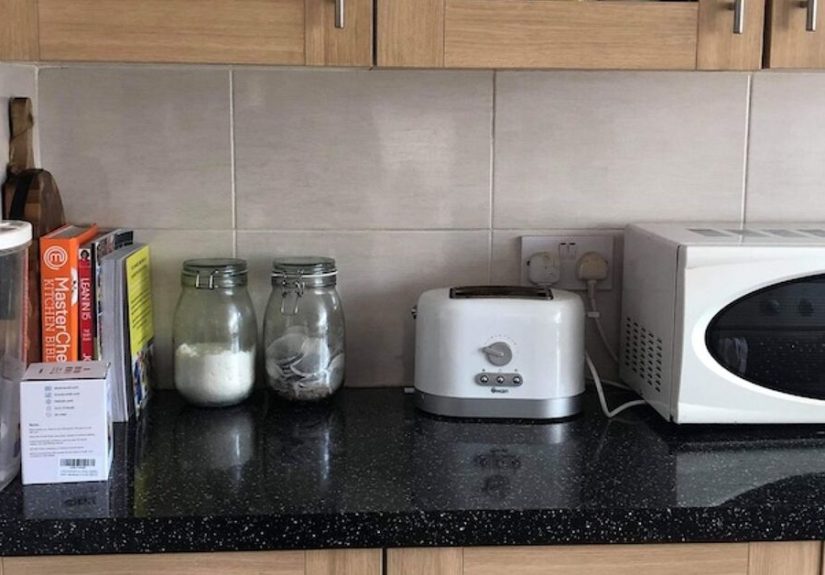
Pro styling tip: Decant frequently used items (coffee, flour, sugar) into matching containers. It’s not just aestheticit reduces visual clutter and makes the space feel “intentional,” like you meant to live there on purpose.
Step 9: The Finishing Touches That Make It Feel “Done”
This is where your rental stops feeling like a unit number and starts feeling like a home:
- Art: Lean framed prints on the counter or hang with removable strips.
- Greenery: A small herb pot or low-light plant adds life instantly.
- Textiles: Coordinated towels, a runner, and maybe a cute curtain (no-drill options exist).
- Counter edit: Keep only what you use daily. The rest goes away.
Budget Breakdown Examples (So This Doesn’t Become a “Luxury Rental”)
Mini refresh ($75–$200)
- New knobs/pulls
- Warm LED bulbs + under-cabinet puck lights
- Washable runner
- Matching towels + a plant
Medium makeover ($200–$600)
- Everything above, plus peel-and-stick backsplash
- Outlet covers and small organization upgrades
- Optional countertop film for a cosmetic update
Big “photo-ready” makeover ($600–$1,200)
- Premium peel-and-stick backsplash + upgraded lighting
- Cabinet wrap or peel-and-stick trim
- Floor solution (rug layering or peel-and-stick floor tiles)
- More robust storage systems
Common Mistakes (And How to Avoid Them)
- Skipping prep: grease is the enemy of adhesives. Clean like you mean it.
- Starting with a visible area: test products on a hidden spot first.
- Assuming walls are level: rentals are full of optical illusions. Use a level.
- Buying exactly the amount you need: get extra tiles/film for errors and future patching.
- Going too trendy: bold patterns can look amazing… or exhausting. Balance trend with timeless elements.
of Real-World Experience: What It Actually Feels Like to DIY a Rental Kitchen Makeover
The internet makes rental kitchen makeovers look like you snap your fingers, apply a peel-and-stick backsplash, and suddenly your kitchen is hosting a candlelit pasta commercial. In reality, it’s more like: you start confidently, then spend 20 minutes trying to remove an outlet cover screw that appears to be welded in place by the ancient magic of landlords past.
My biggest “aha” moment was realizing that lighting is emotional. I used to think under-cabinet lights were a fancy add-on for people who alphabetize their spice jars for fun. Then I installed a simple set of plug-in LED strips and… wow. The same countertops looked cleaner. The same cabinets looked less gloomy. The same backsplash area looked like it had a plan. It didn’t just brighten the workspaceit made the whole kitchen feel more welcoming. It’s the closest thing DIY has to a personality upgrade.
Second lesson: adhesives are only as good as your prep. The first time I tried a peel-and-stick product in a rental kitchen, I cleaned “enough,” which is a phrase that usually translates to “I wiped it with a paper towel and optimism.” A week later, a corner started lifting near the stove. When I redid it properlydegreased, dried completely, and pressed everything down firmlyit held up dramatically better. If you take nothing else from this: clean like you’re trying to impress a very judgmental sponge.
Third lesson: start where mistakes don’t haunt you. If you’re using contact paper on cabinets, begin on a door inside a corner or behind the fridge. Your hands need a warm-up round. The first panel teaches you how fast to peel the backing, how much tension to use, and how to smooth bubbles without creating wrinkles. By panel three, you’re basically a professionalby panel five, you’re giving a TED Talk to your friends about “working with the material.”
Also: seams are a reality. You can minimize them, you can plan them, you can strategically place them where the eye won’t lingerbut if you expect a single-piece, factory-perfect countertop wrap on your first try, you’re setting yourself up for disappointment and an emergency snack run. Instead, aim for “looks great in real life” and “photographs even better.” That’s the sweet spot for rentals.
Finally, the most underrated part of a rental kitchen makeover is the move-out plan. Keeping original hardware, saving leftover tiles, and knowing how you’ll remove adhesives turns a fun weekend project into a confident long-term upgrade. When you can say, “Yes, I can undo all of this,” you stop feeling like you’re borrowing your kitchen and start feeling like you live there.
Conclusion
A rental kitchen makeover DIY isn’t about pretending your apartment is a custom homeit’s about using smart, reversible upgrades to make your daily life better. Start with cleaning and lighting, level-up with hardware and peel-and-stick style, and finish with organization and personality. Do it thoughtfully, keep your originals, and you can enjoy a kitchen you actually like without donating your deposit to the Landlord Vacation Fund.