Table of Contents >> Show >> Hide
- Why ADHD Makes Meals Disappear (Even When You Like Food)
- The Core Fix: Build an “Automatic Eating” System
- Design Your Environment So Food Is Hard to Miss
- What to Eat When Cooking Feels Like Climbing a Mountain
- If Medication Kills Your Appetite: Eat Strategically, Not Randomly
- Meal Prep for ADHD People Who Hate Meal Prep
- A Simple 7-Day Starter Plan (No Moral Judgments Included)
- When to Get Extra Help
- Real-Life Experiences: What Actually Helps (And What Doesn’t)
- Conclusion: Feed the Brain, Not the Fantasy
If you have ADHD, “I forgot to eat” can happen the same way “I forgot to blink” could happen:
you were busy. You were focused. You were in The Zone. And then suddenly it’s 4:37 p.m., your
stomach is filing a formal complaint, and you’re staring into the fridge like it’s a difficult
math problem.
The good news: you don’t need perfect willpower, gourmet meal prep, or a life coach living in
your pantry. What you need is a systemone that works with an ADHD brain (time-blind,
distractible, occasionally powered by raccoons) instead of against it.
Why ADHD Makes Meals Disappear (Even When You Like Food)
1) Time blindness: your day has no “middle”
ADHD can warp time. “I’ll eat in a minute” becomes “I’ll eat after I finish this thing,” and
that thing becomes three things, then seven, then suddenly the sun is setting like a passive-aggressive
reminder. When time feels slippery, meal times don’t feel “real” unless something forces them onto the schedule.
2) Hyperfocus: the productivity trap
Hyperfocus can be a superpoweruntil basic needs vanish from your awareness. You might skip meals
because shifting gears feels impossible, or because you don’t want to break momentum. (Your brain:
“We cannot eat. We are one click away from finishing the entire internet.”)
3) Weak body cues: you don’t feel hunger until it’s LOUD
Some people with ADHD notice internal signals later or less clearly. Hunger may show up as irritability,
headache, shakiness, nausea, or the sudden urge to argue with a printer. If hunger signals are subtle,
you won’t act on them until they’re basically using a megaphone.
4) Medication side effects: appetite can take a vacation
Stimulant medications commonly used for ADHD can suppress appetite. Some people don’t feel hungry during
the medication’s peak effect, then get a wave of hunger later when it wears off. If this is you, the goal
isn’t to “push through” hungerit’s to design eating around your predictable appetite patterns and medication timing.
The Core Fix: Build an “Automatic Eating” System
Here’s the mindset shift that helps most: don’t rely on hunger to remind you to eat. Use
external prompts, low-effort food, and repeatable routines.
Your system should work even on your busiest, messiest, “I have 32 tabs open” days.
Step 1: Put meals on the calendar like they’re appointments
If you’ll show up for a dentist appointment, you can show up for Lunch O’Clock. Create recurring reminders
for breakfast, lunch, and dinner (and optionally 1–2 snacks). The key is to make reminders unavoidable:
- Use a loud alarm (not a gentle ping you can ignore).
- Name it something obvious: “EAT REAL FOOD,” “LUNCH: NOT OPTIONAL,” or “FEED THE HUMAN.”
- Add a second reminder 15 minutes later labeled “Did you actually eat?”
- Use a calendar pop-up so it sits on your screen like a polite bouncer.
Step 2: Anchor eating to things you already do
ADHD brains are great at habits that are chained together. Try pairing food with stable daily anchors:
- After brushing teeth → breakfast (even a “micro-breakfast”).
- After taking medication → a snack (or take medication after breakfast if advised for you).
- Before your first meeting/class → protein + carbs.
- When you plug in your laptop charger → drink water and eat something.
Step 3: Make eating the easiest task of the day
When you’re hungry and focused, the worst moment to cook is… now. Reduce friction by removing steps:
fewer decisions, fewer dishes, fewer minutes between “I should eat” and “I am eating.”
ADHD-friendly rule: If it takes more than 3 steps, you’ll “do it later.” So aim for 1–3 steps.
Design Your Environment So Food Is Hard to Miss
Use visual cues (because ADHD is very “out of sight, out of stomach”)
Put food where you will literally see it:
- A bowl of shelf-stable snacks on your desk (nuts, granola bars, crackers, dried fruit).
- Healthy grab-and-go items at eye level in the fridge (yogurt, cheese sticks, washed fruit).
- A sticky note on your monitor: “Lunch at 12:30.”
- A water bottle + snack next to your keys so you take it when you leave.
Create “snack stations” in your real-life habitats
Think like a wildlife documentarian. Where does the ADHD human spend time? Stock those zones:
- Desk station: protein bar, trail mix, crackers, tuna packets, shelf-stable milk.
- Backpack/bag station: nuts, jerky, peanut-butter crackers, applesauce pouch.
- Car station: water, snack pack, napkins (because life).
What to Eat When Cooking Feels Like Climbing a Mountain
You’re not trying to win a nutrition award. You’re trying to consistently fuel your brain. Start with
“minimum viable meals”: quick combos that cover protein + carbs + fat/fiber so you feel steady longer.
Minimum viable breakfast ideas
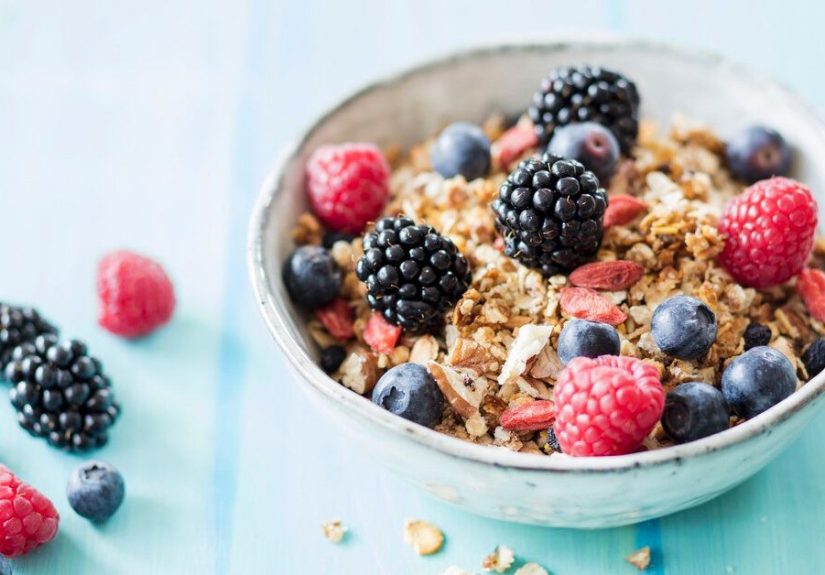
- Greek yogurt + granola + berries (or frozen berries)
- Peanut butter toast + banana
- Microwave oatmeal + nuts + milk
- Egg bites or scrambled eggs + tortilla
- Smoothie: milk/yogurt + fruit + nut butter
Minimum viable lunch ideas
- Rotisserie chicken + bagged salad + dressing
- Turkey/cheese wrap + baby carrots
- Microwave rice + canned beans + salsa + shredded cheese
- Soup + bread + fruit
- Frozen meal you’ll actually eat + side of yogurt
Minimum viable dinner ideas
- Sheet-pan meal: sausage/chicken + frozen veggies (one pan, one timer)
- Stir-fry kit + pre-cooked protein
- Pasta + jar sauce + spinach tossed in at the end
- Breakfast-for-dinner: eggs + toast + fruit
- “Snack plate dinner”: cheese, crackers, fruit, hummus, nuts (yes, it counts)
If Medication Kills Your Appetite: Eat Strategically, Not Randomly
Front-load nutrition when appetite is best
If you take stimulant medication and your appetite drops later, try making breakfast the “biggest”
and most reliable meal of the day. Many clinicians and ADHD organizations suggest eating before
the medication fully kicks in, especially with kids and teensbecause waiting until you feel hungry
may not work.
Use “micro-meals” instead of forcing big plates
When appetite is low, large portions can feel overwhelming. Smaller, more frequent mini-meals can be easier:
half a sandwich now, yogurt later, smoothie after that. Your mission is consistency, not perfection.
Plan for rebound hunger
When medication wears off, hunger can bounce back fast. Keep a ready snack for that window so you don’t
go from “not hungry” to “hangry chaos” in 12 minutes. If afternoons are your crash zone, put a snack in your
bag so it’s there before you need it.
Don’t forget hydration
Thirst can masquerade as fatigue or irritability, and some ADHD meds can make dry mouth or dehydration more likely.
Pair your “eat” reminders with “drink water” prompts. Hydration won’t replace food, but it helps your brain run cleaner.
Meal Prep for ADHD People Who Hate Meal Prep
Traditional meal prep can feel like a weekend-long cooking show you never auditioned for. Instead, do
ingredient prep and assembly prep: you’re making food easier, not making a week of identical containers.
The 15-minute weekly reset
- Wash and portion fruit (or buy pre-washed/pre-cut).
- Stock 2–3 easy proteins: rotisserie chicken, eggs, Greek yogurt, deli turkey, tofu.
- Add 2 “emergency meals”: frozen meals, soup, ramen + add-ons (egg/spinach).
- Make one snack box: nuts + dried fruit + crackers.
Use a default menu to reduce decisions
Decision fatigue is real. Pick “default” options you repeat often:
3 breakfasts, 3 lunches, 3 dinners. If you want variety, rotate one new item per weekdon’t reinvent your entire life every Monday.
A Simple 7-Day Starter Plan (No Moral Judgments Included)
Try this structure for a week. Adjust times based on your schedule.
Daily schedule template
- Morning alarm: Eat something within 60 minutes of waking (even small).
- Lunch alarm: Put food in your body (not just coffee vibes).
- Afternoon snack: 200–300 calories-ish, protein included.
- Dinner anchor: Eat when you finish work/school OR at a fixed time.
- Backup plan: If a meal fails, use an “emergency meal” and move on.
Emergency food list (keep 3 at home at all times)
- Protein shake or smoothie ingredients
- Frozen meal
- Soup + crackers
- Peanut butter + bread
- Yogurt + granola
When to Get Extra Help
Forgetting to eat sometimes is common with ADHD. But if you’re often skipping multiple meals, feeling dizzy,
faint, getting frequent headaches, or noticing big changes in energy, mood, or growth (for kids/teens),
talk with a clinician. Medication adjustments, timing changes, or nutrition support from a registered dietitian
can make a huge differenceespecially if appetite loss is tied to ADHD meds.
Also, if eating feels stressful, scary, or tangled up with body image or control, you deserve support.
This article is about building helpful routinesnot pushing through serious struggles alone.
Real-Life Experiences: What Actually Helps (And What Doesn’t)
The strategies above sound great on paper. Real life, however, is where plans go to get distracted by a new notification.
Here are some common experiences people report when they’re trying to stop forgetting meals with ADHDplus what tends to stick.
(These are composite, everyday scenariosnot medical advice or one-size-fits-all rules.)
The “I forgot because I was winning” experience: One college student described forgetting lunch on days they felt productive.
They’d finally be focused, assignments were flowing, and eating felt like “breaking the spell.” What worked wasn’t motivationit was a rule:
the lunch alarm meant “save your work, take three bites.” Three bites turned into a meal most days. On rough days, three bites still prevented the
late-afternoon crash. The lesson: you don’t have to stop everything; you just have to start eating.
The “nothing sounds good” experience: Another person said medication made food unappealing until evening. They stopped trying to
force big meals at noon and switched to “micro-meals”: yogurt at 11, a smoothie at 1, a snack pack at 3. They kept portions small on purpose so it
didn’t feel like a chore. Surprisingly, the smaller routine made dinner easier too, because they weren’t arriving at the table already cranky and depleted.
The “I will cook… later” experience: A remote worker planned to cook lunch daily and… didn’t. They finally accepted that lunch needed
to be as easy as checking email. They built a “launch pad shelf” in the fridge: pre-cooked protein, bagged salad, tortillas, shredded cheese.
The rule was: lunch must be assemble-only. If an option required chopping, it was “a weekend dream” not “a weekday plan.” Their best line:
“If lunch takes more than 5 minutes, I will become a photosynthesizing houseplant.”
The “I got hangry and made chaotic choices” experience: Several people notice they don’t feel hunger until it’s extremeand then they
eat whatever is fastest. One parent set a snack reminder for their teen right before the usual after-school crash. The snack wasn’t fancy: a sandwich half,
cheese and crackers, or a protein bar plus fruit. The change wasn’t just fewer meltdownsit was that homework became easier because the brain had fuel.
The big win: preventing the crash is easier than recovering from it.
The “I need accountability but I hate being policed” experience: Some folks did well with a buddy system as long as it stayed light.
A friend would text “Did you feed yourself?” at lunch. No lectures, no tracking, no guiltjust a nudge. Others used a shared lunch video call with a
coworker or classmate. It turned eating into a social cue instead of a personal battle. The common thread: external structure helps, but shame makes it worse.
The “I changed one thing and it worked” experience: Most people didn’t overhaul their entire diet. They changed one lever:
an alarm label that made them laugh, a snack basket where they could see it, a default breakfast they could repeat, or a decision to eat before meds kicked in.
ADHD-friendly progress often looks like this: less thinking, fewer steps, more consistency. If you’re eating more often than you were last week, you’re doing it.
Conclusion: Feed the Brain, Not the Fantasy
The goal isn’t to become a perfectly scheduled person who meal-preps in matching glass containers while birds braid your hair.
The goal is to eat often enough that your body and brain stop running on emergency mode.
Start small: one lunch alarm, one snack station, one default breakfast. Make it easy. Make it visible.
Make it repeatable. Then let consistency do the heavy liftingbecause your ADHD brain already has enough jobs.