Table of Contents >> Show >> Hide
- 1. Declutter First (Yes, Really)
- 2. Make Furniture Work Overtime
- 3. Think Vertical: Walls, Doors, and Dead Space
- 4. Use Under-Bed and Under-Furniture Space
- 5. Create “Closets” Without Actual Closets
- 6. Organize by Category, Not by Room
- 7. Keep Surfaces as Clear as Possible
- 8. Get Creative with External and Off-Site Storage
- Real-Life Experiences: Living in a Tiny Home with No Storage
- Conclusion: Your Small House Can Still Feel Big on Function
Living in a small house with almost zero built-in storage can feel like a
permanent game of “Where does THIS go?” One minute you’re just putting
away groceries, and the next there’s a stack of mail on the microwave, a
winter coat on the back of a dining chair, and a rogue laundry basket
lurking in the hallway. The good news: you don’t need more square footage
to feel organized you just need smarter systems.
Home organizers and small-space experts agree on a few big themes:
declutter more often, make your furniture do double duty, think vertical,
and treat every corner like it has a job. With some clever storage ideas,
even a house with no closets (or a single sad cabinet) can run smoothly.
Let’s walk through realistic, budget-friendly strategies to organize a
small house with no storage without turning it into a maze of plastic
bins.
1. Declutter First (Yes, Really)
Before you hang a single hook or buy another cute basket, you need less
stuff. In a small home, clutter builds up faster and has nowhere to hide.
That’s why professional organizers often say organization is 80%
decluttering, 20% containers.
Use the “Zone” Method
Instead of trying to declutter the entire house in one exhausting
weekend, break your home into zones: entry, kitchen counters, bathroom
vanity, bedroom floor, sofa area, and so on. Tackle one zone at a time
and give yourself a clear finish line 20 to 30 minutes per session is
enough to make progress without burning out.
Sort each zone into four categories: keep, donate, trash, and
“not-sure-yet.” Small-space experts often recommend putting the
“not-sure-yet” items in a labeled box with a date on it. If you don’t
reach into that box in three to six months, you’ve got your answer.
Try an “In–Out” Rule
In a home with limited storage, everything has a cost in space. Many
small-home owners follow a “one in, one out” or even “one in, two out”
rule: every time something new comes in, something else leaves. Think of
it as rent for shelf space. It’s simple, but over a year it can prevent
your home from overflowing again.
2. Make Furniture Work Overtime
When you have no closets and very few cabinets, your furniture becomes
your storage system. Choosing multifunctional pieces is one of the most
powerful ways to organize a small house with no storage.
Pick Pieces with Built-In Storage
- Storage ottomans: Great for hiding blankets, toys, or
board games while doubling as extra seating or a coffee table. - Benches with cubbies or lift-up seats: Perfect for
entryways, dining nooks, or under windows. Shoes, bags, or pet supplies
can all live inside. - Platform beds with drawers: These can replace bulky
dressers, freeing up wall space and making bedrooms feel larger. - Storage coffee tables: Look for lift-top designs or
shelves underneath where you can tuck baskets, books, and remotes.
When you’re shopping, check the “inside” and “underneath” of everything.
If it doesn’t store something or do at least two jobs, think twice before
bringing it into a tiny house.
Use Mobile Furniture to Create “Zones”
Rolling carts, narrow trolleys, and bar carts are beloved in small-space
organizing for a reason. They’re like portable closets:
- In the kitchen, a cart can hold pantry staples, small appliances, or a
coffee station. - In the bathroom, it can act as a mini-linen closet for towels and
toiletries. - In the office or living room, it can store craft supplies, homework
materials, or tech gadgets.
When you’re done, just roll it into a corner or a hallway, and your space
instantly feels calmer.
3. Think Vertical: Walls, Doors, and Dead Space
In a small house with no storage, your walls aren’t just for art
they’re undeveloped real estate. Using vertical storage helps you free up
floor space and keeps surfaces clutter-free.
Add Shelves Where You’d Never Expect Them
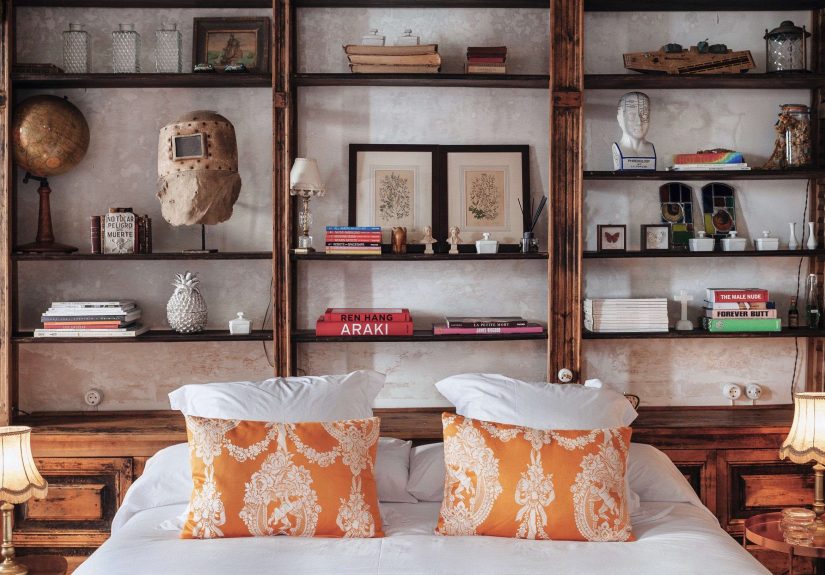
Home designers often recommend tall, narrow shelving instead of short,
wide units in small spaces. Floor-to-ceiling bookcases, ladder shelves,
or wall-mounted shelves can hold:
- Books and décor
- Extra dishes or pantry items
- Office supplies or craft bins
- Bathroom products, towels, and baskets
Keep the visual clutter down by using matching bins, boxes, or baskets.
A wall of mismatched containers can make a small room feel busier than it
really is, while coordinated storage looks intentional and tidy.
Use the Backs of Doors
The backs of doors are storage goldmines. Over-the-door organizers work
for:
- Shoes, scarves, and hats
- Cleaning supplies in a laundry area
- Snacks and pantry items in a kitchen with no pantry
- Makeup and toiletries in a tiny bathroom
If you’re renting and worried about damage, look for no-drill, hook-style
organizers or tension-rod systems that rely on pressure instead of
screws.
Say Hello to Hooks and Pegboards
Hooks are one of the simplest tools for organizing a small house with no
storage. A row of hooks by the entry can replace a full closet for coats,
bags, and umbrellas. Pegboards in kitchens, offices, or craft rooms can
hold tools, utensils, gadgets, and supplies while keeping everything
visible and easy to grab.
4. Use Under-Bed and Under-Furniture Space
Small-space pros talk a lot about “dead space” areas that aren’t doing
anything useful yet. Under your bed, sofa, and low cabinets are classic
examples. In a home with no closets, these spots can act like your
hidden storage rooms.
Upgrade What’s Under the Bed
If your bed has clearance underneath, use it for off-season clothing,
extra bedding, holiday décor, or memorabilia. Choose:
- Rolling under-bed drawers for heavy items like books
or shoes. - Soft storage bags for bulky but light items like
blankets and sweaters. - Labeled bins so you’re not pulling out four containers
just to find extra pillowcases.
Look Under Sofas and Cabinets
A low-profile bin under the sofa can hold games, puzzle boxes, or seldom
used tech. Shallow bins under dressers and sideboards can hide cleaning
supplies, pet food, or bulk paper products. Just be sure anything you
store there is something you don’t need every single day.
5. Create “Closets” Without Actual Closets
No closets? You can build your own storage zones out in the open and make
them look stylish.
Use Open Wardrobes and Clothing Racks
A sturdy, open garment rack with a shelf offers hanging space for
clothes, plus room for boxes or baskets underneath. Add attractive
hangers and a matching set of storage bins, and your “closet” suddenly
looks like a boutique display instead of overflow.
In bedrooms, consider:
- A wardrobe cabinet instead of a traditional closet.
- A trunk or storage bench at the foot of the bed.
- Wall hooks for frequently worn coats, robes, and bags.
Build a Mini-Mudroom in the Entry
Even if your front door opens right into the living room, you can still
create an organized entry zone. Combine:
- A narrow console table or bench.
- Hooks or a rail on the wall for coats and bags.
- Baskets or bins for shoes, dog leashes, or reusable shopping bags.
The key is to give every everyday item a predictable landing spot, so it
doesn’t migrate all over the house.
6. Organize by Category, Not by Room
When you’re trying to organize a small house with limited storage, it’s
helpful to think in categories instead of rooms. For example:
- All cleaning supplies in one area, even if you clean multiple rooms.
- All office supplies in one caddy, even if you work at the kitchen table.
- All tools in one toolbox, instead of scattered drawers.
Use bins or baskets with clear labels like “batteries,” “light bulbs,”
“first aid,” and “party supplies.” That way, when you need something, you
know which basket to grab instead of digging through half the house.
7. Keep Surfaces as Clear as Possible
In a small space, visual clutter is just as stressful as actual clutter.
Even if things technically have a home, crowded counters and tables can
make your space feel chaotic.
Give Everyday Items a “Home Base”
Create small trays or containers for items that naturally land in the
same spot:
- A tray by the door for keys, sunglasses, and a wallet or small bag.
- A lidded box on the coffee table for remotes, chargers, and earbuds.
- A small organizer on the kitchen counter for frequently used utensils
or spices.
When everything has a defined “home base,” it’s easier to reset your
surfaces at the end of the day.
Adopt Tiny Daily Habits
You don’t have to do a full nightly cleaning routine, but a few
small-space-friendly habits make a huge difference:
- Spend five minutes each night putting things back in their zones.
- Take donations out of the house as soon as the bag is full.
- Do quick micro-tidies while waiting for the microwave or kettle.
In a house with no storage, these little habits keep clutter from
snowballing into weekend-long cleanups.
8. Get Creative with External and Off-Site Storage
Sometimes you truly have more belongings than your home can hold, even
after decluttering. In that case, external storage can be part of a smart
organizing plan as long as it’s intentional.
- Use decorative boxes and trunks: These can sit out in
the open as décor while quietly holding seasonal items, paperwork, or
keepsakes. - Consider a small storage unit: This can be worth it if
you have items you genuinely need (like tools, sports gear, or family
heirlooms) but use infrequently. Just avoid treating it as a
“procrastination closet” for random clutter. - Borrow space: If you have a garage, shed, or even a
trusted family member with room, store labeled bins of truly seasonal
items there: holiday décor, camping gear, or baby keepsakes.
The goal isn’t to hide clutter off-site it’s to intentionally house the
items that simply don’t need to live in your limited daily space.
Real-Life Experiences: Living in a Tiny Home with No Storage
Organizing a small house with no storage isn’t just a Pinterest project;
it’s a daily lifestyle. Here’s what it can look like in the real world.
Imagine a couple living in a 600-square-foot rental: one short kitchen
cabinet run, no pantry, no hallway closet, and a single bedroom closet
barely wide enough for one person’s wardrobe. At first, everything felt
like a compromise. Coats hung on the backs of chairs, shoes piled by the
door, and mail formed a permanent drift on the table. They felt like they
were constantly cleaning but never actually catching up.
The turning point came when they stopped asking, “Where can we put this?”
and started asking, “Does this really need to live here?” They did a
ruthless declutter especially duplicates, “just in case” items, and
sentimental things that had been kept out of guilt rather than joy.
Suddenly, the volume of stuff shrank enough that organizing felt
possible.
Next, they invested in a few key pieces: a storage ottoman to corral
living room clutter, a narrow rolling cart to act as a portable pantry,
and an entry bench with cubbies and hooks. Every purchase had to pass a
test: it needed to store something, solve a problem, and still look good
in a small room.
Vertical storage became their best friend. A tall bookcase in the dining
area held dishes, cookbooks, and baskets of extra kitchen gear. Floating
shelves went up in the bathroom to handle towels and toiletries. Over the
bedroom door, a simple hanging organizer suddenly freed up half the
dresser drawers by taking over sock and accessory duty.
They also designed simple daily habits to keep chaos in check. Keys and
wallets always went in the same small tray by the door. Mail was sorted
immediately into recycling, action items, and “file later” with a slim
folder on the shelf for paperwork that truly needed to be saved. They
spent five minutes each night doing a quick reset: dishes into the sink,
laundry into a basket, things returned to their zones.
After a few months, something surprising happened: the house didn’t feel
like a cramped, cluttered box anymore. It still wasn’t big, and there
still weren’t many cabinets, but it felt intentional. Guests would
comment that the space felt cozy and calm, and the couple realized the
organization systems were doing a lot of quiet work behind the scenes.
The biggest lesson from their experience? You don’t organize a small
house with no storage just once and call it done. It’s an ongoing
conversation between you, your stuff, and your space. As your life
changes new hobbies, different work schedules, growing kids your
systems will need small tweaks. But once you’ve built a foundation with
multifunctional furniture, vertical storage, and clear zones, those
tweaks are simple instead of overwhelming.
In the end, a small home with almost no storage can actually help you
live more intentionally. You become choosier about what you buy, more
thoughtful about what you keep, and more aware of how your space affects
your stress level. And that might be the biggest hidden benefit of all.
Conclusion: Your Small House Can Still Feel Big on Function
Organizing a small house with no storage isn’t about perfection or
turning your home into a showpiece. It’s about making sure your space
works for your real life. By decluttering in realistic stages, choosing
multifunctional furniture, thinking vertically, using under-furniture
zones, and creating closets where none exist, you can transform even the
most storage-deficient home into a more peaceful, functional place to
live.
Start small: pick one zone, one shelf, or one corner today. Each tiny
step makes your small house feel a little more like a home that fits you,
not the other way around.