Table of Contents >> Show >> Hide
- Step 1: Name the Feeling (It Helps You Pick the Right Fix)
- Step 2: The 60-Second “Don’t Fall” Reset
- When “Off Balance” Needs Immediate Medical Attention
- Why Balance Goes Sideways (The Short Version)
- Build “Instant-Access Balance” With a Daily 10-Minute Routine
- Minute 1–2: Sit-to-Stand (the “anti-wobble” foundation)
- Minute 3–4: Heel-to-Toe Walk (like you’re on an imaginary tightrope)
- Minute 5–6: Single-Leg Stand (the classic for a reason)
- Minute 7–8: Side Steps + Backward Steps (real-life balance training)
- Minute 9–10: Gentle head turns while standing (vestibular-friendly)
- Fast Lifestyle Tweaks That Make You Steadier This Week
- What to Ask a Clinician (So You Don’t Get Hand-Waved)
- Quick FAQ
- Real-Life Experiences: 5 Quick Balance Comebacks (Illustrative Examples)
- Conclusion: Steady Wins the Day
- SEO Tags
One second you’re walking like a normal human. The next, the floor feels like it’s trying to slide out from under you. If you’ve ever had that “whoawhy am I wobbling?” moment, you’re not alone. Balance is a team sport: your inner ears (vestibular system), eyes, muscles, joints, nerves, blood pressure, hydration, and brain all have to cooperate. When one of them decides to take an unscheduled coffee break, you feel it.
This guide covers what to do right now to steady yourself, how to tell the difference between common causes (lightheadedness vs. vertigo vs. plain old clumsiness), and how to build “backup balance” with simple exercises. We’ll keep it practical, a little funny, and very focused on not face-planting.
Safety first: If you have sudden, severe dizziness or vertigo with chest pain, a sudden severe headache, fainting, trouble speaking, one-sided weakness/numbness, new vision changes, trouble walking, or you just hit your head, treat it as an emergency and seek immediate medical care.
Step 1: Name the Feeling (It Helps You Pick the Right Fix)
“Off-balance” is a big umbrella. Figuring out which kind you have is like choosing the right key for a lock. Here are the most common flavors:
- Lightheadedness (might faint): often tied to dehydration, low blood pressure, standing up too fast, or skipped meals.
- Vertigo (spinning or tilting): commonly inner-ear related, sometimes triggered by head position changes (like rolling in bed).
- Disequilibrium (unsteady, “drifty”): can be vision issues, nerve problems, medication effects, fatigue, or muscle weakness.
- Wobble-from-worry (anxiety/hyperventilation): fast breathing can make you feel floaty, tingly, and unstable.
Quick self-check: Did it start when you stood up? Think blood pressure/hydration. Did it start when you turned your head or rolled over? Think vertigo patterns. Did it build slowly with fatigue, illness, or new meds? Think whole-system recalibration.
Step 2: The 60-Second “Don’t Fall” Reset
If you feel yourself tipping into a wobble, your goal is simple: stop the chain reaction. Use this fast sequence:
1) Stop, widen, and “lock in” a stable point
- Stop moving. Momentum is not your friend right now.
- Widen your stance to shoulder-width (or wider). This instantly increases stability.
- Grab a stable surface (counter, wall, heavy chair). If one is nearby, use itpride heals slower than bruises.
- If you’re on stairs or in a risky spot, sit down. Yes, even if you feel dramatic doing it.
2) Anchor your eyes (your brain loves visual “truth”)
Pick a stationary object at eye level (a doorknob, a picture frame, anything that is not moving). Keep your gaze on it for 10–20 seconds. For many people, this “visual anchor” reduces the sensation of drifting or spinning because it gives your brain a steady reference.
3) Reset your breathing (especially if anxiety is involved)
If you’re breathing fast, your body can act like it’s in emergency mode, and you may feel lightheaded or unsteady. Try: inhale gently through your nose for 3–4 seconds, then exhale longer for 5–6 seconds. Repeat 4–6 times. Long exhale = “we’re safe” signal.
4) Do a quick “circulation boost” if you stood up fast
If the dizziness hit right after standing, it may be a drop in blood pressure (orthostatic/postural hypotension). Try these while holding onto something:
- March in place for 10–20 seconds.
- Calf pumps: rise onto your toes and lower slowly 10 times.
- Leg squeeze: tighten your thighs and glutes for 5 seconds, relax, repeat 5 times.
If symptoms are strong, the simplest move is still the best: sit or lie back down until it passes.
5) Hydrate smartly
Dehydration can make balance feel “sloshy” and worsen low blood pressure. Sip water slowly. If you’ve been sweating, sick, or not eating well, an oral rehydration drink can help. If you have heart, kidney, or salt-sensitive blood pressure issues, ask a clinician before increasing salt.
6) If it’s spinning vertigo, minimize triggers and consider the pattern
If the room spins when you roll over, look up, or tilt your head, one common cause is benign paroxysmal positional vertigo (BPPV). BPPV is often treated with a repositioning sequence (like the Epley maneuver) that moves inner-ear crystals back where they belong. Many people learn a home versionbut it’s best done after proper diagnosis and instruction, because not all vertigo is BPPV, and doing the wrong maneuver can make you feel worse.
When “Off Balance” Needs Immediate Medical Attention
Dizziness is common, but some combinations are not “wait and see.” Get urgent care right away if balance trouble is new and severe and comes with any of the following:
- One-sided weakness, numbness, facial droop, trouble speaking, confusion, or sudden vision changes
- Fainting, severe shortness of breath, or chest pain
- A sudden, severe headache that’s unusual for you
- New inability to walk, severe coordination problems, or repeated falls
- Head injury (especially with vomiting, confusion, or worsening symptoms)
- Sudden hearing loss (with or without vertigo)
Why Balance Goes Sideways (The Short Version)
Balance relies on three major inputs: inner ear (motion sensors), vision (where you are in space), and proprioception (signals from muscles, joints, and nerves about your body position). Your brain blends those signals and sends commands to your muscles to keep you upright.
Common disruptors include inner-ear problems, infections, migraine-related dizziness, anxiety/hyperventilation, medication side effects, nerve conditions like peripheral neuropathy, vision issues, dehydration, and blood pressure changes. Aging can amplify several of these, mostly because strength, reaction time, and sensory input tend to decline unless you actively train them.
Build “Instant-Access Balance” With a Daily 10-Minute Routine
The fastest way to regain balance in the moment is good… but the real superpower is improving your baseline stability so those moments happen less often. Here’s a simple routine you can do at home. Use a counter or sturdy chair for support.
Minute 1–2: Sit-to-Stand (the “anti-wobble” foundation)
- Sit in a chair, feet under knees.
- Stand up without using hands if possible; sit back down slowly.
- Do 8–12 reps. Strong legs = steadier walking.
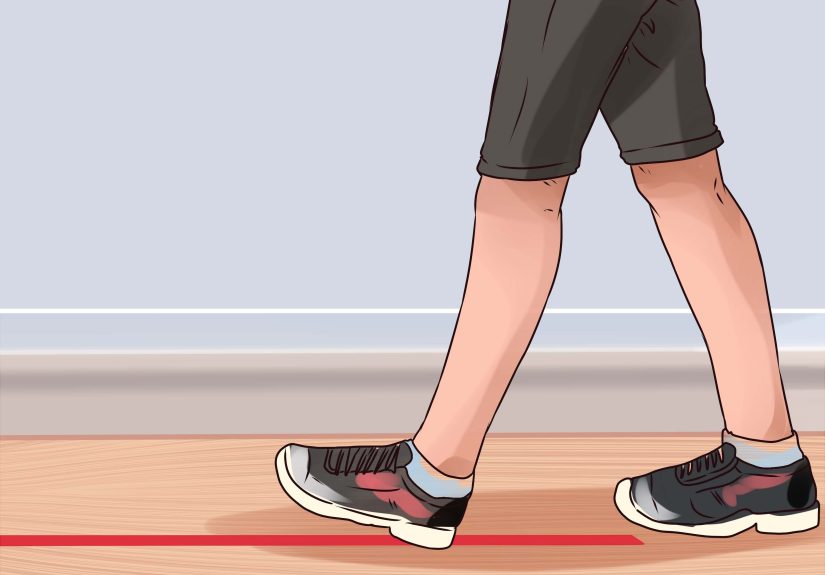
Minute 3–4: Heel-to-Toe Walk (like you’re on an imaginary tightrope)
- Walk 10 steps with the heel of one foot touching the toes of the other.
- Turn around and return. Do 2 rounds.
- Hold a wall lightly if neededthis is training, not a circus audition.
Minute 5–6: Single-Leg Stand (the classic for a reason)
- Stand tall, hold a counter lightly.
- Lift one foot and balance up to 10–30 seconds.
- Switch sides. Do 2 rounds each side.
Minute 7–8: Side Steps + Backward Steps (real-life balance training)
- Take 10 slow side steps to the right, then 10 to the left.
- Then take 10 small steps backward (use a hallway or counter for safety).
Minute 9–10: Gentle head turns while standing (vestibular-friendly)
If turning your head makes you feel unsteady, practice controlled head turns while your feet stay planted. Keep it small and slow at first. If you have diagnosed vestibular issues, a clinician may prescribe specific gaze stabilization drills (like VOR exercises) tailored to you.
Progression tip: Once these feel easy, reduce hand support, close your eyes briefly (only if safe), or try them on a softer surface like a yoga mat. Small changes make your balance system adapt.
Fast Lifestyle Tweaks That Make You Steadier This Week
Check your “balance sabotagers”
- Sleep debt: tired brains process balance signals more slowly.
- Alcohol: even small amounts can impair coordination and worsen vertigo for some people.
- Skipping meals: blood sugar dips can feel like dizziness and shakiness.
- Dehydration: common, sneaky, and surprisingly powerful.
- New medications or dose changes: many can cause dizziness or lightheadednessask your clinician or pharmacist.
Make your home less “trip-ified”
- Improve lighting in hallways and stairs.
- Secure rugs and remove clutter from walkways.
- Use non-slip mats in bathrooms and consider grab bars if you’re at fall risk.
- Wear supportive shoes indoors if you tend to slip or feel unsteady.
What to Ask a Clinician (So You Don’t Get Hand-Waved)
If balance issues recur, disrupt daily life, or come with other symptoms, a targeted evaluation can be worth it. Consider asking about:
- Whether your symptoms match a positional vertigo pattern (and whether a repositioning maneuver is appropriate)
- Orthostatic blood pressure checks (lying, sitting, standing)
- Medication side effects or interactions
- Vision/hearing screening and inner-ear assessment
- Neuropathy or other nerve-related causes if you have numbness/tingling
- Referral to physical therapy for balance training or vestibular rehabilitation
Quick FAQ
“Is dizziness the same as vertigo?”
Not always. Dizziness can mean lightheadedness, faintness, or unsteadiness. Vertigo usually means a spinning or motion illusion, often linked to the inner ear.
“What’s the fastest way to stop a wobble?”
Stop moving, widen your stance, grab a stable surface, anchor your eyes, and slow your breathing. If it started after standing, sit down and try gentle leg pumps before rising again.
“Do balance exercises really help?”
Yesespecially when they build leg strength and teach your brain to respond quickly to slips or trips. Structured exercise programs are widely recommended for reducing fall risk in older adults, and they help at many ages.
Real-Life Experiences: 5 Quick Balance Comebacks (Illustrative Examples)
The stories below are common “patterns” clinicians and therapists hearshared here as composite examples. If one sounds familiar, you’ll know what to try first (and what to avoid).
1) The “I stood up like a toaster” moment
A desk worker pops up after a long meeting, and suddenly everything goes sparkly and weirdlike the room is buffering. The fix was hilariously unglamorous: sit back down, sip water, and do calf pumps before standing again. After a few repeats, they learned the secret cheat code: stand in stagessit, pause, standespecially when dehydrated or stressed.
2) The “bed roll of doom”
Someone rolls over in bed andbaminstant spinning. They grab the mattress like it owes them money. Once evaluated for positional vertigo, a clinician-guided repositioning maneuver helped. The big lesson: when vertigo is triggered by specific head positions, “push through it” often makes you miserable. Moving slowly, using a visual anchor, and getting properly assessed can be a game-changer.
3) The “I forgot humans need water” wobble
A weekend gardener is outside for “just 20 minutes” (which becomes two hours), stands up after crouching, and the world tilts. They steady themselves on a fence, drink water, and feel better in minutes. The next time, they brought a bottle and took micro-breaks. The humor here is cruel: your balance system is fancy, but it still runs on basic suppliesfluids, fuel, and electrolytes.
4) The “panic-breathing makes my legs feel like noodles” experience
A person in a crowded store feels woozy, then starts breathing faster, which makes the woozy feeling worse. Their fix wasn’t a magical supplement; it was a longer exhale and a grounding routine: eyes on a fixed point, feet wide, shoulders down, slow breathing. Within a minute, the shaky-floaty sensation eased. The takeaway: sometimes the body is safe, but the alarm system is loud.
5) The “my feet and my brain aren’t texting each other” problem
An older adult notices they feel unsteady in dim light and on uneven ground. Their clinician suspects reduced sensation in the feet. A simple plan helped: better lighting, supportive shoes, and daily balance drills near a counter. Over weeks, strength improved and confidence returned. Not perfect, but betterand fewer “near falls.” Sometimes regaining balance is less about one dramatic fix and more about stacking small wins until your body trusts itself again.
Conclusion: Steady Wins the Day
When balance disappears, it feels urgentand it is. The quickest path back is almost always: stop, stabilize, anchor your gaze, slow your breathing, and choose the right fix for the cause (circulation, hydration, vertigo patterns, or anxiety-driven hyperventilation). Then, build your baseline with a short daily routine that strengthens legs, trains coordination, and improves your balance reflexes.
If symptoms keep returning, don’t settle for “it’s probably nothing.” Recurrent dizziness, vertigo, or imbalance deserves a real explanation. Getting the right diagnosis (and the right exercises) is how you turn “random wobble” into “handled.”