Table of Contents >> Show >> Hide
- Why Henna Is So Hard to Remove
- How to Remove a Henna Stain: 9 Steps
- Step 1: Wash the Area With Warm Water and a Gentle Cleanser
- Step 2: Soften the Skin First
- Step 3: Try Micellar Water, Baby Oil, Coconut Oil, or Petroleum Jelly
- Step 4: Gently Exfoliate the Surface
- Step 5: Do a Salt-Water Soak for Stubborn Areas
- Step 6: Use a Baking Soda Paste on Hands or Feet Only
- Step 7: Spot-Treat Carefully With Hydrogen Peroxide or Rubbing Alcohol
- Step 8: Moisturize and Repeat Over a Day or Two
- Step 9: Know When to Stop and Call a Professional
- What Not to Do
- If the Henna Stain Is on Clothes, Towels, or Upholstery
- What People Usually Experience When Trying to Remove a Henna Stain
- Final Thoughts
- SEO Tags
Note: This guide focuses on safely fading traditional brown henna from skin. If you have blistering, swelling, intense itching, or pain after a temporary tattooespecially after so-called black hennaskip the home remedies and get medical advice.
Henna is lovely when you want it and wildly committed when you do not. One minute, it is a delicate floral pattern for a wedding, festival, or just a “why not?” kind of Saturday. The next minute, it is a suspicious orange-brown smudge on your palm, wrist, or hairline, and suddenly you are negotiating with your own skin.
The frustrating part is that henna is not sitting loosely on top of the skin like spilled coffee on a countertop. It bonds to the outer layer of skin, which means there is no instant-delete button. Most of the time, the real goal is not to “erase” henna in 30 seconds. It is to fade it faster, safely, and without turning a stain problem into a skin problem.
This guide walks you through nine practical steps, starting with the gentlest methods and slowly moving toward stronger options. Think of it as the stain-removal version of good life choices: start mild, stay patient, and avoid anything that sounds like it belongs in a garage instead of on your face.
Why Henna Is So Hard to Remove
Henna stains because the dye molecule binds to keratin in the outermost skin cells. That is why the color lingers and then gradually fades as those surface cells shed naturally. In plain English, henna does not wash off the way watercolor paint does. It fades as your skin renews itself, so the safest removal methods work by gently cleansing, softening, and exfoliating that top layer.
That is also why time matters. Fresh, surface-level staining is easier to lighten than an older stain that has had hours to settle in. If you catch it early, great. If not, do not panic. You still have optionsyou just need the kind that are patient, not dramatic.
How to Remove a Henna Stain: 9 Steps
Step 1: Wash the Area With Warm Water and a Gentle Cleanser
Start with the least exciting step because, inconveniently, it is often the smartest one. Wash the stained area with warm water and a gentle cleanser or mild soap. Use your fingertips, not a rough scrub brush, not a kitchen sponge, and definitely not the kind of determination that ends with regret.
Work the cleanser over the stain for 20 to 30 seconds, rinse well, and pat dry. If the henna is on your hands, repeat this a few times throughout the day. Repeated gentle washing can help fade the stain without irritating your skin. This is especially useful if the stain is fresh or still mostly superficial.
If the stain is near your face or hairline, be extra gentle. The skin there is thinner and easier to irritate. Lukewarm water is better than hot water, and a soft towel is better than vigorous rubbing. Your skin is not a frying pan.
Step 2: Soften the Skin First
Before you try anything exfoliating, soften the top layer of skin. A warm shower, a short bath, or a warm wet washcloth held against the stain for a few minutes can help loosen surface cells. This is one of those boring-but-effective steps people skip because it lacks drama, but it makes the next steps work better.
Softened skin responds more easily to gentle fading methods. It also reduces the temptation to scrub too hard. If the henna is on your palms, fingers, or feet, soaking the area briefly can be especially helpful because those areas tend to hold deeper, darker stains.
Do not overdo the soak. You want softened skin, not irritated skin. Five to ten minutes is usually enough to set the stage.
Step 3: Try Micellar Water, Baby Oil, Coconut Oil, or Petroleum Jelly
Once the skin is clean and softened, move on to oil-based or gentle cleansing products. Micellar water is a solid choice for sensitive areas. It is often used for makeup removal, and it can help lift pigment from the skin without feeling harsh.
If you do not have micellar water, try baby oil, coconut oil, olive oil, or a thin layer of petroleum jelly. Apply it over the stained area, let it sit for 10 to 20 minutes, and then wipe or wash it off gently. Oils are useful because they can help loosen surface pigment while also protecting your skin from getting dried out.
This is one of the best options for the forehead, hairline, wrists, and other spots where you want fading without aggressive rubbing. If you use oil on the face, make sure to cleanse it off afterward so you are not trading a henna stain for a breakout.
Step 4: Gently Exfoliate the Surface
Now that the stain has been washed and softened, gentle exfoliation can help speed fading. A soft washcloth, exfoliating mitt, or mild facial or body scrub can remove some of the stained surface cells. The word gentle is doing a lot of work here, so let it.
Use small circular motions for about 20 to 30 seconds, then rinse and check the area. On the hands or feet, a sugar or salt scrub may be fine. On the face, stick to something milder, such as a gentle exfoliating cleanser. If you already use products with acids like glycolic acid or salicylic acid, those may help, but go slowly and never pile multiple irritating products on top of one another.
If your skin stings, turns very red, or feels raw, stop. Faster fading is not worth a damaged skin barrier.
Step 5: Do a Salt-Water Soak for Stubborn Areas
If the stain is hanging on like it pays rent, try a salt-water soak. Mix about one teaspoon of salt into one cup of warm water, then soak the stained area for several minutes. This can help loosen dead skin cells and encourage gradual fading.
This method tends to work well for fingers, palms, and feet, where henna often stains more deeply. You can also follow the soak with a very gentle rub using a soft cloth. Think “encourage the stain to leave,” not “declare war.”
Salt-water soaks are simple, inexpensive, and easy to repeat. They are also less aggressive than jumping straight to alcohol or peroxide, which is why they deserve a stop on the ladder before the stronger stuff.
Step 6: Use a Baking Soda Paste on Hands or Feet Only
For tougher stains on thicker skin, mix baking soda with a little warm water until it forms a loose paste. Apply it to the stain, leave it on briefly, and then rub very gently before rinsing. Baking soda has mild abrasive properties, which is why it is better suited to hands, fingers, and feet than to cheeks, eyelids, or the area around your lips.
This is not a “more is better” situation. A small amount, short contact time, and light pressure are enough. If the skin feels tight or irritated afterward, wash it off completely and apply moisturizer.
Some people also combine baking soda with a mild cleanser for extra slip. That can work on sturdy skin, but skip it if the area is already dry, cracked, or sensitive.
Step 7: Spot-Treat Carefully With Hydrogen Peroxide or Rubbing Alcohol
If gentler methods are not cutting it, a cautious spot treatment may help. A small amount of hydrogen peroxide or rubbing alcohol on a cotton pad can lighten stubborn henna, especially on hands or fingertips. The key word is small. These products can be drying and irritating, so they should be used sparingly and never on broken skin.
Dab the product lightly onto the stain for a short time, then rinse thoroughly with soap and water. Follow immediately with moisturizer. Do not use this method repeatedly in one sitting, and do not use it on delicate facial skin unless you know your skin tolerates it well.
Also, please do not start improvising with random cabinet chemistry. No bleach. No ammonia on your skin. No mixing products because the internet once suggested “a hack.” Your skin deserves better than becoming a science fair.
Step 8: Moisturize and Repeat Over a Day or Two
This step is less glamorous than the others, but it matters. After cleansing, exfoliating, or spot-treating, apply a fragrance-free moisturizer or a little petroleum jelly. Keeping the skin comfortable helps prevent irritation, flaking, and overcorrection.
Henna usually fades best with repeated gentle sessions, not one heroic attack. Wash, soften, lighten, moisturize, and then come back later. If you repeat the gentler steps over 24 to 48 hours, you often get better results than you would from one aggressive round that leaves the skin angry.
If you are dealing with bridal mehndi, festival henna, or a decorative stain on the hands, patience really is part of the technique. Annoying? Yes. Effective? Also yes.
Step 9: Know When to Stop and Call a Professional
If the area becomes red, swollen, painful, blistered, or intensely itchy, stop home treatment. Those are signs that the problem may no longer be “a stain that will not leave,” but “skin that is not happy.”
This is especially important if the stain came from black henna. Black henna can contain para-phenylenediamine, or PPD, which is known to trigger strong allergic reactions in some people. If you have trouble breathing, major swelling, hives, or severe pain, get urgent medical help. If a rash or irritation lingers, it is time to speak with a dermatologist.
There is no prize for removing a henna stain at home if the cost is a burned, scraped, or inflamed patch of skin.
What Not to Do
- Do not scrub aggressively. It can irritate the skin and make the area look worse.
- Do not use bleach, drain-cleaner-level logic, or strong household chemicals on skin.
- Do not keep layering exfoliants, acids, alcohol, and peroxide in one marathon session.
- Do not use nail polish remover on your face, neck, or irritated skin.
- Do not ignore blistering, swelling, or severe itching after black henna.
If the Henna Stain Is on Clothes, Towels, or Upholstery
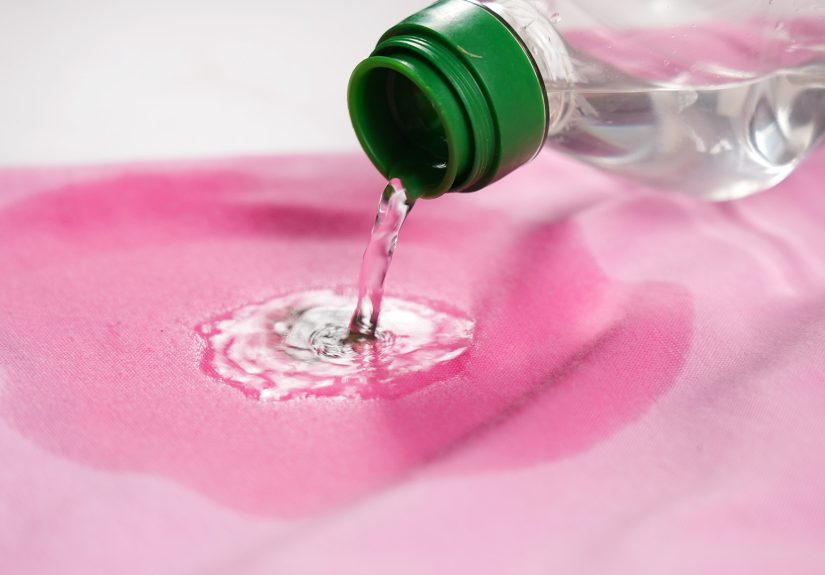
Henna does not limit its chaos to skin. If it lands on fabric, act fast. First, blot the stain with a paper towel or cloth. Do not rub, because rubbing can push the pigment deeper into the fibers. Rinse the area, then pre-treat with a stain remover or a bit of liquid laundry detergent.
Wash the item according to the care label, and do not put it in the dryer until you are sure the stain is gone. Heat can set the stain and make the whole situation much more permanent. For white or color-safe items, a color-safe oxygen bleach product may help after pre-treatment.
For upholstery or carpet, always test in a hidden spot first. A paste of baking soda and water or a fabric-safe detergent treatment may help, but delicate materials are less forgiving than your average bath towel. In other words, patch-test like your dignity depends on it.
What People Usually Experience When Trying to Remove a Henna Stain
One of the most common experiences people have with henna stain removal is simple disbelief. The stain looks temporary, so they assume it will come off like makeup, self-tanner, or a smudge of food coloring. Then they wash once, look down, and realize the henna is still there, looking calm, confident, and completely unbothered. That is usually the moment people learn that henna behaves more like a slow-fading skin dye than a quick surface stain.
Another very normal experience is seeing the stain change before it disappears. Fresh henna can look bright orange at first, then deepen into a richer brown over time. When people begin trying to remove it, the color often fades unevenly. The center may stay darker while the edges lighten first. Fingertips may hang onto color longer than the wrist. The palm may look patchy for a day or two. This does not mean the methods are failing. It usually means the stain is lifting gradually from different layers of skin at different speeds.
People also tend to notice that body placement changes everything. A tiny accidental dot on the forearm may fade fairly quickly with washing and light exfoliation. A stain on the fingers, palms, or feet is often more stubborn. That thicker skin can hold a stronger stain, which is why people frequently feel frustrated when the exact same method works beautifully on one body part and barely makes a dent on another. Henna has favorites, and unfortunately, hands and feet are on the list.
There is also the emotional timeline, which deserves its own small award. Day one is optimism. Day two is a mild internet spiral. Day three is usually a negotiation phase where people promise they will never freehand with henna again if the universe will just remove the thumb stain before Monday morning. This is completely understandable, especially if the stain is visible for work, school, photos, or an event.
Many people learn the hard way that over-scrubbing backfires. They start with a reasonable washcloth situation and then, twenty minutes later, have accomplished very little except creating pink, irritated skin around a still-visible stain. The stain may look darker simply because the surrounding skin is inflamed. In those cases, the best move is often to stop, moisturize, and come back later with a gentler plan.
Another common experience is that oils feel too mild at first but end up being surprisingly useful over time. People often expect a dramatic “wipe and vanish” effect. Instead, what they get is quieter progress: the stain softens, the edges blur, and each wash seems to remove a bit more. It is not cinematic, but it is realistic. Henna removal is usually more slow fade than magic trick.
For people who got a stain from a hairline application, a bridal event, or festival art, the experience is often part practical and part funny. They may not mind the design itself, but they do mind the accidental blob on the knuckle that makes the whole hand look like it lost a paintball fight. In those cases, targeted fading works best. You do not need to attack the entire areajust the accidental stain that overstayed its welcome.
The overall lesson from most real-world henna removal attempts is this: the best results usually come from calm, repeated care. Gentle washing, oil, light exfoliation, a careful spot treatment if needed, and moisturizer in between. Not glamorous, not thrilling, and definitely not the kind of content that becomes an action movie. But it is effective, skin-friendly, and much less likely to leave you with a new problem while solving the old one.
Final Thoughts
If you are trying to remove a henna stain, the most effective strategy is to think in stages. Clean the area, soften the skin, try oil or micellar water, exfoliate gently, and only then consider stronger spot treatments for stubborn areas. Henna fades because the outer skin sheds, so every safe removal method is really just helping that process move along a little faster.
The secret is not brute force. It is patience plus smart technique. Treat your skin kindly, avoid harsh shortcuts, and remember that a slightly slower fade is better than a fast trip to irritation town.