Table of Contents >> Show >> Hide
- First, What “Tick Head” Really Means (And Why It’s Confusing)
- What You’ll Need (No Fancy Gear Required)
- Step-by-Step: How to Remove the Tick Properly (So the “Head” Doesn’t Stay Behind)
- If the Tick “Head” Is Stuck: What To Do (And What Not To Do)
- Aftercare: How to Treat the Bite Site
- When to See a Doctor (Don’t “Wait It Out” on These)
- Lyme Disease and Other Tick-Borne Illnesses: The Risk (Without the Panic)
- What NOT to Do (Tick Myths That Need Retirement)
- Prevention: How to Avoid Round Two
- FAQ: Fast Answers to Common “Is This Normal?” Moments
- Experiences People Commonly Have After an “Embedded Tick Head” Scare (About )
You finally did the brave thing: you removed the tick. You exhaled. You felt heroic. Then you looked closer and thought,
“Wait… is the head still in there?” Cue the dramatic music.
Good news: most “embedded tick head” situations are way less scary than they sound, and you can usually handle the cleanup
safelywithout turning your skin into a DIY archaeology site. This guide walks you through the safest steps, what to do if
mouthparts are stuck, and when it’s smarter to call a healthcare professional.
Quick note: This article is for general education, not personal medical advice. If you’re unsure, feeling ill, or the bite is on a sensitive area (like an eyelid), get medical help.
First, What “Tick Head” Really Means (And Why It’s Confusing)
People say “tick head,” but what’s usually left behind isn’t a whole head like a tiny space helmet. It’s typically
mouthpartsthe barbed pieces a tick uses to stay attached. If removal is rushed (or the tick gets twisted),
those mouthparts can break off and look like a small dark speck.
Two important truths can coexist:
- It’s annoying (nobody wants bonus tick pieces).
- It’s often not an emergency (your skin can sometimes push small bits out as it heals).
What You’ll Need (No Fancy Gear Required)
- Fine-tipped tweezers (the sharper, the better; avoid the blunt “bathroom set” kind)
- Soap and water (or rubbing alcohol / iodine scrub if you have it)
- Good lighting and, if possible, a magnifying glass
- Clean tissue or gauze
- A small container or zip bag (optional, for saving the tick)
Step-by-Step: How to Remove the Tick Properly (So the “Head” Doesn’t Stay Behind)
1) Get a steady setup (this is not a rush job)
Sit down. Stabilize your hands. If the tick is in a hard-to-reach place (back of the thigh, scalp, behind the knee),
recruit a calm helperpreferably one who won’t scream “EW” every three seconds.
2) Grab the tick as close to the skin as possible
Using clean, fine-tipped tweezers, grasp the tick right where it meets the skin. The goal is to grab
the tick’s mouth area, not the bloated body. (Squeezing the body can push irritating fluids into the bite.)
3) Pull upward with slow, steady pressure
Pull straight upsteady and evenuntil the tick releases. Don’t twist, jerk, or “unscrew” it like a stubborn jar lid.
That’s how mouthparts break off and stay embedded.
4) Clean the bite site and your hands
Wash with soap and water. If you prefer, you can use rubbing alcohol or an iodine scrub on the bite area afterward.
5) Decide what to do with the tick
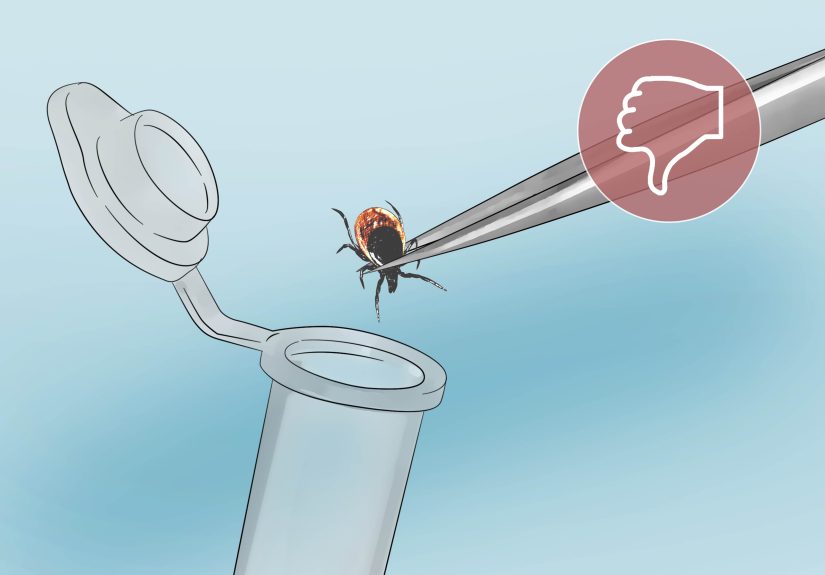
Some people seal it in a bag/container (or drop it into rubbing alcohol) in case a clinician wants to identify it later.
If you keep it, label the date and the general location where you were exposed (e.g., “Jan 23 backyard, North Carolina”).
If the Tick “Head” Is Stuck: What To Do (And What Not To Do)
If you see a tiny dark dot after removal, it might be:
- Mouthparts (a small fragment embedded at the surface), or
- A scab / dried skin / a little irritation at the bite site
Try this first: the “gentle tweezer check”
If the fragment is clearly visible and sticking out, you can try to remove it like a small splinter:
clean the area, then use tweezers to lift it out with minimal digging.
Stop if it turns into digging
If you can’t grab it easily, don’t go full treasure hunter. Aggressive digging can cause more skin damage, inflammation,
and a higher chance of a local infection than the tiny fragment would have caused on its own.
When leaving it alone is the best move
If the mouthparts are deep or you can’t remove them without digging, it’s often reasonable to
leave them alone and let the skin heal. Over time, your body may naturally push the material toward the
surface (similar to how it handles a tiny splinter).
When to get help for a stuck “head”
Contact a healthcare professional if:
- The bite is on a sensitive area (face, eyelid, genitals) or on a young child who can’t hold still
- You can’t remove the tick or remaining parts without significant digging
- Redness, pain, warmth, swelling, or drainage worsens over 24–48 hours
- You develop a spreading rash, fever, or flu-like symptoms
Aftercare: How to Treat the Bite Site
Clean, then keep it boring
After cleaning, you usually don’t need much else. Avoid heavy ointment “layer cakes” unless the skin is cracked or
irritated. If the area is itchy, a cool compress can help.
Itch and irritation: what’s normal?
A small bump, mild redness, or itchiness can happen after a bite. What you don’t want is redness that keeps
spreading, increasing tenderness, or an area that looks progressively angrier day by day.
Keep an eye on the calendar
Many clinicians recommend monitoring for symptoms for a few weeks after a tick biteespecially if you were in an area
where tick-borne illnesses are common.
When to See a Doctor (Don’t “Wait It Out” on These)
- Fever, chills, unusual fatigue, or flu-like symptoms after a tick bite
- Rash (especially expanding redness or a “bull’s-eye” style pattern)
- Severe headache, neck stiffness, or new neurological symptoms
- Muscle/joint aches that feel out of proportion to your normal life
- Worsening local infection signs: increasing warmth, swelling, pus, or significant pain
- Pregnancy, immunocompromised conditions, or if the tick was attached for a long time
Lyme Disease and Other Tick-Borne Illnesses: The Risk (Without the Panic)
Ticks can transmit illnesses like Lyme disease, Rocky Mountain spotted fever, ehrlichiosis, anaplasmosis, and others.
The exact risk depends on where you were, the type of tick, and how long it was attached.
Does a stuck “head” increase disease risk?
Disease transmission risk is primarily about the tick’s feeding process while attached. Once the tick’s body is removed,
leftover mouthparts are mainly a local skin irritation issuenot a “the tick is still drinking your blood”
situation. Still, monitor for symptoms, because the bite itself means exposure happened.
About preventive antibiotics (the “Should I take something?” question)
In certain high-risk situations, a clinician may consider a preventive antibiotic dose soon after removal
(often within a short time window). This decision depends on local Lyme incidence, tick type, estimated attachment duration,
and whether the medication is safe for the individual. Because this is medical decision-making (and not a DIY moment),
it’s best handled by a healthcare professional.
What NOT to Do (Tick Myths That Need Retirement)
Some removal “hacks” are popular because they sound dramatic, not because they work well. Avoid:
- Burning the tick (hot match, lighter, etc.)
- Smothering with petroleum jelly, nail polish, or oils to “make it back out”
- Twisting like you’re turning a key
- Crushing the tick with fingers
- Digging aggressively to chase tiny mouthparts
These methods can irritate skin, increase the chance the tick breaks, or delay removalwhich is the opposite of what you want.
Prevention: How to Avoid Round Two
If you’ve ever removed a tick, you’re automatically allowed to become a prevention enthusiast. A few practical habits:
- Do a full-body tick check after outdoor timeespecially behind knees, waistband, underarms, scalp, and behind ears.
- Shower soon after coming inside to help find ticks before they attach.
- Use EPA-registered repellents as directed (common options include DEET or picaridin).
- Consider permethrin-treated clothing for hiking/camping (permethrin is for clothing/gear, not skin).
- Landscaping helps: keep grass trimmed, reduce leaf litter, and create a barrier between woods and play areas.
- Pet checks matterpets can bring ticks into your home like unwanted souvenirs.
FAQ: Fast Answers to Common “Is This Normal?” Moments
How can I tell if mouthparts are still in my skin?
You might see a tiny dark speck that doesn’t wipe away. But scabs and dried skin can look similar. If you’re unsure,
take a clear photo in good lighting and monitor. If redness or pain worsens, get medical advice.
Should I get the tick tested?
Some services offer tick testing, but results can be misleading. Even if a tick carries a germ, that doesn’t prove you
were infected; and a negative test doesn’t rule out other exposures. Focus on symptom monitoring and medical evaluation
if you feel unwell.
What if the tick was on my scalp?
Scalp ticks are tricky because hair hides everything. Use a comb to part hair, good lighting, and fine-tipped tweezers.
If you can’t see well or the person can’t stay still, it’s reasonable to get help at urgent care.
What if it’s on a child?
The method is the same, but the challenge is movement and location. If the tick is near the eye, deeply embedded,
or the child won’t hold still, professional removal is often the safest choice.
Experiences People Commonly Have After an “Embedded Tick Head” Scare (About )
Most “tick head” stories start the same way: someone spots a tick after a hike, a backyard soccer game, or a dog walk that
was supposed to be “quick.” The first emotion is usually disbelief (“On me? In this economy?”), followed quickly by
a frantic internet search. And the internetbless its heartoften makes it sound like a stuck tick head is a five-alarm
emergency when it’s usually just a minor skin situation that needs calm, careful handling.
A very common experience is the post-removal inspection spiral. People pull the tick off, then stare at the
bite site under a flashlight like they’re decoding a secret message. A tiny dot becomes a “definitely still in there”
certainty. Sometimes it really is a fragment; other times it’s a little scab forming or mild irritation that was already
happening. The stress comes from not being able to tell which is which in the moment. That’s why good lighting and a
magnifying glass can feel like superpowersand why it’s perfectly okay to pause and re-check later instead of poking the
skin repeatedly.
Another classic scenario: the tick breaks when someone tries an old-school trick (twisting, scraping, or panicking with
whatever tool is closest). Then the cleanup becomes harder than it needed to be. People often describe regret here:
“If I had just used fine tweezers and pulled straight up, I wouldn’t be doing forensic dermatology right now.” It’s a
surprisingly valuable lesson: tick removal rewards patience more than bravery.
Many people also report feeling weirdly itchy or hyper-aware of the bite site for days, even when it looks
normal. That’s not only physicalthere’s a mental component. Once you’ve dealt with a tick, your brain starts scanning
your skin like a security system on high alert. Some folks end up doing multiple “phantom tick checks,” convinced they feel
crawling when nothing is there. It’s not silly; it’s your nervous system reacting to a gross, unsettling experience.
Parents and pet owners have their own version of this story. A child can’t always explain what they’re feeling, so adults
worry about missing something. Pets complicate things too: you may find a tick on your dog and then wonder if there are more
hiding in the house. That’s why people often develop a new routine after one tick incidentshowering after outdoor time,
checking waistbands and sock lines, running a lint roller over clothes, and doing quick pet checks at the door. It’s not
paranoia. It’s practical.
Finally, a lot of people describe the “waiting game” afterwardwatching for symptoms and second-guessing every headache.
The most helpful experience-based takeaway is this: be alert, not alarmed. Document the date, keep a note of
where you were exposed, and monitor your body for a few weeks. If a rash, fever, or unusual fatigue shows up, you’ll have
clear info to share with a clinician. That’s not just peace of mindit’s a smart way to turn a stressful moment into an
organized, manageable plan.