Table of Contents >> Show >> Hide
- What Causes Toilet Bowl Rings?
- Before You Start: Safety and Supplies
- Step-by-Step Methods to Remove Toilet Bowl Rings
- Method 1: Vinegar and Baking Soda (Best for Everyday Rings)
- Method 2: Borax or Mild Abrasive + Vinegar (For Stubborn Mineral Buildup)
- Method 3: Pumice Stone (For Thick, Old, or Rusty Rings)
- Method 4: Acid-Based Toilet Bowl Cleaners (Fast but Strong)
- Method 5: The Overnight Vinegar-Soaked Paper Towel Hack
- How to Prevent Toilet Bowl Rings from Coming Back
- Toilet Bowl Ring FAQs
- Real-Life Experiences: What Actually Works on Toilet Bowl Rings
- The Bottom Line
If you’ve ever walked into your bathroom, looked into the toilet, and thought, “I swear I just cleaned that,” you’re not alone. Toilet bowl rings are the stubborn racetrack of shame circling an otherwise clean bathroom. The good news? You don’t need superhuman strength or industrial chemicals to get rid of themjust a little science, a few smart tools, and a bit of consistency.
In this guide, we’ll break down what causes toilet bowl rings, walk through step-by-step methods to remove them (from gentle to heavy-duty), and share real-life experiences so you know what actually works long-term. By the end, you’ll know exactly how to remove toilet bowl rings and keep them from coming back.
What Causes Toilet Bowl Rings?
Toilet bowl rings are less about how “clean” you are and more about what’s in your water and how often the toilet is flushed. Most rings are caused by:
- Hard water mineral deposits: Water with lots of calcium, magnesium, and iron leaves behind chalky white, tan, or rusty-colored stains right at the waterline as the water evaporates.
- Mold and mildew: Dark, gray, or blackish rings often come from mold or mildew thriving in damp, low-light conditionsespecially if the toilet isn’t flushed or cleaned regularly.
- Standing water: Toilets in guest rooms or rarely used bathrooms develop rings faster because water sits still, giving minerals and microorganisms plenty of time to settle and grow.
Over time, that faint line becomes a thick, crusty ring that basic toilet cleaner and a quick swipe with the brush can’t touch. That’s when you need a more targeted approach.
Before You Start: Safety and Supplies
You don’t need a cabinet full of specialty products to remove toilet bowl rings, but a few basics make the job much easier.
Gather Your Cleaning Toolkit
- Rubber gloves: Non-negotiable. You’re working around germs and chemicals.
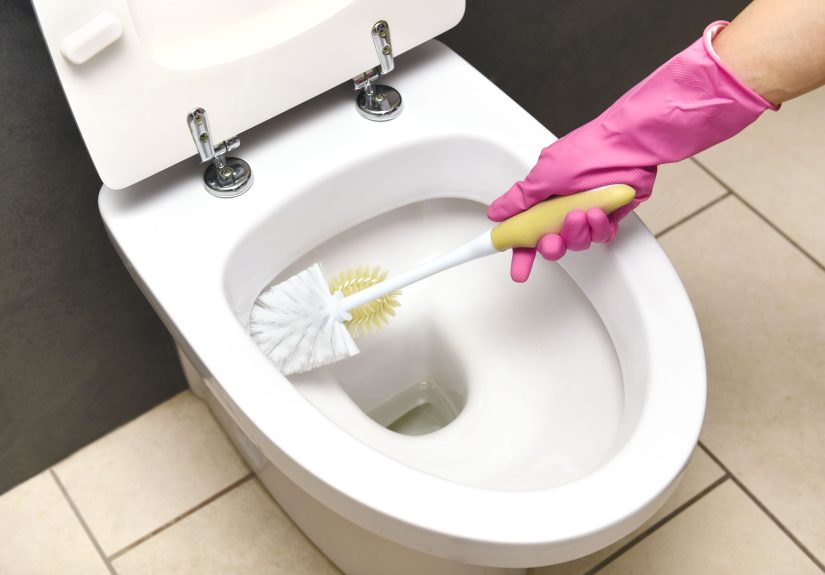
- Toilet brush: A stiff-bristled brush is best for scrubbing around the waterline.
- Distilled white vinegar or cleaning vinegar: The mild acid helps dissolve mineral deposits and hard water stains.
- Baking soda or borax: Mild abrasives that boost scrubbing power without scratching porcelain.
- Mild abrasive powder: Cleaners like Bon Ami or Bar Keepers Friend can help on stubborn mineral buildup if used carefully.
- Pumice stone made for toilets: A toilet-safe pumice stone can buff away thick, older rings and rust stains without scratching porcelain when used correctly.
- Commercial toilet bowl cleaner: Acid-based cleaners (like many “power” or “lime and rust” formulas) cling to the bowl and dissolve tough stains.
- Bucket, measuring cup, and old sponge or cloth: Helpful for emptying the bowl and soaking specific areas.
Important Safety Tips
- Never mix bleach with vinegar or other acids. The combination can create dangerous fumes.
- Ventilate the bathroom. Turn on the fan and crack a window when using strong cleaners.
- Use pumice stones only on porcelain. Avoid them on plastic or specialty finishes.
- Protect septic systems. If you have a septic tank, go easy on harsh chemicals and favor vinegar, baking soda, and septic-safe cleaners.
Step-by-Step Methods to Remove Toilet Bowl Rings
Start with the gentlest method and work your way up. Many light to moderate toilet bowl rings disappear with vinegar and baking soda alone. For older or thick rings, you may need abrasives or a pumice stone.
Method 1: Vinegar and Baking Soda (Best for Everyday Rings)
This combo is a classic for a reason. Vinegar dissolves mineral deposits, and baking soda adds mild abrasion and fizzing action to help lift stains.
- Empty the bowl to lower the waterline (optional but helpful): Turn off the water at the shutoff valve and flush once, or use a small container to bail out some water until the ring is exposed.
- Pour in vinegar: Add about 1 cup of vinegar directly onto the ring area, aiming around the bowl so it coats the stain.
- Add baking soda: Sprinkle 1 cup of baking soda around the bowl, especially over the stained ring. It will fizz as it reacts with the vinegar.
- Let it sit: Allow the mixture to work for 10–15 minutes. For heavier stains, you can wait up to 30 minutes.
- Scrub: Use the toilet brush to scrub the ring with firm circular motions. Pay extra attention to the waterline where the buildup is worst.
- Flush: Turn the water back on if you shut it off and flush to rinse away loosened residue.
If the ring is still visible but lighter, repeat the process once more. This method is ideal as a weekly or biweekly maintenance clean.
Method 2: Borax or Mild Abrasive + Vinegar (For Stubborn Mineral Buildup)
When basic fizzing isn’t enough, borax and mild abrasive powders can step in. They boost scrubbing power without being as harsh as many heavy-duty cleaners.
- Lower the water level: As before, turn off the water and flush to expose the ring as much as possible.
- Sprinkle borax or abrasive cleaner: Dust a generous amount of borax or a gentle abrasive powder around the stain.
- Add vinegar: Slowly pour about 1 cup of vinegar so it wets the powder and creates a paste on the bowl walls.
- Wait 20–30 minutes: Let the acid and mild abrasive work on the mineral deposits.
- Scrub thoroughly: Use the brush to work the paste into the ring. You may feel a bit of resistance as crusty buildup loosens.
- Flush and check: Rinse the bowl and inspect. Repeat on extra-stubborn spots as needed.
Use this method occasionally for heavy buildup, then go back to the vinegar-and-baking-soda routine for regular maintenance.
Method 3: Pumice Stone (For Thick, Old, or Rusty Rings)
If your toilet bowl ring laughs at every cleaner you’ve tried, a toilet-safe pumice stone is often the hero of the story. It works by gently grinding away mineral buildup and rust stains.
- Soak the pumice stone and the ring area: The stone and the porcelain surface should both be wet at all times to prevent scratching.
- Gently rub the ring: With light pressure, move the stone back and forth along the ring. You’ll see a fine gray pastethis is the stone and deposits wearing down.
- Work in small sections: Focus on a few inches at a time until the entire ring is gone.
- Flush and inspect: Once done, flush to rinse away residue and check for any missed spots.
Used correctly, toilet-specific pumice stones are safe for porcelain and remarkably effective on rings that have been there long enough to pay rent.
Method 4: Acid-Based Toilet Bowl Cleaners (Fast but Strong)
Commercial toilet bowl cleaners designed for hard water, lime, and rust stains are powerful and convenient. Many come in thick gels that cling to the ring so the acid can do its work.
- Read the label: Check that the cleaner is safe for your toilet type and your plumbing or septic system.
- Apply under the rim and around the ring: Squeeze the cleaner so it coats the entire ring and the area just above and below it.
- Let it sit: Most products need 5–15 minutes of contact time. The longer end of the range is usually best for rings.
- Scrub: Use your toilet brush to agitate the stained area, especially where the ring is thickest.
- Flush: Rinse thoroughly. If the ring is lighter but still visible, repeat once more.
Reserve strong acid cleaners for tough jobs or periodic deep cleans and rely on gentler methods for weekly maintenance.
Method 5: The Overnight Vinegar-Soaked Paper Towel Hack
This trick is perfect when the ring is very defined along the waterline and you don’t feel like scrubbing your arm off.
- Lower the waterline: Shut off water and flush once so the ring is exposed.
- Soak toilet paper or paper towels in vinegar: Wring them out just enough so they’re saturated but not dripping everywhere.
- Press them onto the ring: Stick the vinegar-soaked strips directly over the stained area, creating a band around the bowl.
- Leave overnight: Let the vinegar sit in contact with the stain for several hours or overnight.
- Remove and scrub: The next day, remove the paper, give the bowl a quick scrub, and flush.
Because the vinegar stays in contact with the ring for so long, it can soften and dissolve even stubborn mineral lines.
How to Prevent Toilet Bowl Rings from Coming Back
Once you’ve finally banished that ring, the goal is to keep it from reappearing like a bad sequel.
1. Clean on a Schedule
A quick weekly clean with vinegar and baking soda or a mild toilet cleaner is often enough to stay ahead of stains. The longer buildup sits, the harder it is to remove.
2. Don’t Let Water Sit Too Long
Rings love rarely used toilets. If you have a guest bathroom, flush it at least once a day or every few days to keep fresh water moving through the bowl.
3. Use Vinegar as Maintenance
Pour a cup of vinegar into the bowl once a week, let it sit for a few minutes, then scrub and flush. This helps dissolve early mineral deposits before they can harden into a visible ring.
4. Skip “Miracle” Tank Tablets
Drop-in tank tablets that turn your water bright blue may look impressive, but many don’t prevent rings effectively and can damage rubber parts inside the tank over time. It’s usually better to manually clean with a brush and targeted cleaner.
5. Consider Your Water Quality
If you live in an area with very hard water and constantly battle mineral stains throughout the house, a water softener or point-of-use filter can help reduce buildup not just in the toilet but in sinks, tubs, and showerheads as well.
Toilet Bowl Ring FAQs
Why won’t my toilet bowl ring go away?
If the ring has been building for months or years, it may be thick, layered mineral scale. In that case, you’ll likely need a combination of a strong cleaner and physical removal with a pumice stone. Multiple passes may be required, but most rings are removable with enough contact time and scrubbing.
Is a pumice stone safe for my toilet?
Toilet-specific pumice stones are designed for porcelain and are safe when used wet and with gentle pressure. Never use them dry or on plastic surfaces. If you’re nervous, test a small area first.
What’s the black ring in my toilet?
A dark gray or black ring is often mold, mildew, or a combination of organic growth and mineral deposits. Regular cleaning, better ventilation, and occasional use of disinfecting cleaners can help keep it from returning.
What about orange or brown rings?
Orange or rusty brown rings usually point to iron in your water. Acid-based cleaners, vinegar, and sometimes rust-removing toilet cleaners are particularly effective for these stains.
Are natural methods really enough?
For light to moderate rings, yes. Vinegar, baking soda, borax, and elbow grease will usually do the trick. For long-neglected bowls, you might combine natural methods with a heavy-duty cleaner or pumice stone to get a fully fresh start.
Real-Life Experiences: What Actually Works on Toilet Bowl Rings
Cleaning experts and everyday homeowners tend to agree on one thing: there’s no single “magic product” that works for every toilet bowl ring, but there are a few standouts that consistently get good results.
Let’s start with the humble herovinegar. Cleaning pros love it because it’s inexpensive, widely available, and surprisingly powerful on mineral deposits and hard water stains. Many people report that simply pouring a cup or two into the bowl, letting it soak, and scrubbing with a brush is enough to erase that faint line before it turns into a full-blown ring. For folks who prefer more natural cleaning, vinegar is often their firstand favoriteline of defense.
Then there’s the vinegar plus baking soda duo. The fizz isn’t just for show; it helps loosen grime and lightly abrade the surface without scratching it. People who use this combo weekly often say they never see defined rings at all, because the mineral deposits don’t stick around long enough to harden. It’s not dramatic, but that’s kind of the pointconsistent, low-drama cleaning prevents the big, time-consuming jobs.
On the more heavy-duty side, acid-based toilet bowl cleaners and thick gels get singled out for their speed and convenience. Homeowners who’ve tried several brands often find that the thicker, cling-style formulas work best on stubborn rings because they stay in contact with the stain instead of just sliding into the water. You apply, wait, scrub lightly, and the ring melts away. People with busy households or multiple bathrooms tend to appreciate that kind of efficiency.
But when stains have been there “forever,” many real-world users swear by a toilet-safe pumice stone. It’s not glamorousyou’re literally scrubbing the ring offbut it’s incredibly satisfying. Once the stone starts gliding more smoothly, you know you’re nearly done. Homeowners who inherit neglected toilets in rentals, older homes, or vacation houses often say the pumice stone was the only thing that finally restored the bowl to bright white.
There are also some clever hacks that people love, especially for those “I don’t want to spend an hour scrubbing” days. The overnight vinegar-soaked paper towel trick is popular: you press vinegar-soaked strips of toilet paper right onto the ring, leave them overnight, and come back to a softened stain that scrubs off easily in the morning. It’s low effort, high payoffperfect if you’re patient but not in the mood to attack the ring right now.
One common theme across experiences is that maintenance beats emergency cleaning every time. People who give their toilets a quick mini-clean once a week, or even a fast swirl with vinegar every few days, tend to avoid dramatic rings altogether. Those who leave the bathroom off their cleaning list for a month or two are more likely to wind up Googling “how to remove toilet bowl rings” at midnight before guests arrive.
Another takeaway: not every product plays nicely with your plumbing. Homeowners who tried drop-in tank tablets often found they didn’t stop bowl rings, and in some cases, plumbers later blamed those tablets for damaged rubber and interior parts. On the other hand, people who stuck with simple toolsbrushes, vinegar, occasional strong cleaner, and pumice when neededusually reported fewer surprises and better long-term results.
Ultimately, the most successful “systems” people use are simple: a favorite cleaner (natural or commercial), a decent brush, and a habit. Whether you’re Team Vinegar, Team Power Cleaner, or a mix of both, the winning strategy is consistency. Do a little bit often, and you may never have to wage war against a dark ring of doom again.
The Bottom Line
Toilet bowl rings might be annoying and a little embarrassing, but they’re absolutely fixable. Start with gentle methods like vinegar and baking soda, level up to borax or mild abrasives if needed, and keep a pumice stone and strong cleaner in your back pocket for those “this has gone too far” situations.
With the right tools and a simple weekly routine, you can remove toilet bowl rings, prevent them from returning, and walk into your bathroom knowing the only rings in your life are the ones you actually like.