Table of Contents >> Show >> Hide
- Step 1: Decide what luggage should (and shouldn’t) live in the garage
- Step 2: Empty everything (yes, even that mystery charger)
- Step 3: Clean the inside and outside like you mean it
- Step 4: Dry it completely (the most skipped, most important step)
- Step 5: Inspect and repair before storage
- Step 6: Choose the right spotoff the floor, away from trouble
- Step 7: Control moisture and humidity (because garages love chaos)
- Step 8: Pest-proof your garage luggage storage plan
- Step 9: Pick a storage method that matches your garage (and your patience)
- Step 10: Store luggage the smart way inside itself
- Step 11: Label, inventory, and set a simple maintenance routine
- Common mistakes that wreck garage-stored luggage
- FAQ: Quick answers for real-life garage storage
- Real-World Experiences: What Actually Works (and What Absolutely Doesn’t)
- Experience 1: The “I stored it on the floor and it’s fine… right?” phase
- Experience 2: The “I used cardboard boxes because they were free” era
- Experience 3: The overhead rack win (with one small lesson)
- Experience 4: The pest surprise nobody wants
- Experience 5: The “why does my suitcase smell like lawn chemicals?” mystery
- Wrap-Up: Your luggage deserves better than “shoved in the corner”
A garage is basically a “choose your own adventure” climate: hot, cold, dusty, occasionally damp, and sometimes
home to tiny roommates with whiskers. That doesn’t mean you can’t store luggage in thereit just means
your suitcases need a little prep and a smart storage plan so they don’t come out smelling like a wet basement
had a fight with a gym sock.
Below are 11 practical steps to keep your luggage clean, dry, pest-free, and easy to grab before your next trip.
We’ll cover what to store, how to protect it from humidity and rodents, and the best garage luggage storage ideas
(from shelving to overhead racks) without turning your garage into an obstacle course.
Step 1: Decide what luggage should (and shouldn’t) live in the garage
First, be honest about your garage environment. If it regularly gets very humid, floods, or has recurring pest
activity, consider storing your most delicate luggage indoors instead.
What’s usually fine in a garage
- Hard-shell suitcases (polycarbonate/ABS) when protected from dust and sun
- Soft-sided luggage in sealed bins or well-fitted covers
- Duffels and backpacks if cleaned, fully dried, and pest-protected
What’s better stored inside the house
- Leather luggage (humidity and temperature swings can dry/crack it)
- Vintage luggage or anything sentimental/irreplaceable
- Designer fabric bags that stain easily or attract pests
Step 2: Empty everything (yes, even that mystery charger)
You’d be amazed what hides in luggage: old toiletries, snacks, sunscreen that exploded in 2019. Anything left
inside can leak, mold, or attract pests. Remove:
- Liquids and gels (they leak, freeze, or bake into sticky regret)
- Food crumbs, candy, gum, protein bars
- Batteries and electronics (better stored in a more stable environment)
- Dirty laundry and shoes (the smell will move in permanently)
Step 3: Clean the inside and outside like you mean it
Garage storage works best when the luggage goes in clean. Dirt and skin oils can cause odors over time, and crumbs
are basically a “grand opening” sign for insects and rodents.
Quick cleaning checklist
- Vacuum the interior seams, corners, and pockets.
- Wipe hard-shell exteriors with mild soap and water.
- Spot clean fabric with a gentle upholstery cleaner or diluted detergent.
- Disinfect handles/wheels if the bag traveled through airports like a brave little germ magnet.
Step 4: Dry it completely (the most skipped, most important step)
If you store luggage even slightly damp, you’re basically slow-cooking mildew. After cleaning, let suitcases air
dry fully with zippers open. If your garage is humid, dry them indoors first, then move them out.
Pro tip
If the bag smells musty, sprinkle a little baking soda inside, leave it overnight, then vacuum it out. It’s cheap,
easy, and doesn’t perfume your luggage like a nightclub.
Step 5: Inspect and repair before storage
Small problems become big problems when ignored for months. Do a quick luggage “physical”:
- Check zippers (run them all the way around; replace if they snag badly)
- Tighten loose screws on handles and wheel housings
- Remove hair and thread from wheels (they collect it like a hobby)
- Patch fabric scuffs so pests don’t find an easy entry point
Step 6: Choose the right spotoff the floor, away from trouble
Where you store luggage in the garage matters as much as how. Avoid spots that get wet, bake in direct sun, or sit
against exterior walls that sweat during temperature changes.
Best placement rules
- Elevate suitcases on shelving, cabinets, or racks (not directly on concrete).
- Leave airflow behind items when possible to reduce trapped humidity.
- Avoid water heaters, washers, freezers, or anything that can leak or drip.
- Skip windows and sun-beam zones (UV can fade fabric and weaken plastics).
Step 7: Control moisture and humidity (because garages love chaos)
Humidity is the silent luggage-ruiner: it encourages mildew, funky odors, rust on metal parts, and fabric damage.
The goal is “dry and steady,” not “tropical rainforest meets arctic blast.”
Simple moisture-control options
- Use lidded plastic bins to reduce dust and moisture exposure.
- Add desiccants (silica gel packets or moisture absorbers) inside luggage or bins.
- Measure humidity with an inexpensive hygrometer so you’re not guessing.
- Dehumidify if your garage stays muggy (especially in rainy seasons).
As a practical target, keep humidity low enough that condensation and musty smells don’t developmany home moisture
guidelines recommend staying below 60% relative humidity, with an ideal comfort range around 30–50% when possible.
Step 8: Pest-proof your garage luggage storage plan
Rodents and insects don’t care if your suitcase was expensivethey care if it’s cozy. Soft-sided luggage is
especially tempting because fabric is chewable and pockets are excellent hideouts.
What works (without turning your garage into a science experiment)
- Seal entry points (gaps around doors, pipes, and vents). If a pencil fits, a mouse might too.
- Store in sealed bins (gasket-lid totes are your best friend).
- Keep the garage cleanno pet food, birdseed, or open trash near luggage.
- Inspect seasonally for droppings, shredded material, or gnaw marks.
Step 9: Pick a storage method that matches your garage (and your patience)
There isn’t one “best” waythere’s the best way for your space. Here are the most effective luggage
storage options for garages, from easiest to most space-saving.
Option A: Shelving units (the reliable classic)
A sturdy shelf keeps luggage visible, elevated, and accessible. Open-wire shelving can improve airflow, which helps
in humid climates. Use labeled bins for smaller travel items (packing cubes, luggage tags, TSA locks).
Option B: Garage cabinets (the neat freak’s dream)
Cabinets reduce dust and make the garage look calmereven if the inside is a little chaotic. They also add a layer
of pest protection when doors close flush.
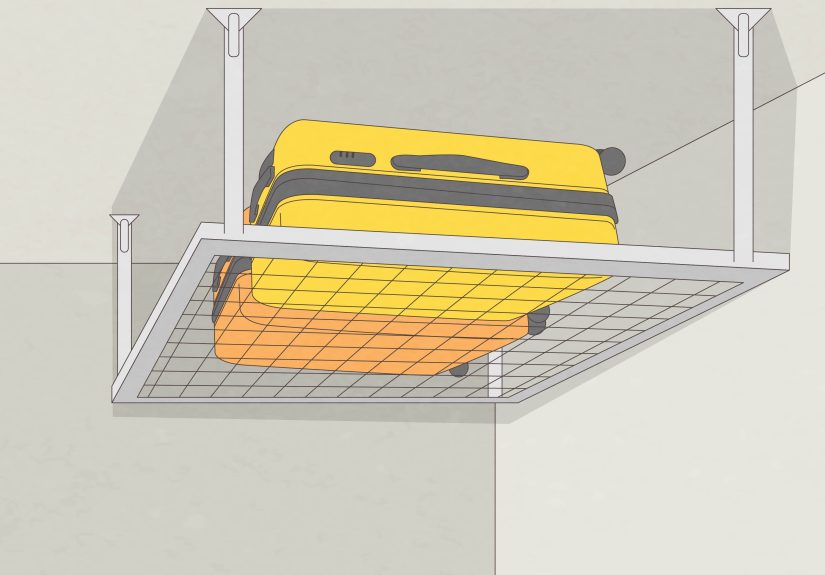
Option C: Overhead storage racks (maximum space, minimum floor clutter)
If your garage floor is sacred (or occupied by cars you actually park indoorsrare and impressive), overhead racks
are excellent for bulky, lightweight items like nested suitcases inside bins. Follow weight ratings and install
into ceiling joists properly.
Option D: Wall hooks for soft bags (quick grab-and-go)
Duffels and backpacks can hang on heavy-duty wall hooks. Just keep them off the ground and away from garage door
gaps where dust and pests sneak in.
Step 10: Store luggage the smart way inside itself
Luggage is storage-shaped, so let it do double dutycarefully. The trick is avoiding moisture traps and keeping
things easy to find later.
Best practices for packing luggage in storage
- Nest suitcases: put smaller bags inside larger ones to save space.
- Use breathable organization: packing cubes or cotton bags for accessories.
- Avoid airtight sealing of damp fabriconly seal after everything is fully dry.
- Add odor control: a small desiccant pack or baking soda sachet helps prevent “garage smell.”
- Keep a “travel kit”: luggage scale, spare tags, and a small pouch of essentials.
Step 11: Label, inventory, and set a simple maintenance routine
You’re not building a museum archive, but future-you will appreciate a little organization. Label bins and note
what’s stored whereespecially if you have multiple suitcases that look like identical black rectangles.
Easy maintenance schedule
- Every 3–4 months: quick visual check for pests, dampness, and odors.
- Before peak travel: verify wheels, handles, and zippers work smoothly.
- After storms: check for water intrusion near garage walls and corners.
Common mistakes that wreck garage-stored luggage
- Storing directly on concrete (moisture wicks up and invites mildew).
- Using cardboard boxes (they break down, attract pests, and don’t seal).
- Putting luggage near chemicals (fumes can leave lingering odors in fabric).
- Skipping cleaning (crumbs + time = pest party).
- Forgetting humidity (your nose shouldn’t be the first moisture detector).
FAQ: Quick answers for real-life garage storage
Can I store luggage in a garage year-round?
Yesif it’s clean, dry, elevated, and protected from moisture and pests. In extreme heat/humidity areas, keep
delicate materials indoors and store garage luggage in sealed bins or cabinets.
What’s the best container for suitcase storage?
A lidded plastic tote (ideally with a gasket-style seal) is great for soft-sided luggage and travel accessories.
Clear bins make it easier to identify what’s inside without opening everything.
Should I put silica gel packets in stored luggage?
They can help with moisture control in enclosed spaces. Just keep them away from kids and pets, and don’t rely on
tiny packets to fix a very damp garageuse humidity control and better sealing first.
Real-World Experiences: What Actually Works (and What Absolutely Doesn’t)
Let’s talk about the stuff people learn the hard waybecause garage luggage storage looks simple until you unzip a
suitcase and get hit with “Eau de Mildew,” plus the bonus surprise of a chewed zipper pull. Here are a few
real-world style scenarios (and the takeaways) that make your plan stronger.
Experience 1: The “I stored it on the floor and it’s fine… right?” phase
A classic: someone slides two suitcases onto the garage floor “just for a few weeks.” A few weeks becomes a season.
Then the rainy months hit, the concrete stays cool, and moisture quietly creeps in. The luggage doesn’t look wet,
but it develops a stale smell that won’t quit. The fix usually involves re-cleaning, baking soda, fresh air, and a
promise to never again trust concrete with anything fabric-covered.
Takeaway: Elevation is non-negotiable. Even a low shelf, a pallet, or a sturdy cabinet base beats
direct contact with the floor. Concrete is a moisture source, not a friend.
Experience 2: The “I used cardboard boxes because they were free” era
Free boxes are temptinguntil they soften, sag, and become luxury condos for bugs. Cardboard absorbs moisture and
can attract pests, and it’s also excellent at collapsing at the exact moment you try to lift it with one hand while
holding a coffee in the other. In many garages, cardboard doesn’t “store” luggage so much as it “offers it up to
the elements.”
Takeaway: Lidded plastic bins are boring in the best way: they hold up, they stack, and they help
block dust and humidity. If you want to level up, use gasket-seal totes for soft-sided luggage.
Experience 3: The overhead rack win (with one small lesson)
Overhead racks can feel like magicsuddenly your garage floor is back, and the suitcases aren’t in the way. The
“small lesson” is that overhead storage only stays magical if you keep it light, stable, and labeled. One family
stored nested luggage in clear bins overhead and labeled each bin (“Carry-ons,” “Kids’ Travel,” “Adapters & Locks”).
Finding everything took minutes instead of a full “garage dig” expedition.
Takeaway: Put luggage overhead only when it’s protected (bins), labeled, and not overloaded. If
it’s hard to lift safely, it doesn’t belong above your head.
Experience 4: The pest surprise nobody wants
The gross truth: garages are common entry points for pests. Soft luggage left uncovered can become nesting material,
and pockets are perfect hideouts. People who avoid this problem usually do two things consistently: they seal entry
gaps (especially around garage doors and utility penetrations), and they store fabric items in sealed containers.
The ones who don’t… learn to recognize the sound of “something scurrying” far too well.
Takeaway: Pest-proofing is a system: seal openings, remove food sources, and use sealed bins.
Occasional inspections prevent small problems from becoming a full-blown garage wildlife documentary.
Experience 5: The “why does my suitcase smell like lawn chemicals?” mystery
This one is sneaky. Even if your luggage is clean, it can absorb odors from nearby itemspaint, gasoline cans,
fertilizer, or strong cleaners. People often discover this right before a trip when their clothes come out smelling
like a hardware aisle. The solution is simple: store luggage away from chemicals and consider cabinets or bins that
reduce odor transfer.
Takeaway: Keep luggage in a “clean zone” of the garage: away from chemicals, lawn products, and
anything with fumes. If you can smell it from three feet away, your luggage can probably smell it too.
Wrap-Up: Your luggage deserves better than “shoved in the corner”
Storing luggage in a garage is totally doableas long as you treat your garage like what it is: a rough-and-tumble
environment with moisture, dust, temperature swings, and occasional pests. Clean and dry your bags, elevate them,
protect them with bins or cabinets, control humidity, and check on them seasonally. Do that, and your next trip
starts with a suitcase that’s ready to rollnot one that needs an emergency de-mildew spa day.