Table of Contents >> Show >> Hide
- First: What “Real Maple Syrup” Actually Is
- The Fastest Way to Spot the Real Stuff: Read the Front Label Like a Detective
- The Ingredient List: Where the Truth Lives (Even If It’s in Tiny Font)
- Grades Aren’t About “Better” vs. “Worse”They’re About Color and Flavor
- Texture and Pour: Real Maple Syrup Doesn’t Behave Like Corn Syrup
- Price and Packaging: Not Proof, But a Strong Clue
- Storage Is a Secret Clue: Pure Maple Syrup Is More Perishable
- “Maple” on the Label Doesn’t Always Mean Maple in the Bottle
- A 10-Second Grocery Aisle Checklist
- How to Taste-Test at Home (Without Turning It Into a Science Fair)
- Real-Life Experiences: What People Notice First (and What Actually Helps)
- Conclusion
Maple syrup has a public image problem. Somewhere along the way, a lot of us got introduced to “maple” through a
sticky brown bottle that tastes like pancakes got a cologne sponsorship. And honestly? That’s not your fault.
Imitation syrups are designed to look familiar, pour dramatically, and cost less than your morning latte.
But if you care about flavor (and you’d like your waffles to taste like something that actually came from a tree),
learning how to spot real maple syrup is one of the easiest grocery upgrades you can make. This guide
breaks down label tricks, ingredient giveaways, grading terms, storage clues, and quick tests you can use in the
aislewithout turning breakfast into a courtroom drama.
First: What “Real Maple Syrup” Actually Is
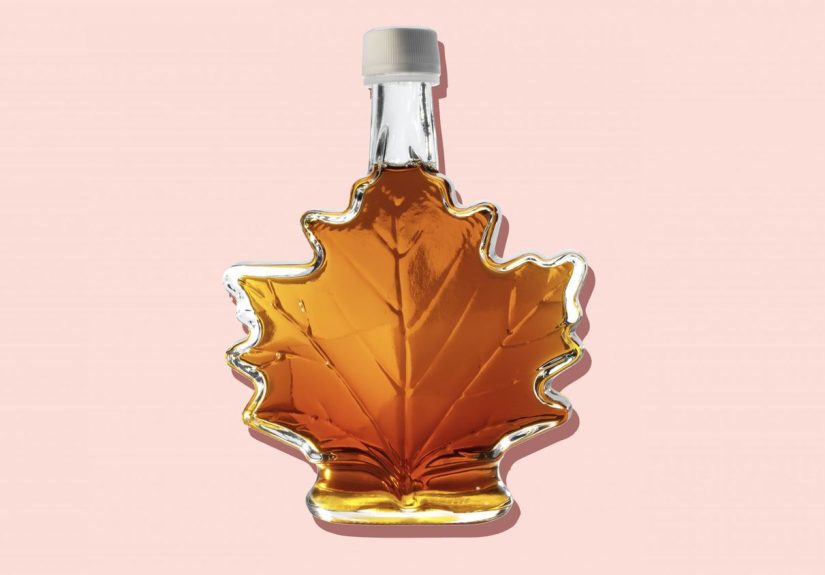
Pure maple syrup is made by collecting sap from maple trees and boiling it down until it becomes a
concentrated syrup. It takes a whole lot of sap to make a little syrupone of the biggest reasons the real stuff
costs more.
Real maple syrup isn’t “maple-flavored.” It’s not a blend of other syrups “with maple essence.” It’s the product of
maple sap, heat, time, and someone standing near steam for hours thinking, “I could’ve chosen accounting.”
The Fastest Way to Spot the Real Stuff: Read the Front Label Like a Detective
When you’re staring at a shelf full of bottles, the front label is trying to influence you. Your job is to read it
like you’re immune to marketing (even if you’re not).
Green-flag phrases (usually real maple syrup)
- “100% Pure Maple Syrup”
- “Pure Maple Syrup”
- “Maple Syrup” (with no “flavored” or “pancake” nearby)
- “Grade A” + a color/flavor descriptor (Golden/Amber/Dark/Very Dark)
Red-flag phrases (usually imitation or blended syrup)
- “Pancake Syrup” or “Breakfast Syrup”
- “Maple-Flavored” anything
- “Table Syrup”
- “Original Syrup” (translation: “originally not maple”)
- “Made with real maple syrup” (could be a small amountkeep reading)
The key idea: imitation brands love to use the word “maple” as a vibe, not as an ingredient. If the label sounds like
it’s describing a memory of maple rather than maple itself, you’re probably holding corn syrup in costume.
The Ingredient List: Where the Truth Lives (Even If It’s in Tiny Font)
Here’s the simplest rule in this entire article:
Pure maple syrup should be one ingredient: maple syrup.
Sometimes you won’t see an ingredient list at alland that can still be normal for a single-ingredient product. In
other cases, if an ingredient list appears, it should be boring in the best way possible: “maple syrup.”
What imitation syrup ingredient lists often look like
Imitation syrups vary, but many commonly contain ingredients such as:
corn syrup or high fructose corn syrup, water, caramel color, artificial flavors,
and thickeners (like cellulose gum). If you see a list like that, it’s not “fake maple syrup” so much as
“corn syrup with a maple impression.”
Watch for the “Made With Real Maple Syrup” loophole
This is the food-label equivalent of saying, “I’m basically a gym person” because you once walked past a treadmill.
A product can include a small amount of real maple syrup and still be mostly cheaper sweeteners. If the first
ingredient is corn syrup and maple syrup is halfway down the list, you’re not buying maple syrupyou’re buying
maple guest-starring in a corn syrup movie.
Grades Aren’t About “Better” vs. “Worse”They’re About Color and Flavor
If you’ve ever wondered why everything is “Grade A” now, you’re not imagining things. Modern U.S. grading standards
categorize consumer-ready syrup as U.S. Grade A, then break it down by
color and taste:
- Golden Color, Delicate Taste (lightest, mild maple flavor)
- Amber Color, Rich Taste (classic “all-purpose” maple vibe)
- Dark Color, Robust Taste (stronger flavor, great for cooking)
- Very Dark Color, Strong Taste (bold, dramatic, not here to be subtle)
Lighter syrup tends to show up earlier in the season; darker syrup often comes later. None of these are “fake.”
They’re different expressions of the same productkind of like how coffee can be light roast or dark roast, but it’s
still coffee (not “coffee-flavored beverage syrup”).
Shopping tip: pick a grade based on how you’ll use it
- Pouring on pancakes/waffles: Amber is a crowd-pleaser.
- Baking or glazing meat/vegetables: Dark or Very Dark holds flavor in recipes.
- Tea, yogurt, fruit, or subtle sweetness: Golden can be lovely.
Texture and Pour: Real Maple Syrup Doesn’t Behave Like Corn Syrup
One of the most surprising differences is thickness. Many people expect syrup to be thick and slow because that’s
what imitation pancake syrup is designed to do. Real maple syrup is typically thinner and more fluid.
It pours easily. It doesn’t form a stretchy ribbon. It doesn’t cling to the bottle like it’s scared of heights.
Flavor tells the story, too
Real maple syrup tastes complex: caramel-like, toasted sugar, sometimes vanilla or butterscotch notes.
Imitation syrup often tastes mostly sweet, with a one-note “maple flavor” that hits hard and leaves fast.
If imitation syrup is a pop song chorus, pure maple is the whole album.
Price and Packaging: Not Proof, But a Strong Clue
Because real maple syrup takes significant sap and labor to produce, it generally costs more per ounce than
pancake syrup. That doesn’t mean expensive syrup is automatically purebut it does mean:
ultra-cheap “maple” is almost never the real thing.
Packaging patterns you’ll often see
- Pure maple syrup: glass bottles, jugs, or cans; simple labeling; producer info often included.
- Imitation syrup: plastic squeeze bottles; brand-forward design; words like “original,” “breakfast,” or “table.”
Again, these are patterns, not laws. But if your bottle looks like it could survive being launched from a cannon and
still squeeze perfectly, it’s probably optimized for corn syrup economics.
Storage Is a Secret Clue: Pure Maple Syrup Is More Perishable
Here’s a practical difference you can use in real life: pure maple syrup typically needs refrigeration after opening
because it doesn’t contain the same preservatives many imitation syrups do. If you’ve ever left an opened bottle of
pure maple syrup out for too long and spotted moldgross, yes, but also very on-brand for a minimally processed food.
What happens if you see mold on pure maple syrup?
It’s not a “throw away the entire concept of breakfast” situation. Guidance varies, but many food experts note that
surface mold can sometimes be removed and the syrup reheated to a safe temperature, then stored properly. That said,
if the syrup smells off, tastes odd, or you’re unsure, play it safe and replace it.
Crystals aren’t a sign of fake syrup
Pure maple syrup can form sugar crystals over time (especially if it’s stored cold). That’s usually harmless and
more about sugar chemistry than quality. Gentle warming can dissolve crystals.
“Maple” on the Label Doesn’t Always Mean Maple in the Bottle
Some of the trickiest products aren’t sold as syrup at all. Think granola, snack bars, cereals, or “maple” flavored
oatmeal. The word “maple” might describe flavor, not content. In many foods, maple can be the characterizing flavor
even if the actual ingredient is artificial flavoring or a tiny amount of real syrup.
If you’re buying maple syrup specifically, don’t let other products train your eyes to accept “maple” as a free-floating
adjective. For syrup, you want the ingredient to match the headline.
A 10-Second Grocery Aisle Checklist
- Step 1: Does it say 100% Pure Maple Syrup or Pure Maple Syrup? Good start.
- Step 2: If there’s an ingredient list, is it just maple syrup? Perfect.
- Step 3: Do you see “pancake,” “table,” or “maple-flavored”? That’s your exit sign.
- Step 4: Is there a Grade A color/taste descriptor? That’s common for real syrup.
- Step 5: Does the price make sense for a labor-intensive product? If it seems too good, it probably is.
How to Taste-Test at Home (Without Turning It Into a Science Fair)
The spoon test
Put a small spoonful of each syrup on separate spoons. Pure maple syrup will taste layered and aromatic. Imitation
syrup will usually taste mainly sweet, with a sharp “maple” note that feels added rather than grown.
The pour test
Pour a small amount from the bottle. Pure syrup tends to flow more freely. Imitation syrups often pour slowly and
stretch because they’re formulated to be thicker (often with gums or higher-viscosity sweeteners).
The heat test (aka the “waffle reality check”)
Warm syrup gently and smell it. Pure maple syrup becomes more fragrant with heat. Imitation syrup often smells mostly
sweet, sometimes with a candy-like aroma.
Real-Life Experiences: What People Notice First (and What Actually Helps)
If you’ve ever switched from pancake syrup to pure maple syrup, the first “experience” is usually surprisebecause
pure maple syrup doesn’t behave like the syrup many of us grew up with. It pours faster. It’s thinner. It doesn’t
cling to the bottle with cartoon-level commitment. People often describe the first bite as “Oh… this tastes like
something,” which sounds rude until you remember how many imitation syrups taste like sweet brown enthusiasm.
One common moment: you buy a bottle labeled “maple” because it’s on sale, and you don’t think too hard because you’re
tired and breakfast shouldn’t require advanced training. Then you get home, flip it over, and meet the ingredient list:
corn syrup, high fructose corn syrup, caramel color, “natural and artificial flavors,” maybe a gum to thicken it up.
The experience isn’t just disappointmentit’s realizing that “maple” is sometimes used the way “ocean breeze” is used
in laundry detergent. Like, sure, it’s a concept. Not a guarantee.
Another experience shows up at brunch. Someone brings pure maple syrup, and suddenly the table splits into two groups:
the people who drizzle politely, and the people who treat it like liquid gold and guard the bottle like a dragon.
Pure syrup has that effect because the flavor holds up even when it hits hot pancakes, salted butter, and crispy bacon
all at once. You get caramel and toasted notes instead of just sweetness. If you try a darker grade (Dark or Very Dark),
the experience can be even more dramaticless “sweet topping,” more “ingredient.” It’s the difference between a
background singer and the lead vocalist.
Storage experiences are also revealing. People often learn the hard way that pure maple syrup should be refrigerated
after opening. The first time someone spots surface mold on a bottle they left on the counter, they usually assume
the syrup is “bad.” But that experience is also a clue: pure maple syrup is a minimally processed food without the
same preservative system many imitation syrups have. It’s not indestructible. Once you move it to the fridge (or
freezer for long storage), the whole routine gets easy: pour what you need, cap it tight, and put it back. Some people
even keep a smaller bottle in the fridge for everyday use and freeze the rest.
And then there’s the “crystal panic” experience: you open the bottle and see sugar crystals, and your brain whispers,
“Is this fake?” With pure maple syrup, crystals can happenespecially with cold storagebecause sugar likes to do
sugar things. Warm the bottle gently and they usually dissolve. It’s not a sign of imitation; it’s more like a
chemistry cameo.
The most useful experience-based advice is simple: once you’ve tasted real maple syrup, you start recognizing it
instantlyon the nose, on the tongue, and on the label. Your shopping habits change, too. You stop buying “maple”
because the label is cozy and start buying maple because it’s maple. Breakfast gets less confusing. And somehow,
waffles feel slightly more like a life choice you’re proud of.
Conclusion
If you remember only one thing, make it this: real maple syrup is a product, not a flavor. It should
be pure, clearly labeled, and (when listed) have a one-item ingredient list. Imitation brands can still be sweet and
convenient, but they’re a different category entirelyusually corn syrup with added flavor and thickener magic.
Once you learn the label cues and what real syrup tastes like, spotting the difference becomes quick, easy, and a lot
more satisfying than arguing with a bottle that says “maple” but means “maple-ish.”