Table of Contents >> Show >> Hide
- First: Is This a DIY Job or a “Call a Pro” Job?
- Why Hair Gets Severely Matted (So You Can Outsmart It)
- Your Detangling Toolkit
- Step-by-Step: How to Untangle Severely Matted Hair Safely
- Step 1: Don’t start drycreate slip first
- Step 2: Split the situation into smaller sections
- Step 3: Start at the edges of the mat with your fingers
- Step 4: Move to a wide-tooth combends first, always
- Step 5: Use a detangling brush (optional) for finishing
- Step 6: Cleanse gently (if needed) after the mat is mostly out
- Stubborn Mats: Techniques That Save Hair (and Sanity)
- Hair-Type Tweaks (Because One-Size-Fits-All Hair Advice Is a Lie)
- Aftercare: Keep the Hair From Re-Matting Tomorrow
- Prevention: How to Avoid Severe Mats in the First Place
- FAQ
- Real-World Experiences: What People Learn the Hard Way (So You Don’t Have To)
- Conclusion
- SEO Tags
Severely matted hair has one job: to make you feel like your hair is fighting you for custody of your scalp. The good news?
Most mats can be loosened safely at home if you use the right “slip,” the right tools, and the right attitude (patient, not
“I have five minutes before class”).
This guide walks you through exactly how to untangle severely matted hair with minimal breakageplus when to stop and call a
professional, because sometimes the bravest thing you can do is hand the situation to someone who owns a cape and salon scissors.
First: Is This a DIY Job or a “Call a Pro” Job?
Before you start tugging, do a quick reality check. Matted hair can range from “gnarly knot” to “felted sweater on my head.”
If any of the following are true, consider booking a stylist (or barber) who’s experienced with detangling or textured hair:
- The mat is tight to the scalp (especially if you can’t slide a finger under it).
- Your scalp hurts when you lightly press around the area, or you see redness, swelling, scabs, or oozing.
- You suspect lice (intense itching plus tiny moving bugs or stuck-on nits).
- The hair is medically fragile (recent illness, chemotherapy regrowth, postpartum shedding, or major breakage).
- You’ve tried gently for 30–60 minutes and the mat isn’t budging at all.
If none of that applies, greatthis is likely doable at home. You’re not “bad at hair.” You just need a better plan than
“attack it with a brush and hope.”
Why Hair Gets Severely Matted (So You Can Outsmart It)
A mat is basically a traffic jam of strands: shed hairs, dry ends, friction, and tangles that have tightened over time. Common
culprits include:
- Friction: hoodies, scarves, collars, helmets, rough towels, cotton pillowcases, and tossing at night.
- Dryness: curly/coily hair, winter air, heat styling, swimming, or skipping conditioner.
- Product buildup: heavy gels, hairspray, dry shampoo, or layers of leave-ins that weren’t fully rinsed.
- Long stretches without detangling: protective styles left in too long, depression/illness, travel, or busy seasons.
- Hair texture factors: tight curls and coils interlock easily; fine hair tangles fast; damaged hair grips itself like Velcro.
The strategy is the same regardless of the cause: reduce friction (add slip), break the mat into smaller problems (sections),
and loosen from the ends upward (so you’re not tightening the knot while “fixing” it).
Your Detangling Toolkit
Must-haves
- Slip product: rinse-out conditioner, deep conditioner, hair mask, or a detangling spray.
- Wide-tooth comb: wide spacing helps separate strands without shredding them.
- Clips or hair ties: to section hair and keep your progress from re-tangling itself.
- Spray bottle with water: for controlled dampness (not a full shower soak if you don’t want it).
Nice-to-haves (very helpful for severe mats)
- Hair oil: a few drops can boost slip (think lightweight oils, not “my hair is now a salad”).
- Detangling brush: flexible bristles can help once the mat has loosened.
- Microfiber towel or soft T-shirt: reduces frizz and new tangles versus rough terry towels.
- Rat-tail comb (optional): for gently “unlocking” small knotsonly once hair is lubricated.
- Small scissors (optional): for last-resort trimming or careful micro-snips (details below).
Pro tip: If you’re detangling a child’s hair, add distractions. A show, a snack, a “choose your own adventure” storywhatever
buys you patience without turning detangling into a negotiation summit.
Step-by-Step: How to Untangle Severely Matted Hair Safely
Step 1: Don’t start drycreate slip first
Dry mat + brush = breakage festival. Instead, saturate the matted area with conditioner, deep conditioner, or detangler.
If the mat is huge, work section by section so the product actually reaches the inside of the knot.
- Lightly mist the mat with water until it’s damp (not dripping).
- Apply a generous amount of conditioner/detangler directly onto the mat.
- Press and “squish” the product in with your fingersdon’t rub aggressively.
- Let it sit for 10–20 minutes. For very tight mats, 30 minutes can be better.
This waiting step is not “doing nothing.” It’s chemistry and lubrication. You’re softening the knot and reducing friction so
strands can slide apart instead of snapping.
Step 2: Split the situation into smaller sections
Trying to detangle your whole head at once is like trying to untangle Christmas lights while someone keeps adding more lights.
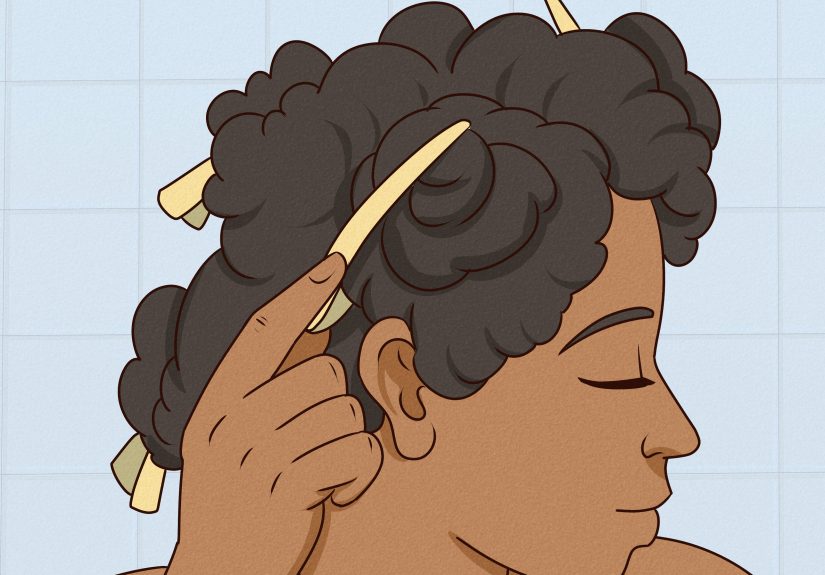
Make 4–8 sections (more if your hair is thick or tightly coiled). Clip away the hair you’re not working on.
Step 3: Start at the edges of the mat with your fingers
Fingers are your safest detangling tool because you can feel what’s happening. Begin at the outer edges of the mat:
gently pull tiny pieces apart. You’re not “yanking”; you’re “persuading.”
- Pinch a small bit of hair near the end of the mat and gently tease strands apart.
- If it resists, add more product and move to a different spot for a minute.
- Hold the hair above the knot (closer to the scalp) with one hand while working with the other to reduce scalp pulling.
Step 4: Move to a wide-tooth combends first, always
Once your fingers can create a little space, use a wide-tooth comb. Start at the very ends of the hair in that section.
Comb a half-inch, then another half-inch, working gradually upward.
- Comb the last inch of hair until it’s smooth.
- Move up one inch and comb again.
- Repeat until the comb passes from mid-lengths to ends easily.
- Only then work closer to the roots.
If you start at the roots, you force the comb through the entire knot length, which tightens the mat and increases breakage.
Bottom-up detangling is slower but dramatically kinder to your hair.
Step 5: Use a detangling brush (optional) for finishing
When the wide-tooth comb glides through, you can switch to a detangling brush if you likeespecially on straighter textures.
For tight curls/coils, many people stick with fingers + wide-tooth comb to preserve curl clumps and reduce frizz.
Step 6: Cleanse gently (if needed) after the mat is mostly out
If product buildup contributed to the mat, you may need a gentle wash. But washing severely matted hair before detangling can
tighten knots. A safer approach:
- Detangle first as much as possible.
- Shampoo the scalp gently (focus on roots), letting suds run through lengths.
- Condition again and do a final light detangle in sections.
Stubborn Mats: Techniques That Save Hair (and Sanity)
The “Soak and Wait” upgrade
If you’re making progress but the mat keeps “re-gripping,” reapply conditioner and give it another 10–15 minutes. Some people
find a warm towel wrap over the conditioned mat helps the product penetrate (warm, not hotyour scalp is not a baked potato).
Add a drop of oil for extra slip
A tiny amount of oil can help strands slideespecially on very dry, curly, or chemically treated hair. Start with a few drops,
emulsify between palms, and press it into the matted area. Too much oil can make detangling harder by turning hair into a slick
rope that’s difficult to grip.
The “rat-tail unlock” (use gently)
If a knot is small but stubborn, a rat-tail comb can help “unlock” itonly after the area is well lubricated. Slide the tail
into the edge of the knot and wiggle slightly to create space. Do not stab, scrape the scalp, or rip through. If it hurts, stop.
Careful micro-snips (last resort, with rules)
Sometimes a mat contains a few strands acting like zip ties. If the mat is far from the scalp and you can clearly see what you’re
cutting, you can try tiny “micro-snips”:
- Only cut vertically into the mat (a few millimeters), never straight across like you’re cutting a ponytail off in a movie.
- Use the smallest scissors you have and cut slowly.
- Stop immediately if you’re near the scalp or can’t see what you’re doing. That’s a professional moment.
The goal is not “cut the knot out.” It’s “release the tension so the knot can loosen.” If you need multiple cuts, you’re
probably better off getting helpbecause hair grows back, but regrettable DIY chop jobs live forever in photo albums.
Hair-Type Tweaks (Because One-Size-Fits-All Hair Advice Is a Lie)
Curly, coily, or textured hair
- Detangle in sections with lots of conditioner for slip.
- Finger-detangle longer before introducing a comb.
- Consider “pre-detangling” before washing (a pre-shampoo detangle) to prevent wash-day mats.
- After detangling, style in a way that prevents re-tangling (twists, braids, or defined curl clumps).
Fine or easily breakable hair
- Use lightweight detanglers and minimal oil.
- Go extra slowfine hair snaps faster under tension.
- Hold hair above the knot to reduce pulling at the root.
Wigs, extensions, or synthetic hair
- Work in small sections and avoid yankingfibers can stretch or fray.
- Detangle before washing, and keep the direction of combing consistent to avoid creating new tangles.
- If it’s an expensive piece, consider professional help to avoid permanent damage.
Aftercare: Keep the Hair From Re-Matting Tomorrow
Once you’ve detangled, your hair is basically saying, “Thank you, but I’m tired.” Treat it gently for a few days:
- Deep condition to restore moisture and reduce friction.
- Skip aggressive heat styling for a bit; air-dry when possible.
- Use a leave-in conditioner or light detangler before combing.
- Trim if needed: if your ends are shredded, they’ll tangle again faster.
Prevention: How to Avoid Severe Mats in the First Place
Prevention is mostly about reducing friction and managing shed hairs before they knit together:
- Detangle regularly (especially after washing or heavy styling).
- Sleep smart: braid/twist loosely, or use a satin bonnet or satin/silk pillowcase.
- Moisturize consistently: conditioner after shampoo, and consider a weekly mask for dry hair.
- Be gentle with wet hair: use a wide-tooth comb and avoid rough towel rubbing.
- Watch product buildup: clarify occasionally if you use heavy stylers, then condition well.
- Protect during high-friction days: scarves/hoods/helmets can mat hairuse protective styles underneath.
FAQ
Is it better to detangle in the shower?
It can bebecause water plus conditioner creates slip. But severely matted hair often needs time for product to penetrate
before shower detangling works. Many people do a “pre-soak” with conditioner first, then finish in the shower in sections.
Should I shampoo first?
Usually, no. Shampoo can increase friction if the hair is already matted. Detangle first (at least partially), then cleanse
gently and condition again.
How long should detangling take?
For minor mats: 10–30 minutes. For severe mats: 45–120 minutes (sometimes split across sessions). If the mat is tight to the
scalp or painful, professional detangling may be fasterand kinder.
What if I’m losing a lot of hair while detangling?
Some shed hair is normal, and mats often trap shed strands that come out all at once. But if you notice bald patches,
significant thinning, scalp pain, or ongoing heavy shedding, consider talking with a healthcare professional.
Real-World Experiences: What People Learn the Hard Way (So You Don’t Have To)
People who’ve battled severe mats often say the same thing: the hardest part isn’t the knotit’s the impatience. Someone will
start strong, get annoyed at minute seven, and then try to “just power through” with a brush. That’s usually the moment the
mat tightens like a zip tie and the scalp starts protesting. The win comes when they switch from “force” to “strategy”: load
up conditioner, wait, and work in tiny sections. It’s less dramatic, but so is hair breakage.
Another common experience: mats show up after life happens. Finals week. A new baby. A long hospital stay. A depressive spell.
Travel with questionable hotel shampoo. In those moments, hair care drops to the bottom of the priority listunderstandably.
When people finally face the mat, they often feel embarrassed, like they “should have” handled it sooner. But shame doesn’t
detangle hair. A plan does. The most helpful mindset shift is treating the mat like laundry you forgot in the washer: not a
moral failure, just a problem that needs the right steps.
Parents detangling kids’ hair report a big difference when they slow down and narrate what they’re doing: “I’m starting at the
ends. I’m holding near your head so it won’t pull. Tell me if I’m hurting you.” That communication reduces fearand fear is a
tangle multiplier. Kids tense up, heads jerk, and suddenly you’re detangling a moving target. A calm routine (conditioner, a
show, breaks, and praise for patience) often turns detangling from a battle into a manageable chore.
People with curls and coils often discover that “dry brushing” was their hidden villain. They might have been taught to brush
hair like it’s a sweater you’re lint-rolling: quick and daily. But textured hair tends to do better with detangling during
conditioned, damp momentswash day, refresh day, protective styling time. Once they start detangling with slip, their hair
breaks less, tangles less, and the “matted surprise” becomes rarer. Many also find that nighttime protectionloose braids,
twists, and satinmakes a bigger difference than buying twenty products.
And then there’s the “I tried oil and it didn’t work” crowd. When oil helps, it’s usually because it’s used as a small add-on
to a conditioner-based detangle, not as the entire plan. Too much oil can make hair slick but still stuck, like trying to
untie a knot in a greased rope. The best results usually come from layering: water for dampness, conditioner or detangler for
slip, a tiny bit of oil only if needed, and then patient finger work before tools. The overall lesson from real-life
detangling stories is simple: the slow method is the fast methodbecause it prevents breakage, setbacks, and “I made it worse”
moments.
Conclusion
Untangling severely matted hair isn’t about brute strengthit’s about lowering friction, working in small sections, and moving
from ends to roots like you’re solving a puzzle instead of starting a fight. Use lots of slip, take breaks, and don’t be
afraid to call a professional if the mat is tight, painful, or near the scalp. The goal is healthy hair and a happy scalp,
not winning an argument with a knot.