Table of Contents >> Show >> Hide
- What Are Dowsing (Divining) Rods?
- A Reality Check: What Science Says (and Why the Rods Move)
- What You Need to Start
- Safety First (Seriously): Don’t Dowse-and-Dig Like a Movie Villain
- How to Use L-Rods: Step-by-Step for Beginners
- How to Use a Forked (Y) Divining Rod
- How to Use a Pendulum for Dowsing
- Beginner Practice Drills (So You’re Not Just Vibes-Guessing)
- Common Beginner Mistakes (and How to Fix Them)
- Practical Uses (and Sensible Limits)
- FAQ: Quick Answers Beginners Always Ask
- Conclusion: Stay Curious, Stay Safe, Stay Honest
- Beginner Experiences: What People Commonly Notice (and What It Can Teach You)
Dowsing (also called divining or, in some parts of the U.S., water witching) is one of those practices that lives in the
interesting neighborhood between “old-school tradition” and “I swear it worked on my uncle’s ranch.”
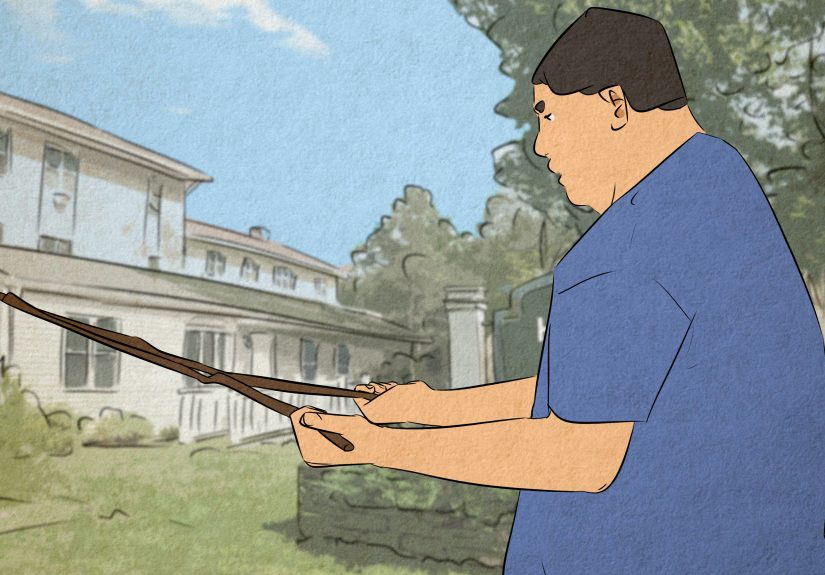
The idea is simple: you hold a pair of rods (or a forked stick, or a pendulum), walk around, and watch for movement that supposedly indicates
water, pipes, minerals, or even lost objects.
This guide will show you how beginners typically use dowsing rods step-by-step, how to practice safely, and how to keep your expectations
realistic. Think of it like learning to use a compassexcept the compass points north, and the rods point toward… your curiosity.
What Are Dowsing (Divining) Rods?
The most common “rods” are either:
- L-shaped rods (two metal rods held one in each hand)
- Y-shaped forked stick (a branching twig held with both hands)
- Pendulum (a weight on a chain or string used for yes/no questions or map-based searching)
People historically used these tools to try to locate groundwater for wells, trace buried lines, or find “energies” (depending on who you ask).
In the U.S., the term “water witching” is commonly used for dowsing specifically aimed at finding groundwater.
A Reality Check: What Science Says (and Why the Rods Move)
Here’s the honest part: controlled testing generally does not support dowsing as a reliable way to locate hidden targets.
That doesn’t mean the rods “never move.” They absolutely movesometimes dramatically. But the most widely accepted explanation is the
ideomotor effect: tiny, unconscious muscle movements can steer the rods without you realizing you’re doing it.
The rods also act like amplifiers. Hold them in a slightly unstable position and the smallest shift in your hands can create a big swing or cross.
Add expectation (“I think the pipe is over here”), environmental cues (terrain dips, greener grass, a line of trees), and good old confirmation bias,
and the experience can feel extremely convincing.
A helpful mindset for beginners is: treat dowsing as an intuitive tracking exercise, not a replacement for surveying tools,
hydrogeology, utility locating, or professional services.
What You Need to Start
Option 1: Make Simple L-Rods (Fast, Cheap, Classic)
You can make beginner L-rods in minutes:
- Grab two metal wire coat hangers (or sturdy wire).
- Cut each into a length of wire you can bend into an “L.”
- Make a short handle (about 4–6 inches) and a long arm (about 12–16 inches).
- Optional upgrade: slide the handle portion into a hollow tube (like a pen body with ink removed) so it rotates more freely.
Option 2: Use a Forked (Y) Branch
The traditional forked stick is usually from a flexible branch. People often choose willow, peach, or witch hazelbut if you’re a beginner,
pick whatever is comfortable and springy. Your grip and tension matter more than the tree’s résumé.
Option 3: Pendulum
Any small weight on a chain works (a key, ring, small stone). Pendulums are often used for yes/no questions or for “map dowsing,” where you hover
the pendulum over a printed map and watch its swing.
Safety First (Seriously): Don’t Dowse-and-Dig Like a Movie Villain
If your dowsing goal involves diggingeven “just a little”use proper safety steps:
- Call 811 before you dig in the U.S. (it’s free, and it helps mark buried utilities).
- Never assume a line is “probably not there.”
- Use dowsing only as a curiosity tool; verify with legitimate locating methods.
In other words: dowsing rods are not magical immunity wands against buried power lines. Let’s keep your eyebrows exactly where they are.
How to Use L-Rods: Step-by-Step for Beginners
Step 1: Set a Clear Target
Beginners get better results (and less confusion) when the target is specific. Good beginner targets:
- A known underground water pipe route (that you can verify later)
- A buried sprinkler line
- A hidden object placed by a friend (simple, safe “test mode”)
- A known well location (for practice patterns)
Step 2: Hold the Rods Correctly
- Hold one rod in each hand by the short end (the handle).
- Keep your elbows relaxed near your sides.
- Point the long arms straight ahead, roughly parallel to the ground.
- Keep the rods level and parallel with a small gap between them (2–6 inches is common).
- Most important: keep your grip light. If you death-grip the rods, they won’t swing freely.
Quick self-check: if your forearms feel like you’re carrying groceries for a family of six, loosen up.
Step 3: “Neutral” Your Body
Before walking, pause. Take a breath. Relax your shoulders. The goal is to start in a neutral state so you can notice what changes.
Many beginners accidentally “aim” the rods without realizing it.
Step 4: Choose a Simple Walking Pattern
Walk slowly in a straight line across the area. Then move over a few feet and walk back in the opposite directionlike mowing a lawn.
This grid approach helps you mark where movements happen consistently.
Step 5: Watch for Common Rod Signals
Different traditions interpret movement differently, but the most common beginner interpretations are:
- Rods cross inward: “hit” or target detected
- Rods swing outward: boundary, “no,” or moving away from target
- One rod pulls more than the other: possible direction or line orientation
If you’re trying to trace a pipe, some dowsers say the rods may open outward when aligned with the pipe’s direction. Others see a crossing signal.
The key is consistency: what does your setup do when you walk over something you already know is there?
Step 6: Mark and Repeat
When you get a strong movement, stop and mark the spot (a small flag, chalk, or even a stick in the ground).
Then approach that same area from a different direction. If the rods react in roughly the same place repeatedly, you’ve created a “pattern,”
which is far more useful than a one-time twitch.
How to Use a Forked (Y) Divining Rod
The Y-rod method relies heavily on tensionmeaning the rod is more likely to “flip” when your hands subtly squeeze or twist.
Here’s a beginner-friendly way:
- Hold one fork end in each hand, palms up or slightly inward.
- Angle the fork ends upward so the stem points forward.
- Apply gentle, even pressureenough to keep it stable, not enough to wrestle it into submission.
- Walk slowly in your grid pattern.
- A “dip” or downward pull of the stem is traditionally read as a hit. Mark it, then verify by repeating from other angles.
Tip: if the Y-rod snaps down constantly, you’re holding it under too much tension. If it never moves at all, you may be holding it too loosely.
Yesthis is basically rod yoga.
How to Use a Pendulum for Dowsing
Step 1: Establish Your Yes/No Signals
Hold the pendulum still and ask a simple question with a known answer: “Is my name [your name]?” Observe the swing.
Then ask: “Is my name [not your name]?” Many people use:
- Clockwise circle = yes
- Back-and-forth swing = no
- Side-to-side swing = maybe/unclear
Your signals may differand that’s fine. The point is to define them before you start asking bigger questions.
Step 2: Use It Over a Map (Optional)
Place a printed map on a table. Hover the pendulum over the area and slowly move across it.
Mark where the pendulum changes direction or intensifies. For beginners, map dowsing is best treated as an experiment, not a guarantee.
Beginner Practice Drills (So You’re Not Just Vibes-Guessing)
Drill 1: The Hidden Object Test
- Ask a friend to hide a small object (like a coin) in one of several identical boxes or cups.
- Turn away while they set it up.
- Use L-rods or a pendulum to “detect” which container holds the object.
- Repeat 10–20 times and record results.
This kind of simple, repeatable test helps you see whether your hits are better than chanceand teaches you how strongly expectation can influence movement.
Drill 2: Trace a Known Line
If you already know where a pipe or sprinkler line runs, practice tracing it without looking at your notes.
Mark your “hits,” then compare them to the known route. This is a low-stakes way to learn what your rods tend to do over real-world features.
Common Beginner Mistakes (and How to Fix Them)
- Grip too tight: Loosen your hands so the rods can swing. Think “butterfly,” not “bench press.”
- Walking too fast: Slow down. Fast walking adds random motion and makes signals harder to interpret.
- Expecting one perfect signal: Look for repeatable patterns across multiple passes, not a single dramatic crossing.
- Forgetting the environment: Slopes, wind, uneven ground, and obstacles can change your posture and create rod movement.
- No verification plan: If you can’t confirm results somehow, you’re collecting vibes, not information.
Practical Uses (and Sensible Limits)
People commonly try dowsing for:
- Locating water for wells (traditional use)
- Finding lost objects (often with pendulums)
- Tracing buried lines (sprinklers, pipes) as a first-pass guess
- Mindfulness and intuition practice (learning how attention affects perception and movement)
The sensible limit: if the task has safety, legal, or financial consequences (digging, construction, drilling a well),
use proper methods and professionals. Dowsing can be a personal tradition or curiosity practicebut it shouldn’t be your only tool.
FAQ: Quick Answers Beginners Always Ask
Do the rods need to be copper?
Many people prefer copper or brass, but beginners can learn with simple wire. What matters most is that the rods move freely and you can hold them consistently.
Can anyone learn dowsing?
Anyone can learn the basic technique of holding rods and observing movement. Whether that movement reliably detects a hidden target is a different question.
That’s why practice drills and verification are so helpful.
Why does it feel so real?
Because it is realyour body is making real movements. The “mystery” is whether the movements come from external forces or from subconscious cues and expectations.
Conclusion: Stay Curious, Stay Safe, Stay Honest
Learning how to use dowsing or divining rods can be surprisingly fun. It teaches you about attention, body mechanics, expectation, and how quickly the human brain
turns patterns into “signals.” If you treat it like a beginner’s experimentwith repeatable practice, notes, and real-world verificationyou’ll get the best of both worlds:
a fascinating experience and a grounded approach.
And if nothing else, you’ll gain a new appreciation for how powerful your hands are at doing things without sending a calendar invite to your conscious brain.
Beginner Experiences: What People Commonly Notice (and What It Can Teach You)
Beginners often report the same first surprise: “I didn’t think the rods would move… and then they moved a lot.”
That moment can feel spooky in the fun, campfire-story wayuntil you realize the rods are basically built to amplify tiny shifts.
A small change in wrist angle or finger pressure becomes a dramatic cross, like your hands are speaking in bold font.
One common experience is the “confidence wave.” You start neutral, walk a few passes, and the rods stay quiet. Then you step into a spot where you
think something might bemaybe the grass looks greener, maybe the ground dips slightly, maybe you’re near where the old well used to beand
suddenly the rods cross hard. Many beginners describe an instant internal reaction: a little jolt of certainty, like your brain just shouted,
“FOUND IT!” even if you don’t have proof yet.
Another classic beginner moment happens when practicing over something knownlike a sprinkler line you can see at the control box.
You walk your grid, and the rods cross near where the line should be. You feel validated. Then you repeat the pass, but this time you’re thinking,
“Okay, rods, do the thing,” and they cross sooner, or later, or not at all. This is where many people learn the real lesson:
your attention and expectation can change the results. Some beginners respond by getting frustrated; others get fascinated and start treating it like a personal lab.
The second group usually learns faster.
People also commonly notice “directional behavior.” For example, the rods may cross strongly when walking north-south but barely react east-west.
Beginners often interpret that as the target having a line-like shape (like a pipe), and sometimes that’s a reasonable hypothesisespecially if the area has
a known utility route. The smarter move is to mark your strongest signals, then compare them with verified information later. Even if your final result isn’t perfect,
you’ve trained yourself to think in patterns instead of one-off moments.
If you try a pendulum, many beginners experience “instant yes/no.” You ask a question and the pendulum swings decisively, which feels like a clear answer.
Over time, beginners often notice the pendulum answers become less crisp when the question is vague (“Is this a good idea?”) and more consistent when the question
is concrete (“Is the object in this room?”). That shift nudges you toward better thinking: more specific questions, clearer definitions, less emotional loading.
Even if you remain skeptical about the method, the process can still sharpen your decision-making habits.
Finally, a lot of beginners describe dowsing as unexpectedly calming. The slow walking, the focus, the repeated passes, the simple act of marking resultsit can feel
like a mindful scavenger hunt. When treated responsibly, it becomes less about “proving magic” and more about exploring how humans notice the world.
If you want to make the experience genuinely valuable, keep a notebook: write down where you got signals, how strong they felt, what direction you walked,
and what you learned when you verified later. That’s how a mysterious moment turns into a meaningful skill-building practice.

![A Beginner's Guide to WordPress Block Patterns [+ Insights from WCEU Speaker Sean Blakeley]](https://gearxtop.com/wp-content/uploads/2026/03/a-beginners-guide-to-wordpress-block-patterns-insights-from-wceu-speaker-sean-blakeley-zZYF6DMk-thumb.jpg)