Table of Contents >> Show >> Hide
- The artist behind the whimsy: turning nostalgia into clay
- Why vintage figurines still hit us right in the feelings
- How these ceramic dolls are made: the “old doll, new life” method
- Step 1: Choosing a vintage “base character”
- Step 2: Making a plaster mold
- Step 3: Pouring liquid clay (slip casting)
- Step 4: Cleaning seams, refining details, and sculpting personality
- Step 5: Firing: turning fragile clay into durable ceramic
- Step 6: Painting, underglazes, and glazing for that vintage shine
- What makes these dolls “Bored Panda perfect”
- Collecting, ethics, and the “remix” question
- If you want to try this aesthetic: practical tips that save your sanity
- How to display ceramic dolls without turning your home into a stress museum
- What this trend says about us right now
- Conclusion
- Extra: of Studio-Style Experiences Inspired by Vintage Ceramic Dolls
There’s a very specific kind of magic that lives in a glass cabinet at a grandparent’s house. You know the one:
a small army of delicate figurines, frozen mid-curtsy, mid-waltz, mid-“I’m not allowed to touch that, am I?”
They’re equal parts charming and slightly haunted (in a friendly way, like a polite ghost who compliments your outfit).
That cabinet energy is exactly what makes the Bored Panda story I Create Ceramic Dolls Inspired By Vintage Figurines so sticky-in-your-brain.
It’s not just “look at this cute craft.” It’s an entire aesthetic time machine: vintage shapes, sweet faces, old-world poses,
and the satisfying permanence of clay that’s been fired into something that can outlive trends, algorithms, and your current obsession with minimalism.
The artist behind the whimsy: turning nostalgia into clay
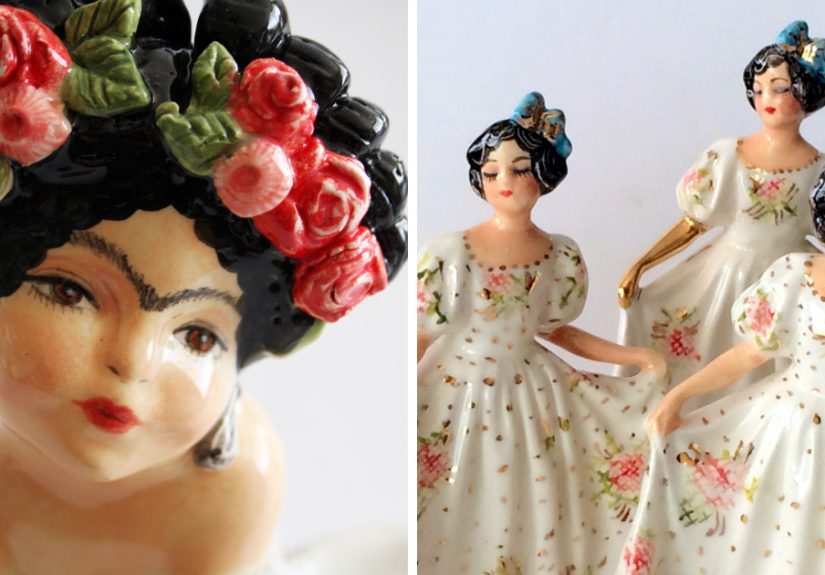
In the original Bored Panda post, artist Fugi Naim describes a lifelong fascination with dolls and figurinessparked by childhood memories of collectibles
and art pieces surrounding her, especially a cabinet full of dolls, figurines, and ornaments. She also explains that receiving a ceramic kiln (“a ceramic oven”)
became a turning point: once she started working with clay, she found what felt like her creative home. From there, building full dolls became inevitable.
What’s especially interesting about her approach is how it balances reverence and reinvention. She isn’t copying the past to preserve it in amber.
She’s using vintage forms as a starting pointthen reshaping, sculpting, and painting details so each piece becomes a new character with an old soul.
Why vintage figurines still hit us right in the feelings
Vintage figurinesespecially mid-century ceramics and porcelainare tiny storytelling devices. Their body language is theatrical:
a tilted head, a careful hand gesture, a swish of a dress that suggests motion even when everything is perfectly still.
Collectors often gravitate toward them because they’re nostalgic, decorative, and surprisingly emotional objects.
In the U.S., figurine collecting has long included well-known mid-century makers and linesthink the era when decorative ceramics were everywhere:
living room shelves, curio cabinets, even kitchen nooks. The appeal wasn’t only “fancy.” It was intimate. A figurine could be a souvenir,
a gift, or a tiny symbol of taste and aspiration. And because many were mass-produced, they also became shared cultural “background characters”
the kind of objects lots of people recognize even if they don’t know the brand name.
When a modern ceramic artist borrows that language, something cool happens: the figurine stops being a generic decoration and becomes a specific point of view.
The pose stays familiar, but the details changeexpression, color, styling, and the little imperfections that prove a human hand was there.
How these ceramic dolls are made: the “old doll, new life” method
The Bored Panda post lays out a process that blends traditional ceramic technique with a remix mindset:
choose an existing vintage doll, make a mold, cast it in clay, then sculpt, paint, and glaze it into a one-of-a-kind piece.
That sounds straightforwarduntil you remember that ceramics is basically the art of controlling mud as it slowly plots against you.
Step 1: Choosing a vintage “base character”
The starting point is an existing doll or figurineoften something rare or no longer produced. In her post, Naim mentions working with vintage dolls,
including a focus in her Etsy shop on dolls based on the vintage Sun Rubber Co. style, which she describes as close to her heart.
This choice matters because the original object carries design DNA: proportions, posture, and that distinctive “era look.”
A 1950s-inspired doll reads differently than a Victorian-inspired figurine, even before color touches the surface.
Step 2: Making a plaster mold
Plaster molds are a backbone of slip casting. You create a mold that captures the form, then use it to reproduce the shape in clay.
Practical mold-making often includes release strategies (so your mold separates cleanly) and a pour hole for the slip.
Ceramic Arts Network resources commonly emphasize careful mold preplike applying mold soap properly and removing excess so it doesn’t imprint on the cast.
This is the part of the process where patience pays rent.
Step 3: Pouring liquid clay (slip casting)
Slip casting is exactly what it sounds like: clay, but in a liquid suspension. You pour the slip into a porous plaster mold.
The mold pulls water from the slip by capillary action, and a clay layer builds up against the mold wall. After enough thickness forms,
you pour out the excess slip, and what remains becomes the “shell” of your piece.
Educational materials from U.S. ceramics organizations explain the fundamentals clearly: slip is a water-based suspension with ceramic particles,
plaster’s porosity wicks water away, and the formed piece (often called the “green body”) is fragile until firing transforms it into a stronger ceramic.
In other words, at this stage your doll is basically a confident-looking cookie made of dust and hope.
Step 4: Cleaning seams, refining details, and sculpting personality
Once the cast comes out of the mold, it needs cleanupseam lines, pour spouts, and any tiny casting flaws.
This is also the moment where “vintage inspiration” turns into “new artwork.”
In her Bored Panda post, Naim describes sculpting and painting details to make each doll special and differenther own.
Think of this phase like character design. The base form is the template. The surface work becomes the story:
a sharper nose, softer cheeks, a different hairstyle, a playful accessory, an expression that reads shy, bold, sleepy, or mischievous.
Step 5: Firing: turning fragile clay into durable ceramic
Firing is where ceramics stops being “craft that can crumble” and becomes “object that can survive a move.”
Greenware is typically bisque-fired first (to harden it while keeping it porous enough for glaze), then glaze-fired to finish.
Temperature is often discussed in “cones,” a ceramic measurement of heat-work (temperature plus time).
Many studios fire at common mid-range cones (like cone 6) for stoneware and some porcelains, depending on clay and glaze choices.
This is also the stage where planning beats vibes. If your clay body and glaze aren’t compatible at your firing temperature,
you can get crazing (fine cracks), shivering (glaze flaking), pinholes, or other surprises that nobody asked for.
Step 6: Painting, underglazes, and glazing for that vintage shine
“Painting” ceramics can mean a few different things, but one classic route is underglaze plus a transparent glaze.
Underglazes are used to create designs and patterns that show through the glaze layergreat for crisp details like facial features,
clothing motifs, and decorative accents. After that, a clear or translucent glaze can add depth and a glass-like finish.
That’s part of why vintage figurines feel so luminous: light bounces off glaze differently than it does off matte paint.
When you apply that logic to a ceramic doll, you get a piece that feels both illustrated and sculpturallike a character that stepped out of a storybook
and decided to become a keepsake.
What makes these dolls “Bored Panda perfect”
Bored Panda thrives on work that is instantly scroll-stopping and then slowly rewarding. Ceramic dolls inspired by vintage figurines do both:
they catch your eye with charm, then keep you looking because the details are densetiny faces, surface patterns, and nostalgic cues.
The format also invites an emotional arc. In the Bored Panda write-up, you can feel the “before and after” story:
childhood fascination → discovering clay through a kiln gift → returning to old dolls → bringing them back in a new form.
That’s not just a technique; it’s a creative origin story. People love that almost as much as they love a glossy glaze.
Collecting, ethics, and the “remix” question
Working from existing vintage dolls raises a natural question: where is the line between inspiration, casting, and reproduction?
In fine art and craft, this often depends on context: whether the source object is in the public domain, whether the result is transformative,
whether it’s clearly presented as an original artwork, and whether trademarks or protected character designs are involved.
Many artists who work with vintage-inspired forms focus on transformation: changing features, adding sculpted elements,
altering surface design, and making each piece a unique statement rather than a direct replica.
It’s less “copy machine” and more “remix album,” with clay as the DJ.
If you want to try this aesthetic: practical tips that save your sanity
Start with one strong silhouette
Vintage figurines tend to have a readable silhouettean iconic pose, a dress shape, a gentle curve.
Pick a form that communicates even without color. If it’s charming in plain clay, it’ll be charming when finished.
Respect the mold-making learning curve
Mold-making is a craft inside the craft. Small details (like cleaning off excess mold soap before a pour, or planning clean seam placement)
can decide whether you get crisp results or constant frustration. If you want repeatable casts, build time into the process.
Test your colors like you’re running a tiny lab
Ceramic color can shift in firing. Underglaze and glaze combinations may look different after heat-work.
Make small test tilesespecially if you’re chasing that vintage palette of soft pastels, creamy whites, and glossy accents.
Design the face last (yes, really)
Faces carry the emotional weight. Save them for when everything else is solid: seams cleaned, surface smoothed, and your plan clear.
A confident face can rescue a piece; a rushed face can make a beautiful sculpture look like it just remembered it left the oven on.
How to display ceramic dolls without turning your home into a stress museum
These pieces live best where they’re visible but protected: a shelf with stable footing, a cabinet, or a wall niche.
If the work has delicate protrusions (tiny arms, accessories, thin glazed edges), keep it away from high-traffic zones
and anywhere your cat can interpret it as a new personal challenge.
Lighting matters too. A soft directional light brings out glaze depth and surface texture.
The goal is to make the doll look like a small stage actorspotlit, adored, and safely out of reach of flying remote controls.
What this trend says about us right now
The resurgence of vintage-inspired ceramics fits a bigger cultural mood: people want objects with warmth, history, and visible effort.
A slip-cast ceramic doll isn’t disposable. It’s slow.
And “slow” is suddenly luxuriousespecially when the end result feels like a memory you can hold.
That’s why this kind of work resonates beyond the craft community. It appeals to collectors, nostalgists, interior design lovers,
and anyone who’s ever felt emotionally attached to a weird little figurine that absolutely did not match the rest of the room.
Conclusion
I Create Ceramic Dolls Inspired By Vintage Figurines lands because it blends technique and tenderness.
The processmold, slip, cast, refine, fire, paint, glazehas real discipline behind it.
But the result is playful: characters that feel like they’ve stepped out of a cabinet memory and into a modern studio.
Whether you’re a ceramic artist, a collector, or just someone who loves art that feels cozy and uncanny in equal measure,
these dolls are proof that nostalgia doesn’t have to be passive. You can reshape itliterallyinto something new.
Extra: of Studio-Style Experiences Inspired by Vintage Ceramic Dolls
If you spend time around ceramic artists who make figurative workespecially pieces inspired by vintage figurinesyou’ll hear a familiar pattern of “studio moments.”
They’re not dramatic Hollywood montages (unless someone drops a greenware arm, in which case yes, it becomes a tragic short film),
but they’re the real, lived texture of making. First comes the thrill of choosing a reference: a thrift-store figurine, a retro doll, a mysterious cabinet cutie
with a permanently polite smile. There’s a strange intimacy to it. You’re studying posture and proportions the way a writer studies dialogue, looking for a personality
hiding in the shape.
Then comes the humbling part: molds. Makers often describe their first serious mold attempt like a relationship that “taught them a lot.”
You learn that plaster has opinions. It sets when it wants to set. It captures every fingerprint you didn’t realize you left behind.
And if you rush the release step, the mold will punish you by refusing to separatelike two magnets that fell in love and won’t let go.
The best studios build routines around this: consistent measuring, careful prep, and a little respect for the chemistry.
Slip casting adds its own rhythm. Pour. Wait. Drain. Wait again. The waiting is oddly meditativeuntil you realize you waited too long and your wall thickness
is now “ceramic bunker.” When the cast finally releases cleanly, it feels like a small miracle, and artists tend to celebrate quietly in ways outsiders don’t notice:
a satisfied nod, a “nice,” or the classic, “Okay… we can work with this.” Cleanup is where patience becomes a personality trait. Seam lines get scraped down,
surfaces get sponged, and every tiny flaw becomes a negotiation: is it character, or is it going to bug me forever?
The emotional peak often happens at firing. Kilns turn everyone into temporary philosophers. While the piece is heating,
makers rehearse all possible outcomes: “It’ll be fine,” “I should’ve supported that part,” “Why did I think that thin hand was a good idea?”
Opening the kiln after a bisque fire is a reliefyour fragile clay is now durable enough to handle. Opening after a glaze fire is a reveal.
Glaze can transform a piece into something luminous and vintage-sweet… or it can run, crawl, pinhole, and generally behave like it has its own creative agenda.
That’s why experienced artists test relentlesslyand why they still sometimes get surprised.
Finally, there’s the most joyful phase: the personality pass. Painting faces, adding tiny decorative elements, choosing soft vintage colors,
and deciding whether the doll feels shy, bold, dreamy, or mischievous. This is where the piece stops being “a cast” and becomes “a character.”
Makers often say the doll tells them what it wants to behalf joke, half true. And when it’s finished, there’s a particular satisfaction in placing it on a shelf.
It’s not just a decoration. It’s a small, fired, glazed storymade from nostalgia, patience, and the stubborn refusal to let an era’s charm disappear.