Table of Contents >> Show >> Hide
- What Are Cuddle Cards, Exactly?
- Why a Hug by Mail Hits Different (Yes, There’s Real Science Here)
- Designing Cuddle Cards: Cozy, Not Cluttered
- Make It Mail-Friendly: USPS Basics You’ll Be Glad You Knew
- When to Send a Cuddle Card (AKA: The “I Don’t Know What to Say” Moments)
- What to Write Inside (Without Sounding Like a Motivational Poster)
- How to Make Your Own Cuddle Cards (DIY Version)
- Why This Works in a Lonely Era
- Conclusion: A Real Hug, in Paper Form
- Extra: of Experience (What Creating and Mailing Cuddle Cards Taught Me)
We live in a world where you can “react” to someone’s bad day with a crying emoji… and then immediately get distracted by a video of a raccoon stealing a slice of pizza.
Modern communication is fast, frictionless, andlet’s be honestsometimes emotionally equivalent to yelling “good luck!” out of a moving car.
That’s why I created cuddle cards: a sweet, mail-friendly way to send a little comfort that feels more like a real hug and less like a notification.
Think of them as hug by posta tangible reminder that someone is thinking about you, rooting for you, and would absolutely squeeze you (with consent) if they weren’t 1,200 miles away.
What Are Cuddle Cards, Exactly?
A cuddle card is a greeting card designed to deliver comfort, warmth, and connection through physical mail. The “cuddle” part can be as simple as a cozy message
(“I’m here. You’re not alone.”) or as extra as a little paper-crafted “hug pocket” that opens like arms, a soft mini insert, or a small fold-out that literally wraps around the note.
The real point isn’t fancy engineeringit’s tactile care. When someone holds your card, they’re holding proof that you spent time on them.
Not “I typed this while waiting for coffee” time. Real time.
Why a Hug by Mail Hits Different (Yes, There’s Real Science Here)
Social connection isn’t a cute bonus feature in lifeit’s a health issue. The U.S. Surgeon General has warned that loneliness and isolation can harm both mental and physical health,
and called for stronger social connection as a public health priority.
And it’s not just a “sad feelings” thing. Research summaries discussed by the American Psychological Association note that lacking social connection can raise health risks in a way that’s been compared
to major risk factors like smoking.
So where do cuddle cards fit? They’re basically a low-tech, high-heart tool for connectionespecially when you can’t show up in person.
They create a moment of attention that’s hard to replicate on a screen:
the texture of paper, the sound of an envelope opening, the small surprise of something arriving just because someone cared.
Handwritten Notes Don’t Just Feel GoodThey Can Boost Well-Being
There’s also evidence that writing gratitude or appreciation letters can improve well-being for the writer and can be meaningful for the recipient.
One University of Texas report on research around gratitude letters highlights how expressing gratitude can improve well-beingand how people often underestimate how happy recipients will feel.
Translation: your “This is probably cheesy” fear is usually wrong. Your card is more likely to be kept in a drawer and reread than mocked in a group chat.
Designing Cuddle Cards: Cozy, Not Cluttered
When I started designing these, I had one main rule: the card should feel like comfort, not homework.
That meant a layout that’s warm, simple, and easy to personalize.
Key Design Elements That Make a Card Feel Like a Hug
- Soft language: supportive, specific, and non-toxic. (“I’m sorry this is hard” beats “Everything happens for a reason.”)
- Gentle visuals: rounded shapes, cozy icons (blankets, mugs, little clouds), and plenty of breathing room.
- Interactive comfort: a fold-out “wrap,” a tiny affirmation insert, or a “pull tab” that reveals a message like “I’m still here.”
- Optional prompts: small fill-in lines like “Today, I’m proud of you for _______.” (Because brains under stress love helpful structure.)
The goal is emotional clarity: the recipient shouldn’t have to decode your intentions like it’s a mystery novel with a confusing ending.
They should open it and instantly feel, “Oh. Someone’s got me.”
Make It Mail-Friendly: USPS Basics You’ll Be Glad You Knew
Cuddle cards are meant to travel, so I designed them with mailing realities in mind. The U.S. Postal Service has specific size rules for letters and postcards,
and shape matters more than most people realize.
Postcard vs. Letter: Why Size and Thickness Matter
If you’re sending a postcard-style cuddle card, USPS guidelines for postcard dimensions are tighter than letter-size mail.
If you’re using an envelope, your cuddle card usually counts as a letterunless it’s unusually shaped or rigid.
Important: Square Cards Can Cost Extra
USPS notes that some First-Class Mail letters can require an extra nonmachinable surcharge when they’re rigid, square, or unusually shaped, because they don’t move smoothly through sorting equipment.
In plain English: if you want to keep postage simple, go rectangular.
Cuddle-card pro tip: if you add anything chunkylike a button, thick sticker pile, or a tiny charmyour sweet hug could become a mail-processing obstacle course.
Keep embellishments flat, or use a slightly sturdier envelope and be ready to pay the correct postage.
When to Send a Cuddle Card (AKA: The “I Don’t Know What to Say” Moments)
The best time to send a cuddle card is often when you’re tempted not towhen it feels awkward, when you’re unsure what to say, or when life is messy.
Cards help you show up with warmth without forcing a big conversation.
Specific Moments That Call for a Hug by Post
- Grief: “I’m thinking of you today. No pressure to reply. Just love.”
- Burnout: “You don’t have to earn rest. I’m proud of you for surviving this week.”
- New job nerves: “Go be excellent. Also: hydrate. Also: you’ve got this.”
- Friendship reconnection: “I miss you. Can we do a low-pressure catch-up soon?”
- Long-distance love (family/friends): “This is a hug with postage and feelings.”
Big moments matter, surebut small moments are where cuddle cards become a habit.
A random Tuesday card can feel even more powerful because it says: “You matter when nothing is being celebrated.”
What to Write Inside (Without Sounding Like a Motivational Poster)
The heart of a cuddle card is the message. Here’s the formula I use when I want to be supportive without going full “inspirational mug aisle.”
A Simple 3-Part Message That Works
- Name the reality: “I know things have been heavy lately.”
- Offer a true comfort: “You don’t have to carry it alone.”
- Make it specific: “I’m free Saturday if you want a call, or I can just text you bad jokes.”
If you want a little science-backed boost, add a gratitude line. Gratitude letters and notes have been linked with positive emotional effects in multiple reports and summaries.
It doesn’t have to be intense; it can be as small as: “I’m grateful you exist in my life.”
How to Make Your Own Cuddle Cards (DIY Version)
You can absolutely buy cute cards. But if you want to create cuddle cards from scratcheither for personal use or as a creative projecthere’s a practical approach.
Materials
- Cardstock or thick paper (enough stiffness to feel special)
- Printer or markers
- Scissors + glue/tape
- Envelope (rectangular is easiest for mailing)
- Optional: stickers, washi tape, a small insert slip
Step-by-Step
- Pick a size: Choose a standard card size that fits a regular envelope and stays rectangular.
- Create the “hug” feature: Add a fold-out wrap panel or a small “pocket” inside that holds an affirmation strip.
- Design the front: Keep it simple: one cozy illustration + a short line (“A hug for you,” “Cuddle delivery,” “Open when you need a squeeze”).
- Write the message: Use the 3-part formula above. Add one personal detail that proves it’s for them.
- Flatten decorations: If it bulges, it may trigger extra postage or damage risk in sorting.
- Mail it: Address clearly, seal well, and use the correct postage for the shape and thickness.
You’ll notice none of these steps involve perfection. That’s intentional. Cuddle cards aren’t about being an artist; they’re about being present.
Why This Works in a Lonely Era
When loneliness is common enough to be treated like a public health problem, small practices that build connection start to matter more.
News coverage and public health discussions have emphasized that many Americans feel disconnected and that rebuilding everyday connection is a real challenge.
A cuddle card won’t fix society, obviously. But it can fix a moment. And moments stack up.
It’s a tiny proof-of-life signal that says: “You are not invisible.”
Conclusion: A Real Hug, in Paper Form
I made cuddle cards because people deserve comfort that isn’t rushed, outsourced, or squeezed into a 10-second reply.
Sending a hug by post is a simple act, but it carries weight: time, intention, and warmth.
So if someone in your life is strugglingor celebratingor just existing bravelysend the card.
Make it cozy. Make it specific. Make it real.
Because sometimes the most powerful thing you can mail is the message: “I’m with you.”
Extra: of Experience (What Creating and Mailing Cuddle Cards Taught Me)
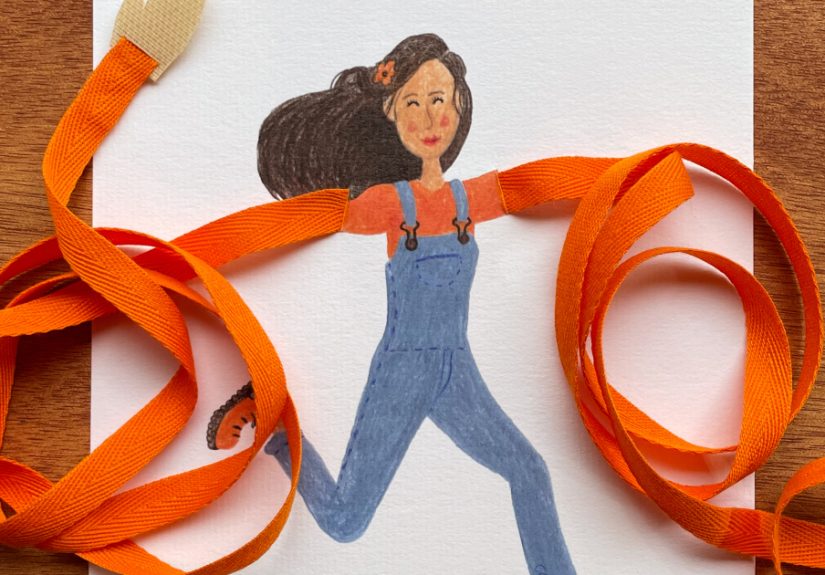
The first cuddle card I made looked… ambitious. I had this grand vision of a fold-out “paper hug” with little arms that wrapped around a note like a tiny cardigan.
In my head, it was adorable. In real life, it was a bit like origami wrestled a greeting card and everyone lost. Still, I mailed it anyway.
That was lesson one: the feeling matters more than the engineering. The recipient doesn’t grade your folds. They feel your effort.
When my friend texted, “I opened this and immediately smiled,” I realized I had been treating the card like a product instead of what it really was:
a container for care.
Lesson two surprised me: making the cards was calming. Designing the front, choosing the words, and writing slowly felt like a tiny ritual.
It reminded me of why handwritten notes are still a thing. You can’t speed-run sincerity.
Even if you try, your hand will cramp and physically refuse to let you become a productivity monster.
Lesson three was about specificity. The best responses I got weren’t to the cards with the prettiest doodles.
They were to the cards that included a small, true detailsomething like, “I know Tuesdays are the hardest,” or
“I’m proud of how you keep showing up even when you’re tired.”
Those lines landed because they proved I wasn’t sending a generic “feel better” broadcast. I was sending their hug.
I also learned to respect the practical stuff. One card got slightly bent because I added too many layered stickers on the inside.
It wasn’t a disaster, but it taught me to keep embellishments flatter if I want the card to arrive looking like comfort rather than like it survived a dramatic action movie.
Now I use texture strategically: a soft-looking pattern, a single sticker, a neat washi borderenough to feel special without turning the envelope into a lumpy mystery.
The biggest lesson, though, was how these cards changed the “rules” of staying in touch. Phone calls can feel like a commitment.
Texting can feel like noise. But a card doesn’t demand anything back. It simply arrives and says, “Here.”
And that’s powerful for people who are overwhelmed, grieving, anxious, or just not in a talkative season.
After a few weeks, I started keeping a small stack of cuddle cards ready to goblank inside, waiting.
Not because I’m organized (I’m not; my email inbox is a museum of unfinished intentions), but because life is unpredictable.
Someone will get sick. Someone will have a rough week. Someone will quietly need proof that they matter.
Now, instead of wondering what to do, I can grab a card, write something true, and send a hug that shows up in a mailbox like a small, gentle surprise.