Table of Contents >> Show >> Hide
- Why Spray Paint Still Feels Electric
- From the Street to the Studio to the Museum
- What Spray Paint Can Do That Other Mediums Cannot
- The Craft Behind the Can
- Safety Is Not Optional. It Is Part of the Craft.
- Why Communities Respond to Spray Paint Art
- Can You Build a Career With Spray Paint Art?
- What It Feels Like to Make Art With Spray Paint: A First-Person Reflection
- Conclusion
- SEO Tags
Say “spray paint art,” and some people still picture a hoodie, a brick wall, and a neighbor clutching pearls. But that old stereotype misses the point by a mile. Spray paint is not just a tool of rebellion. It is a serious artistic medium, a public language, and for many artists, a way of turning empty surfaces into memory, motion, and mood.
I make art with spray paint because it does something few mediums can do without breaking a sweat. It moves fast. It glows. It drifts. It can whisper in a misty fade or hit a wall with the confidence of a marching band. A brush is thoughtful. A pencil is intimate. A spray can? A spray can enters the room like it already paid rent.
That speed is part of the magic, but it is not the whole story. Great spray paint art is not random. It takes planning, restraint, layering, patience, and a surprising amount of respect for physics, weather, surface texture, and chemistry. The best aerosol artists know how to improvise without losing structure. They know how to make bold work without making a visual mess. And they know that if they want the art to matter, it needs more than color. It needs intention.
Why Spray Paint Still Feels Electric
There is something wonderfully alive about aerosol paint. The color does not simply land on a surface; it arrives as a cloud, a veil, a burst, or a stain. That changes the artist’s relationship with the work. Instead of dragging pigment across a surface, you are directing it through air. That little difference changes everything.
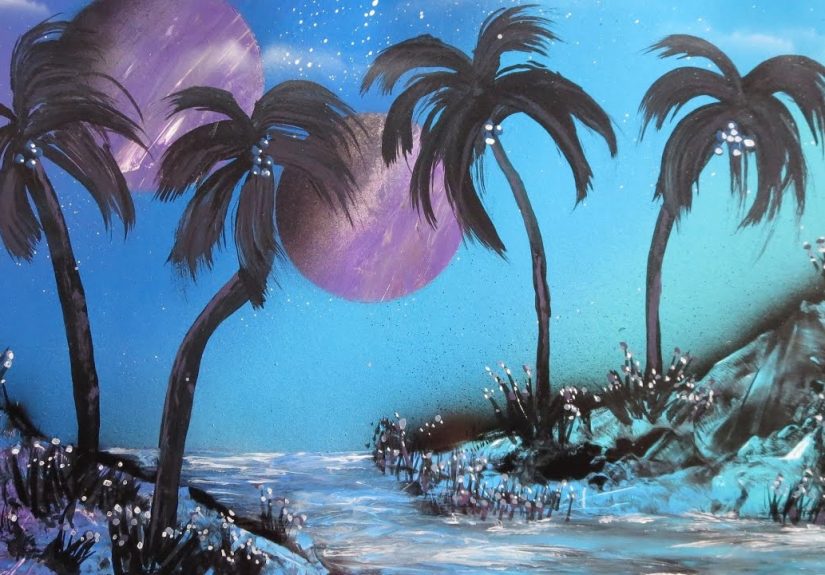
Spray paint lets artists build atmosphere quickly. A sky, a halo, a shadow, a soft edge, a fading glow, or a rough industrial texture can appear in seconds. That makes the medium especially powerful for large-format work, murals, street-inspired canvas pieces, abstract compositions, lettering, and mixed-media installations. It also explains why spray paint keeps showing up in galleries, public art projects, design collaborations, and educational community art programs.
In other words, spray paint is not the “lazy shortcut” some people imagine. It is a medium that rewards confidence and punishes hesitation. If you do not know what you are doing, the can will expose you faster than an unforgiving overhead light in a department-store dressing room.
From the Street to the Studio to the Museum
The cultural story of spray paint art is one of the most interesting arcs in modern visual culture. What began as part of graffiti writing and hip-hop visual expression developed into a broader creative movement that reached trains, walls, legal mural programs, studio canvases, community spaces, fashion, and eventually museums. That journey did not happen because institutions suddenly became cool. It happened because the art was too powerful to ignore.
Spray paint became a tool for visibility. For many artists, especially in cities, it offered speed, scale, and access. It allowed people to write themselves into the landscape, whether the establishment approved or not. Over time, artists and curators started to recognize that aerosol work was not merely about marking territory. It was about style, rhythm, color theory, typography, identity, politics, and public storytelling.
That tension still exists. Spray paint art can live in a museum and still feel raw. It can appear on a sanctioned mural and still carry the pulse of the street. It can be deeply personal and wildly public at the same time. That dual identity is part of what makes it such a compelling medium. Spray paint art does not always ask for permission culturally, even when it absolutely should ask for permission legally.
The smartest artists understand that difference. They respect property, work on authorized walls or accepted surfaces, and build careers that preserve the spirit of aerosol art without confusing creativity with vandalism. That distinction matters for artists, communities, and the future of public art.
What Spray Paint Can Do That Other Mediums Cannot
It Creates Atmosphere at Top Speed
Aerosol paint can shift from dense to translucent in an instant. That makes it ideal for gradients, glowing backgrounds, smoky transitions, cosmic effects, shadows, and dramatic depth. Artists can create an emotional environment before the viewer even identifies the subject. A portrait can feel cinematic. A letterform can feel like it is vibrating. A wall can go from blank to breathing in a very short time.
It Makes Layering Feel Physical
Spray paint is all about layers. Underpainting, overpainting, ghost marks, drips, fades, scratches, clean lines, soft edges, and half-hidden forms all contribute to the final image. That layered quality gives the work a sense of history. One mark speaks to the next. One decision leaves a trace beneath another. The result often feels less like a flat image and more like a record of action.
It Thrives at Scale
Some mediums shrink when the surface gets bigger. Spray paint gets more interesting. Large walls, garage doors, panels, fences, and oversized canvases invite movement from the artist’s full body. You are not just painting with your hand; you are painting with your stance, your reach, your timing, and sometimes your willingness to climb a ladder without developing a dramatic monologue about your life choices.
It Balances Precision and Chaos
Spray paint has range. It can be crisp enough for graphic shapes and lettering, yet loose enough for texture, fog, and abstraction. That means a single piece can combine design discipline with happy accidents. And yes, accidents matter. Some of the best spray paint work looks alive precisely because it allows for drift, overspray, and unpredictable moments that a tighter medium might sterilize.
The Craft Behind the Can
People who have never worked with spray paint often assume the process is simple: shake can, point can, become genius. Cute theory. Reality is less glamorous and much more interesting.
Good aerosol art starts with decisions. What is the surface? Is it canvas, wood, primed panel, metal, brick, or concrete? How absorbent is it? How smooth? How large? Will the piece be indoors or outdoors? Is the image typography-driven, abstract, figurative, or mixed? What is the color story? Where will the eye go first? What deserves a hard edge, and what should dissolve?
Then comes control. Different nozzles create different spray patterns and line widths. Distance affects softness. Speed affects density. Layer order changes everything. A muddy piece is often not a talent problem. It is a sequencing problem. Strong spray paint artists think in layers the way strong composers think in sound. They know when to go loud, when to pause, and when one more pass will improve the piece versus completely ruin it in the most educational way possible.
Composition matters just as much as technique. A bright mural with weak structure is still weak. A dramatic fade cannot rescue a confused idea. The artists who last are the ones who learn fundamentals: balance, contrast, negative space, form, typography, rhythm, and visual hierarchy. Spray paint may look spontaneous, but the best work usually has strong bones underneath the flash.
Safety Is Not Optional. It Is Part of the Craft.
Paint fumes are not a personality trait. They are a real safety issue. Anyone serious about making art with spray paint has to respect ventilation, protective gear, and the chemical reality of the medium. That means working in well-ventilated areas, following product safety guidance, using appropriate protection for paint vapors and overspray, and treating the workspace like a studio rather than a dare.
That is especially true indoors. Spray paint can release fumes and particles that irritate the eyes, nose, throat, skin, and lungs. Poor airflow can turn a short session into a bad decision. Safety also includes practical matters: keeping the area clear, protecting surfaces, storing cans properly, and staying away from ignition sources. Nobody wants their artistic legacy to include the phrase “minor fire incident.”
There is also an ethical side to safety. Public art should not put the artist, the audience, or the community at risk. If a wall is not legal, the problem is not just legal exposure. It is the possibility of unsafe conditions, rushed decision-making, and disrespect for the people who live around the work. Permission is not a buzzkill. It is the foundation of sustainable public practice.
Why Communities Respond to Spray Paint Art
Spray paint art is powerful because it changes a place fast. A plain wall becomes a landmark. A neglected corner becomes a conversation starter. A school, alley, shop exterior, underpass, or community center can feel more human when color and imagery appear where emptiness used to be.
That transformation is why aerosol art thrives in collaborative settings. Community murals, youth workshops, neighborhood festivals, school projects, and public art programs often use spray paint because it is energetic, accessible, and visually immediate. The process itself becomes part of the meaning. People do not just look at the final image. They remember the making of it: who showed up, what was discussed, what the wall used to look like, and what it means now.
Spray paint also carries a sense of local identity. It can reflect language, symbols, histories, and tensions that belong to a place. It is one reason mural and street-based art can feel more emotionally direct than polished corporate decor. It may not be as tidy, but it is often more honest.
Can You Build a Career With Spray Paint Art?
Yes, but it rarely happens through one lane alone. The modern spray paint artist often works across formats: murals, canvas work, prints, commissions, live events, workshops, apparel, digital design, licensing, and collaborations with brands or cultural institutions. The can might be the heart of the practice, but the career usually grows through versatility.
Artists who succeed over time tend to do three things well. First, they develop a recognizable visual voice. Second, they adapt their work to different surfaces and audiences without losing that voice. Third, they understand that professionalism matters just as much as raw talent. Meeting deadlines, respecting sites, communicating with clients, and knowing how to price work are not the boring part. They are the rent-paying part.
There is also a lesson here for younger artists: do not confuse visibility with longevity. A flashy wall can get attention. A body of work, a strong reputation, and a safe, legal, disciplined practice can build a future.
What It Feels Like to Make Art With Spray Paint: A First-Person Reflection
I make art with spray paint because it feels like thinking out loud in color. When I pick up a can, I do not feel like I am decorating a surface. I feel like I am entering into an argument with emptiness, and for once, emptiness does not get the last word.
The first thing I notice is always the sound. That soft metallic rattle when the can wakes up. The hiss when paint leaves the nozzle. The quick silence between passes. It is almost musical. Not polished symphony music, either. More like a garage band that somehow knows color theory. The rhythm keeps me honest. If I rush, the surface tells on me. If I hesitate too long, the energy disappears. Spray paint demands commitment. It has no patience for timid maybe-energy.
I love the moment when a blank surface stops being a wall and starts becoming a piece. That transformation can happen with one bold line, one cloud of color, or one shape that suddenly anchors everything around it. Before that moment, the surface is intimidating. After that moment, it becomes a conversation. I add a layer, the wall answers back. I push the color darker, the composition gets louder. I soften an edge, and suddenly the whole piece can breathe again.
Some days the process feels effortless. The colors behave. The spacing works. The drips land where they should. I step back and think, “Well, look at that, I seem to know what I’m doing.” Other days, the piece fights me from the start. A color goes muddy. A shape leans wrong. A line that looked heroic in my head comes out looking like it took a wrong turn at a roundabout. That is part of the medium too. Spray paint teaches humility in real time.
What keeps me coming back is the physicality of it. I am not tucked quietly into a tiny corner of the page. I am moving. Reaching. Pivoting. Stepping back. Coming in closer. My whole body gets involved. That changes how the art feels. The piece holds evidence of motion. It records decisions, corrections, risk, and nerve. Even when the image is controlled, the energy underneath it stays visible.
I also love how spray paint remembers. Layers matter. Earlier marks never disappear completely. Even when I paint over them, they leave a mood behind. A hidden word can create tension in the final surface. A covered sketch can thicken the texture. A mistake I thought I erased might end up giving the piece its best moment. Spray paint is generous like that. It lets failure stay in the room long enough to become style.
Then there is the public feeling of it. Even when I am working on canvas, spray paint never feels entirely private. The medium carries the energy of walls, neighborhoods, trains, alleys, murals, storefronts, and city edges. It feels social. It feels spoken. It feels like a medium that expects to be seen by someone who did not ask for an art lecture and still deserves a memorable visual experience.
That may be my favorite thing about it: spray paint does not beg for attention, but it knows how to command it. It can be beautiful without being delicate. Bold without being empty. Fast without being careless. It can carry anger, humor, memory, celebration, and grief all at once. It can look polished, rough, dreamy, or defiant. It can belong in a gallery, on a legal mural wall, in a classroom project, or on a carefully prepared canvas in a studio.
So when I say, “I make art with spray paint,” I am not just naming a tool. I am naming a way of seeing. I am talking about color that moves through air before it lands. I am talking about marks that feel alive. I am talking about art that can transform a surface and, on a good day, transform the artist too.
Conclusion
Spray paint art matters because it sits at the intersection of speed, skill, culture, and public emotion. It can carry the visual DNA of graffiti, the ambition of studio painting, the reach of mural work, and the immediacy of design. It is bold, but it is not careless. It is fast, but it is not shallow. And when practiced with discipline, safety, and permission, it can be one of the most exciting mediums in contemporary art.
I make art with spray paint because it refuses to be timid. It asks for courage, clarity, and control. It demands respect. And when it works, it does not just cover a surface. It creates atmosphere, memory, and presence. That is not a gimmick. That is art.