Table of Contents >> Show >> Hide
- Why Squirrels Make Shockingly Good Photo Subjects
- How to Get Better Squirrel Photos Without Turning Your Yard Into a Theme Park
- Can You Really Make Money Photographing Backyard Squirrels?
- The Hard Truth: Loving It Is Not Enough
- Why This Kind of Work Resonates So Strongly
- What the Experience Really Feels Like
- Conclusion
That title sounds like the opening line of a neighborhood feud, a wildlife documentary, or a very tense HOA meeting. In this case, though, “shoot” means exactly what squirrel lovers hope it means: I’m talking about shooting photos. Lots of them. Endless, acrobatic, blink-and-you-miss-it, peanut-judging, tail-flicking squirrel photos.
And here is the surprising part: this is not just a cute hobby. Backyard squirrel photography can become a serious creative side business. Not always a full-time living. Not always a glamorous one. Definitely not the kind with a private jet and a personal assistant named Claudia. But if you are patient, consistent, and better at reading squirrel body language than most people are at reading emails, you can get remarkably close to earning real money from something that looks, from the outside, like standing by a window waiting for a furry gymnast to do something ridiculous.
That is the magic of the modern backyard creative economy. You do not need an African safari, a helicopter, or a van full of exotic gear to make compelling wildlife images. Sometimes all you need is a decent camera, a clean view through your kitchen window, a backyard that visiting animals already trust, and the emotional resilience to take 400 photos of a squirrel before admitting that the best frame is number 237, where it looks mildly offended and profoundly majestic.
Why Squirrels Make Shockingly Good Photo Subjects
Squirrels are the working comedians of backyard wildlife photography. They are common, expressive, unpredictable, and active during the day, which is wonderful news for anyone who enjoys sleep and owns a camera. Gray squirrels, fox squirrels, and other common tree squirrels spend much of their time foraging, climbing, leaping, freezing, scolding, burying food, digging up food, and acting like they are late for six appointments at once.
That constant motion is not random chaos. It is behavior, and behavior is what makes wildlife photography sell. A static portrait is nice. A squirrel hanging upside down from a branch with a walnut in its mouth and the expression of a tiny, overconfident pirate? That is a story. And stories are what viewers remember.
Tree squirrels are especially photogenic because their daily routines repeat in useful ways. They often work favorite routes through yards, fences, trunks, feeders, and low branches. They cache nuts in the ground, revisit those areas, and return to reliable food sources. They also have wonderfully readable body language. A flattened pose means caution. A tail twitch can signal agitation. A stretched pause on a branch often means they are calculating their next leap. Once you begin to notice these patterns, you stop “hoping” for a good shot and start anticipating one.
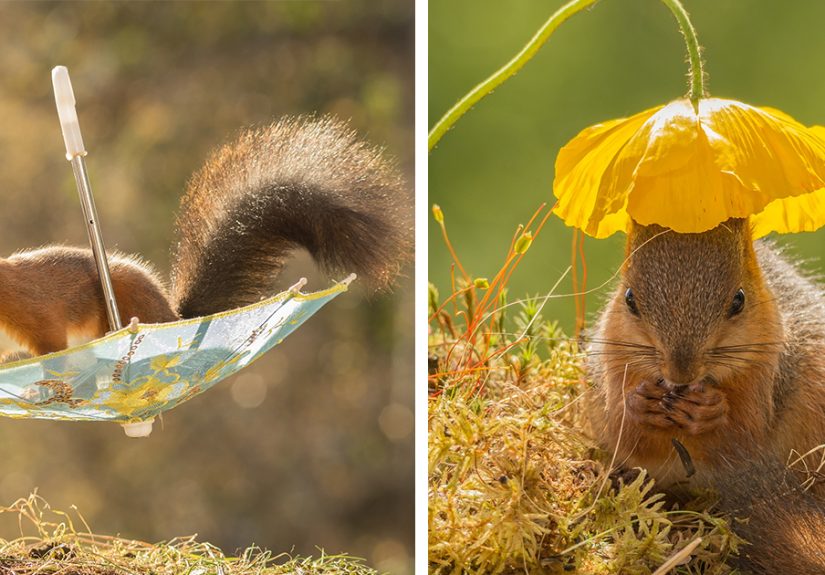
That shift matters. Great backyard wildlife photography is less about luck than people assume. Luck helps, of course. So does being present when a squirrel decides to wear a mushroom cap like a tiny forest wizard. But repeatability is what turns a casual hobby into a reliable creative practice.
The Backyard Is Not a Limitation. It Is a Studio.
Many photographers spend years believing that serious wildlife work only happens in remote places. Then one day they realize the backyard is not second-rate nature. It is simply edited nature. The cast is smaller, the setting is familiar, and the lighting is easier to study. That is an advantage.
When animals show up in the same general area day after day, you can learn your angles, test your shutter speed, adjust your exposure, and build scenes that feel natural without disturbing the subject. A branch near a fence line. A stump by a flower bed. A mossy log in soft morning light. These become recurring “sets” where familiar wild actors keep wandering into frame.
That is when squirrel photography stops feeling random and starts feeling intentional. Instead of chasing the animal, you prepare the scene and wait. The squirrel does the rest, usually while behaving like it owns the property and you are just the intern.
How to Get Better Squirrel Photos Without Turning Your Yard Into a Theme Park
The best backyard squirrel images usually come from a combination of patience, predictable perches, and ethical distance. The goal is not to make wildlife act unnatural. The goal is to understand normal behavior well enough that you can be ready when it happens.
Start with light. Early morning and late afternoon are your friends. Those hours tend to bring softer contrast, warmer tones, and more texture in fur. Midday sun can make even the cutest squirrel look like it is being interrogated by a police lamp.
Next comes placement. If you can identify a route squirrels already use, that is your gold mine. Maybe they sprint along a fence, pause on one branch, or stop near a stump before crossing the yard. If you have a clean background behind that spot, you have the beginnings of a strong setup. Wildlife photographers often talk about “natural perches” because the frame looks better when the subject pauses somewhere visually pleasing. A branch near a food source or near a common travel line can create exactly that opportunity.
Then there is distance. Ethical wildlife photography is not just a nice slogan for people who enjoy canvas tote bags. It is practical. When animals feel stressed, the images look stressed. The pose tightens. The eyes go alert in the wrong way. The behavior turns defensive or disappears entirely. Use a longer lens when possible, move slowly, and let the animal decide what level of closeness is acceptable. If a squirrel constantly freezes, barks, or aborts its normal routine because of your presence, you are too close or too obvious.
Another underappreciated trick is to photograph from indoors. Windows are not glamorous, but they are excellent blinds. A kitchen window, a slightly opened sliding door, or a fixed indoor position can help animals ignore you more quickly. You become part of the house instead of a moving threat in the yard.
And yes, you will take a lot of unusable photos. Blurry tails. Head turns. Perfect jumps captured one-tenth of a second too late. A glorious action frame ruined by one twig crossing the face like nature’s version of bad timing. This is normal. Wildlife photography is a numbers game with occasional moments of poetry.
Can You Really Make Money Photographing Backyard Squirrels?
The honest answer is yes, but “almost make a living” is usually more realistic than “buy a yacht.” Backyard squirrel photography can generate income through several overlapping channels, and the strongest approach is rarely just one thing.
1. Fine-Art Prints
This is the most obvious path because squirrel photos are charming, emotional, and giftable. A technically sharp image with humor, seasonal atmosphere, or a strong story can work beautifully as wall art. Prints do especially well when they feel whimsical without looking fake. People buy wildlife art when it gives them wonder, delight, or a reason to smile during a Tuesday that has gone badly.
Limited editions, open editions, small framed prints, and seasonal collections can all work. The key is curation. Nobody needs to see every squirrel photo you have ever taken. They need the ones with expression, clean composition, and a clear emotional hook.
2. Greeting Cards, Calendars, and Small Merchandise
This is where backyard wildlife photography becomes surprisingly practical. Not every buyer wants a large framed print. Plenty of people will happily buy a squirrel holiday card, a calendar of backyard animal portraits, or a postcard set that makes their desk feel less soul-crushing. A funny squirrel image can travel farther on a small product than on a gallery wall.
In many ways, squirrels are perfect for this market. They are familiar enough to be relatable, expressive enough to be funny, and wild enough to retain that little spark of discovery. They are basically nature’s sitcom cast.
3. Stock Photography and Licensing
Stock can be less glamorous, but it is one of the most scalable ways to earn from wildlife images. Editors, designers, bloggers, educators, and marketers all need strong animal imagery. The catch is that stock photography rewards usefulness as much as beauty. A cute squirrel portrait is nice; a squirrel image with clean composition, copy space, seasonal relevance, and commercial versatility is better.
That means you need range. Wide shots, close-ups, horizontal images, vertical images, winter scenes, autumn foraging, clean backgrounds, behavior shots, and images that can illustrate themes like preparation, persistence, urban wildlife, curiosity, or backyard nature. A single “great photo” is not a stock strategy. A coherent body of searchable, well-keyworded images is.
4. Editorial Features and Media Use
If your images are distinctive enough, they may find life beyond personal websites and marketplaces. Local magazines, nature publications, blogs, tourism newsletters, and lifestyle websites often want images that feel fresh but accessible. The humble squirrel can become editorial gold when photographed well because it bridges wildlife, neighborhood life, humor, and seasonal storytelling.
5. Audience-Building
This is where the business gets modern. A squirrel photographer today is not just a person with a camera. They can also be a micro-publisher. A website, newsletter, social account, short-form video feed, or print shop can all reinforce one another. The audience may begin with cute squirrel content, but over time it supports workshops, presets, books, behind-the-scenes content, seasonal launches, and repeat buyers.
That is why some photographers come close to making a living from backyard wildlife work. They are not selling one JPEG. They are building a tiny ecosystem around a recognizable creative voice.
The Hard Truth: Loving It Is Not Enough
Now for the less cuddly part. Passion is essential, but it is not a business model. Plenty of people love photographing animals. Far fewer people edit ruthlessly, keyword properly, print consistently, package professionally, market patiently, and keep going when sales are slow.
To get anywhere close to real income, you need repeatability. That means a workflow. A style. A recognizable point of view. It also means accepting that the money often comes from the boring parts: file organization, print quality, product descriptions, storefront maintenance, shipping materials, seasonal planning, and learning what actually sells.
There is also a difference between “cute” and “memorable.” The internet is full of cute. What people pay for is emotion, craft, and distinction. A squirrel with a nut is common. A squirrel backlit by winter sun, balanced on a frosted branch, with posture that suggests determination and comedy at the exact same time? That is art. Or at least art with excellent whiskers.
And then there is consistency. Buyers trust consistency. Editors trust consistency. Audiences follow consistency. If your work is delightful once every six months, that is a lovely hobby. If it is delightful week after week, season after season, that becomes something people can recognize, share, and eventually buy.
Why This Kind of Work Resonates So Strongly
Backyard squirrel photography works because it transforms the ordinary. Most people think they already know squirrels. They see them run across power lines, dig in flower beds, and perform suspicious acrobatics near bird feeders. But a great photo interrupts that familiarity. It makes people look again.
That second look is valuable. It reminds people that wildlife is not somewhere else. It is here. In suburbs, cities, cul-de-sacs, tiny gardens, apartment courtyards, and the patch of grass behind the fence. A photographer who can reveal wonder in that everyday setting is doing more than making pretty images. They are changing how people see their own home landscape.
That is one reason this niche has emotional power. It is accessible nature. It tells viewers, “You do not have to travel far to be amazed.” In a culture where people are overworked, overbooked, and one notification away from total mental collapse, that message lands hard.
What the Experience Really Feels Like
Here is the part people rarely see. They see the final squirrel photo online and assume the experience must be whimsical from start to finish. Sometimes it is. Sometimes it is you standing in socks at 7:12 a.m., coffee cooling on the counter, camera in hand, trying not to sneeze while one squirrel judges you from a fence post like a tiny landlord.
The routine becomes strangely intimate. You start recognizing individual animals by behavior rather than biology. One arrives like a polite regular. Another behaves like a caffeine-powered burglar. One likes the low branch. Another always pauses near the stone border, half-hidden, as if it suspects paparazzi. You begin tracking weather, light, and seasonal food almost automatically. Not because you are trying to become a forest wizard, but because you want to know when the best action will happen.
Autumn is usually chaos in the best way. Squirrels move with purpose, carrying, burying, leaping, revisiting, and rethinking every decision. Winter gives you cleaner backgrounds and fur that looks richer in soft light. Spring feels twitchier, faster, more territorial. Summer can be lush but visually messy, with leaves everywhere and backgrounds that look like nature forgot to edit itself.
The emotional rhythm is funny, too. Some days you feel like a genius because you captured one perfect frame: ears sharp, paws lifted, tail arched, eyes bright, background creamy and clean. On those days you walk around like you have personally advanced the field of wildlife art. The next morning you take 600 photos and all of them look like a furry comma bouncing through foliage.
Still, the attachment grows. Not in a sentimental, cartoon way, but in the steady way that comes from attention. You notice how alert they are, how strategic they can be, how often they repeat routes, how quickly they react to change. Photographing them does not make them pets. It makes them legible. And once wild animals become legible, the yard feels more alive than it did before.
That is also where the business side becomes sustainable. You are not forcing yourself to create content about something you barely tolerate. You are building products, stories, and images around a subject you would watch anyway. The camera gives the interest shape. The market gives it structure. The work becomes more than “cute squirrel pictures.” It becomes a visual record of neighborhood wildlife, seasonal change, behavior, and personality.
And yes, there is a deep, slightly ridiculous pleasure in realizing that the thing other people laugh about can actually pay. Not always enough. Not always steadily. But enough to matter. Enough to cover gear, printing, shop fees, framing tests, maybe even a real slice of income. Enough to make you say, with a straight face, “I photograph squirrels in my backyard,” and then enjoy the silence while other people try to decide whether you are joking.
That is the real charm of it. You begin because squirrels are there. You continue because they are fascinating. And somewhere along the way, if you work hard and see clearly enough, the ordinary backyard turns into a studio, a classroom, a tiny wildlife theater, and maybe even a business.
Conclusion
So, can you almost make a living from shooting squirrels in your backyard? Absolutely. With a camera, a sense of timing, ethical habits, a sharp editorial eye, and a willingness to treat the work like a real creative business, backyard squirrel photography can grow from a charming obsession into a genuine revenue stream. Not every frame will sell. Not every season will be magical. But the combination of accessible wildlife, repeatable behavior, emotional storytelling, and multiple income paths makes this niche more viable than it sounds at first glance.
In other words, the dream is not ridiculous. It is just fuzzier than most business plans.