Table of Contents >> Show >> Hide
- Why Cyprus Is Known As “The Island of Cats”
- Meeting Limassol’s Stray Cats: Streets, Beaches, and Back Alleys
- What 18 Photos Can Reveal About Street Cats
- The Reality Behind the Cuteness: Overpopulation and TNR
- How to Be a Responsible Cat Lover When You Visit Limassol
- Behind the Lens: My Experience Taking 18 Photos of Stray Cats in Limassol
- Why These Limassol Cats Matter
The first thing you notice when you arrive in Limassol isn’t the sea breeze, the palm trees, or even the
sun-bleached stone streets. It’s the cats. They stretch across warm car hoods, doze on crumbling doorsteps,
and stare at you from rooftops like tiny, furry landlords who know they run the town.
Limassol, a lively coastal city in Cyprus, is one of those rare places where photographing stray cats
doesn’t feel like a quirky hobby – it feels like documenting a parallel society. My 18 photos of stray cats
living in Limassol capture a little slice of that world: the elegance, the scruffiness, the resilience, and
the quiet relationship between humans and the city’s feline residents.
Think of this as a visual love letter with a practical side. Yes, we’re here for adorable cat photos worthy
of a Bored Panda scroll-fest. But we’re also here to talk about what it really means when a city has more
cats than people, and how responsible cat lovers, travelers, and locals can help these street cats without
causing more problems than they solve.
Why Cyprus Is Known As “The Island of Cats”
Cyprus has a long, almost mythical relationship with cats. Archaeologists have found evidence of early
domesticated cats on the island dating back around 9,000 years, suggesting humans and felines have been
roommates here for a very long time. Over the centuries, legend says cats were brought in to help control
snakes and pests, and – spoiler alert – the cats decided to stay permanently.
Fast-forward to today and estimates suggest that Cyprus has around one million or more stray and feral cats,
roughly one for every human living on the island. In some reports, the numbers climb even higher. In busy
cities like Limassol, that means cats are everywhere: near cafes, around harbors, in parking lots, on
construction sites, and tucked into the shadows of old stone churches.
For many tourists, these cats are part of the island’s charm. You’ll see visitors snapping pictures,
sharing snacks, and crouching in the street trying to coax a particularly photogenic tabby into one more
pose. For locals, the relationship is more complex: they feed, shelter, and care for cats, but also grapple
with the realities of overpopulation, disease risk, and the cost of veterinary care.
Meeting Limassol’s Stray Cats: Streets, Beaches, and Back Alleys
The cats of the old town
Many of the photos in this series were taken in Limassol’s old town. Here, narrow streets and peeling
facades create the perfect backdrop for feline portraits. A ginger cat naps in the doorway of a closed
bakery. A black-and-white tuxedo cat slinks along a stone wall, pausing just long enough to give the
camera a “what are you doing here?” look.
Old buildings and courtyards offer warm, sheltered corners that cats love. You might find entire cat
colonies living behind a single block of flats, sharing water bowls left by residents and staking out
favorite sun spots on stairways and balconies.
Harbor cats and seafront loungers
Move closer to the waterfront and the vibe changes. Along the promenade and near the marina, the city’s
street cats turn into tiny, furry restaurant critics. They patrol under outdoor tables, hover near the
bins behind fish taverns, and lounge under benches where tourists stop for ice cream.
Some of my favorite shots capture this seaside lifestyle: a calico cat framed by fishing nets, a tabby
dozing under a boat, and a bold kitten who decided that the middle of a boardwalk was an excellent place
for a nap. These cats might technically be strays, but you can see the effect of human kindness: fuller
bellies, calmer behavior, and the easy confidence of animals who know someone will eventually share
leftovers.
The hidden corners: construction sites and vacant lots
Not all of Limassol’s cats live in picturesque postcard settings. Some of the most striking images come
from less glamorous places – abandoned buildings, overgrown lots, and fenced-off construction areas.
In one photo, a young cat peers out from behind broken fencing, framed by graffiti and crumbling stone.
In another, a striped tomcat perches on stacked cinder blocks, lit by the golden hour sun, looking like
he owns the entire unfinished building site. These are the cats that remind you that behind every cute
picture is a real animal navigating traffic, hunger, and weather on its own.
What 18 Photos Can Reveal About Street Cats
Resilience in small bodies
Spend a day photographing stray cats and you start to notice recurring themes. One is resilience.
Limassol’s cats are survivors: they adapt to heat, hunt around dumpsters, memorize feeding spots, and
learn which humans can be trusted. In the photos, you can see it in their posture – wary but curious –
and in the way some cats keep one eye on the camera and one on the nearest escape route.
Micro-communities of cats and humans
Another thing the photos capture is the quiet partnership between cats and the people of Limassol.
Volunteers and ordinary residents leave bowls of food and water in specific spots. Small wooden shelters
or plastic crates lined with blankets appear along walls and in courtyards. If you watch long enough,
you’ll see the same people show up at the same time every day, carrying bags of kibble like clockwork.
These relationships form micro-communities: a colony of cats relying on a handful of humans, and those
humans in turn building routines and emotional bonds around their feline neighbors. My images of cats
waiting under balconies, or flocking excitedly to a familiar pair of footsteps, are tiny visual stories
of those daily rituals.
Beauty and hardship in the same frame
You can’t photograph stray cats honestly without capturing both sides of their lives. Some of the cats
in my 18 photos look regal and healthy; others are skinny, scarred, or missing part of an ear. That
contrast is exactly why these images matter.
One shot shows a relaxed, well-fed cat basking on a windowsill. Another image, taken just a few streets
away, shows a rough-coated tomcat with wary eyes and ribs barely hidden beneath his fur. Together,
they tell the story of an entire urban ecosystem – one that depends on human choices and public policy
as much as it does on a cat’s natural hunting instincts.
The Reality Behind the Cuteness: Overpopulation and TNR
As charming as Limassol’s cats are, their growing numbers have become a serious challenge. National
estimates suggest that Cyprus has around a million or more stray cats, with some reports putting the
figure at about 1.5 million – more cats than people on the island. Local shelters and volunteers do
heroic work, but they’re constantly overwhelmed by new litters of kittens.
That’s where TNR – trap, neuter, return – comes in. TNR is a humane strategy widely used in Europe and
the United States to manage stray and feral cat populations. Cats are humanely trapped, sterilized,
vaccinated, and then returned to their colony. Over time, this reduces the number of new kittens, keeps
healthier adult cats in place to defend the territory, and stabilizes the population.
In Cyprus, various organizations run TNR campaigns, including free-of-charge sterilization programs for
stray and feral cats. Municipalities like Limassol have also launched or expanded sterilization efforts,
with increased government funding directed toward neutering campaigns. It’s not a quick fix – think
years, not months – but where TNR is consistently applied, studies show it can reduce colony sizes and
improve overall cat welfare.
When you look at a single image of a cat curled up in a doorway, it’s easy to forget the systems behind
that snapshot: volunteers coordinating feeding routes, vets performing surgeries, and activists pushing
for better laws and public funding. The photos may be Instagram-pretty, but the story they tell is one of
long-term, practical compassion.
How to Be a Responsible Cat Lover When You Visit Limassol
If you’re a traveler who loves taking photos of animals, Limassol is basically your dream destination.
But with great photo ops comes great responsibility. Here are some simple ways to enjoy the city’s
street cats without accidentally making their situation worse.
1. Look, don’t grab
Many stray cats are semi-feral. Some enjoy being petted; others absolutely do not. Let the cat decide.
Offer your hand slowly, respect body language, and never chase or corner an animal just for a shot. A
relaxed cat makes for a much better photo anyway.
2. Feed smart, not randomly
Local volunteers often maintain regular feeding stations. Instead of leaving food in random spots, ask a
shelter, rescue group, or a nearby shop owner if there’s an established feeding place you can support.
Dry food and fresh water are usually better than table scraps that might upset feline stomachs.
3. Support TNR and local rescues
If you loved photographing Limassol’s cats, consider giving back. Many organizations accept online
donations or even sponsor-a-cat programs. A small contribution can help fund neutering, vaccinations,
and medical treatment for injured animals – the unglamorous but essential side of those beautiful
photos.
4. Adopt, don’t impulse “souvenir” a cat
Falling in love with a street kitten is very easy; navigating international pet travel is not. If
you’re serious about adopting a cat from Cyprus, work with a reputable rescue group that can guide you
through vaccinations, paperwork, and transport. Don’t simply grab a cat and hope it works out at the
airport.
5. Be an ethical photographer
Skip the flash in dark alleyways – it can startle animals. Avoid forcing cats into props or poses. Let
them just be themselves. The best cat photos in Limassol come from observation and patience, not from
staging. Think of yourself as a quiet guest in their neighborhood.
Behind the Lens: My Experience Taking 18 Photos of Stray Cats in Limassol
Photographing stray cats in Limassol is both easier and harder than it sounds. On one hand, there are
cats everywhere. Step out of your hotel just after sunrise and you’ll see them stretching on sidewalks,
blinking sleepily from rooftops, and weaving between parked cars like they’re starting their morning
commute. On the other hand, getting meaningful photos – not just random snaps – takes time, patience,
and a little humility.
On the first morning, I started at the seafront, thinking bright light plus sparkling water plus cats
would equal instant magic. The cats strongly disagreed. Most of them were more interested in the
fishermen’s buckets than my camera. A sandy-colored tom gave me exactly one glance, then turned his back
on me in what I can only describe as professional-level shade.
The more time I spent walking, the more I realized that the best moments happened away from the busiest
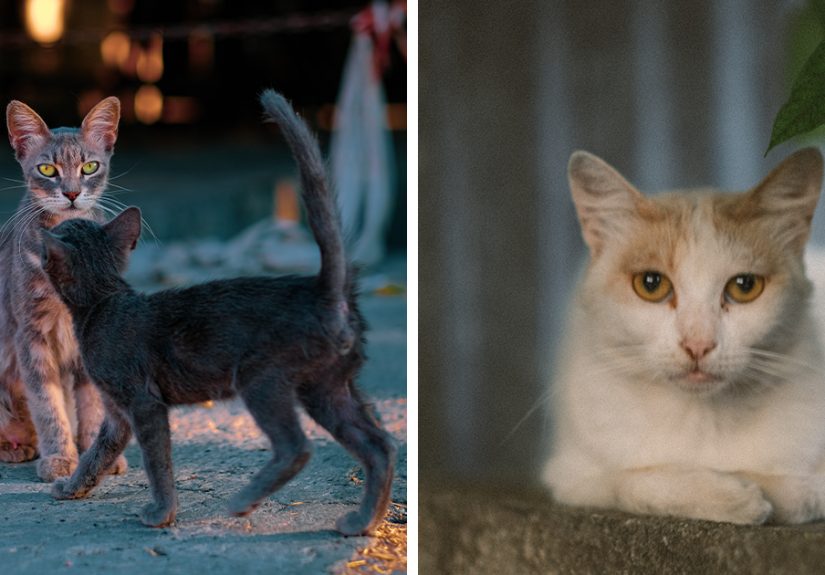
spots. Turning into side streets, I found calmer scenes: an older cat grooming a kitten under a line of
hanging laundry, a trio of tabbies sharing a patch of sun outside a closed hardware store, a white cat
balancing on a stone wall like a tiny acrobat. Instead of chasing “perfect” compositions, I started
focusing on the small, honest details – the texture of worn steps, the rust on balcony railings, the way
light pooled in quiet courtyards.
Some cats were instantly curious, trotting up with tails held high, sniffing the lens, and then
flopping down as if to say, “Okay, human, this is my good side.” Others kept a careful distance,
watching with narrowed eyes from doorways or under cars. One calico in an abandoned lot became a
recurring character; I saw her on three different days in the same area, each time a little braver,
edging closer as she realized I came bearing nothing but a camera and soft conversation.
Emotionally, the experience was a tug-of-war. Some scenes were pure joy: a pair of kittens wrestling in
a stray beam of light, a sleek black cat strutting along a wall like it was his personal runway. Other
moments were harder: a skinny cat limping across the street, an older tom with scars and cloudy eyes,
a tiny kitten eating from a pile of food twice its size. Each shutter click felt like both a celebration
and a responsibility – a way to show the world how beautiful these animals are, and also a reminder that
beauty doesn’t erase the need for care.
From a technical point of view, Limassol is a dream for cat photography. The warm Mediterranean light
does half the work for you, especially during golden hour. Textured walls, colorful doors, and layers of
history form natural backdrops. Wide-angle shots capture cats within their environment – weaving between
chairs at a cafe, perched under street art, or framed by old stone arches – while tighter portraits
highlight their individual personalities: the suspicious squint, the curious head tilt, the sleepy slow
blink that feels like a cat’s version of a smile.
By the time I finished the 18 photos that make up this series, I realized the project had shifted from
“cute cat pictures” to something more like a visual diary of coexistence. Every image contains not just a
cat, but a hint of human presence – a coffee cup, a bicycle, a pair of shoes passing just out of frame.
These photos are about cats, yes, but they’re also about how a city chooses to live alongside them: the
kindness of people who feed them, the policies that shape their future, and the everyday, unscripted
moments where human and feline lives intersect.
If you ever find yourself in Limassol with a camera (or just your phone), take a slow walk off the main
path. Follow the sound of meows echoing through an alley, or the sight of a tail curling lazily over a
balcony edge. You might come home with a full memory card, a new appreciation for street cats, and –
if you’re not careful – the sudden urge to donate to a TNR program before you even unpack your suitcase.
Why These Limassol Cats Matter
Stray cats in Limassol are more than background characters in vacation photos. They’re living, feeling
animals navigating a city that both loves and struggles with them. My 18 photos are just a small window
into their world, but if they inspire you to feed a local stray, support a rescue, or simply look more
closely at the animals sharing your streets, then the project has done its job.
The next time you scroll through a Bored Panda gallery of street cats, remember that every pair of eyes
looking back at you belongs to an individual with a story – a story shaped by human choices. With a bit
of awareness, responsible tourism, and support for humane programs like TNR, we can help ensure that the
cats of Limassol – and countless other cities – have futures that are as hopeful as the photos make them
look.