Table of Contents >> Show >> Hide
- The campaign in plain English: kid creativity + grown-up wallets = real-world help
- How a kid’s sketch becomes a store-ready plush toy
- Meet SAGOSKATT: the “designed by kids, for kids” plush lineup
- Where the money goes: from plush purchases to children’s programs
- Real examples of kid-designed toys that made it to shelves
- Why this works (and why people keep talking about it)
- How families (and even classrooms) can lean into the idea
- A quick reality check: what to look for in “charity plush” promises
- Conclusion: the plushies are cute, but the model is the real star
- Experiences: real-life moments people have around kid-designed IKEA plush toys
- 1) The “we’re just going in for one thing” family trip that becomes a creativity field trip
- 2) The drawing-table takeover that turns into a mini design contest
- 3) The bedtime moment where a silly plush becomes a serious comfort object
- 4) The classroom or group activity that connects art, empathy, and real-world impact
- 5) The moment a kid realizes their idea could be “real”
IKEA is famous for two things: (1) furniture names that sound like friendly trolls, and (2) making adults question their life choices in the lighting aisle. But every so often, IKEA pulls off something that’s genuinely adorable and surprisingly meaningful: it turns children’s drawings into real, huggable plush toysthen uses the sales to support kids through charitable partners.
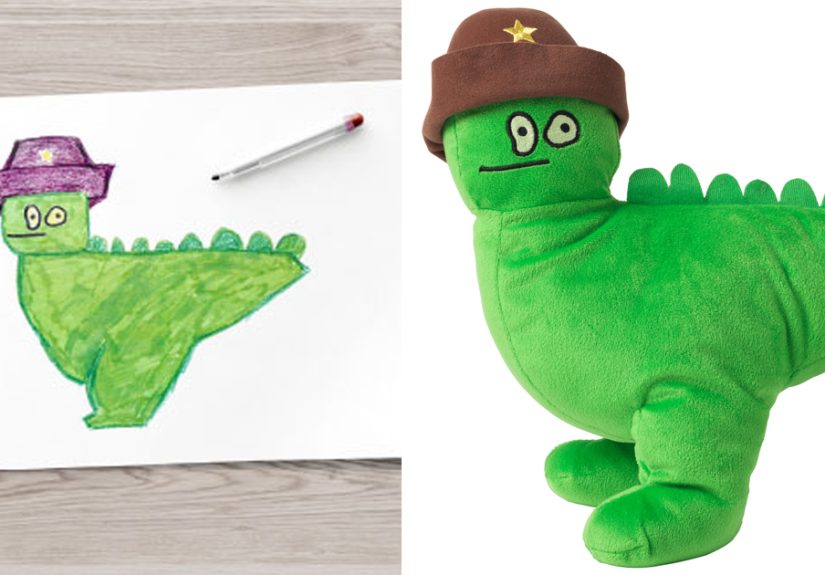
The concept is delightfully simple. Let kids draw the “soft toy of their dreams.” Pick a handful of winners. Turn those scribbles into plushies that look like they leapt straight out of a crayon-fueled imagination. Then make the purchase itself part of a giving campaignso a goofy little monster on your couch can help a real child somewhere get safer, healthier, or better supported.
The campaign in plain English: kid creativity + grown-up wallets = real-world help
IKEA has run multiple “do good while shopping” efforts over the years, but two ideas often get bundled together in people’s minds: the Soft Toys for Education fundraising campaign and the kid-designed plush collections like SAGOSKATT. They’re related in spirit (stuffed animals + giving), but they aren’t identical in how they work.
In the Soft Toys for Education model, IKEA’s charitable arm has historically donated a fixed amount per item soldoften described as €1 for each soft toy and children’s book during a seasonal periodto support education initiatives with partners such as UNICEF and Save the Children. Over time, that “small per-item” approach adds up in a big way.
Separately (and more cutely), IKEA has also run drawing competitions where children submit original characters. Those winners become real products, and in some years and markets IKEA has pledged the full retail price or the full proceeds from specific collections to children’s causes. In the U.S., IKEA has repeatedly tied SAGOSKATT collections to Save the Children’s work in the United States.
How a kid’s sketch becomes a store-ready plush toy
Turning a child’s drawing into a product you can toss to a toddler (without panic) requires more than a sewing machine and optimism. The magic is in translating “imagination logic” into “real-world plush logic” while keeping the toy safe, durable, and recognizable.
Step 1: Kids draw their dream creature
IKEA invites children to create an original characteranything from a friendly vegetable superhero to an animal that defies basic biology. The wilder the better. The point isn’t polished art; it’s personality.
Step 2: Submissions are reviewed and winners are selected
Depending on the year and structure, winners are chosen by IKEA teams and/or juries. The scale can be enormous. For example, one U.S. press kit describes a year with over 87,000 drawings from 50 countries, narrowed down to six winning characters. That’s not a competition; that’s a global imagination stampede.
Step 3: Product developers “translate” the drawing
Designers and product developers interpret the essential featuresshape, face, colors, key quirksand create prototypes that preserve the child’s intent. If the drawing includes something like “a rainbow that wears socks,” the job is to make that detail feel intentional rather than accidental. (Yes, this is the kind of serious work the world needs more of.)
Step 4: Safety and durability meet cuteness
Plush toys sold at scale have to meet safety requirements and hold up to real life: dragging, chewing, washing, and the inevitable moment when a kid decides the toy is also a hat. The final design balances whimsy with practical materials and construction.
Meet SAGOSKATT: the “designed by kids, for kids” plush lineup
IKEA’s kid-designed plush collections often run under the name SAGOSKATTlimited-edition soft toys created from children’s competition drawings. The characters are consistently the kind of strange-cute you’d expect when you give kids total creative freedom.
One U.S. collection highlighted winners like: a cucumber superhero on a mission to make veggies cool, a party mouse with balloons, a hug-loving monster meant to guard kids from bad dreams, and even a rainbow that wears socks becauseobviouslyit might get cold up in the sky. The charm is that these aren’t adult “market-tested” ideas. They’re kid ideas, left gloriously intact.
Where the money goes: from plush purchases to children’s programs
The “raise money for charity” part isn’t a vague feel-good tagline. IKEA has documented specific donation structures and partners, especially around education and child well-being.
Soft Toys for Education: the power of small per-item giving
For years, IKEA’s Soft Toys for Education campaign has been described as donating €1 per soft toy and children’s book sold during a seasonal window in hundreds of stores, supporting children’s education initiatives through UNICEF and Save the Children. UNICEF USA has described this long-running approach (notably across the 2003–2013 period) and the significant fundraising totals it generated for education programs.
What makes this model effective is its math: a small contribution multiplied by millions of purchases becomes a major pool of fundingwithout asking shoppers to do anything beyond what they were already doing: buying a toy, a book, or a gift.
SAGOSKATT in the U.S.: “kids helping other kids”
In the United States, IKEA has repeatedly tied SAGOSKATT collections to Save the Children. One U.S. press kit states that IKEA U.S. would donate 100% of the retail price of each SAGOSKATT 2019 soft toy sold to Save the Children’s relief and recovery efforts in the United States. IKEA has also described donating 100% of the retail price from purchases of the SAGOSKATT 2021 collection to Save the Children U.S.
That distinction matters: “profits” can be a slippery word, but “retail price” is blunt and easy to understand. When that’s the pledge, the purchase becomes a straightforward donation mechanism wrapped in a plush package.
Real examples of kid-designed toys that made it to shelves
The most fun proof that this is real is… the toys themselves. They are too specific to be invented by a corporate brainstorming session. (No offense to corporate brainstorming, but it rarely produces “cucumber superhero.”)
SAGOSKATT 2019: six winners, maximal imagination
A U.S. press kit for SAGOSKATT 2019 describes a lineup selected from over 87,000 drawings submitted across 50 countries. The winners included characters with names like Gurki (the cucumber hero), Jesse (the party mouse with balloons), and a monster designed to give kids bedtime confidence.
SAGOSKATT 2021: kid art goes international (and the U.S. gets a winner)
IKEA’s global newsroom has also described later collections (like SAGOSKATT 2021) being selected from tens of thousands of submissions and turned into limited-edition soft toys. IKEA U.S. highlighted a U.S. winner and framed the collection as “designed by kids,” with donations tied to Save the Children in the United States.
Why this works (and why people keep talking about it)
Plenty of brands run charity tie-ins. Few feel as organic as turning kid drawings into productsbecause the product itself carries the story. The toy isn’t just “a plush.” It’s that plush: a specific child’s weird, wonderful idea made real.
1) The cause is baked into the purchase
Instead of asking people to add a donation at checkout (which can trigger decision fatigue), the donation is integrated. You buy the thing; the giving happens. That’s why per-item campaigns can scale so well.
2) Kids get creative agency, not just consumer attention
This isn’t “kids as marketing props.” It’s kids as designers. Even when only a handful win, the premise still validates creativity as something that matters and can have impact.
3) The toys are conversation starters
A normal teddy bear is sweet. A rainbow in socks is a story. The moment someone asks, “Why does your plush rainbow have socks?” you get a natural opening to talk about the drawing competition and the charity support behind itwithout sounding like an infomercial.
How families (and even classrooms) can lean into the idea
Whether or not you ever submit a drawing, this campaign is a great excuse to turn “shopping” into something more meaningful than “we needed a storage bin and somehow left with 14 candles.”
Host a mini “plush design studio” at home
Give kids paper, markers, and one prompt: “Design a character that would make another kid feel happy or safe.” The results will be hilarious, sometimes heart-melting, and occasionally deeply confusing (in a good way).
Connect creativity to empathy
Ask: “If your plush toy could help kids in one way, what would it be?” You’ll get answers like “food,” “school,” “friends,” and “a superhero cape.” (One of those might actually be necessary.)
Use it as a gentle lesson in cause-related giving
Explain that some purchases can support a causebut it’s also smart to understand how the giving works: per-item donations, proceeds, retail price pledges, and which partner organizations receive support. It’s an easy way to build healthy “feel-good” skepticism without cynicism.
A quick reality check: what to look for in “charity plush” promises
Campaigns like this are most trustworthy when they’re specific: who receives funds, what the donation structure is, and what the campaign window is. IKEA’s public descriptions have often included those kinds of detailslike “€1 per item” for Soft Toys for Education in certain years, or “100% of retail price” for certain U.S. SAGOSKATT collections. That specificity is what turns a warm story into verifiable impact.
As a shopper, the smart move is simple: read the campaign language for your country and year, because partners and mechanics can vary by market. The core idea remains consistentkids’ creativity powering support for kidsbut the details matter.
Conclusion: the plushies are cute, but the model is the real star
IKEA turning children’s drawings into plush toys is adorable on the surfaceand surprisingly thoughtful underneath. It takes imagination seriously, gives kids a real creative platform, and links everyday purchases to tangible support for children through major partner organizations.
So yes, you can buy a cucumber superhero or a bedtime-guardian monster and feel a little ridiculous about it. But if that purchase also helps fund children’s programs and recovery efforts, then congratulations: your living room just became slightly softer and slightly more meaningful.
Experiences: real-life moments people have around kid-designed IKEA plush toys
If you want to understand why this idea sticks, don’t start with corporate press releasesstart with the moments that happen around the toys. Not “perfect” moments. The regular-life ones: the car ride, the drawing session, the bedtime negotiation, the sudden deep conversation at the kitchen table that begins with a plush creature that looks like it was designed by a joyful alien.
1) The “we’re just going in for one thing” family trip that becomes a creativity field trip
A lot of families have a familiar IKEA storyline: you show up for something practical (shelves, bins, a desk lamp), and you leave with a cart that suggests you’re opening a small café. The plush section is where the mood shifts. Kids don’t browse plush toys like adults browse furniture; they adopt plush toys. When the plush toy looks like a child’s drawing brought to life, kids often recognize the vibe immediately: “This was made by someone like me.” That alone can flip shopping from “errand” to “inspiration.”
2) The drawing-table takeover that turns into a mini design contest
The simplest way to ride the campaign’s energy is to run your own at home. Put out paper, crayons, markers, and ask kids to invent a creature with one job: “help someone feel better.” The result is usually a parade of characters with oddly specific superpowers: a sock-wearing rainbow that keeps you warm, a monster that scares away nightmares, or a vegetable hero that makes healthy food less intimidating. Even without submitting anything, kids learn the difference between drawing “something cute” and designing “something with purpose.”
3) The bedtime moment where a silly plush becomes a serious comfort object
Parents and caregivers know bedtime is where logic goes to retire early. “I need water.” “I need another hug.” “I need to explain my feelings about the moon.” Plush toys are part of that ritual for a reason: they’re tactile, predictable, and comforting. When a plush is explicitly designed to be a “hug monster” or a friendly guardian, the story becomes part of the comfort. A kid can project bravery onto the toy. That’s not magicit’s child development doing what it does best: using play to process emotions.
4) The classroom or group activity that connects art, empathy, and real-world impact
Teachers and youth leaders often look for projects that combine creativity with values without feeling like a lecture. A “design a plush for good” activity checks that box. Kids can share their character’s backstory, explain how it helps others, and then talk about how real campaigns connect purchases to charitable support. The conversation can stay age-appropriate and still be meaningful: “Some toys help other kids go to school,” or “Some collections support children after disasters.” When kids see their creativity linked to helping otherseven conceptuallyit lands.
5) The moment a kid realizes their idea could be “real”
The most lasting experience people describe around initiatives like this is the mindset shift: creativity isn’t just a pastime, it can be a contribution. Even if a child never wins a competition, the act of seeing kid-designed toys on a shelf sends a message: adults didn’t “fix” the weirdness out of the idea. They honored it. For a kid, that’s powerful. It says: your imagination has value, your voice can show up in the world, and sometimes your playful idea can even help other kids.
That’s why the IKEA story keeps circulating online year after year. It’s not only that the plush toys are cute (they are). It’s that the whole loop draw, create, sell, givefeels like what we wish more companies would do: make it easy for everyday people to participate in something positive, and make creativity feel like a practical force, not a luxury.