Table of Contents >> Show >> Hide
- What Makes This Japanese Cafe Different
- Why Employment Access Is Still a Huge Issue
- Technology With a Human Purpose
- Why the Model Feels So Powerful to Customers
- What Businesses Can Learn From This Idea
- A Better Conversation About the Future of Work
- More Than a Cafe, Less Than a Miracle, Exactly the Kind of Idea We Need
- Experiences Related to This Story: What a Place Like This Really Represents
- Conclusion
Every so often, a story comes along that makes the internet stop doomscrolling for five seconds and say, “Wait, that’s actually brilliant.” This is one of those stories. In Tokyo, a Japanese cafe found a way to employ people with severe mobility limitations, including people who are paralyzed or otherwise homebound, as waiters. The twist is futuristic, but the heart of the idea is surprisingly simple: if people cannot always go to work physically, maybe work can come to them.
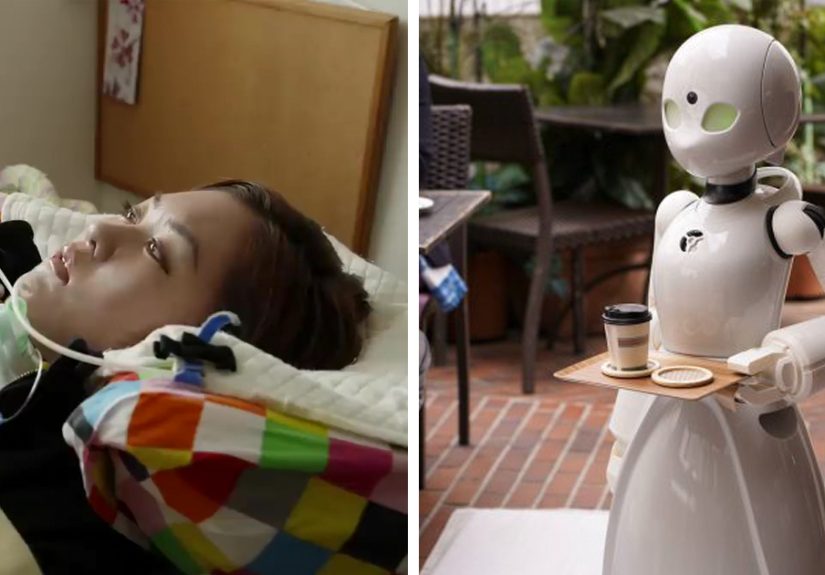
That is the big idea behind the DAWN Avatar Robot Cafe, where remote workers operate robot servers from home or care settings. Customers still get greeted, served, and spoken to by a human being. The human just happens to be present through a robot body instead of sneakers and an apron. It sounds like science fiction with better table service, yet it points to a very real question modern workplaces still struggle with: how many talented people are shut out of jobs because the job was designed too narrowly in the first place?
This is what makes the story so compelling. The cafe is not interesting because robots are cute, although they absolutely are. It is interesting because the technology is being used to expand dignity, employment, and social participation. Instead of replacing people, the system gives people another way to show up. In a world where automation often gets pitched as a job-eating monster, this cafe flips the script and says, “Actually, what if tech helped more people work?” That is a much better headline, and frankly, a much better future.
What Makes This Japanese Cafe Different
The DAWN Avatar Robot Cafe is built around remotely operated robots called OriHime and OriHime-D. These are not autonomous AI waiters making mysterious decisions about your coffee order. They are controlled by real people in real time. Some workers use standard computer controls, while others can use assistive tools such as eye-tracking systems, depending on their physical abilities. The result is a model that lets people with severe disabilities interact with customers, take part in service work, and earn income without needing to commute to a physical restaurant.
That matters more than it may seem at first glance. Hospitality jobs are often treated as impossible for people with major mobility limitations because the work usually requires standing, walking, carrying items, and moving through crowded spaces. This cafe looked at that assumption and basically replied, “Only if you refuse to redesign the job.” By shifting the physical movement to a robot while keeping the communication, warmth, timing, and personality human, the cafe keeps the essence of service intact.
And that essence matters. Good service is not just about placing a plate on a table. It is about acknowledgment. It is the welcome, the eye contact, the joke, the sense that another person is helping create a pleasant experience. That human layer is exactly what the cafe preserves. Its slogan-like philosophy can be summed up in a refreshingly honest way: these workers are not AI. They are people using technology to be present where traditional workplaces have not made room for them.
Why Employment Access Is Still a Huge Issue
This story hits a nerve because the employment gap for disabled people is still very real. Even in the United States, where disability rights law has existed for decades, employment outcomes remain far from equal. Recent labor data show that employment rates for people with disabilities have improved, but they still lag significantly behind those of people without disabilities. That means millions of people are still navigating barriers that have less to do with talent and more to do with infrastructure, expectations, and plain old design failures.
Mobility limitations are also common, not rare edge cases. Public-health data in the U.S. show that mobility disability affects a substantial share of adults. In other words, the need for accessible work is not some niche issue relevant to a tiny group of people. It is part of the reality of modern labor markets, aging populations, chronic illness, long-term recovery, and disability more broadly. When companies fail to plan for inclusion, they are not simply being old-fashioned. They are ignoring a large part of the human population.
The DAWN model offers a useful lesson here. Accessibility is often discussed like a legal checklist: add a ramp, update a form, include a policy statement, and everybody goes home feeling noble. But the harder question is whether a workplace is truly designed to include people with different bodies, health conditions, and energy levels. This cafe does something many organizations still avoid. It reimagines the work itself instead of forcing the worker to somehow become “less disabled” to fit the job.
Technology With a Human Purpose
There is a reason this story resonates far beyond Japan. Too much tech coverage focuses on novelty first and people second. Robot dog does a backflip. Fridge speaks French. Toaster probably wants venture capital. The DAWN Avatar Robot Cafe feels different because the technology has a clear social purpose. It is not trying to impress people with gadgets alone. It is trying to reduce isolation and expand participation.
That last part is important. Employment is not just about a paycheck, though obviously paychecks are nice and rent keeps being weirdly persistent. Work also provides structure, community, identity, and a sense of usefulness. Health and policy experts have long warned that social isolation can harm both mental and physical well-being. So when a cafe creates a system where homebound workers can interact with coworkers and customers, the benefit is larger than economics alone. It can strengthen connection, confidence, and visibility.
That is part of what makes the cafe so smart from a design perspective. It solves more than one problem at once. It provides employment. It creates social interaction. It demonstrates assistive technology in a public setting. And it quietly teaches customers something valuable: disability does not erase personality, skill, humor, or professionalism. Often, what erases those things is exclusion.
Why the Model Feels So Powerful to Customers
For diners, the experience is memorable not because it feels cold or robotic, but because it reveals the person behind the machine. Customers are not being served by a faceless automation system. They are being served by someone who may be speaking from home, from a care facility, or from a bed, yet is still fully present in the interaction. That realization can be surprisingly moving. It shifts disability from abstraction to relationship.
It also challenges the lazy assumption that accessibility lowers quality. In many settings, inclusive design actually improves the experience because it forces better thinking. Tasks are streamlined. Communication becomes clearer. Tools become more flexible. People become more intentional. The cafe works not despite adaptation, but because of it. It proves that accommodations are not a charity project. They are often a design upgrade.
There is also a deeper emotional effect. A place like this reminds customers that “showing up” does not have to mean showing up in the old, narrow, physically standardized way. Presence can be mediated, extended, translated, and supported. Human connection is more adaptable than many institutions give it credit for. That idea feels especially relevant in a post-pandemic world that has already learned, sometimes reluctantly, that remote presence can be real presence.
What Businesses Can Learn From This Idea
The obvious lesson is not that every company needs robot waiters rolling around the office kitchen. Your break room is probably chaotic enough already. The real lesson is that many jobs can be redesigned when employers are willing to separate essential functions from outdated habits. How much of a role truly requires physical presence? Which parts can be supported through assistive technology? What tasks are being bundled together in ways that unnecessarily exclude people?
Companies that ask those questions seriously may discover that disability inclusion is less about heroic effort and more about practical creativity. Flexible scheduling, remote tools, accessible software, hybrid workflows, and customized interfaces can all widen participation. Some workers may need eye-tracking, speech tech, modified controls, or alternative communication tools. Others may simply need a job that does not require a draining commute or rigid on-site attendance. Inclusion is not one-size-fits-all. That is exactly why thoughtful design matters.
There is also a branding lesson here, though it should never be the main motivation. Businesses that visibly create real opportunities for disabled workers tend to earn more trust than those that post polished diversity slogans and then quietly design everybody out of the building. People can tell the difference between inclusion as marketing and inclusion as structure. This cafe is compelling because the concept is built into the operation itself. It is not window dressing. It is the point.
A Better Conversation About the Future of Work
The future of work is often discussed in dramatic extremes. Either robots will steal every job, or remote work will magically solve every inequity, or AI will somehow run civilization while humans become decorative ferns. Reality is less cinematic and more useful. The most promising future-of-work ideas are often the ones that combine human skill with adaptive tools to remove preventable barriers.
That is why the Japanese cafe story matters. It offers a practical example of inclusive innovation. It does not pretend technology is morally good on its own. It shows that the value of technology depends on what it is designed to do and whom it is designed to include. Here, the answer is refreshingly clear: it is designed to help people participate in society who might otherwise be left out of everyday work and everyday contact.
There is something quietly radical in that. The cafe does not frame disabled people as passive recipients of care. It frames them as workers, hosts, communicators, and contributors. That shift in framing is huge. It moves the conversation from pity to participation, from limitation to design, from “Can they work?” to “Why haven’t we built more ways for them to work?”
More Than a Cafe, Less Than a Miracle, Exactly the Kind of Idea We Need
It is tempting to treat stories like this as heartwarming one-offs, the kind people share online with comments like “faith in humanity restored” before immediately returning to their usual schedule of stress and snacks. But the better response is to see the cafe as a working prototype for a broader cultural shift. It shows what happens when technology, disability inclusion, and employment design are approached with imagination instead of excuses.
No, a single cafe will not fix structural inequality. It will not erase discrimination, redesign every workplace, or instantly make labor markets fair. But it does something arguably more important: it provides proof. Proof that barriers we often treat as permanent may actually be solvable. Proof that accessibility can be creative, not merely compliant. Proof that a workplace can become more human by using technology well, not less human.
And maybe that is why this story keeps resonating. Underneath the robots, the screens, and the futuristic novelty, it is really about something old-fashioned and deeply human: the desire to be seen, to contribute, and to belong. A Japanese cafe found a way to turn that desire into a job. The rest of the world should be paying attention.
Experiences Related to This Story: What a Place Like This Really Represents
One of the most interesting things about a story like this is the emotional experience wrapped around the technology. On paper, it sounds mechanical: remote controls, assistive interfaces, robot bodies, service workflows. In real life, the feeling is much softer and much more human. A customer walking into a cafe like this might expect a novelty act, maybe something halfway between a tech demo and a quirky tourist stop. What they are more likely to remember, though, is the human interaction. A greeting lands differently when you realize the person speaking to you may be participating in public life through a system that finally made room for them.
That can change how people understand disability almost instantly. Instead of seeing disability as distance, they see communication. Instead of assuming dependence, they see skill. Instead of imagining limitation as the whole story, they see adaptation in motion. That is a powerful experience for customers, but it may be even more powerful for workers. Employment is not only about productivity metrics. It is about being part of a rhythm, having a shift, speaking with people, solving small problems, and feeling needed in the ordinary flow of the day.
For many people with severe physical limitations, ordinary flow is exactly what has been disrupted. Daily life can become overmanaged by logistics, health demands, transportation barriers, or fatigue. A job that restores choice and interaction can feel bigger than the title on the schedule. It can restore routine. It can create conversation topics beyond illness. It can bring back a sense of professional identity that disability or isolation may have interrupted. That is why the cafe model feels so meaningful. It is not just “Look, a robot can carry a tray.” It is “Look, a person can reconnect with work and society through a better system.”
There is also a quiet dignity in the public nature of the experience. These workers are not hidden away in a back-office inclusion initiative nobody ever sees. They are front-facing. They greet people. They become part of the atmosphere. Their presence challenges social habits that too often keep disabled people invisible. And because the interaction happens in a casual setting, the lesson reaches people without a lecture. Nobody has to sit through a corporate training slideshow titled Inclusive Awareness Pathway 3.0. They just have coffee, order food, and meet another human being in a new format.
That may be the most memorable experience tied to this story: realizing that inclusion does not always need to be dramatic to be profound. Sometimes it is as simple as redesigning the doorway into work. Sometimes it looks like a robot waiter. Sometimes it sounds like a voice coming through a machine, cheerful and competent, asking whether you would like another drink. And sometimes that ordinary question carries an extraordinary message underneath it: I am here, I am working, and I belong in this world too.
Conclusion
The story of this Japanese cafe is not just charming internet bait with a futuristic twist. It is a practical example of how inclusive design can open jobs to people who have long been excluded from them. By letting remote workers with severe mobility limitations operate robot waiters, the cafe proves that accessibility can be imaginative, socially meaningful, and economically useful at the same time.
More importantly, it offers a better way to think about innovation. The best technology does not only move faster or look smarter. It removes barriers, protects dignity, and helps more people participate in everyday life. That is exactly why this model feels bigger than one cafe in Tokyo. It is a reminder that when society redesigns work around human reality instead of rigid habit, more people get to belong.