Table of Contents >> Show >> Hide
- What the Jaques Playmate Croquet Set Actually Is
- Why “Playmate” Matters: Kid-Friendly Specs Without Feeling Like a Toy
- Setting Up Your First Croquet “Court” Without Overthinking It
- How to Play (Family Version): Rules People Will Actually Follow
- Quick Coaching: Helping Kids Hit Better in 10 Minutes
- Is the Jaques Playmate Croquet Set “Good Quality”?
- Hosting a Backyard Croquet Day (Because You’ll Inevitably Do It Again)
- Care and Storage: Keep It Nice for Next Season
- How to Make the Playmate Set Even Better (Without Buying Anything)
- Final Take: A Classic Lawn Game That Actually Fits Family Life
- Real-World Playing Experiences (The “We Actually Took It Outside” Add-On)
Croquet is one of those magical backyard games that looks fancy enough for a garden party, but plays casual enough for a Tuesday. It’s part sport, part strategy, part “who put the wicket there?” and it has a rare superpower: it gets kids and adults on the same team without needing batteries, Wi-Fi, or a referee with a whistle.
The Jaques Playmate Croquet Set is built for that exact vibeclassic croquet energy, scaled for younger players, and packaged so you can toss it in the car for parks, picnics, and family reunions where someone always says, “We should do something outside.”
What the Jaques Playmate Croquet Set Actually Is
Jaques is one of the old-school names in traditional games (the brand traces its history back to the late 1700s). The Playmate set is positioned as a beginner-friendly, youth-forward croquet kitstill “real” croquet equipment, but sized and weighted so kids don’t feel like they’re swinging a fence post.
What’s in the box (aka: the good stuff)
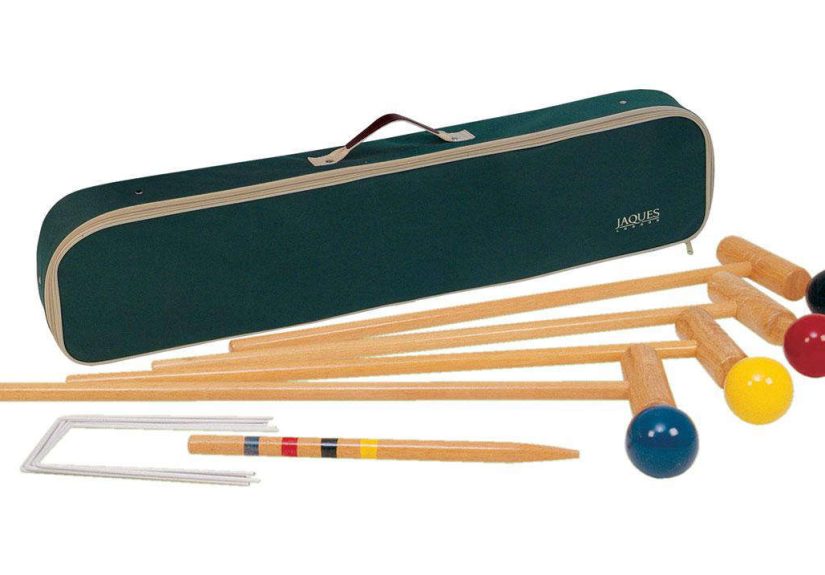
While exact contents can vary by retailer and region, the Playmate set is commonly described as including:
- 4 junior-size croquet mallets (around 30 inches long)
- 4 croquet balls in classic colors (often around 8 oz and about 75 mm in diameter)
- 6 metal hoops/wickets
- 1 winning peg/stake (typically multi-colored)
- Rules booklet (Jaques-branded instructions)
- Canvas storage/carry case (zippered bag style)
Translation: it’s a complete four-player set aimed at younger families, with the essentials to start playing immediatelyno “some assembly required” meltdown necessary.
Why “Playmate” Matters: Kid-Friendly Specs Without Feeling Like a Toy
Many croquet sets fall into one of two categories: “adorable but flimsy” or “beautiful but heavy enough to qualify as gym equipment.” The Playmate set sits in a sweet spot: lighter, shorter mallets and smaller, easier-to-move balls that still behave like croquet equipment rather than novelty props.
1) Shorter mallets = better form and fewer complaints
Adult croquet mallets can be long and awkward for kids. A ~30-inch mallet reduces the “I have to hunch like a cartoon villain” posture and makes it easier to learn a smooth pendulum swing.
2) Lighter balls = more success early on
Regulation-style recreational balls are often heavier, and on bumpy lawns they can hop, wobble, or stop short. Lighter balls can be easier for smaller players to move with a controlled swing. The tradeoff is they may be more affected by uneven grassso the lawn matters more (or you embrace the chaos, which is also valid).
3) Fewer wickets, faster games
Classic American backyard croquet often uses a nine-wicket “double diamond” course, which is awesome… and also a longer commitment. The Playmate’s typical six-wicket setup is more approachable for younger attention spans and quicker rounds. You can always add difficulty later with house rules (more on that soon).
Setting Up Your First Croquet “Court” Without Overthinking It
You don’t need a perfectly trimmed lawn or a measuring tape blessed by the Croquet Gods. For family play, the best setup is the one that gets everyone swinging in under five minutes.
The “Playmate Six” Course (simple, fast, fun)
- Pick a flat-ish rectangle of grass. (If the ground looks like a mini golf course, your balls will explore new religions.)
- Place the winning peg near one endthis is your finish point.
- Set 6 wickets in a loose loop or gentle zigzag. Keep spacing comfortable: far enough to require real hits, close enough that kids don’t need a cardio warm-up.
- Make a starting area a few mallet-lengths from the first wicket. That’s it. You’re officially a croquet venue.
Pro tip: If the wickets feel too tight for younger players, angle them slightly so the opening “welcomes” the ball. You can straighten them later when the kids start trash-talking with confidence.
How to Play (Family Version): Rules People Will Actually Follow
There are multiple legitimate versions of croquet. Competitive rule sets exist. Associations have diagrams. There are debates. For the backyard, you want something closer to “easy to start” than “law school exam.” Here’s a clean, family-friendly format that works beautifully with a six-wicket set.
Goal
Be the first player (or team) to run your ball through all wickets in the chosen order, then hit the winning peg to finish.
Teams (optional)
- Free-for-all: each player plays one ball.
- Two teams: pair up (helpful for younger kids so an older teammate can coach).
Turn basics
- One stroke per turn.
- If your ball goes through the next wicket correctly, you earn one bonus stroke.
- If you hit another ball with your ball, you earn one bonus stroke (simple version).
That’s enough structure to feel like croquet while keeping the pace moving. If your group wants more strategy later, you can upgrade to traditional “roquet and croquet shot” rules (where hitting another ball earns extra actions), but start simple. Kids don’t need a rules committee; they need momentum.
Out-of-bounds (keep it friendly)
If a ball rolls out of your play area, place it back in bounds about a mallet-head from where it exited (or just do the classic backyard move: “Put it somewhere fair, don’t be weird about it.”). Announce boundary rules before starting so no one accuses Grandma of a cover-up.
Quick Coaching: Helping Kids Hit Better in 10 Minutes
If you teach one thing, teach this: swing, don’t shove. Croquet works best as a controlled pendulum motion. Pushing the ball turns into “random lawn violence,” which is a different sport.
Three coaching cues that actually work
- Eyes on the ball: Don’t watch the wicket. The wicket isn’t running away.
- Quiet hands: A smooth swing beats a heroic heave.
- Finish the swing: Follow-through helps direction and distance.
Also: there’s no single “correct” stance for casual play. Some people use the classic between-the-legs swing for accuracy; others use a side stroke for power. Pick what feels steady and safe for the player.
Is the Jaques Playmate Croquet Set “Good Quality”?
Quality in croquet sets usually comes down to three things:
- Mallets: balance, sturdiness, and how they hold up if someone treats the lawn like it owes them money.
- Balls: weight/roll consistency and durability.
- Wickets: how easily they go into the ground and how well they stay put.
The Playmate set’s big advantage is intentional design for younger players: lighter, smaller components that make early games more satisfying. The flip side is that if you want a more competitive “adult” feelheavier balls that roll truer on rough grass, or a full nine-wicket courseyou may eventually want to level up to a larger recreational or premium set.
Who this set is perfect for
- Families with kids who want “real” equipment sized for them
- Backyard hosts who want a fast-to-learn lawn game
- People who love the idea of croquet but also love the idea of not reading a 40-page rulebook
Who might want something else
- Groups that want six players out of the box
- Players aiming for classic nine-wicket double-diamond backyard croquet
- Anyone who wants a heavier, more “tournament-y” feel in ball roll and wicket stability
Hosting a Backyard Croquet Day (Because You’ll Inevitably Do It Again)
Croquet is secretly a party game wearing a sport costume. Once the set is out, people wander over, claim a color like it’s a personality type, and suddenly you have a tournament.
Easy tournament format
- 2–4 players: free-for-all race to finish
- 5–8 players: rotate winners on, or do teams
- Kids + adults: teams work bestlet kids take the “scoring” shots through wickets when possible
Theme ideas (fun, not fussy)
- Holiday croquet: decorate wickets with removable ribbon or color markers
- Birthday challenge: each wicket is worth a “prize token” (stickers, snacks, bragging rights)
- Obstacle add-ons: a safe cone “gate,” a chalk circle target, or a bonus shot zone
Important safety note: Croquet mallets are not lightsabers. Set a “swing bubble” ruleno one stands within mallet range of the striker. The game is more fun when everyone keeps all their teeth.
Care and Storage: Keep It Nice for Next Season
If you want the set to last (and not become “that sticky bag of outdoor sadness” in the garage), a few simple habits help:
- Dry it before storing: wipe off damp grass, especially after morning dew or sprinklers.
- Don’t bake it in a trunk: extreme heat can age finishes and warp wood over time.
- Keep wickets together: store them in the same pocket or bundle so you’re not “missing one hoop” every single time.
- Quick check before play: make sure mallet heads and handles are snug and stable.
How to Make the Playmate Set Even Better (Without Buying Anything)
1) Add a “skills minute” before the game
Have each player take three practice swings: one short tap, one medium hit, one aim-through-a-wicket attempt. Kids improve instantly when the first three swings aren’t during “official scoring.”
2) Use “friendly wicket” mode
For younger kids: if the ball hits a wicket leg and stops right next to it, let it count as “through” once per game. That single mercy rule can save the entire afternoon.
3) Create an optional “bonus gate”
Place one wicket off to the side. If a player runs it at any time, they earn a bonus stroke. It adds strategy without complexity.
Final Take: A Classic Lawn Game That Actually Fits Family Life
The Jaques Playmate Croquet Set is best understood as a confidence-building croquet kit: it lowers the physical barriers (weight, size, setup time) so kids can get into the fun quickly, while still keeping the satisfying, old-school feel that makes croquet worth dragging onto the grass in the first place.
If your goal is family playkids learning aim, adults enjoying strategy, everyone laughing at that one ball that refuses to behavethis set is a strong match. And if you end up loving croquet enough to obsess over nine-wicket layouts later… congratulations. You have become the person who owns lawn diagram sketches. Welcome.
Real-World Playing Experiences (The “We Actually Took It Outside” Add-On)
The first time you open the Jaques Playmate Croquet Set, it has that satisfying “proper game” feeleverything has a place, the bag is ready to travel, and the pieces don’t scream “toy aisle.” That matters, especially with kids, because half the battle is convincing them this isn’t a one-round novelty. The other half is preventing the mallets from becoming medieval props. So, yes: set the “swing bubble” rule immediately. You will feel dramatic. You will also keep your shins.
Our best early experience came from keeping the setup intentionally simple. Instead of hunting for the perfect croquet court, we picked the flattest patch of grass and laid out a gentle six-wicket loop that didn’t require Olympic-level hitting power. The shorter mallets made a bigger difference than expected: younger players could stand comfortably without bending too far forward, and they looked more coordinated faster. That’s sneaky importantkids stick with games that make them feel skilled within the first ten minutes.
The lighter balls created two very real backyard realities. On smooth grass, they roll nicely and make it easier for smaller players to cover distance without overswinging. On bumpy grass, though, they can wander. But here’s the twist: that “imperfection” became part of the fun. When a ball bounced slightly off line and still slipped through the wicket, everyone acted like we’d witnessed a miracle. When it didn’t, we got a teachable moment about aiming for the center and letting the swing do the work. We also learned quickly to rotate who gets the “close-to-the-wicket” shotskids love being the one to finish a gate, and it keeps morale high.
The biggest upgrade wasn’t equipment; it was pacing. We tried strict rules for about five minutes, then shifted into “family rules” that kept the game moving: one bonus shot for running a wicket, one bonus shot for bumping another ball, and a single “mercy pass” per player (if your ball stops right beside the wicket after hitting it, you can count it once). Suddenly, everyone was engaged. Adults still had strategyblocking lines, guarding the peg, choosing whether to play safe or go boldbut kids weren’t stuck in frustration loops.
By the second session, we introduced a tiny tournament format: two short games instead of one long one. Winners kept their ball colors (because apparently that’s a status symbol now), and we added a silly prize like “first pick of snacks.” The croquet set became a reason to go outside rather than just another thing stored in the garage. That’s the real win: not perfect play, but repeat playan easy tradition that doesn’t require planning, just a patch of grass and a willingness to laugh when someone accidentally becomes their own worst opponent.