Table of Contents >> Show >> Hide
- What Is Karimoku New Standard?
- The Main Karimoku New Standard Dining Table Styles to Know
- What Makes These Tables So Appealing?
- How a Karimoku New Standard Dining Table Fits Into Real Homes
- Who Should Buy One?
- Things to Consider Before Buying
- Experience: Living With a Karimoku New Standard Dining Table
- Final Thoughts
- SEO Tags
If a dining table could wear a tailored jacket, speak softly, and still somehow steal the whole room, it would probably be a Karimoku New Standard dining table. This is the kind of furniture that does not beg for attention with flashy tricks. Instead, it wins you over the old-fashioned way: with beautiful wood, thoughtful proportions, clever construction, and the quiet confidence of something designed to age gracefully rather than trend aggressively.
That matters because when people search for a Karimoku New Standard dining table, they are usually looking for more than one single product. They are looking for a design language. They want to understand why this Japanese brand keeps showing up in conversations about modern dining furniture, Japandi interiors, sustainable wood design, and those rare pieces that feel both sculptural and usable. In other words, they want the full story, not just a glamour shot and a price tag.
This article breaks down what makes Karimoku New Standard special, which dining table styles deserve your attention, how the brand balances craftsmanship with contemporary design, and what it is actually like to live with a table that looks refined enough for a design magazine but sturdy enough for Tuesday-night takeout.
What Is Karimoku New Standard?
Karimoku New Standard, often shortened to KNS, is the contemporary arm of the larger Karimoku furniture story. The brand was launched to bring together Japanese woodworking expertise and a roster of international designers, creating furniture that feels modern without becoming cold, precious, or overdesigned. That combination is a big reason the brand stands out in a crowded world of minimalist dining tables that all start to resemble polite rectangles after a while.
The company’s identity is deeply tied to wood. Not in the vague, marketing-brochure sense of “we love natural materials,” but in the more serious sense of understanding how timber behaves, how it should be cut, joined, finished, and preserved, and how overlooked hardwoods can be turned into pieces with lasting value. Karimoku New Standard has built much of its reputation around using sustainably sourced Japanese hardwoods and transforming smaller-diameter trees that might otherwise be undervalued into furniture meant to last for decades.
Why the Brand Feels Different
Many contemporary furniture brands are excellent at visual branding and less impressive at construction. Karimoku New Standard tends to flip that script. Its tables do look good, obviously, but they also reveal an obsession with how a piece is made. Joinery, grain, edge profiles, leg placement, flat-pack logic, and surface treatments are not afterthoughts here. They are part of the design itself.
That is why a KNS dining table usually feels more intentional than trendy. The design is clean, but not sterile. The shapes are restrained, but not boring. And there is often one slightly unexpected move, a faceted pedestal, an inset top, a softened geometry, or a printed surface, that keeps the table from fading into the background like another anonymous slab on four legs.
The Main Karimoku New Standard Dining Table Styles to Know
One reason searchers get a little confused is that “Karimoku New Standard dining table” can refer to several different table families. Instead of one universal table, the brand offers a few distinct dining-focused designs, each with its own personality. Think of them as siblings: clearly related, but definitely not dressing alike on purpose.
1) Colour Wood Dining Table
If there is a headline-grabbing Karimoku New Standard dining table, this is the one. The Colour Wood Dining Table is the piece most likely to appear in editorials, mood boards, and “best dining tables” roundups. Designed by Scholten & Baijings, it brings together Japanese woodworking and a more playful European design sensibility.
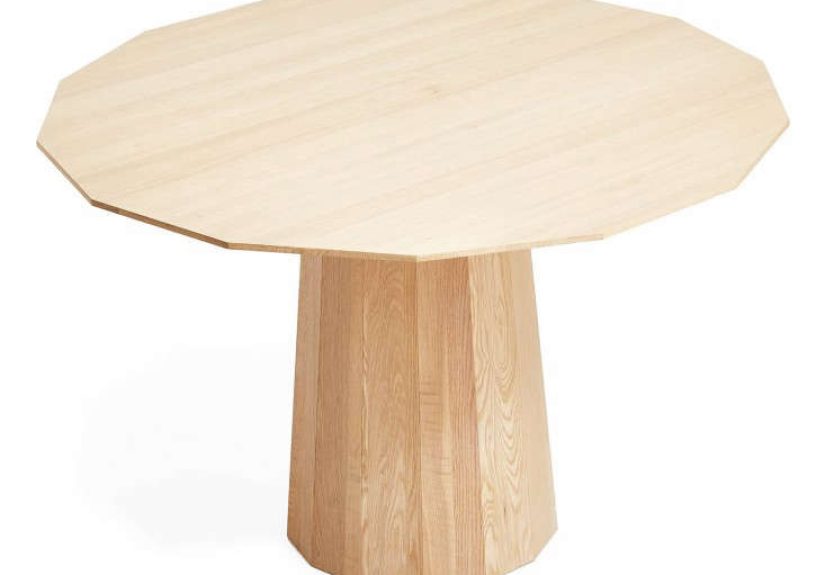
The silhouette is memorable. Rather than using a standard round top, the table often appears with a polygonal, 14-sided form that reads as round at a glance but becomes more interesting the longer you look at it. The base has a barrel-like presence made from carefully joined wood components, which gives the table both visual softness and architectural structure.
Then there is the surface treatment. Some versions come in plain natural wood, while others use transparent color washes and printed graphic patterns that look almost like a permanent tablecloth. That is the genius of the design: it feels artistic without becoming fussy. You get warmth, geometry, and a subtle sense of humor all in one piece. It is the rare dining table that says, “Yes, I am serious about design,” while also whispering, “Relax, I am still here for pasta night.”
2) Castor Dining Table
If the Colour Wood table is the extrovert with excellent taste, the Castor Dining Table is the calm, capable minimalist who never needs to raise its voice. Designed by BIG-GAME, this table strips away anything unnecessary and focuses on proportion, practicality, and wood quality.
The Castor table has a lighter, more understated expression than the Colour Wood line. It is compact, straightforward, and flexible enough to work in homes, cafés, or creative studios. The legs sit in a way that frames the top cleanly, and the overall effect is simple without feeling generic. Some versions are offered with linoleum tops, which add a softer tactile surface and a slightly more relaxed, everyday character.
This is one of the most versatile options in the Karimoku New Standard lineup. If you like modern oak dining tables, practical forms, and furniture that can move between dining and work use without an identity crisis, Castor makes a strong case for itself.
3) Spectrum Table
The Spectrum Table is where Karimoku New Standard leans into the overlap between dining and working. Designed by Geckeler Michels, it has a longer, more architectural profile and is available in sizes that can comfortably handle everything from family meals to meetings, laptops, and the occasional dramatic spread of takeout containers.
Spectrum feels especially relevant today because so many people want their dining room furniture to multitask. The table’s clean lines, solid oak construction, and flat-pack practicality make it appealing for contemporary homes where one surface may need to serve several roles in a single day. Breakfast nook at 8 a.m., workspace at 10, dinner party at 7, puzzle headquarters by Sunday afternoon. The table is ready.
Visually, Spectrum is a little more linear and structured than Colour Wood, and a little more polished than Castor. It suits people who love Japandi dining furniture with a crisp, almost workspace-friendly edge.
4) Scout Table
The Scout Table, associated with designer Christian Haas, offers another flavor of Karimoku New Standard dining design. It often feels compact, refined, and highly suitable for smaller spaces or for homeowners who want something elegant without turning the dining zone into a dramatic design monologue.
Scout is a good reminder that sophistication does not always need a large footprint. Its appeal lies in proportion, subtle detailing, and a sense of quiet ease. If your apartment, breakfast area, or compact dining room cannot handle a grand statement piece, Scout may be the smarter choice.
What Makes These Tables So Appealing?
Material Honesty
First, there is the wood. Karimoku New Standard does not treat wood like camouflage for mediocre design. The grain, tone, and finish are central to the experience. Oak, chestnut, and other Japanese hardwoods are allowed to look like themselves, which gives the tables warmth and depth that engineered sameness simply cannot fake.
Joinery and Construction
Second, the construction matters. These tables often highlight the intelligence of how pieces come together. In the Colour Wood line, the joinery becomes part of the visual story. In Castor and Spectrum, the construction supports flat-pack practicality and clean assembly without making the table feel disposable. That is an important distinction. Plenty of furniture ships flat. Not much of it still feels dignified once assembled.
Balance of Art and Utility
Third, the tables strike a rare balance between sculptural form and everyday function. Some design-forward dining tables are gorgeous but annoyingly impractical. Others are so utility-driven they seem designed by a spreadsheet. Karimoku New Standard usually lands in the sweet spot between those extremes. The tables are visually distinctive, but still built for eating, gathering, working, and living.
How a Karimoku New Standard Dining Table Fits Into Real Homes
One of the strongest selling points of a Karimoku New Standard dining table is flexibility. These tables work especially well in interiors that value natural materials, clean lines, and a restrained palette, but they are not limited to one aesthetic lane.
In a Japandi Interior
This is the obvious pairing, and yes, it works. A KNS table looks right at home with linen curtains, muted ceramics, warm neutrals, and low visual clutter. The wood tones add warmth, while the refined shapes keep the room feeling airy.
In a Modern Apartment
If your space leans modern rather than soft, a Spectrum or Castor table can sharpen the room beautifully. Add black accents, understated lighting, and a few sculptural chairs, and the table starts to feel crisp and gallery-like without becoming cold.
In a More Eclectic Room
The Colour Wood Dining Table is especially good here. Because it already plays with form and pattern, it can bridge minimalist architecture and more expressive décor. It pairs surprisingly well with vintage pieces, handmade ceramics, and interiors that want one design object with personality instead of ten random “statement” items all fighting for custody of the eye.
Who Should Buy One?
A Karimoku New Standard dining table is a smart fit for buyers who care about craftsmanship, sustainability, and long-term value more than fast-furniture convenience. It is ideal for people who notice details, not just dimensions. If you can tell when a table edge has been thoughtfully softened, or why a base feels better proportioned than another, you are probably the target audience.
It is also a strong choice for buyers who want a designer dining table that does not feel ostentatious. KNS furniture is sophisticated, but rarely loud. It earns attention through clarity and quality, not through stunt design.
On the other hand, if your top priority is the cheapest possible dining surface that can survive exactly one lease cycle and three flatmates who think placemats are oppressive, this may not be your lane. Karimoku New Standard is an investment in materials, design, and longevity.
Things to Consider Before Buying
Choose the Right Shape
Round and polygonal tables like Colour Wood encourage conversation and soften a room visually. Rectangular tables like Spectrum and larger Castor versions can make better use of narrow rooms and seat more people efficiently.
Think About Daily Use
If your table will serve as a desk half the week, Spectrum and Castor deserve extra attention. If you want the dining table to be the artistic centerpiece of the room, Colour Wood is the one that makes people stop mid-sentence and ask where you found it.
Respect the Finish
Wood furniture ages beautifully, but it still appreciates good manners. Use coasters. Wipe spills quickly. Avoid dragging gritty objects across the surface. In other words, treat it like the grown-up table it is, not like a sacrificial altar for craft glue and rogue scissors.
Experience: Living With a Karimoku New Standard Dining Table
Living with a Karimoku New Standard dining table is less like owning a trendy piece of décor and more like slowly discovering why good furniture can change the mood of a home. On day one, you notice the obvious things: the grain, the finish, the way the edges catch the light, the fact that the table somehow looks calm and special at the same time. It photographs beautifully, sure, but the real test begins after the camera goes away and life starts happening on top of it.
At breakfast, the table feels quiet and grounding. A mug, a bowl, a newspaper, maybe a laptop sneaking into the scene before coffee has fully done its job, all of it looks better on a surface that has real material depth. There is something about solid wood, especially when handled with this much restraint, that makes the daily routine feel less disposable. The table does not scream for attention, yet it subtly elevates everything around it.
By afternoon, especially in homes where the dining area doubles as a workspace, the experience gets even more interesting. A Spectrum or Castor table can handle notebooks, chargers, paperwork, and a mild existential crisis without losing its composure. That flexibility is part of the appeal. You do not feel as if you are “ruining” a precious design piece by actually using it. The table seems designed with the understanding that modern life is messy, layered, and not neatly separated into showroom categories.
Dinner is where the emotional value really shows up. A Karimoku New Standard dining table has presence, but it is the kind of presence that helps people settle in. The rounded or softened geometries feel welcoming rather than rigid. With the Colour Wood table in particular, the faceted form and patterned surface often become a conversation starter without turning into a novelty. Guests notice it. They ask about it. Then they stop talking about the table and start lingering around it, which is exactly what a good dining table should encourage.
Over time, you also begin to appreciate what the table is not. It is not bulky. It is not clumsy. It is not trying too hard. It does not rely on faux rustic distressing, exaggerated industrial hardware, or oversized proportions to announce that it exists. Instead, it proves itself through use. Plates look good on it. Flowers look good on it. A simple loaf of bread on a board somehow looks like an editorial spread on it. That may sound dramatic, but good furniture has a way of making ordinary moments feel slightly more composed.
There is also satisfaction in knowing the table comes from a brand with real woodworking roots. Even if guests never ask about sourcing, small-diameter oak, or Japanese joinery, you know the piece was conceived with those values in mind. That backstory adds depth to the ownership experience. It feels less like buying décor and more like bringing home an example of thoughtful industrial design.
The long-term experience is probably the strongest argument of all. A Karimoku New Standard dining table does not peak on delivery day. It tends to improve as you live with it. You learn how light moves across the finish in the morning. You notice how easily it adapts to holidays, solo dinners, work sessions, and gatherings with friends. You stop thinking of it as “the new table” and start thinking of it as part of the house itself. That is when you know the investment made sense.
Final Thoughts
The best way to think about a Karimoku New Standard dining table is this: it is where craftsmanship meets restraint, and where restraint still leaves room for personality. Whether you prefer the graphic artistry of Colour Wood, the everyday versatility of Castor, the hybrid practicality of Spectrum, or the compact elegance of Scout, the common thread is clear. These tables are designed to be used, admired, and kept.
In a furniture market crowded with lookalikes, Karimoku New Standard offers something more satisfying: tables with real design intelligence, real material integrity, and real staying power. They are modern, but not temporary. Refined, but not stiff. Distinctive, but not exhausting. And honestly, that combination is harder to find than most furniture brands would like you to believe.
If you want a dining table that brings warmth, subtle drama, and long-term credibility into your home, Karimoku New Standard is absolutely worth your attention. Some tables hold plates. These tables hold a room together.