Table of Contents >> Show >> Hide
- What Sparked the “Woman’s World” Backlash?
- Katy Perry’s Defense: “It’s Satire”
- The Dr. Luke Question: Perry’s “Call Her Daddy” Explanation
- Why “Woman’s World” Became a Culture-War Magnet
- Did the Backlash Hurt the Rollout?
- Zooming Out: What This Says About Pop in 2024
- What’s Next for Katy Perry?
- Conclusion: The Real Battle Was Over Meaning
- Experiences: What It Feels Like Watching a Pop Backlash Unfold (500+ Words)
Pop comebacks are supposed to feel like fireworks: loud, bright, and a little bit dangerous (in a fun way, not a “my group chat is now a courtroom” way).
But when Katy Perry launched her latest era with “Woman’s World”, the reaction didn’t just split the roomit redecorated it, then argued about the paint color.
The song and its music video arrived with a bold, slogan-ready title and a wink-at-the-camera vibeat least, that’s what Perry later insisted. Critics and fans,
meanwhile, heard something closer to “2014 empowerment starter pack” and watched visuals they felt leaned into the very male-gaze tropes the lyrics seemed to reject.
Add a producer credit that sparked immediate controversy, and suddenly the rollout became less “summer single” and more “pop culture debate club.”
What Sparked the “Woman’s World” Backlash?
1) The message felt familiarmaybe too familiar
“Woman’s World” positions itself as a celebratory women’s-empowerment anthem. That’s not new territory for Perryshe has a long history of big,
communal, stadium-friendly messaging. The problem, as many listeners put it, is that the modern pop landscape is less impressed by slogans and more
obsessed with specificity. In 2024 pop, “tell me who you are” tends to win over “tell me a motivational poster.”
Early reactions (even before the full release) criticized the writing as clichéd and “dated,” with some online commenters comparing the vibe to the mid-2010s era
of corporate feminism: catchy, well-intended, but oddly disconnected from what women are actually fighting for right now.
2) The music video triggered “male gaze” alarms
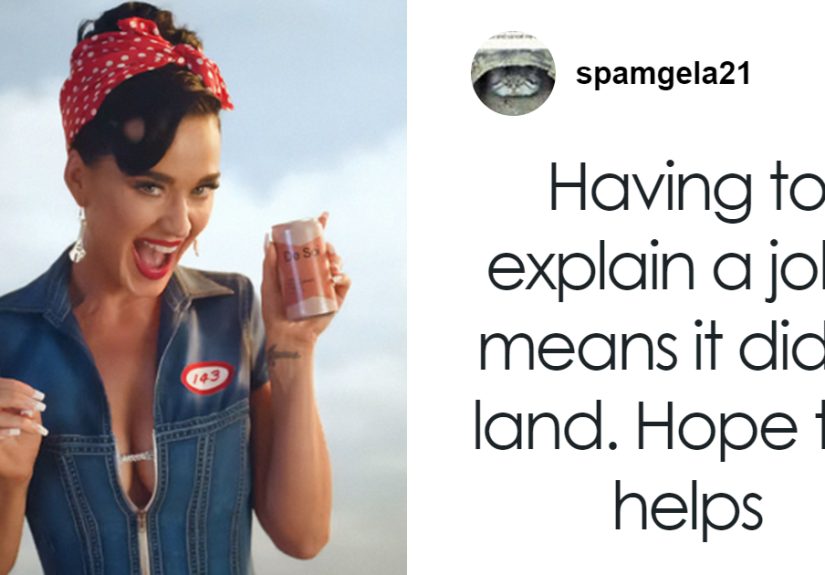
The music video’s tone is intentionally exaggerated: construction-site imagery, over-the-top props, and moments that feel like slapstick. But many viewers said
the joke didn’t land cleanly because the video also includes sexualized shots and gags that read less like critique and more like participation.
When a piece of content tries to mock objectification while simultaneously serving it, the audience tends to ask a brutally simple question:
“Am I laughing with you… or are you laughing at me?”
Some fans defended the visuals as camp or parody, while others argued the execution felt confusing: a message of empowerment paired with imagery
that appeared designed to attract the kind of attention empowerment anthems usually critique.
3) The producer credit became its own headline
The biggest lightning rod was the involvement of producer Dr. Luke. That credit instantly reframed how many people interpreted the song’s “women’s empowerment”
premise. To critics, it wasn’t just ironyit was a contradiction loud enough to drown out the chorus.
This controversy didn’t require a deep-dive for casual fans; it already had cultural memory. So the discussion expanded beyond “Is this a good song?”
to “What does it mean to sell empowerment while collaborating with someone widely viewed as controversial?”
Katy Perry’s Defense: “It’s Satire”
The behind-the-scenes explanation
After the backlash gained momentum, Perry posted behind-the-scenes footage and argued that people were missing the intent. Her caption was basically a neon sign:
You can do anything! Even satire!
In the clip, she described the opening construction-site sequence as intentionally sarcastic, “slapstick,” and “on the nose.”
The point, she suggested, was to exaggerate how “empowerment” aesthetics can become performativeespecially when they’re still shaped by the male gaze.
In other words: she wasn’t endorsing the clichésshe was parodying them.
Why that defense didn’t settle the debate
Satire has a built-in risk: if it’s subtle, people may mistake it for sincerity; if it’s obvious, people may call it lazy; if it needs a full explanation,
people will say the joke failed. “Woman’s World” ran into all three problems at once.
Some critics argued that the video’s “satire” label arrived as a retrofita way to protect the project after the initial reaction.
Others said the satire might be present in moments, but the lyrics play the empowerment message straight, which creates a mismatch:
the visuals appear to mock the very message the chorus tries to sell earnestly.
The Dr. Luke Question: Perry’s “Call Her Daddy” Explanation
Months later, Perry addressed the producer controversy more directly in a podcast appearance. Her core point was: the record reflects her own story,
and collaborators help facilitate it. She framed Dr. Luke as one of many people involved, not the author of her intention.
She also described her new music as grounded in her personal “metamorphosis” and the confidence she feels nowespecially in her life as a mother and a woman.
The message was clear: judge the work through her authorship and perspective, not solely through the credits list.
That argument may persuade some listenersartists collaborate all the timebut the backlash shows how credits have become part of the art itself.
In today’s pop culture, a producer isn’t just a behind-the-scenes technician; they’re a signal of values, alliances, and awareness.
Whether that’s fair is debatable. Whether it’s real is not.
Why “Woman’s World” Became a Culture-War Magnet
Pop feminism has evolved faster than pop slogans
“Empowerment” pop in the early-to-mid 2010s often leaned on broad, uplifting languageperfect for radio, commercials, and sports arenas.
But the 2020s audience (especially online) tends to demand more texture: who is being empowered, from what, and at whose expense?
Vague empowerment can read like branding instead of belief.
The internet doesn’t just consume pop it cross-examines it
In a pre-social era, a music video could be messy and still be “just a video.” Now, viewers analyze symbolism like it’s an AP English final.
Every prop, camera angle, and credit line becomes evidence. “Woman’s World” didn’t simply release into the worldit released into
TikTok think-pieces, X threads, YouTube breakdowns, and reaction memes that move at the speed of caffeine.
Satire requires trust in the satirist
Satire works best when the audience believes the creator understands the target. But public perception matters:
if people don’t trust your cultural commentary, they won’t treat your exaggeration as critiquethey’ll treat it as confusion.
And if the project is already under fire for its collaborators, that trust becomes even harder to earn.
Did the Backlash Hurt the Rollout?
Commercially, controversy can be a strange kind of fuel. Even mixed reactions drive clicks, streams, and conversation.
The video quickly pulled in millions of views, partly because people were curiousand partly because people wanted to argue with evidence.
That said, attention isn’t the same as affection, and “viral” isn’t always a synonym for “beloved.”
Critically, major pop outlets were harsh. Some reviews framed the track as a stale retread, arguing it failed to be either a convincing anthem
or satisfying camp. Others emphasized that the single’s messaging was undermined by its context and collaborators.
The combined effect: instead of a clean comeback narrative (“Katy’s back!”), the era opened with a cloud of qualifiers
(“Katy’s back… but let’s talk about the credits… and the satire… and the male gaze…”).
Zooming Out: What This Says About Pop in 2024
1) Intent is not impact
Perry may genuinely see “Woman’s World” as parodying shallow empowerment aesthetics. But audiences judge what a work does,
not just what it means to do. If the “male gaze” imagery lands as “male gaze,” the impact is the messageno matter the disclaimer.
2) Authenticity is the new production value
Pop stars can still be theatrical, larger-than-life, and glossy. But today’s listeners want a sense that the person behind the spectacle is
emotionally or culturally connected to what they’re selling. The internet can smell “focus group feminism” like it’s a gas leak.
3) Credits are part of storytelling
The producer controversy shows that pop audiences increasingly treat the credits list as narrative. It communicates taste,
ethics (or lack thereof), and strategy. In the streaming erawhere fans track everythingwho you work with becomes a statement,
even if you didn’t mean it that way.
What’s Next for Katy Perry?
“Woman’s World” is positioned as the opening chapter of a larger era tied to her album 143, a project she has described as dance-pop
with “love” as a throughline. That framing suggests she wants exuberance, momentum, and big pop energyan invitation back into
her world of maximal choruses and glossy spectacle.
Whether the era gets defined by the controversy or by the music will depend on what comes next: follow-up singles, live performances,
interviews, and how clearly the project communicates its point of view. In pop, a messy first impression can be redeemedbut only if
the next move feels undeniable.
Conclusion: The Real Battle Was Over Meaning
“Woman’s World” didn’t just spark debate about a song. It became a referendum on how pop feminism should sound, who gets to sell it,
and whether satire can survive the modern content economy without a user manual.
Perry’s defense“It’s satire”isn’t ridiculous on its face. The video does contain exaggerated, cartoonish elements that resemble parody.
But in 2024, satire isn’t only about intention; it’s about clarity, credibility, and context. And “Woman’s World” walked into the conversation
wearing all three like slightly uncomfortable shoes.
Experiences: What It Feels Like Watching a Pop Backlash Unfold (500+ Words)
If you’ve ever been online when a major pop star drops a “comeback” single, you know the pattern: first comes the countdown, then the teaser snippet,
then the comment section turns into a stadium. But the “Woman’s World” moment felt like a particularly modern kind of chaosless “I love/hate this song”
and more “I’m assembling a PowerPoint.”
One common experience is the whiplash between listening and litigating. You press play expecting a quick three-minute dopamine hit.
Instead, you’re ten minutes deep in a thread arguing about whether a single camera angle is satire or sincerity. That’s not because listeners are joyless.
It’s because pop has become a language people use to talk about the worldand when a song declares itself about “women,” people assume it’s stepping into
real life, not just the club.
Another very real experience: the split-screen brain. On one side, you’ve got the music itselfmaybe you like the beat, maybe you don’t,
maybe the chorus gets stuck in your head against your will (pop’s oldest trick). On the other side, you’ve got everything around it: who produced it,
what the visuals imply, what the marketing suggests, what the artist said in interviews. In 2024, you rarely consume a song “purely.”
You consume it with context in your lap like a second device you didn’t ask for.
If you’re a longtime fan, the experience can be even weirder. Fandom isn’t just cheering; it’s also defending, interpreting, and sometimes negotiating
with disappointment. You might recognize the artist’s old strengthsbig hooks, bold visuals, commitment to the bitwhile also feeling that the new move
doesn’t translate in the same way it once did. And when the discourse heats up, fans often end up playing “press secretary” online:
explaining intent, clarifying timelines, and begging strangers to remember that enjoying a pop song is not a binding moral contract.
Then there’s the experience of “satire explained”that particular internet phenomenon where an artist says, “It’s a joke,” and the
audience replies, “If you have to say it’s a joke, it might not be working.” You can almost feel the collective reaction:
some people nod along (“Oh, I get it now”), others roll their eyes (“Sure, Jan”), and a third group simply laughs at the fact that the debate exists
at all. Satire used to be something you discovered. Now it’s sometimes something you’re handed with a caption.
Finally, there’s the experience of watching the conversation outgrow the song. At a certain point, “Woman’s World” wasn’t just a track;
it was a symbol used by different groups to argue about bigger questions: what empowerment means, what accountability looks like, and how much cultural
responsibility we should place on pop stars whose job is, fundamentally, to entertain. The strange truth is that a pop backlash can be a kind of mirror:
it shows what people are tired of, what they’re hungry for, and what they no longer want to accept as “good enough.”
Whether you think the backlash was fair or excessive, it illustrates a core reality of modern pop: the audience isn’t passive anymore.
They’re participants. They’re critics. They’re detectives. And sometimes they’re comedians. In that world, a comeback single isn’t just music
it’s a public conversation starter. The only question is whether the artist controls the first sentence, or whether the internet writes the paragraph.