Table of Contents >> Show >> Hide
- What the interview is about (and why it hit a nerve)
- KevinMD in plain English: the digital town square for clinicians
- Who is Cory Calendine, MDand why he’s the right interviewer for this topic
- TikTok’s “explosive growth” isn’t just bigit’s structurally different
- Medical misinformation: the glitter of the internet (it gets everywhere)
- So what can physicians do? Start small, stay ethical, be useful
- Examples of physician content that actually helps (without turning you into a robot)
- Burnout, documentation, and why social media becomes a pressure valve
- What’s next for KevinMD (and for physician media)
- Added experiences: what clinicians commonly learn from doing interviews and posting online
- Conclusion: the internet needs fewer hot takes and more good-faith doctors
Every so often, the internet gifts us a rare sighting: a doctor with a stethoscope in one hand and a
ring light in the othertrying to explain something complicated in under 30 seconds without accidentally
starting a comment war. That’s basically the energy behind the “KevinMD interview by Cory Calendine, MD”
episodewhere the founder of KevinMD finds himself on the other side of the mic.
The conversation isn’t just “Hey, social media is neat.” It’s a practical, occasionally hilarious tour through:
TikTok’s rocket-ship growth, why medical misinformation spreads like glitter (forever and everywhere), how
vertical short videos rewire attention spans, and what physicians can do to show up online without sacrificing
professionalismor their remaining free time.
This article breaks down the interview’s big themes, adds context from medical ethics and public health guidance,
and offers concrete examples of what “good doctor content” looks like in 2026 (hint: it’s not interpretive dancing
about cholesterolunless you’re very confident in your choreography).
What the interview is about (and why it hit a nerve)
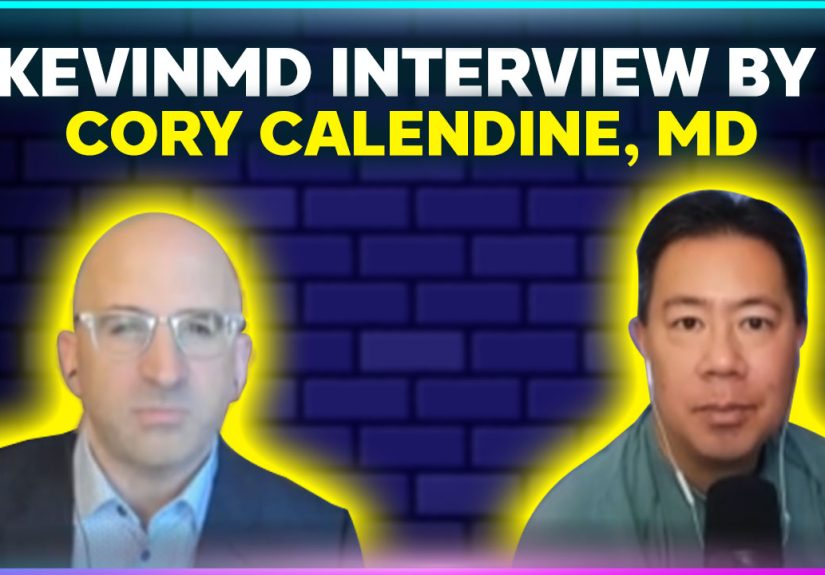
In the KevinMD podcast episode titled “KevinMD interview by Cory Calendine, MD,” Kevin Pho describes being
interviewed by orthopedic surgeon Cory Calendinewho has built a large social media presence. Their discussion
centers on TikTok’s explosive growth, medical misinformation, the mechanics of vertical short-form video,
how physicians can start on social media, what’s next for KevinMD, trends to watch, and physician speaking.
Read that list again and you’ll notice the through-line: doctors are already part of the online information
ecosystemwhether they participate or not. When patients scroll for health answers, the question isn’t
“Will they find content?” It’s “Will they find content that helpsor content that confidently lies?”
KevinMD in plain English: the digital town square for clinicians
KevinMD has been around long enough to remember when “going viral” mostly referred to influenza. Founded in 2004,
the platform grew into a major publishing space where physicians and other health professionals share commentary,
patient-care reflections, and perspectives on policy, practice, technology, and culture.
That matters because health care is full of stories that never fit into a clinic note: the messy human context,
the moral distress, the system constraints, the “this shouldn’t be this hard” moments. KevinMD helped make those
stories visiblelong before every professional had a personal brand and a podcast mic.
Why interviews like this are different from “influencer” content
The best clinician-to-clinician interviews don’t chase hot takes. They translate the reality of medicine into
something the public can understand, while also giving clinicians tools to navigate a world where attention is a
currency and algorithms are the bankers.
Who is Cory Calendine, MDand why he’s the right interviewer for this topic
Cory Calendine is an orthopedic surgeon known for hip and knee work (including modern joint-replacement approaches)
and for building a strong online presence. In the context of this interview, that combination is the whole point:
he understands both the clinical stakes and the social media realities.
When a surgeon who communicates online interviews a physician-media founder, you get a conversation that’s both
tactical (how do you actually post?) and strategic (what happens to public trust when misinformation wins the feed?).
TikTok’s “explosive growth” isn’t just bigit’s structurally different
The interview highlights TikTok’s rapid rise and why it matters for medicine. TikTok isn’t only popular; it’s built
for discovery. You don’t need a big follower base to reach people, because the algorithm is happy to introduce your
video to strangers who never asked for it… which is both magical and mildly terrifying.
What the data says about TikTok use
U.S. usage is especially strong among younger adults, and many users actively participate by postingnot just watching.
In other words, TikTok isn’t a passive platform. It’s a factory that turns viewers into creators. And health content
is part of the supply chain.
Why vertical short-form video changes the “rules”
- Speed wins: People decide whether to stay in the first second or two.
- Clarity beats completeness: The best posts communicate one idea, not twelve.
- Confidence can be mistaken for competence: A calm voice + captions can look “authoritative,” even when wrong.
- Stories stick: Humans remember narratives more than bullet-point lectures.
That’s why physicians who want to educate online often need to rethink how they teach. The goal isn’t to compress a
medical textbook into 45 seconds. It’s to deliver a single, accurate “next best step” for understandingthen direct
people to deeper, reputable sources.
Medical misinformation: the glitter of the internet (it gets everywhere)
The interview calls out medical misinformation as a major issue on fast-moving platforms. That’s consistent with U.S.
public health messaging: the Surgeon General has warned that health misinformation is a serious threat that can harm
people’s health, undermine trust, and weaken public health efforts.
What’s tricky is that misinformation doesn’t always look like a cartoon villain. Sometimes it’s a real concern wrapped
around a wrong conclusion. Sometimes it’s a single true sentence used to sell a bogus product. And sometimes it’s a
confident explanation that skips the boring-but-essential part where evidence is weighed.
Why misinformation spreads faster than nuance
- It’s emotional: fear, outrage, hope, miracle curesthese outperform “it depends.”
- It’s simple: one cause, one solution, one villain.
- It’s shareable: a tidy narrative travels better than a balanced explanation.
- Platforms reward engagement: and conflict is extremely engaging.
There’s also a profession-specific complication: when a person with credentials spreads misinformation, the harm can
be greater because audiences give medical authority extra weight. Medical journals and professional bodies have raised
concerns about clinicians who disseminate false claims online and the downstream impact on public trust.
So what can physicians do? Start small, stay ethical, be useful
The interview touches on how physicians can start on social media. Let’s make that concrete, with a simple framework
you can use without hiring a marketing team or sacrificing your weekend.
1) Pick a lane: who are you helping?
Successful physician creators usually choose one primary audience:
patients and families, medical trainees, or the broader public.
You can talk to all three, but your content will be sharper if you know who you’re addressing.
2) Build guardrails (before you need them)
U.S. ethics guidance emphasizes that physicians can’t fully separate personal and professional identities online.
State medical board guidance also stresses professionalism and the importance of protecting patient information.
And legally, HIPAA sets national standards for protecting individually identifiable health information.
Practical guardrails that keep you out of trouble:
- No patient-identifying details (even “no names” can still be identifiable when details pile up).
- Don’t give individualized medical advice in comments or DMsuse general education and encourage appropriate clinical care.
- Use disclaimers (“educational, not medical advice”), but don’t treat disclaimers like magic force fields.
- Assume screenshots are foreverbecause they are.
3) Make accuracy the brand
One underrated tactic: normalize how to evaluate health information. The National Library of Medicine’s MedlinePlus
offers a plain-language checklist for assessing online health sources (who runs the site, why they published it,
whether experts review content, and how ads/funding influence information). Teaching audiences how to check
can be as valuable as teaching them what to know.
Examples of physician content that actually helps (without turning you into a robot)
Example A: “Myth vs. reality” (high reach, high responsibility)
Hook: “No, detox teas don’t ‘reset’ your liver.”
Middle: One sentence on what the liver does and why “detox” claims are misleading.
Close: “If you’re worried about liver health, ask your clinician about evidence-based screening and risk factors.”
Example B: “What I wish people knew before surgery” (expectations, not advice)
A surgeon can educate about typical recovery timelines, common misconceptions, and questions patients should ask
without telling any individual viewer what they personally need. This is especially relevant for orthopedic topics,
where TikTok is full of recovery stories that may be sincere but not universally applicable.
Example C: “How to read a health headline” (media literacy as medicine)
Short-form videos are perfect for teaching simple interpretation skills:
absolute risk vs. relative risk, correlation vs. causation, and why “single study proves” is usually a red flag.
This is a quiet superpower in a noisy feed.
Burnout, documentation, and why social media becomes a pressure valve
The KevinMD episode includes sponsor messaging about documentation burden and burnout, which reflects a broader,
well-documented reality: physicians spend substantial time on electronic health record tasks and desk work relative
to direct patient care. Multiple peer-reviewed studies have found that for each hour of face time with patients,
clinicians may spend roughly two additional hours on EHR and related work.
That context explains why many physicians show up online in the first place. Social platforms can be:
a creative outlet, a community, a place to advocate, and sometimes
the only space where a doctor can speak in complete sentences instead of diagnosis codes.
But it’s also a trap if it becomes one more job. The healthiest pattern looks like this:
create in batches, set boundaries, and focus on sustainable contributionnot constant output.
What’s next for KevinMD (and for physician media)
The interview tees up “what’s next” for KevinMD and highlights trends to watch: continued dominance of short-form
video, the rise of clinician creators as public educators, and a growing need for trustworthy voices who can explain
health topics without sensationalizing them.
If you zoom out, KevinMD’s evolution mirrors a wider shift: medicine is no longer communicated only through journals,
news outlets, and clinic visits. It’s communicated through podcasts, comment threads, stitched videos, and
“here’s what I wish someone told me” posts. The formats changed. The responsibility didn’t.
Added experiences: what clinicians commonly learn from doing interviews and posting online
Because the topic is an interviewKevin Pho being interviewed by Cory Calendinelet’s talk about the real-world
experiences clinicians often report when they step into public-facing media, whether that’s a podcast conversation,
a TikTok channel, or a written platform like KevinMD. These aren’t “war stories.” They’re patternsrepeatable lessons
that show up across specialties.
Experience 1: The first “big comment” teaches humility fast
Many physicians describe the same moment: they post a simple educational videosomething harmless like explaining why
antibiotics don’t treat viral infectionsand suddenly the comments section becomes a live debate club. Someone arrives
with a personal anecdote, someone else posts a conspiracy link, and a third person demands a diagnosis based on a
blurry symptom description and a vibe.
The lesson is not “don’t post.” The lesson is to prepare your response posture in advance. Clinicians who last tend to:
(1) respond to a few comments with calm, general education, (2) avoid individualized advice, and (3) stop feeding the
thread once it turns into a looping argument. You’re not “losing” by disengagingyou’re modeling boundaries.
Experience 2: DMs are where professionalism gets stress-tested
A very common experience for physician creators is receiving direct messages that start politely and then drift into
clinical questions. The sender might be scared, uninsured, or frustrated with the health system. It’s human to want to
help. But it’s also risky and often inappropriate to practice medicine in a DM.
Physicians who do this well often use a consistent script: “I can’t provide personal medical advice here, but I can
share general information and encourage you to see a clinician in person or use appropriate services.” Some creators
also point people to reputable public resources and explain how to evaluate what they’re reading. This approach aligns
with the ethical principle of doing good without creating a shadow clinic inside your inbox.
Experience 3: Short-form video forces better teaching
Clinicians are trained to be thorough. TikTok is trained to be brief. The collision can be painful… and productive.
Many doctors report that learning to communicate in 30–60 seconds actually improves how they talk with patients.
Why? Because short videos force you to:
- identify the single most important takeaway,
- use plain language,
- anticipate misunderstandings, and
- offer a next step that doesn’t overpromise.
In interviews (like the KevinMD episode), this same skill shows up as clarity under pressureanswering questions
without hiding behind jargon. The best clinician interviewees are not the flashiest. They’re the ones who can explain
complex topics with calm accuracy, then admit uncertainty when it exists.
Experience 4: The “why” matters more than the “platform”
Some physicians start posting to educate. Some start to advocate. Some start because they’re burned out and need a
creative outlet. And some start because they’re tired of watching misinformation dominate the narrative. What tends to
separate sustainable creators from exhausted ones is a clear “why” plus realistic boundaries.
If your “why” is to help people understand joint replacement recovery, you don’t need to post every day. If your “why”
is to counter misinformation, you don’t have to respond to every provocation. If your “why” is to build a professional
voice, you can do that with one strong post per weekespecially if it’s accurate, useful, and respectful.
That’s why the KevinMD interview by Cory Calendine works as a case study: it’s not hype about being online. It’s a
reminder that physician communication is part of patient care nowsometimes indirectly, sometimes at scale, and often
in formats medicine didn’t design. The opportunity is real. The responsibility is real. And yes, the ring light is
optional.
Conclusion: the internet needs fewer hot takes and more good-faith doctors
The big takeaway from the “KevinMD interview by Cory Calendine, MD” is refreshingly practical: physicians can help
shape online health culture, but only if they show up with accuracy, ethics, and boundaries.
TikTok and other platforms will keep evolving. The misinformation problem won’t vanish. But clinician voicesespecially
those trained to communicate responsiblycan raise the signal-to-noise ratio. And that’s not just “content.”
That’s public service.