Table of Contents >> Show >> Hide
- What LG’s High-Tech Mask Actually Is (Spoiler: It’s an Air Purifier You Wear)
- The Star Upgrade: Built-in Mic and Speaker (Voice Amplification Without “Mask Pull-Down”)
- Under the Hood: Fans, Filters, and the “Breath-Matching” Sensor
- Comfort and Practical Specs: Weight, Battery, Noise, and Recharge Time
- So… Is It a “COVID Mask,” an “Air Pollution Mask,” or a Gadget?
- Launch and Availability: Why Thailand First?
- How It Compares to Other “Tech Masks” (Razer, Xupermask, and the Gadget Arms Race)
- Who This Mask Makes Sense For (And Who Should Skip It)
- Practical Tips If You’re Considering a Wearable Air Purifier Mask
- Conclusion: A Mask Upgrade That’s Actually About Usability
- Real-World Experiences: What Wearing a Mic-and-Speaker Mask Can Feel Like (500+ Words)
If you’ve ever tried to order coffee through a face mask, you already know the two universal truths of masked life:
(1) your voice becomes a mysterious muffled whisper, and (2) everyone suddenly forgets how to read lips.
LG’s answer to this everyday comedy-of-errors is a mask that doesn’t just filter airit also helps you be heard.
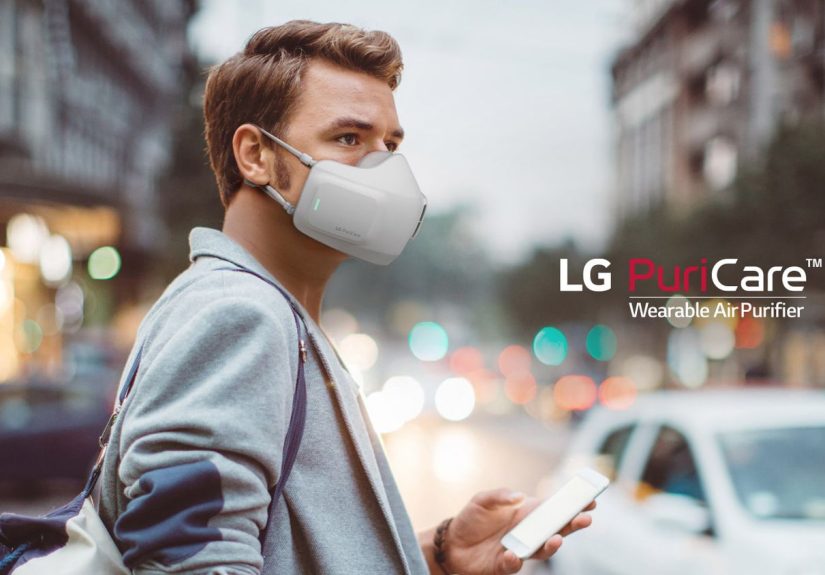
The company’s LG PuriCare Wearable Air Purifier (yes, that’s the full name, and yes, it sounds like a sci-fi
side quest) got a major communication upgrade: a built-in microphone and speaker designed to amplify your voice
while you keep the mask on. It’s a surprisingly practical feature in a world where masks show up not only during
outbreaks, but also in wildfire smoke seasons, allergy spikes, and polluted commutes.
In this deep dive, we’ll break down what LG’s “high-tech mask” actually is, how the mic-and-speaker setup works,
what the real-world tradeoffs look like, and who might genuinely benefitplus a longer “experience” section at the
end to make this feel less like a spec sheet and more like a “would I actually wear this?” conversation.
What LG’s High-Tech Mask Actually Is (Spoiler: It’s an Air Purifier You Wear)
LG’s PuriCare Wearable Air Purifier is best understood as a compact personal air filtration device shaped like a
face mask. Instead of relying only on passive airflow through fabric, it uses internal fans to pull air through
replaceable HEPA-grade filters and deliver that filtered air to the wearer. The goal is to make breathing feel
more consistentespecially when you’re moving aroundwhile also filtering airborne particles.
The “wearable air purifier” concept originally sounded like peak futuristic weirdness, but it was built to address
very normal problems: masks can feel stuffy during exercise, glasses can fog up, and high-filtration masks can be
hard to breathe through if the fit is tight. LG’s approach uses powered airflow plus a sensor-driven fan system to
reduce that “breathing through a pillow” sensation some people dislike.
Key idea: powered airflow + filtration + fit
LG pairs HEPA-grade filters with a fan system and a breathing/respiratory sensor. When you inhale, the device can
increase airflow; when you exhale, it can reduce it. In plain English: it tries to match the mask’s airflow to the
way you’re breathing, so the experience feels less restrictive and more natural.
The Star Upgrade: Built-in Mic and Speaker (Voice Amplification Without “Mask Pull-Down”)
Let’s talk about the headline feature: a built-in microphone and speaker designed to help people hear you while
you’re masked. LG calls this VoiceON technology. The concept is simple: the mic picks up your speech and the speaker
projects it outward so your voice doesn’t disappear into the fabric-and-filter void.
This matters more than it sounds. Communication is one of the main reasons people “cheat” with maskspulling them
down to talk, speaking too loudly in close proximity, or repeating themselves until everyone is annoyed. A voice
amplification feature aims to keep conversations clearer while keeping the mask in place.
How VoiceON is meant to work in daily life
- It detects when you’re speaking so the system isn’t blasting audio constantly.
- It boosts your voice through the speaker so listeners don’t have to lean in.
- It reduces “mumble fatigue” (the exhausting cycle of repeating yourself three times).
If you’ve ever watched a meeting turn into a full-on game of “What did you say?” this feature feels less like a
gimmick and more like a quality-of-life upgradeespecially for teachers, retail workers, receptionists, tour guides,
and anyone who talks for a living.
Under the Hood: Fans, Filters, and the “Breath-Matching” Sensor
The PuriCare Wearable Air Purifier leans on three core mechanics: filtration, powered airflow, and a more sealed
fit. LG’s design uses dual fans and a respiratory sensor to adjust airflow based on breathing patterns. Think of it
as a mask that tries to “keep up” when your breathing rate changeswalking, climbing stairs, or doing light exercise.
Filtration: HEPA-grade filters are the point of the product
The mask uses replaceable H13 HEPA-grade filters (typically described as filtering very small particles at high
efficiency). That matters for smoke, dust, and many common airborne irritants. It’s also why the device needs
upkeepfilters don’t last forever, and the “wearable purifier” idea only works if you treat it like a filter system,
not a forever-mask.
Fit: comfort is also “performance”
A powered mask is still a mask. If it leaks a lot, it defeats part of the purpose. LG emphasizes an ergonomic seal
around the nose and chin and uses a silicone face guard in multiple sizes. Translation: it’s trying to reduce air
leakage without turning your face into a pressure point experiment.
Comfort and Practical Specs: Weight, Battery, Noise, and Recharge Time
Here’s where LG’s update becomes more than “we added a mic.” Along with VoiceON, LG also improved the motor and
power setup, targeting the biggest practical complaints about wearable gadgets: heaviness, noise, and battery life.
Lighter body
The updated version was designed with a smaller, lighter, more efficient motor, reducing the mask’s weight to about
94 grams. That number matters because “a little heavy” becomes “absolutely not” once it’s on your face for an hour.
More battery
LG increased the battery capacity to around 1,000 mAh and positioned the device as capable of running for up to
roughly eight hours on a charge (depending on usage). Recharge time is typically described as about two hours via USB.
In everyday terms, that’s “charge it like a phone” energy, not “find a special dock and pray.”
Noise levels: the unglamorous but crucial detail
A wearable air purifier has fans. Fans make noise. LG’s published specs list noise levels in a range (often quoted
from the mid-30s dB on low to low-50s dB on high). That’s not jackhammer territory, but it’s enough that you’ll
notice it in a quiet roomespecially if the voice amplification is also active.
So… Is It a “COVID Mask,” an “Air Pollution Mask,” or a Gadget?
The honest answer: it’s primarily a powered filtration device you wear, and it lives in the overlap between
“personal air quality” and “mask convenience.” That’s a useful distinction because it helps set expectations.
Many high-filtration masks are regulated and tested under specific standards. A wearable purifier mask may use
HEPA-grade filters, but that doesn’t automatically make it equivalent to a certified respirator for every scenario.
It’s better to treat it as a consumer tech approach to filtered breathingespecially for smoke, dust, commuting,
and general air quality discomfortrather than assuming it replaces medical-grade PPE.
What about the exhalation valve question?
Some wearable purifier masks include an exhalation valve to reduce humidity and make exhaling easier. But public
health guidance has cautioned that masks with valves may not provide “source control” (reducing what you exhale into
the surrounding air), because the valve can allow unfiltered exhaled air to escape.
The takeaway is not “never wear anything with a valve,” but rather: understand the difference between protecting
you from incoming particles versus protecting others from your exhaled droplets/aerosols. If you’re
in a setting where source control is important (crowded indoor spaces, healthcare environments, or where local rules
require it), follow the specific guidance for that situation.
Launch and Availability: Why Thailand First?
When LG discussed the updated PuriCare Wearable Air Purifier, it positioned the launch as starting in Thailand,
with additional markets to follow once local regulatory approvals were in place. That rollout style is common for
products that blur the line between consumer electronics and health-adjacent gear: requirements can vary widely,
and “approved to sell” isn’t the same everywhere.
In a memorable marketing moment, LG noted the mask being used by Thai athletes, coaches, and staff as they traveled
for a major international sporting eventan easy way to say, “This is meant for real movement, real breathing, and
real public spaces,” not just a concept render.
How It Compares to Other “Tech Masks” (Razer, Xupermask, and the Gadget Arms Race)
LG isn’t alone in trying to make masks more “wearable” in the lifestyle sense. Around the same time, other tech
brands explored masks with voice amplification, lighting, or audio features. The difference is in priorities.
LG’s strategy: breathing comfort + communication
LG built the PuriCare concept around airflow management and filtration, then added voice amplification because the
original concept made speech harder. The mic/speaker isn’t a party trickit’s a fix for a genuine usability problem.
Razer’s strategy: loud looks + futuristic features
Razer’s Project Hazel leaned into the cyber-aesthetic: LEDs, transparency, and voice projection as part of a
“make masks feel cool” pitch. That’s not automatically badsometimes style is what gets people to actually wear a
thingbut it’s a different design philosophy.
Xupermask’s strategy: mask + headphones energy
Will.i.am’s Xupermask pushed into “wearable audio” territory, blending filtration with built-in headphones and
more lifestyle-tech flair. That kind of product targets a different buyer: someone who wants a statement piece as
much as a functional mask.
Who This Mask Makes Sense For (And Who Should Skip It)
Good fit for:
- People who talk a lot in public (customer service, teaching, guiding, hosting).
- Commuters dealing with pollution, dust, or seasonal smoke.
- Wearers who dislike “stuffy” masks and want assisted airflow.
- Gadget-minded users who are willing to maintain filters and charge devices.
Probably not for:
- Anyone needing certified occupational PPE for a regulated workplace requirement.
- People who hate device upkeep (charging, cleaning, replacing parts).
- Minimalists who want “grab a mask and go” simplicity.
Practical Tips If You’re Considering a Wearable Air Purifier Mask
1) Treat it like a filter system, not a forever mask
Replace filters on schedule, store the mask cleanly, and don’t assume performance stays the same if you neglect
maintenance. Filtration is only as good as the filter’s condition and the fit.
2) Test the voice feature where it matters
The mic-and-speaker idea shines in noisy environments and conversations with distance. But in quiet rooms, you may
prefer turning it off so you don’t feel like you’re narrating your own life to the entire library.
3) Think about context: “incoming protection” vs “outgoing control”
If the mask design includes an exhalation valve, pay attention to when you’re wearing it and why. If you’re trying
to minimize what you exhale into shared air, follow local guidance on what types of masks are recommended.
4) Expect a learning curve
Just like switching from wired earbuds to wireless, the first week is about habits: charging, cleaning, packing it,
and figuring out which settings feel comfortable. Once it becomes routine, the “high-tech” part stops feeling weird.
Conclusion: A Mask Upgrade That’s Actually About Usability
A built-in mic and speaker might sound like a gimmick until you remember how much of mask frustration is about
communication. LG’s VoiceON upgrade tackles a real, daily pain point: being understood without pulling your mask down.
Combined with a lighter build, improved battery capacity, and a fan-and-sensor system designed for easier breathing,
the PuriCare Wearable Air Purifier feels like one of the more practical entries in the “tech mask” era.
It’s not a magic solution, and it won’t be the right choice for every settingespecially where certified PPE or
source-control guidance is the deciding factor. But as a consumer-focused wearable air filtration device, it shows
how “mask tech” matured from novelty to something that tries to solve the unsexy problems: comfort, clarity, and
getting through the day without sounding like you’re talking through a pillow.
Real-World Experiences: What Wearing a Mic-and-Speaker Mask Can Feel Like (500+ Words)
Picture the most common mask moment of the last few years: you’re in a busy placetrain platform, grocery aisle,
school hallwayand you say something perfectly normal, like “Excuse me,” or “Do you have this in medium?”
The other person leans in. You repeat it. They lean in closer. Now you’re both doing the exact opposite of what
most people want during flu season: closing distance because speech got swallowed by fabric.
This is where LG’s built-in mic and speaker concept starts to feel less like “extra tech” and more like “finally.”
In a typical commute scenario, the voice amplification can help your speech cut through background noise without
requiring you to raise your voice. That matters not only for convenience, but also for reducing the awkward social
dance of repeated questions. People who work customer-facing jobs often describe the real fatigue as mental:
repeating yourself all day is exhausting. A voice module that projects clarity can make the workday feel smoother.
In an office or classroom setting, the experience becomes more nuanced. A wearable air purifier mask with fans may
produce a low hum, and while it’s not deafening, it can be noticeable in a quiet roomespecially when you’re
sitting still and suddenly aware of every sound. The smart move in those spaces is treating the voice feature like
a tool, not a default. Turn it on when you need to address a group, speak across a counter, or talk through a
barrier. Turn it down (or off) when you’re having a one-on-one conversation a foot away.
Exercise is another “make or break” experience. A lot of people dislike high-filtration masks while moving because
it can feel like breathing resistance stacks up as your heart rate rises. The airflow assistance and breath-matching
sensor are designed for that momentwhen you’re walking fast, taking stairs, or doing light training. In practice,
the comfort gain depends on the fit and your tolerance for wearing a device strapped to your face. Some users will
love the feeling of assisted airflow; others will decide that any gadget weight on the face is a dealbreaker.
Then there’s the everyday “mask maintenance reality.” Disposable masks are easy because you don’t think about them.
A wearable purifier mask is more like a pair of wireless earbuds: you have to keep it charged, store it cleanly,
and remember it exists before you leave the house. The first few days can feel like learning a new routine:
charging overnight, checking battery, packing it in a case, and figuring out when to swap inner covers or filters.
Once the habit is built, it becomes just another personal itemlike keys, wallet, phone.
The most interesting real-world moment is usually the first conversation where the other person immediately
understands you. No leaning in. No “What?” No exaggerated shouting. Just… normal human speech. That’s when the
built-in mic and speaker stop feeling like a novelty and start feeling like a usability upgradeone that’s quietly
aimed at helping people keep the mask on, without sacrificing the ability to communicate like a person.