Table of Contents >> Show >> Hide
- What Do Lice Bites Look Like?
- How to Tell If It Is Really Lice
- Where Lice Show Up Most Often
- How to Check for Lice at Home
- How to Treat Lice Bites and the Lice Causing Them
- What Not to Do
- When to Call a Healthcare Provider
- How to Prevent Lice From Coming Back
- The Bottom Line on Lice Bites
- Experiences Related to Lice Bites: What People Commonly Go Through
If the phrase lice bites makes your scalp itch on command, welcome to the club. Lice have a special talent for causing panic that is wildly out of proportion to their size. They are tiny, annoying, clingy, and impressively rude houseguests. But they are also treatable, and in most cases, they are more of a nuisance than a medical emergency.
The tricky part is that lice bites are not always easy to spot. In fact, with head lice, the “bites” themselves are often not what people notice first. Most people notice itching, scratching, tiny eggs stuck to hair shafts, or the sudden desire to burn every pillowcase they own. The good news is that you do not need to set your home on fire, shave everyone’s head, or wage chemical warfare against your couch. You just need to know what to look for, what actually works, and what absolutely does not.
This guide breaks down how to identify lice bites, how to tell head lice from other itchy scalp problems, how treatment works, and when it is time to call a healthcare provider. We will also cover the real-life experiences people commonly have with lice, because nothing says “parenting surprise” quite like discovering tiny bugs the night before picture day.
What Do Lice Bites Look Like?
Here is the first important truth: lice bites are often subtle. If you are expecting something dramatic like a mosquito welt, you may be disappointed. Lice feed on blood, and the itch usually comes from a reaction to their saliva, not from a giant visible bite mark. That is why many people have symptoms without ever clearly seeing individual bites.
With head lice, the bites themselves are usually hard to see because they happen on the scalp, where hair gets in the way and the marks are tiny. What people notice instead is:
- Itching on the scalp, especially behind the ears and at the back of the neck
- A tickling or crawling sensation in the hair
- Small red bumps or irritated spots from scratching
- Sores or crusted areas if scratching gets intense
- Trouble sleeping, since lice tend to be more active in the dark
With body lice, the bites are often easier to spot. They may appear as small, itchy red bumps or a rash, commonly on areas where clothing seams rest against the skin, such as the shoulders, waist, groin, or thighs.
With pubic lice, the bites can cause itching and irritation in the genital area, and sometimes in other coarse hair such as the armpits, chest, beard, eyebrows, or eyelashes.
So yes, lice bite. But in everyday life, the more useful question is not “Can I see the bite?” It is “Can I find the lice, the nits, or the pattern of symptoms that points to lice?”
How to Tell If It Is Really Lice
An itchy scalp does not automatically mean lice. Dandruff, eczema, dry skin, allergic reactions, hair products, and seborrheic dermatitis can all make your head feel like it is staging a protest. That is why a diagnosis based on itching alone can go sideways fast.
The strongest clue is finding one of these:
- Live crawling lice: tiny, fast-moving insects that avoid light
- Nits: eggs attached firmly to the hair shaft close to the scalp
- Scratching-related sores: especially at the nape of the neck or behind the ears
Nits are commonly mistaken for dandruff, lint, or product buildup. The difference is attitude. Dandruff flakes off easily. Nits act like they signed a lease. They stay stuck to the hair shaft and do not brush away casually.
Also, not every nit is a sign of an active infestation. Empty eggs farther from the scalp may be left over from old lice that are already gone. That is one reason seeing a live louse matters so much.
Where Lice Show Up Most Often
Head Lice
Head lice are the most common type, especially in preschool and elementary school-age children. They spread mostly through close head-to-head contact. Contrary to popular myth, they do not jump, fly, or launch themselves like tiny scalp ninjas. They crawl.
Look for them:
- Behind the ears
- At the back of the neck
- Near the crown and part line
- On hats, brushes, or hair accessories only occasionally
Body Lice
Body lice live mostly in clothing and bedding and move to the skin to feed. Their bites are more likely to cause visible rash-like irritation on the body. Unlike head lice, body lice are more strongly associated with poor access to clean clothing and bathing facilities.
Pubic Lice
Pubic lice, also called crabs, usually affect the pubic area and are commonly spread through sexual contact. They cause itching, visible nits, or lice attached to coarse hair. If pubic lice are suspected, it is smart to get medical advice and ask whether STI testing is also appropriate.
How to Check for Lice at Home
If lice are suspected, skip the dramatic sighing for a moment and do a proper check. A careful exam is much more useful than a panic spiral.
- Seat the person in a bright room or use a strong lamp.
- Part the hair in small sections.
- Look closely near the scalp, especially behind the ears and at the nape of the neck.
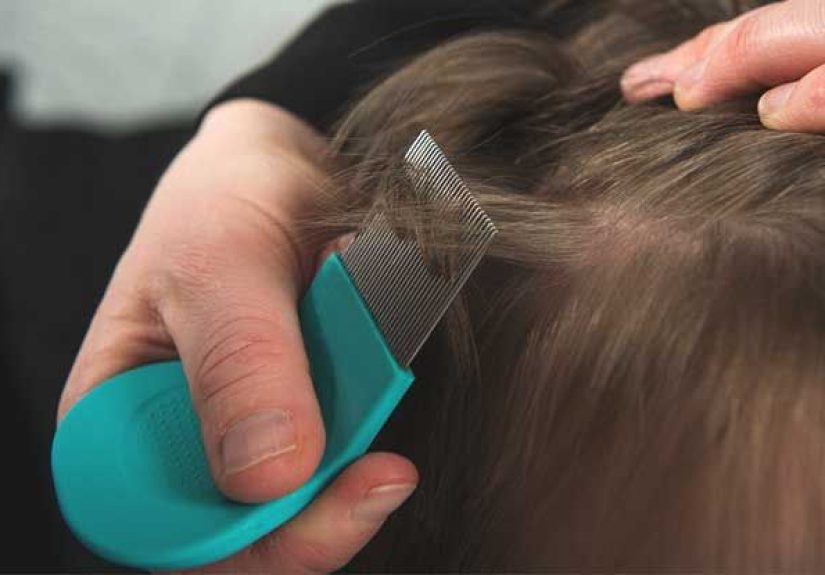
- Use a fine-toothed nit comb on wet hair.
- Wipe the comb on a white tissue or paper towel after each pass and inspect what comes off.
Wet hair can make the process easier because lice move more slowly. Conditioner may also help during combing, unless you are about to use a medicated product that specifically says not to use conditioner first. Always follow the product label, not your neighbor’s cousin’s Facebook advice.
If you are not sure what you are seeing, a pediatrician, family doctor, dermatologist, pharmacist, or school nurse may be able to help confirm the diagnosis.
How to Treat Lice Bites and the Lice Causing Them
Treating lice bites is really a two-part job. First, get rid of the lice. Second, calm the itch and help the skin heal.
Step 1: Use a Proven Lice Treatment
For head lice, treatment often starts with an over-the-counter product containing 1% permethrin or pyrethrins with piperonyl butoxide. If those do not work, a healthcare provider may recommend a prescription option such as ivermectin, spinosad, malathion, or benzyl alcohol, depending on the person’s age, medical situation, and local resistance patterns.
Important treatment rules:
- Use the product exactly as directed
- Do not use extra product “just to be safe”
- Do not combine multiple lice products unless a clinician tells you to
- Do not use conditioner before certain medicated treatments if the label says not to
- Repeat treatment only according to the instructions or a clinician’s guidance
Some products need a second treatment in about 7 to 10 days or 9 days, depending on the medication. Others may not. The label wins this argument every time.
Step 2: Comb Out Nits and Recheck
Even when combing is not strictly required, it can help. A fine-toothed lice comb can remove nits and lice from the hair shaft, reduce confusion later, and help you see whether treatment is working. Check the hair every 2 to 3 days for 2 to 3 weeks after treatment.
This part is not glamorous. It is slow, repetitive, and approximately as thrilling as alphabetizing paper clips. But it is useful.
Step 3: Soothe the Itch
The itching can continue for days or even weeks after successful treatment because the skin is still reacting to the bites and irritation. That does not always mean the lice are still alive.
To help relieve symptoms:
- Wash the scalp or affected skin gently
- Avoid aggressive scratching
- Keep fingernails short, especially in children
- Ask a healthcare professional about using an anti-itch product if needed
- Seek care if the skin looks infected, warm, swollen, crusted, or painful
If body lice or pubic lice are involved, treatment also includes washing the body and cleaning clothing, linens, and towels appropriately.
Step 4: Clean Smart, Not Wildly
You do not need to deep-clean your entire zip code. Head lice do not survive long away from a human host. Focus on practical cleanup:
- Wash recently used clothing, bedding, towels, and hats in hot water
- Dry them on high heat
- Soak combs and brushes in hot water
- Vacuum furniture and floors
- Seal items that cannot be washed in a plastic bag for about two weeks if needed
What you do not need: fumigant sprays, foggers, gasoline, kerosene, miracle internet hacks, or a medieval exorcism.
What Not to Do
Bad lice advice spreads almost as fast as school rumors. Avoid these common mistakes:
- Do not treat an itchy scalp without confirming lice first. Not every itch is lice.
- Do not use dangerous home remedies. Flammable or irritating substances can cause real harm.
- Do not keep reapplying treatments too soon. More is not better.
- Do not assume lice mean poor hygiene. They do not.
- Do not panic over every nit. Old or empty nits can stick around.
When to Call a Healthcare Provider
Get medical advice if:
- You are not sure whether it is lice
- The person is under age 2
- The person is pregnant or breastfeeding and needs treatment guidance
- Over-the-counter treatment did not work
- The scalp or skin looks infected
- The person has lice on the eyelashes or eyebrows
- You suspect body lice or pubic lice and want diagnosis or treatment advice
For pubic lice, medical guidance is especially important because sexual partners may also need evaluation and treatment.
How to Prevent Lice From Coming Back
You cannot bubble-wrap the world, but you can lower the odds of repeat infestation.
- Avoid head-to-head contact during play, sports, naps, and selfies with suspiciously enthusiastic group huddles
- Do not share combs, hats, helmets, hair accessories, scarves, towels, or earbuds
- Check close household contacts if one person has lice
- Follow through with the full treatment plan and recheck schedule
- Let close contacts know so others can check early
The Bottom Line on Lice Bites
Lice bites are real, but they are not always obvious. In head lice cases, you are usually identifying the infestation through itching, live lice, nits, and scratching-related irritation rather than through dramatic bite marks. The most common trouble spots are behind the ears and at the back of the neck. For body lice and pubic lice, the bites and rash may be easier to see.
The key to treatment is simple: confirm lice, use a proven treatment exactly as directed, comb and recheck, and clean the environment sensibly. No shame, no myths, no chemical overkill. Lice are persistent little freeloaders, but with the right approach, they can absolutely be evicted.
Experiences Related to Lice Bites: What People Commonly Go Through
One of the most common experiences with lice is mistaking the problem for something else at first. A parent may notice a child scratching behind the ears for days and assume it is dry skin, shampoo irritation, or plain old fidgeting. A teenager may think the white specks near the scalp are dandruff. An adult may blame a new hair product. Then comes the closer look under bright light, the nit comb, and the deeply humbling moment of realizing the scalp has unexpected wildlife.
Another common experience is that the itching seems out of proportion to what is visible. People often expect obvious bite marks, but with head lice, the irritation can feel intense even when the scalp looks fairly normal. Some children barely itch at all, while others scratch enough to create red bumps and sore spots. This mismatch can make families second-guess themselves. They wonder whether the treatment worked, whether the bugs are still there, or whether every tiny sensation means another infestation. In reality, itching can linger even after successful treatment because the skin is still reacting.
There is also the emotional side, which is rarely talked about enough. Parents often feel embarrassed, as though lice are somehow a report card on housekeeping. Kids may worry classmates will think they are dirty. Adults can feel the same way, especially if they catch lice from a child and suddenly find themselves nit-combing their own hair at midnight. But lice are opportunists, not moral critics. They like access, not mess. School-aged kids get them so often because they spend lots of time close together, not because anyone failed at shampooing.
Many families also describe the treatment process as equal parts medical care and endurance sport. The first round may seem straightforward, but the follow-up is where patience gets tested. Combing every few days, washing bedding, checking siblings, and trying to remember whether the second treatment is due on day 7, day 9, or “whenever I next have a quiet moment,” can feel like a part-time job. Some people find the routine reassuring because it gives them a plan. Others feel like they are starring in a very low-budget thriller called The Return of the Nit Comb.
There are also practical lessons people learn the hard way. For example, not every white speck is a live egg. Not every itch means treatment failure. Not every home remedy online deserves a place near a human scalp. And perhaps most importantly, the dramatic urge to wash every soft surface in the house three times is understandable, but not usually necessary. Families who do best tend to be the ones who stay methodical: confirm the diagnosis, treat correctly, recheck consistently, and avoid panic-fueled overreaction.
In the end, most experiences with lice follow the same arc. There is surprise, mild horror, a lot of laundry, some annoyed scalp scratching, and eventually relief. Once people understand what lice bites really look like, how lice spread, and how treatment actually works, the whole situation becomes much more manageable. Still annoying, yes. But manageable. And that is a very comforting distinction when you are standing in the bathroom holding a nit comb like it is a tiny plastic sword.