Table of Contents >> Show >> Hide
- Why this old TV story still feels surprisingly current
- Lauren Tewes was more than a scandal headline
- The double standard Tewes pointed to still stings
- Fred Grandy’s regret matters because it is not self-congratulatory
- What the story says about fame, friendship, and workplace loyalty
- The legacy of Julie McCoy is bigger than the scandal
- Final thoughts: a sad, honest footnote to a sunny TV fantasy
- More experiences and reflections related to this story
- SEO Tags
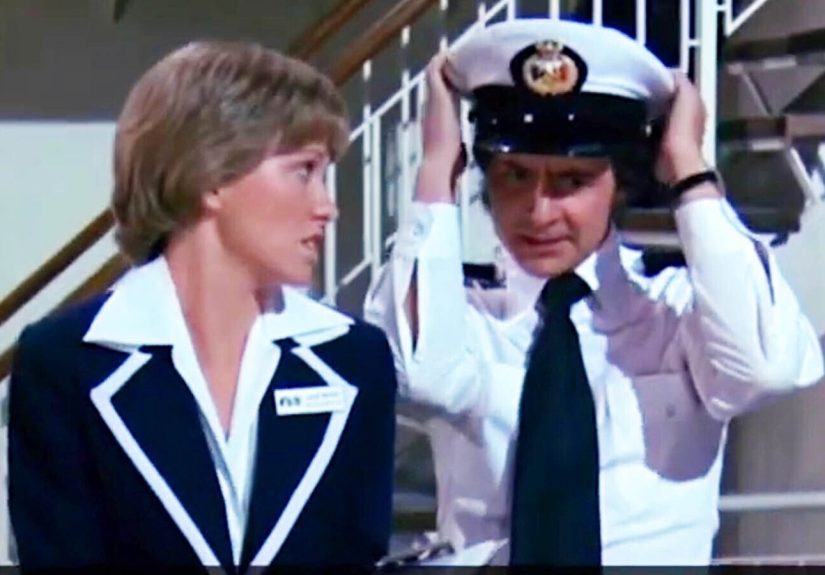
The Love Boat was supposed to be television comfort food: smiling crew members, glamorous guest stars, and enough pastel-colored romance to make a sunset jealous. For millions of viewers, Julie McCoy, “your cruise director,” was a huge part of that charm. Played by Lauren Tewes, Julie brought warmth, wit, and an almost supernatural ability to make chaotic passengers feel like they had booked the right cruise after all. So when the actress disappeared from the show in the mid-1980s, fans noticed. And decades later, the story behind that exit still hits a nerve.
The reason this story is sailing back into the spotlight is simple: Fred Grandy, the actor who played Gopher, recently admitted he regrets not doing more to support Tewes when she was fired amid her cocaine addiction. It is the kind of confession that lands with extra force because it is not dressed up as Hollywood mythmaking. It feels painfully human. Grandy was not trying to rewrite history into something shiny. He was acknowledging that when someone on a hit show was struggling, the people around her did not respond with enough courage, compassion, or backbone. In other words, the cast of a famously feel-good series found itself living through a very un-feel-good reality.
Why this old TV story still feels surprisingly current
On the surface, this sounds like another retro celebrity headline built for nostalgia clicks. But the deeper reason it resonates is that it is not really about vintage television trivia. It is about what happens when addiction collides with workplace culture, public image, and fear. Those themes are not stuck in 1984. They are alive and well today, just wearing newer shoes.
Back then, addiction was often treated less like a health crisis and more like a moral failure with a studio memo attached. If someone was struggling, especially in a public-facing job, the response was often punishment first, empathy later, and understanding maybe sometime around never. Tewes herself has spoken over the years about how damaging that period was, not just professionally but personally. The fallout reportedly cost her far more than a role. It damaged her finances, her stability, and her reputation. Hollywood did what Hollywood often does best when it feels uncomfortable: it backed away and pretended the problem belonged to one person.
That is what makes Grandy’s regret feel meaningful. He is not merely commenting on a tabloid chapter from the set of The Love Boat. He is describing a culture in which people watched a co-worker struggle and did not push back hard enough when the system decided to make an example of her. Nostalgia tends to airbrush the hard stuff. This story grabs the paintbrush back.
Lauren Tewes was more than a scandal headline
One reason this topic deserves a careful look is that Lauren Tewes was not some fringe supporting player who wandered in for a few episodes and out for a controversy. She was central to the show’s identity. Julie McCoy was not just a side character with a clipboard. She was one of the emotional anchors of the series, a familiar face who helped sell the fantasy that life on the Pacific Princess could be charming, funny, and maybe even a little magical.
Tewes also brought something especially valuable to the role: she made Julie feel competent without turning her into a bore. That is a harder trick than television makes it look. Julie was polished, kind, and capable, but she never seemed robotic. She had spark. She had comic timing. She had the kind of screen presence that made viewers feel at ease. When she left, the series lost more than an employee in the credits. It lost part of its emotional architecture.
That matters because stories like this often reduce actresses to the worst moment of their biography. The shorthand becomes brutal: she was fired for drugs, full stop, end of sentence, roll credits. But that flattening misses the real story. Tewes was a talented actor on one of the biggest network shows of its era. She was also a person struggling with addiction during a period when the entertainment business was not exactly famous for sober wisdom, consistent support, or enlightened HR policy. Grandy’s regret, in that sense, restores some of the missing dimension. It says: she was not just a cautionary tale. She was our colleague, our friend, and someone we should have stood up for.
The double standard Tewes pointed to still stings
One of the sharpest parts of this whole story is Tewes’ own point that being a woman made the fallout harsher. That observation is difficult to dismiss because Hollywood has a very long history of forgiving messy men while turning women into morality plays. The 1970s and 1980s were hardly an exception. Men in entertainment could develop reputations for wild behavior and still be described as rebels, rascals, or lovable disasters. Women, meanwhile, were often tagged as unstable, unprofessional, or finished.
Tewes’ career became a case study in that imbalance. Once the addiction became public, the story attached itself to her name in a way that often overshadowed the work she had done and the recovery she fought for. Grandy’s recent comments underline that reality from the inside. His regret is not just about one private emotional failure. It is also about being part of an environment that allowed a gendered double standard to operate without enough resistance.
That is what gives the headline its real weight. Yes, it has the tabloid crackle of “Julie the Cruise Director” and “fired for doing coke,” but underneath the splashy wording is a serious cultural point: people were quicker to judge than to help, and women often paid the steepest price.
Fred Grandy’s regret matters because it is not self-congratulatory
There is something refreshing about the way Grandy’s comments land. He is not trying to make himself the hero of a story where he admits he fell short. He is not offering a polished “we all learned and grew” speech wrapped in inspirational ribbon. Instead, the regret sounds blunt and unresolved. That makes it more believable.
Public apologies and retrospective interviews can sometimes feel suspiciously tidy, like someone found an old mistake in storage and brought it out after a quick dusting. This one feels different because it does not erase the damage. Grandy is essentially saying that when Tewes needed public support, he did not provide enough of it. That kind of admission does not fix the past, but it does puncture the fantasy that everyone around a crisis secretly did their best. Sometimes they did not. Sometimes they froze. Sometimes they went quiet. Sometimes they protected the machine instead of the person.
And that is exactly why the story connects today. Plenty of readers know what it feels like to watch someone at work struggle and see the room go silent. Maybe the details are different. Maybe there is no cruise ship, no ABC hit, and no aggressively 1970s opening theme. But the emotional pattern is familiar.
What the story says about fame, friendship, and workplace loyalty
The hardest truth in this story may be that successful workplaces are often terrible at handling personal crises. As long as a person is performing, everyone smiles. Once the struggle becomes visible and inconvenient, the tone can change fast. Suddenly the group that once felt like a family starts acting like a brand management committee.
The Love Boat cast has long been remembered for its chemistry and affection. Later reunions and fan events have only reinforced that warm image. But affection alone is not always enough when someone is in real trouble. Friendship can become passive. Loyalty can become polite silence. And the person in crisis can wind up isolated in the middle of a crowd that genuinely likes them.
That is why Grandy’s reflection carries more punch than a standard cast-reunion anecdote. It forces a distinction between liking someone and actively defending them. Those are not the same thing. Plenty of people are loved in private and abandoned in public. Tewes’ story, sadly, fits that pattern.
The legacy of Julie McCoy is bigger than the scandal
If there is one thing worth rescuing from the headline machinery, it is this: Julie McCoy remains one of classic television’s most recognizable characters because Lauren Tewes made her unforgettable. That legacy survived the firing, the stigma, and the years of reduced visibility. It also helps that audiences have gotten better at revisiting old stories with a little more nuance and a little less finger-wagging.
Today, Tewes’ story can be seen in fuller context. She was a breakout TV star. She struggled. She paid a heavy price. She got sober. She remained beloved by fans and respected by many of her colleagues. In recent years, the continuing affection around The Love Boat reunions has made one thing clear: viewers did not forget Julie McCoy, and the people who worked with Tewes did not forget her either.
That does not magically turn a painful chapter into a happy ending with confetti and a closing monologue from Captain Stubing. But it does suggest something important. Careers can be wounded without being erased. Reputations can be revised. And even decades later, truth still has a way of walking back on deck and clearing its throat.
Final thoughts: a sad, honest footnote to a sunny TV fantasy
The most striking part of this story is the contrast. The Love Boat sold viewers a floating world of romance, laughter, and tidy resolutions. Yet one of its most memorable behind-the-scenes stories is about addiction, stigma, and the regret of not helping enough. Maybe that is why this headline keeps floating back. It reveals the gap between the fantasy people watched and the reality the cast lived.
Fred Grandy’s regret does not rewrite what happened to Lauren Tewes. It does something smaller, but still valuable: it names the failure. And sometimes naming the failure is where the real reckoning starts. For fans of classic television, the takeaway is not simply that Julie the Cruise Director was treated unfairly. It is that our favorite old shows were made by real people, in imperfect systems, with all the fear, weakness, loyalty, and missed chances that come with being human.
So yes, this is a story about The Love Boat. But it is also a story about what support looks like when it matters most, and what regret sounds like when it arrives years late but still means something. That is not quite the ending a glossy TV fantasy promised. It is messier than that. It is sadder than that. And because it is honest, it is far more memorable.
More experiences and reflections related to this story
Stories like this hit a nerve because they remind people of moments when they watched someone struggle and did not know what to do. Almost every workplace has its version of this. It may not involve fame, addiction, or a beloved network series, but the emotional mechanics are similar. One person is clearly having a hard time. Everyone notices. Nobody wants to say the wrong thing. The silence gets dressed up as professionalism, and before long, the struggling person is carrying the full weight alone.
That is one reason Fred Grandy’s regret feels so recognizable. Many people have lived some version of it. They look back on an old co-worker, classmate, relative, or friend and think, “I should have stepped in. I should have said something. I should have been braver.” Regret often arrives with excellent timing if your goal is to feel terrible and be too late to fix anything. It is one of life’s least charming habits.
There is also a lesson here about how institutions respond when someone’s problem becomes public. In a healthy environment, a person in trouble gets support, treatment options, privacy where possible, and a real path back. In an unhealthy environment, the person becomes “the issue,” and everyone else quietly shifts into self-protection mode. The brand matters. The optics matter. The awkwardness matters. The human being at the center of the mess somehow matters least. That pattern is not limited to Hollywood. It shows up in offices, schools, sports teams, and families.
Another experience many readers may recognize is the way public identity can trap someone. Lauren Tewes was not just any employee. She was Julie McCoy, a symbol of friendliness and polished poise. When performers become strongly identified with a role, the public can forget that they are not made of network lighting and theme music. They are people. They get overwhelmed. They make mistakes. They need help. The same audience that cheers a character’s charm can be strangely unforgiving when the actor behind the role turns out to be painfully human.
What makes the story more moving now is that it invites a better response than the one the culture gave back then. Instead of gawking at the downfall, readers can pay attention to the recovery, the honesty, and the late-but-real effort to tell the truth. Grandy’s regret is part of that truth. So is Tewes’ resilience. So is the fact that fans still remember Julie McCoy with affection, not as a footnote but as a central part of what made The Love Boat work.
In that sense, the story has something unexpectedly useful to offer. It asks a hard question: when someone around us is obviously struggling, do we become spectators, or do we become support? Nobody answers that perfectly every time. But hearing an older, wiser version of a co-star admit he wishes he had done more is a powerful reminder that silence is not neutral. Silence chooses a side. And too often, it chooses the side of comfort over courage.
If there is a hopeful note here, it is that cultural attitudes really have changed, even if imperfectly. Addiction is still stigmatized, but it is more widely understood as a health issue than it once was. Conversations about workplace responsibility are better than they were. And audiences have grown more willing to separate a person’s worst chapter from the total value of their life and work. That shift does not erase what happened to Tewes. But it does make it easier to revisit her story with respect instead of gossip.
And maybe that is the best way to end it: not with the scandal, but with perspective. Julie McCoy remains part of TV history. Lauren Tewes remains part of that legacy. Fred Grandy’s regret does not sink the memory of the show; it deepens it. It reminds us that behind every glossy pop culture memory are real people trying, failing, surviving, and sometimes learning too late what they should have done sooner. That may not be as breezy as an old Saturday-night cruise. But it is real. And real stories tend to stay afloat much longer.