Table of Contents >> Show >> Hide
- Why videoconference wardrobe malfunctions happen (even to smart people)
- The Hackaday concept: Safe Meeting as a “panic button” powered by AI
- What the machine learning is actually doing
- Why edge AI matters: privacy, latency, and trust
- How this relates to “content moderation” technology (without turning your meeting into a surveillance system)
- Why videoconference apps already use similar ML (and what they can learn from Safe Meeting)
- Accuracy challenges: false positives, bias, and the “beige shirt problem”
- The practical side: simple habits that beat panic (and pair well with AI)
- Where this is going next: from “mute the camera” to “protective visual layers”
- : Real-World Experiences and Lessons Learned From “Wardrobe-Safe” Video Calls
- Conclusion
Video calls were supposed to make work easier. Instead, they created a brand-new category of workplace risk:
the “I forgot the camera existed below my collarbone” incident. You know the setupprofessional voice, confident agenda,
and a top-half outfit that says “capable adult.” Then someone asks you to stand up, reach for a charger,
or adjust the laptop, and suddenly your career flashes before your eyes like a low-budget action montage.
That’s the hilarious (and painfully human) problem behind a Hackaday favorite: a tongue-in-cheek project called
Safe Meeting, built to detect “business-inappropriate attire” and shut down your camera before your meeting turns into
an HR-adjacent story your coworkers repeat forever. The charm isn’t just the jokeit’s the idea that
computer vision and edge AI can act like a digital seatbelt for remote work: unobtrusive, quick, and designed to prevent
a small mistake from becoming a big moment.
Why videoconference wardrobe malfunctions happen (even to smart people)
Wardrobe mishaps don’t happen because people are careless. They happen because video conferencing quietly rewires behavior.
At home, you’re moving around, multitasking, and living in a space that wasn’t designed for “always-on” professionalism.
Add in early mornings, tight schedules, kids/pets/doorbells, and the false sense of security that comes from sitting still,
and you’ve got a perfect storm for accidental “too casual” exposuresometimes literally.
The three most common triggers
- Unexpected motion: standing up, leaning back, or turning to grab something off-screen.
- Camera repositioning: lifting a laptop, adjusting an external webcam, or changing seats mid-call.
- Assumptions: “They can only see my face,” which is true until it isn’t.
The real takeaway is not moral judgment. It’s risk management. If remote work is here to stay, we shouldn’t be shocked that
people want tools that reduce the blast radius of a tiny mistake.
The Hackaday concept: Safe Meeting as a “panic button” powered by AI
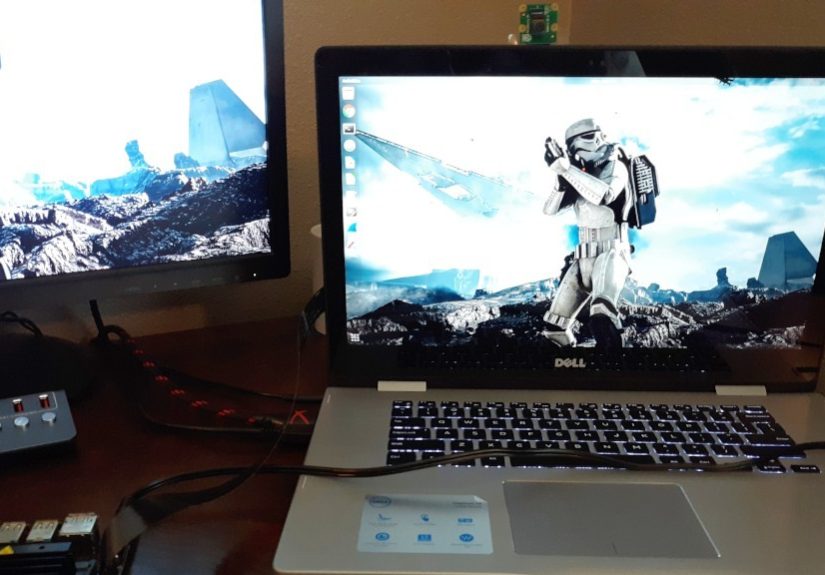
The Safe Meeting idea is simple: run a camera pointed at the same scene as your conferencing camera, classify what it sees,
and if the system detects something that looks like underwear or otherwise “not meeting-appropriate,” it triggers an immediate
camera shutdown. In the Hackaday write-up, the system is intentionally playfulbut the architecture is very real:
a small edge computer (like an NVIDIA Jetson Nano) handles inference locally, and an automation step turns video off fast.
Conceptually, it’s less “robot judge of your fashion choices” and more “automatic emergency brake.” The system isn’t trying to
style you. It’s trying to prevent a moment that you would obviously prefer not to broadcast.
What makes this approach practical
- Speed: the best safety feature is one that reacts before your brain finishes thinking “oh no.”
- Local processing: analyzing frames on-device can reduce privacy exposure compared to cloud-only pipelines.
- Clear action: the response is binary and immediateturn off camerarather than trying to “fix” the image.
What the machine learning is actually doing
Under the hood, this kind of system relies on classic computer vision building blocksjust modernized with neural networks.
While implementations vary, most solutions follow a pipeline like this:
1) Detect the person (and ignore the background)
Real-time “person segmentation” is the same family of tech used for background blur and virtual backgrounds.
The model identifies which pixels belong to the subject versus the room behind them. Once you’ve got a clean foreground,
everything gets easier: fewer false alarms from a beige couch, fewer distractions from a patterned wall,
and less risk of confusing random objects for clothing.
2) Classify attire risk with a confidence threshold
Next comes classification: “Does this frame look like it contains business-inappropriate attire?”
The important phrase is confidence threshold. A good system doesn’t fire on a single uncertain frame.
It uses a tuned threshold (and often multiple frames in a row) to reduce false positivesbecause a safety tool that
shuts off your camera every time you wear a striped shirt is not a safety tool. It’s a prank.
3) Smooth results over time so it doesn’t flicker
Video is noisy: lighting changes, compression artifacts appear, hands move fast, and cameras auto-expose.
Practical systems often apply simple temporal rules, like “trigger only if the risk label appears for N frames”
or “require a sustained confidence level for 300–500 milliseconds.” This makes behavior feel stable and predictable,
which matters because people will only trust automation that acts consistently.
Why edge AI matters: privacy, latency, and trust
A wardrobe-malfunction prevention tool is inherently sensitive. It processes the exact kind of imagery users most want to keep private.
That’s where edge computing (running ML locally on your device) becomes a big deal:
local inference can lower latency and reduce how much data leaves your machine.
Hardware like the Jetson Nano became popular for maker-friendly edge AI because it can run CNN inference efficiently without
needing a full desktop GPU. Even if you’re not using that exact device, the point stands: if you can do detection on-device,
you minimize exposure, simplify compliance, and improve user comfort.
A reasonable privacy stance for systems like this
- Default to local processing whenever possible.
- Store nothing by defaultno frames, no clips, no “training examples.”
- Be explicit about what the model detects and what triggers an action.
- Give the user control: on/off toggles, sensitivity settings, and clear indicators.
How this relates to “content moderation” technology (without turning your meeting into a surveillance system)
In the broader software world, detecting explicit or risky content is often called content moderation.
Cloud services can flag categories like explicit nudity, suggestive content, or other unsafe material in images and video.
Those tools are typically designed for platforms that host user-generated content, not for personal meeting protection
but the underlying idea (classify risky content) overlaps.
The key difference is intent and scope. A personal “save me from myself” feature should be:
user-controlled, minimally invasive, and purpose-limited.
If it becomes mandatory, opaque, or centrally monitored, it stops being a safeguard and starts being surveillance,
which is a totally different conversationand usually a worse one.
Why videoconference apps already use similar ML (and what they can learn from Safe Meeting)
If you’ve ever used background blur, portrait cutout, or virtual backgrounds, you’ve already benefited from real-time
segmentation models. These features isolate your silhouette, separate it from the room, and apply effects in real time.
Some platforms have expanded into “background enhancement,” including AI-generated or cleaned-up backgrounds.
Here’s what a Safe Meeting-style feature adds that typical “background blur” doesn’t:
- Risk detection rather than aesthetics: it’s not trying to make you look cooler; it’s trying to prevent a mistake.
- Immediate protective action: it turns video off rather than attempting a complicated edit mid-stream.
- Clear failure mode: if uncertain, default to safety (or prompt the user) rather than guessing.
Accuracy challenges: false positives, bias, and the “beige shirt problem”
Detecting “inappropriate attire” sounds straightforward until you remember how messy real-world visuals are.
Lighting varies. Camera quality varies. Clothing colors vary. Skin tones vary. And lots of professional outfits are
close in color to skin, especially in warm lighting. That means two major risks:
False positives (camera shuts off when nothing is wrong)
If the system is too sensitive, it becomes disruptive. Users will disable it, which defeats the purpose.
You can reduce false positives with better training data, foreground segmentation, conservative thresholds,
and “multi-frame confirmation” before triggering.
Unequal performance across people and environments
Computer vision systems can perform differently depending on skin tone, lighting, and camera characteristics.
A responsible solution should be tested across diverse real-world conditions and should allow user calibration.
The goal isn’t perfectionit’s reliability you can trust.
The practical side: simple habits that beat panic (and pair well with AI)
Even if you love the idea of an ML safety net, the best protection is still a mix of human habit and smart defaults.
Think of it like seatbelts and safe driving: one doesn’t replace the other.
A fast “video call preflight” checklist
- Check the preview frame: not just your faceyour full visible area.
- Lock your camera angle: avoid balancing laptops on unstable surfaces.
- Assume you’ll stand up: dress for the whole frame, not the top half.
- Use a physical cue: a sticky note near the camera that says “FULL OUTFIT.” (Yes, really.)
- Know your emergency shortcut: your fastest “camera off” action should be muscle memory.
ML doesn’t eliminate responsibilityit reduces the cost of a momentary lapse. And that’s a very human-centered use of AI.
Where this is going next: from “mute the camera” to “protective visual layers”
Turning off video is the simplest safe response, but it’s not the only possibility. Research in video understanding and
“virtual try-on” points toward future systems that can apply protective overlays to preserve modesty without cutting the feed.
For example, a model could detect clothing regions, then apply a neutral mask in a way that looks stable across motion.
That said, the more “clever” the fix, the more room there is for glitchesand the stakes are higher when the problem is embarrassment.
In many professional settings, the least risky response is still the best one: camera off, recover, continue.
: Real-World Experiences and Lessons Learned From “Wardrobe-Safe” Video Calls
If you ask remote workers what they’ve learned since video calls became routine, you’ll hear a consistent theme:
professionalism isn’t just what you sayit’s the environment you accidentally reveal. People don’t plan mishaps.
They happen in the margins: the 10 seconds before a meeting starts, the moment you think your camera is off,
the quick reach for a notebook, the laptop shift that tilts your camera down. Those moments are why “wardrobe-safe”
design is more than a joke; it’s a real productivity feature, because nothing derails a meeting like panic.
One common pattern teams describe is the “false confidence loop.” After dozens of calls where only your head and shoulders
are visible, you start assuming the frame is always tight. Then the day comes when you join from a different device,
or the camera defaults to a wider lens, or you sit farther back than usual. Suddenly, the assumptions break, and you’re
scramblingmuting video, lowering your chair, angling the screen, apologizing while trying to stay composed.
Even if nothing truly inappropriate appears, the fear that it might is enough to spike stress and distract you
for the rest of the call.
Another recurring story: the “helpful coworker” moment. Someone messages privately: “Hey, just a heads-upyour camera angle is low.”
That’s kindness, but it’s also a reminder that relying on humans to catch problems is inconsistent. People hesitate to speak up,
especially in mixed seniority groups. Others don’t notice until it’s too late. A lightweight ML safeguard changes the social dynamics:
it reduces the need for awkward intervention and makes “camera off for a second” feel normal, not suspicious.
Educators and trainers often report a slightly different challenge: they move more. Teaching on video means standing, writing,
demonstrating objects, stepping out of frame, and returning. Movement increases the odds of exposing more than you intended,
and it makes camera framing harder to control. In those scenarios, an automated “risk tripwire” can be genuinely calming.
It doesn’t replace preparation (you still want a stable setup and appropriate clothing), but it can reduce the mental load,
letting you focus on the lesson rather than constantly monitoring your own preview window.
The most practical lesson teams share is simple: a system that prevents embarrassment must be predictable.
Users will tolerate a safety feature that occasionally turns video off for an extra-cautious reasonbecause that failure mode is safe.
What they won’t tolerate is random behavior. That’s why the best implementations combine multiple signals
(foreground segmentation, confidence thresholds, and time smoothing) and communicate clearly: an on-screen indicator,
a quick explanation (“Video paused for privacy”), and a one-click resume when you’re ready.
Ultimately, the real “experience” of wardrobe-safe ML isn’t about catching people out. It’s about building confidence into remote work.
When people feel protected from accidental mishaps, they participate more freely, move more naturally, and spend less time
performing “camera anxiety.” The best technology disappears into the backgroundright up until the moment it quietly saves you.
Conclusion
Hackaday’s Safe Meeting concept lands because it’s funny and true at the same time: remote work created new ways to slip up,
and machine learning can offer a practical safety net. The best version of this idea is privacy-first and user-controlled,
running locally when possible, storing nothing, and acting quickly and predictably. Whether you implement a full ML system or
just adopt a smarter preflight routine, the goal is the same: keep the focus on the meeting, not the mishap.