Table of Contents >> Show >> Hide
- Why Your Workout Space Matters More Than Willpower
- Start by Choosing the Easiest Possible Spot
- Buy Equipment That Earns Its Rent
- Design for Mood, Not Just Function
- Create a Routine Your Real Life Can Survive
- Safety: Because Getting Motivated Is Hard Enough
- How to Stay Interested After the Newness Wears Off
- Conclusion: Make the Healthy Choice the Easy Choice
- Extra Notes From a Reluctant Exerciser: What Actually Helped Me Use the Space
- SEO Metadata
If you love exercise, congratulations. You are the golden retriever of wellness. This article is not for you.
This is for the rest of us: the people who have rolled out a yoga mat once, used it twice, then let it become a soft monument to good intentions. The people who say, “I should work out,” in the same tone used for “I should probably clean behind the refrigerator.” The reluctant exercisers. The serial procrastinators. The people who do not need a boot camp sergeant, but do need a setup that makes moving feel easier, less awkward, and way less annoying.
The good news is that a home workout space does not need to look like a boutique gym or a tech billionaire’s basement. It just needs to remove excuses, lower the effort required to get started, and make exercise feel less like punishment and more like a thing that fits your actual life. If you can create a space that is visible, inviting, functional, and tailored to what you genuinely enjoy, you are much more likely to use it regularly.
In other words: the best home gym setup is not the one with the fanciest machine. It is the one you will still be using after the novelty wears off and your couch starts whispering sweet nothings again.
Why Your Workout Space Matters More Than Willpower
Most people assume the main barrier to exercise is discipline. That sounds noble, but it is also a very convenient way to blame yourself. In reality, your environment matters a lot. If your exercise gear lives in three different closets, your mat smells like regret, and your only open floor space is occupied by laundry with strong opinions, you are not failing. Your setup is.
A good home workout space works like a silent assistant. It reduces friction. It keeps the basics visible. It makes the first five minutes less annoying. And for beginners or anyone restarting after a long break, that matters more than you think. Once movement becomes easier to begin, consistency gets a fighting chance.
That is especially important when you remember how little exercise most adults actually manage. The target for general health is not extreme: about 150 minutes of moderate aerobic activity each week, plus muscle-strengthening work at least twice weekly. Yet many adults still do not hit both markers. A smart home fitness setup can help by removing commute time, lowering social pressure, and letting you work out in whatever outfit best reflects your emotional state. Even if that outfit is “laundry day raccoon.”
Start by Choosing the Easiest Possible Spot
The first rule of building a small home gym is to stop waiting for a perfect extra room. You do not need a finished basement, a garage renovation, or a motivational neon sign that says Rise & Grind in all-caps aggression. You need a usable patch of space.
That might be:
- a corner of your bedroom
- an open area in the living room
- the guest room nobody actually uses
- a basement section with decent lighting
- a garage zone that is not currently acting as a museum of cardboard boxes
The ideal location is the one that passes what I call the two-minute friction test. Can you start moving within two minutes of deciding to exercise? If the answer is yes, good. If the answer is, “Well, first I have to move a chair, find my bands, untangle a charger, and negotiate with the cat,” then your setup needs work.
What to Look for in a Good Spot
- Enough room to move safely: You should be able to stretch your arms, step side to side, and lie down on a mat without kicking furniture or discovering a table edge with your shin.
- Good light: Natural light is great, but bright lamps also help. A dim, cave-like setup can make exercise feel like a punishment scene in a low-budget movie.
- Ventilation: If the room gets hot fast, add a fan or improve airflow. Nobody sticks with workouts that feel like they are happening inside a toaster.
- Visual calm: If possible, avoid setting up next to clutter. Your brain already has enough reasons to bail.
Buy Equipment That Earns Its Rent
One of the easiest mistakes in a home gym setup is buying gear for your fantasy self instead of your real self. Fantasy You buys a rowing machine, a weighted vest, battle ropes, and a vibrating recovery gadget that looks like a power tool from the future. Real You wanted a clear floor, a good mat, and maybe something heavy enough to make squats interesting.
Start small. Start versatile. Start with equipment you will use across different types of at-home workouts.
A Practical Beginner Setup
- Exercise mat: For floor work, mobility sessions, stretching, and bodyweight workouts.
- Resistance bands: Cheap, compact, and useful for everything from rows to glute work to assisted mobility.
- Adjustable dumbbells or one or two pairs of dumbbells: Great for strength training without taking over your life.
- A sturdy bench, step, or stable ottoman substitute: Helpful for presses, step-ups, and modified exercises.
- Foam roller or massage ball: Small, easy to store, and surprisingly effective for post-workout recovery.
- Fan, speaker, or tablet stand: Not technically exercise equipment, but absolutely part of a workout room you will want to use.
If you love cycling, maybe a bike makes sense. If you genuinely enjoy treadmill walking while watching your favorite show, fantastic. But do not buy large equipment because it seems “serious.” Buy it because it matches your habits.
A good test is this: Would I still use this on a tired Wednesday when motivation is low and my best personality trait is canceling plans? If yes, it belongs in your workout room. If not, it is probably expensive decor.
Design for Mood, Not Just Function
Reluctant exercisers often miss an important truth: aesthetics matter. If your workout space at home feels cold, cluttered, or vaguely medical, you will avoid it. People are more likely to repeat behaviors that feel pleasant, rewarding, and personal. So yes, your exercise corner should be functional. But it should also feel good to enter.
Simple Design Upgrades That Make a Difference
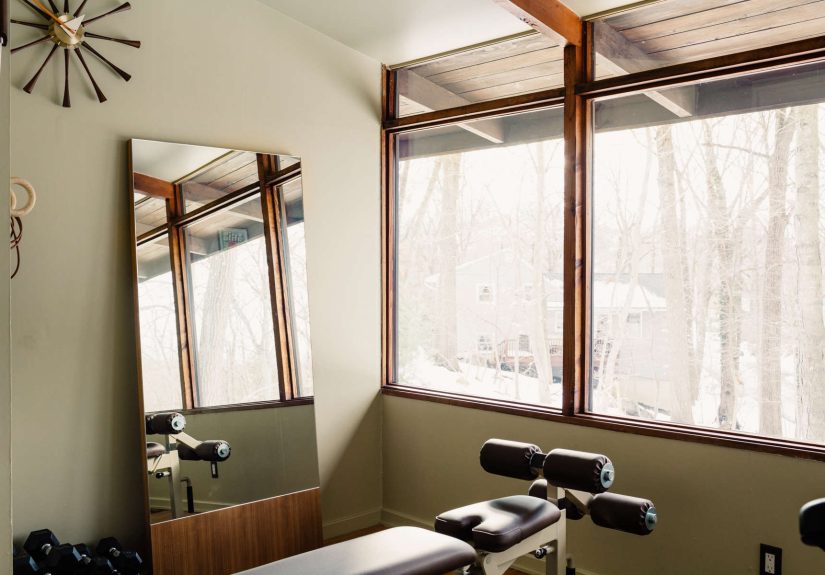
- Add a mirror if it helps with form and makes the room feel bigger.
- Use vertical storage like shelves, baskets, or wall hooks so gear stays visible but tidy.
- Choose colors you actually like. Calm neutrals, bright energizing tones, or whatever makes the space feel intentional.
- Bring in a speaker or screen. Music, guided classes, or background entertainment can make exercise less boring.
- Keep a water bottle nearby. Tiny convenience, big excuse eliminator.
- Use one motivating visual cue. Not twelve. A quote, a calendar, or a checklist is enough. You are building a workout nook, not opening a motivational candle shop.
There is also something powerful about leaving part of your setup visible. A neatly rolled mat in a basket, dumbbells by the wall, and bands on a hook act as reminders. Out of sight may be out of mind, but in sight is often “fine, fine, I guess I’ll do ten minutes.”
Create a Routine Your Real Life Can Survive
A beautiful home exercise room means nothing if your workout plan assumes you wake up every day with the energy of a movie montage. The best routine is the one that survives bad sleep, busy weeks, and mood swings that can only be described as “sentient oatmeal.”
That means keeping your plan simple, balanced, and flexible. Start smaller than your ego wants. If you are new to exercise or getting back into it, consistency beats intensity. You do not need to crush yourself. You need to return tomorrow.
A Reluctant-Exerciser-Friendly Weekly Template
- 2 days of strength training: 20 to 30 minutes using bodyweight, bands, or dumbbells
- 2 to 3 days of cardio: brisk walking, bike, dance workout, step-ups, or low-impact circuits
- 1 to 2 short mobility sessions: 10 to 15 minutes of stretching, core work, or recovery
- Daily movement snack: 5 to 10 minutes counts, especially on busy days
That structure supports a healthy mix of cardio, strength, flexibility, and habit-building without requiring elite enthusiasm. It also gives you permission to keep workouts short. A short workout is not a failure. It is often the gateway to a real routine.
Make It Ridiculously Easy to Begin
Try one or more of these:
- Schedule workouts at the same time each day.
- Pair exercise with something enjoyable, like a podcast, show, or playlist.
- Lay out your clothes or shoes in advance.
- Use a printed workout card so you do not waste energy deciding what to do.
- Track sessions on a calendar for visible progress.
Habit formation loves cues and repetition. If your body learns that “after coffee” or “after work” means “move for 20 minutes,” exercise starts to become less of a debate and more of a rhythm.
Safety: Because Getting Motivated Is Hard Enough
A great home workout room should make you feel safe, not reckless. Warm up before harder movement. Cool down afterward. Start with manageable weights and learn proper form for strength exercises. Wear shoes that match the workout when needed, especially for higher-impact or strength sessions. Keep the floor clear and the space dry. And if you are sweating like a confused manatee, drink water and use that fan.
If you are coming back from injury, dealing with pain, or managing a medical condition, build more carefully and consider professional guidance. There is no prize for pushing through something that clearly feels wrong.
Also, clean your stuff. Wipe down high-touch equipment, air out your mat, and avoid turning your lovely little fitness sanctuary into a bacteria-themed side project.
How to Stay Interested After the Newness Wears Off
The hardest part of a beginner home workout routine is not week one. Week one is powered by optimism, shopping, and a suspicious amount of ambition. The hard part is week four, when life gets loud and your workout mat is no longer thrilling.
This is where variety helps. Rotate between strength, walking workouts, mobility, dance sessions, and low-impact cardio. Rearrange the room slightly if it helps. Try a new playlist. Switch your screen angle. Buy one tiny upgrade after a month of consistency, not before. Reward the habit, not the fantasy.
Most of all, redefine success. A “good” workout is not only the one that leaves you flattened on the floor reconsidering your choices. A good workout is one you finished, one that felt doable, and one you can repeat. The body benefits from consistency more than drama.
Conclusion: Make the Healthy Choice the Easy Choice
If you are a reluctant exerciser, your goal is not to become a different person overnight. Your goal is to build a home workout space that works with your personality instead of constantly fighting it. Choose an easy location. Keep the setup simple. Buy versatile equipment. Make the room feel good. Create a routine your real schedule can handle. And focus on reducing friction, because the easier it is to begin, the more likely you are to keep going.
The best home gym ideas are not about perfection. They are about practicality with a pulse. A mat in the corner. Dumbbells that are easy to grab. A fan, a playlist, a little open floor, a little dignity. That is enough to create momentum.
And if your workout space helps you move more often, feel stronger, sleep better, lower stress, and stop making eye contact with that unused gym membership, then congratulations. You built a room that does not just look healthy. It actually helps you live that way.
Extra Notes From a Reluctant Exerciser: What Actually Helped Me Use the Space
I wish I could tell you that the thing that transformed my workout life was discipline. It was not. It was convenience mixed with mild vanity and a low tolerance for nonsense. Once I stopped trying to build a home gym for an imaginary ultra-motivated version of myself, everything got easier.
At first, I made the classic mistake. I thought I needed a “real” fitness room. I pictured sleek storage, inspiring wall art, and enough equipment to impress someone named Brad who definitely drinks green juice on purpose. What I actually had was a small apartment, a full schedule, and a personality that could come up with twelve excuses before breakfast. So instead of waiting for a perfect solution, I claimed a corner of the living room and made one rule: it had to be easier to start exercising than to talk myself out of it.
That changed everything.
I put down a good mat and left it rolled in a basket beside the TV stand. I added resistance bands to a hook, placed one pair of dumbbells where I could see them, and bought a fan because I know myself well enough to understand that overheating turns me into a dramatic Victorian ghost. I also propped up a cheap tablet stand so I could follow workouts without balancing my phone against a water bottle like a gremlin engineer.
Then I made the space less sterile. Not fancy. Just pleasant. Better lighting. One plant. One speaker. One clean towel nearby. Suddenly the area felt less like a punishment corner and more like a place with a purpose. That mattered more than I expected. I did not need a room that screamed intensity. I needed one that quietly said, “You can handle twenty minutes here.”
The other thing that helped was giving up on all-or-nothing thinking. In the beginning, I believed a workout only counted if it was long, sweaty, and vaguely cinematic. That belief is incredibly convenient when you want to quit. Now I treat ten or fifteen minutes as a win. Sometimes I start with mobility work and end up doing more. Sometimes I only stretch and walk in place while watching a show. Either way, I showed up, and that keeps the habit alive.
I also learned that the room has to match the season of life you are in. During busy weeks, I use bands, dumbbells, and short circuits. During stressful weeks, I lean into walking, low-impact cardio, or simple yoga. I stopped asking, “What is the perfect program?” and started asking, “What kind of movement am I realistically willing to do today?” That question gets much better results.
If you are building your own home workout space, my advice is simple: make it visible, make it comfortable, and make it forgiving. Do not build for your best day. Build for your average Tuesday. Build for the day when motivation is nowhere to be found and your couch is campaigning hard. If your space can still get you moving on that day, then it is doing exactly what it should.
And honestly, that is the version of fitness that finally worked for me. Not perfection. Not punishment. Just a room, a routine, and fewer reasons to say no.