Table of Contents >> Show >> Hide
- What Is “Marie Fisher Interior Design” in Plain English?
- The MFID Signature: 6 Design Pillars That Show Up Again and Again
- The Marie Fisher Interior Design Process (And Why It Matters)
- Project Examples Often Associated With MFID’s Work
- How to Bring the “Marie Fisher Interior Design” Feeling Into Your Own Space
- Experiences Related to “Marie Fisher Interior Design” (500+ Words of Real-World Lessons)
- Conclusion
Some interiors whisper. Others walk into the room, adjust their collar, and say, “RelaxI’ve got this.”
Marie Fisher Interior Design (often abbreviated as MFID) has built a reputation around that second kind:
spaces that feel effortless, but only because someone obsessed over the details so you don’t have to.
Think: calm that isn’t boring, personality that isn’t chaotic, and rooms that actually work for real life
(including the realities of backpacks, Zoom calls, and the mysterious phenomenon of “why does everyone gather in the kitchen?”).
This article breaks down what “Marie Fisher Interior Design” can mean as a style, a process, and a standarddrawing from MFID’s
published project stories and broader best practices in American interior design. If you’re a homeowner, developer, or just someone
trying to stop buying throw pillows in emotional distress, you’ll find practical takeaways you can use right now.
What Is “Marie Fisher Interior Design” in Plain English?
At its core, Marie Fisher Interior Design is about designing spaces that feel tailoredlike a well-fitted jacket,
not a one-size-fits-all poncho. MFID’s portfolio spans residential, hospitality, commercial, and multi-family projects, and the
through-line is consistent: thoughtful materials, purposeful layouts, and a strong “story” behind each environment.
If you zoom out, the MFID approach sits at the intersection of three things that great interiors always need:
strategy (how the space functions), sensation (how it feels), and specificity
(the unglamorous part where everything actually gets built correctly).
The MFID Signature: 6 Design Pillars That Show Up Again and Again
1) A “story” that’s more than a mood board
In multi-family and hospitality projects especially, MFID leans into narrative: a guiding concept that ties materials, color,
art, and amenities into something memorable. This isn’t “theme park theming.” It’s brand coherenceso residents and guests feel
like the environment makes sense from the lobby to the lounge to the last hallway they walk down at 11:47 p.m. carrying takeout.
2) Layouts that respect how people actually move
A pretty room that’s awkward to live in is basically a very expensive museum exhibit. The MFID mindset starts with circulation,
sightlines, and daily rituals: where you drop keys, where you charge devices, where you want quiet, where you want connection.
Good space planning quietly eliminates frictionso your home feels “bigger” without adding a single square foot.
3) Material choices that do heavy lifting
Materials aren’t decoration; they’re performance. Texture can warm up a minimalist palette. Durable finishes can make a public
lounge feel inviting without turning it into a stain-collection contest. And natural materials can bring calm without shouting,
“Look! I am a Nature Moment!”
4) Lighting as architecture’s best friend
If you’ve ever sat in a gorgeous room that somehow made everyone look like they were auditioning for a vampire movie, you already
understand the power of lighting. A strong lighting plan layers ambient, task, and accent lightso the room can shift from “productive”
to “restful” without you needing to move to a different zip code.
5) Wellness and sustainability that’s built in, not bolted on
Modern interiors are increasingly expected to support well-being: better air, thoughtful acoustics, comfortable lighting, and
materials that don’t turn your home into a chemistry experiment. Sustainability can show up as reclaimed materials, low-emitting
finishes, durable selections, and systems that reduce waste over time.
6) Specificity: the “boring” superpower
There’s a reason seasoned designers talk about details like they’re sacred: the more precise the intent and documentation, the more
likely your finished space matches your vision. In real projects, “close enough” becomes “why is the hardware the wrong finish in
every single room?” MFID’s published writing underscores the idea that specificity separates good from great.
The Marie Fisher Interior Design Process (And Why It Matters)
Design that looks effortless is usually the result of a repeatable process. While every project has its own quirks, a professional
interior design workflow typically moves through phases that protect your budget, timeline, and sanity.
Phase 1: Discovery and Alignment
- Goals: What should the space do? How should it feel?
- Constraints: Budget, schedule, existing conditions, must-keep items, building rules.
- Success metrics: “More storage” is a start. “A drop zone that fits four backpacks” is a plan.
Phase 2: Concept and Story
This is where the project’s narrative comes alivepalette, materials, key forms, and the emotional tone. If it’s a multi-family
building, the “story” often becomes a branding tool. If it’s a home, it becomes a decision filter: does this choice support the life
you want to live here?
Phase 3: Design Development
- Refining layouts and elevations
- Confirming major selections (flooring, paint direction, key finishes)
- Lighting strategy and fixture concepts
- Early budgeting and value-engineering (before it hurts)
Phase 4: Documentation and Specifications
This is the “details” phase: schedules, finish specifications, furniture packages, and drawings that ensure builders and vendors
can execute accurately. It’s not the glamorous part of design, but it’s the part that keeps you from buying the same item twice
because the first one mysteriously disappeared into the supply chain.
Phase 5: Procurement and Coordination
Furniture, lighting, and finishes are ordered, tracked, and coordinatedespecially important for commercial, hospitality, and
multi-family work, where one backordered piece can domino your opening date.
Phase 6: Installation, Styling, and Punch
The space comes together, problems get solved, and the finishing layerart, accessories, textiles, and final adjustmentsturns
“constructed” into “complete.”
Project Examples Often Associated With MFID’s Work
The easiest way to understand a design philosophy is to see what it produces. Below are examples frequently referenced in connection
with Marie Fisher Interior Design’s published project portfolio and press coverage.
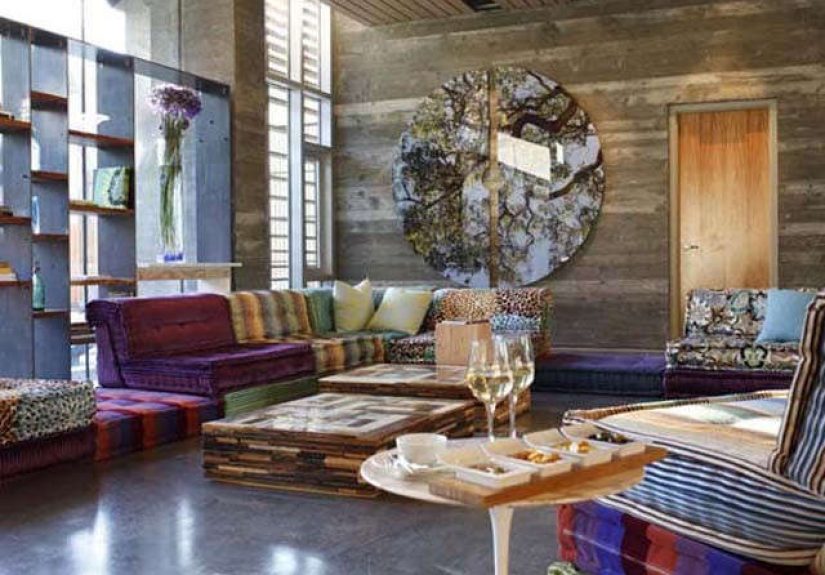
H2 Hotel, Healdsburg: Eco-conscious hospitality that still feels stylish
Hospitality design has a tough job: it must be durable, cleanable, and operationally practicalyet still deliver a memorable guest
experience. Coverage of H2 Hotel highlights a “rustic boho” sensibility paired with green building features and material choices
that lean natural, reclaimed, and guest-friendly. It’s the kind of place where sustainability isn’t a lecture; it’s simply how the
hotel works.
- Design lesson: Sustainability becomes more compelling when it improves comfort and experience (not just a checklist).
- Steal it: Use natural light control (like shutters) and durable, tactile flooring to create calm without feeling sterile.
The Sevens (Multi-family): Branding through spaces people actually use
Multi-family design wins when amenities feel intentionalnot like leftover square footage someone tried to “Pinterest” at the last
minute. In MFID’s published story for The Sevens, the interiors are framed around a concept that links two distinct buildings through
a cohesive identity, using a grid-based language and a consistent brand color thread. The design positions amenity areas as a lifestyle
ecosystem: work, play, wellness, and connection.
- Design lesson: Amenity spaces perform better when they feel like “destinations,” not generic rooms with a sofa.
- Steal it: Pick one brand anchor (color, form, material, or pattern language) and repeat it subtly across shared spaces.
The Dean (Multi-family): A bold concept that differentiates in a crowded market
When the goal is to stand out, safe design can be the riskiest choice. MFID’s published scope for The Dean describes amenity and
common spaces inspired by the swagger of the Rat Pack and James Deanusing bold materials, color, and art to create a signature
aesthetic. That’s not about nostalgia; it’s about energy and identity.
- Design lesson: “Memorable” usually requires a controlled dose of boldnessanchored by strong fundamentals.
- Steal it: Choose one “hero” move (a color, art wall, or material contrast) and support it with calmer companions.
Quest Diagnostics (Workplace): Cohesive furniture that supports function
Workplace interiors succeed when furniture isn’t an afterthought. MFID’s published scope for a Quest Diagnostics office project
centers on specifying a cohesive furniture packagesupporting functional needs across offices, open workstations, meeting rooms,
and communal spaces while aligning with the client’s vision and the architect’s framework.
- Design lesson: A workplace feels “designed” when furniture, circulation, and collaboration zones are intentionally coordinated.
- Steal it: Build a furniture kit-of-parts: a few repeatable pieces and finishes that flex across the whole office.
How to Bring the “Marie Fisher Interior Design” Feeling Into Your Own Space
You don’t need a hotel budget to borrow a professional design mindset. Here are practical, high-impact moves that mirror how strong
studios approach interiorswithout requiring you to own 47 sample boards and a laser measure you swear you’ll return someday.
Start with feelings, then translate into features
- Feeling: Calm → Feature: fewer visual categories, closed storage, warmer lighting.
- Feeling: Energized → Feature: contrast, art, brighter task lighting, bolder accents.
- Feeling: Cozy → Feature: layered textiles, softer edges, warmer materials, dimmable lights.
Use layered lighting (yes, even in rentals)
- Ambient: overall glow (ceiling, wall wash, or floor lamps)
- Task: work zones (desk, kitchen prep, reading)
- Accent: focal points (art lights, sconces, shelf lighting)
Choose materials that look good and live well
If a surface can’t survive your actual life, it will eventually become a background character in your personal tragedy. Favor
finishes that balance beauty with durability. And if you’re painting, consider low-emitting options and ventilate well during and
after the project.
Make nature part of the plan
Biophilic design doesn’t have to mean a jungle wall that demands a watering schedule like it’s a part-time job. Start with a few
plants, natural textures (wood, stone, woven elements), and maximize daylight and outdoor views if you have them.
Practice “specificity” before you buy
Before purchasing, write down: dimensions, finish, sheen level, care requirements, and what it must match. This one habit prevents
the classic mistake of “I love it!” followed by “Why does it look… weird… in my room?” (Spoiler: scale, undertones, or lighting.)
Experiences Related to “Marie Fisher Interior Design” (500+ Words of Real-World Lessons)
If you want the truth about interior design, it’s this: the most important decisions often don’t look dramatic on Instagram.
They look like a meeting about chair glides. Or a debate about whether a fabric can survive both sunlight and toddlers. Or a heated
conversation about the color “white,” whichscientifically speakingcomes in approximately 9,000 emotionally charged variations.
One consistent lesson across professional interior design work (and echoed in MFID’s own writing about specificity) is that
clarity early saves pain later. Teams that document intentdown to exact finishes, transitions, and installation
detailstend to avoid expensive “oops” moments. Without that clarity, projects can drift. A contractor makes a reasonable assumption.
A vendor substitutes a product. A “close enough” becomes permanently installed. And suddenly your “warm modern” space feels like it
was designed by three different people who never met and communicate exclusively through vague emojis.
In multi-family amenity design, another frequent experience is learning that “amenities” aren’t about stuffing a building with
trendy rooms. They’re about understanding how residents actually live. A coworking lounge works when there are enough outlets,
comfortable seating options, and lighting that doesn’t punish anyone with a laptop. A fitness room feels premium when acoustics and
durability are handled, not when a neon sign screams “HUSTLE” at 6 a.m. (Some people are here for wellness, not intimidation.)
Projects that succeed often have a coherent storyso the spaces feel connected rather than random.
Hospitality projects teach a different kind of discipline: the design must look great while handling constant use. Here, experience
tends to revolve around smart durability. Reclaimed or natural materials can create warmth, but selections must be
balanced with maintenance reality. A beautiful fabric that pills immediately or a delicate surface that stains on contact becomes a
daily headache for staffand eventually for guests. When sustainability is integrated thoughtfully (like reclaimed wood, efficient
systems, or low-emitting finishes), it can enhance comfort and brand credibility at the same time.
Workplace design brings its own set of lessons, especially around furniture packages and functionality. A cohesive selection strategy
can unify an office even when the architecture is fixed. But “cohesive” doesn’t mean “everything matches.” It means the pieces feel
related: consistent tones, repeated forms, and a hierarchy of spaces. Employees need varietyfocus zones, collaboration zones, and
casual touchdown spacesbecause work is not one single posture. (If it were, everyone would simply become a chair.)
And then there’s the most universal interior design experience: scale surprises. The rug you loved online arrives and
turns out to be the size of a bath mat. The pendant light looks perfect in a showroom and suddenly feels like a UFO hovering over your
dining table. Professional teams reduce these issues with mockups, samples, and measured planning. At home, you can borrow the same
habit: tape out furniture footprints, mock up pendant heights, and test paint on multiple walls at different times of day. It’s not
overthinkingit’s preventing your living room from becoming a museum of returns.
Finally, one of the most reassuring experiences people report after working with a strong interior design process is that the space
begins to feel like it “clicks.” Not because everything is expensive, but because decisions support each other. Lighting supports the
palette. The palette supports the materials. Materials support the story. The story supports the way people live there. That’s the
quiet magic behind “Marie Fisher Interior Design” as a concept: design that endures because it’s intentional, specific, and human.
Conclusion
“Marie Fisher Interior Design” isn’t just a nameit’s a useful framework for what high-performing interiors do well: they tell a clear
story, prioritize function, treat lighting and materials as essential, and sweat the details so the final space feels effortless.
Whether you’re planning a renovation, a new multi-family amenity strategy, or simply trying to make your home feel more “you,” the
takeaway is the same: start with clarity, build with intention, and let specificity turn your ideas into reality.