Table of Contents >> Show >> Hide
- What Is Marine Black Phylite, Exactly?
- Why Marine Black Phylite Has Become a Designer Favorite
- Marine Black Phylite vs. Soapstone, Slate, and Other Black Stones
- Best Uses for Marine Black Phylite in the Home
- The Pros of Marine Black Phylite
- Potential Drawbacks to Know Before You Buy
- How to Care for Marine Black Phylite
- How to Shop for Marine Black Phylite Like a Pro
- What the Experience of Living With Marine Black Phylite Feels Like
- Final Thoughts
- SEO Tags
If you love dark natural stone but do not want your kitchen, bath, or fireplace to look like every other “nice black countertop” on the internet, Marine Black Phylite is worth a serious look. It is moody, elegant, dramatic, and just textured enough to keep a minimalist space from feeling flat. In other words, it is the design equivalent of wearing a black blazer with perfect shoes: classic, sharp, and a little intimidating in the best possible way.
One important note before we get cozy: in the stone trade, this material is more commonly referred to as Marine Black Phyllite. You will also see it marketed alongside or even as soapstone in some showrooms because it shares a similar dark, honed, velvety look. But geologically, many suppliers identify Marine Black as phyllite, not true soapstone. That detail matters, because appearance and performance are not always the same thing.
What Is Marine Black Phylite, Exactly?
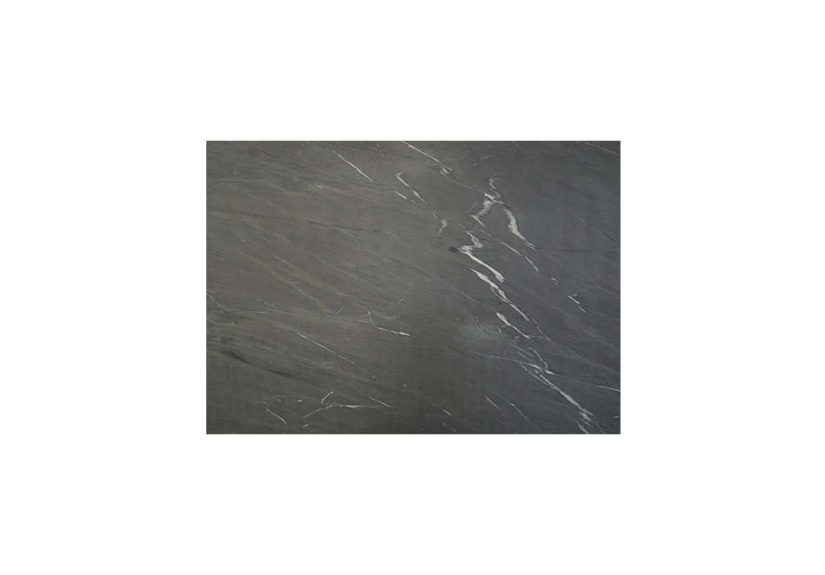
Marine Black Phylite is a dark natural stone known for its charcoal-to-black body color, subtle movement, and soft white or silvery veining. It usually appears in a honed finish, which gives it a smooth, matte surface instead of a glossy, mirror-like shine. The result is refined, tactile, and quietly luxurious.
From a geology standpoint, phyllite is a foliated metamorphic rock. It forms when fine-grained sedimentary rock, often shale, is transformed by heat and pressure. That process gives phyllite its signature sheen and gentle surface movement. It sits in the metamorphic family between slate and schist, which is a fancy way of saying it is more developed than slate but not as visibly crystalline as schist. Think of it as the middle child who turned out stylish and weirdly photogenic.
Marine Black is especially popular with homeowners and designers who want the look of black soapstone, but with a slightly different personality. Instead of reading soft and cloudy, it often reads sharper, more linear, and more architectural. The veining can feel graphic without becoming loud, which is a rare trick in natural stone.
Why Marine Black Phylite Has Become a Designer Favorite
1. It Delivers the “Dark Stone” Look Without Looking Generic
There are plenty of black stones on the market, but many either look too uniform or too busy. Marine Black Phylite lands in the sweet spot. It has depth, movement, and texture, yet it still behaves like a neutral. That makes it easy to pair with white oak cabinetry, painted millwork, warm brass, aged bronze, stainless steel, or even bold colors like forest green and deep navy.
2. The Honed Finish Feels Current and Timeless
Polished surfaces can be beautiful, but honed black stone has a quieter confidence. Marine Black Phylite often shows best in a matte or low-sheen finish, which works especially well in modern, transitional, Scandinavian, organic, and European-inspired interiors. It also photographs beautifully, which may not sound important until your contractor finishes the kitchen and suddenly everyone is taking “casual” pictures near the island.
3. It Works Beyond Countertops
Marine Black Phylite is not limited to kitchen counters. It can also shine as a bathroom vanity top, fireplace surround, accent wall, utility sink, bar top, or feature slab in a living area. Because it brings both color and texture, it can anchor a room without relying on complicated patterns or trendy finishes.
Marine Black Phylite vs. Soapstone, Slate, and Other Black Stones
Marine Black Phylite is often compared to soapstone, and that comparison is understandable. Both can have a soft, dark, honed look that feels rich rather than flashy. But they are not identical.
Compared with soapstone: Marine Black Phylite may offer a similar visual mood, but it should not automatically be treated as if it has identical mineral composition or maintenance needs. True soapstone is known for its high talc content and very specific performance profile. Marine Black phyllite may look like soapstone’s chic cousin, but cousins are not twins.
Compared with slate: Phyllite generally has more sheen and a more silky, gently rippled surface character than slate. Marine Black can therefore feel more dynamic and layered than a flatter, more uniform slate.
Compared with granite or quartzite: It usually looks softer, moodier, and less sparkly. If you dislike busy mineral flecks or a glossy “showroom shine,” Marine Black Phylite offers a more understated aesthetic.
Compared with quartz: Quartz can mimic black stone, but Marine Black Phylite gives you the real variation of natural material. No printed pattern, no repeated veining, no suspiciously identical corners. Nature does not copy-paste.
Best Uses for Marine Black Phylite in the Home
Kitchen Countertops
This is one of the most compelling applications. Marine Black Phylite adds contrast to light kitchens and depth to darker ones. It works especially well with slab backsplashes, integrated ledges, waterfall edges, and minimalist cabinetry.
Bathroom Vanities
In bathrooms, the stone creates an upscale, spa-like look. Paired with warm wood, brushed brass, or creamy plaster walls, it feels sophisticated without trying too hard.
Fireplace Surrounds
Because of its dark tone and linear movement, Marine Black Phylite makes a dramatic fireplace surround. It can read sculptural and architectural, especially in fluted, paneled, or full-height applications.
Feature Walls and Built-Ins
Used vertically, this stone becomes less “countertop” and more “art with excellent posture.” It can elevate bar niches, mudroom moments, living room walls, and custom millwork inserts.
The Pros of Marine Black Phylite
Beautiful natural variation: Each slab has its own veining and tonal shifts, which gives the installation a custom look.
High-end visual texture: The subtle sheen and movement keep black surfaces from feeling flat or lifeless.
Versatile style range: It works in rustic-modern, contemporary, traditional, and even industrial interiors.
Usually shown in a honed finish: That softer appearance can hide fingerprints and everyday visual noise better than some polished black stones.
Strong design presence: Marine Black Phylite can become the focal point of a room without requiring bold colors or loud patterns elsewhere.
Potential Drawbacks to Know Before You Buy
No natural stone is perfect, and anyone promising a completely maintenance-free stone is probably also selling magic beans.
Trade naming can be confusing: Some slabs may be marketed as soapstone even when they are classified as phyllite. Always ask for the actual material identification, finish, origin, and care recommendation from the supplier or fabricator.
Performance may vary by slab: Natural stone is not a uniform factory product. Density, absorption, veining, and finish can differ. That means one slab may behave a little differently from another.
Maintenance is still part of the deal: Even beautiful black stone can show oils, dust, water residue, or wear depending on finish and use. If you want a surface that never changes and never asks anything of you, that is a job for a different material.
Honed stone has a lived-in look: Many people love that. Some do not. If you are the type who notices one breadcrumb from across the room, choose with self-awareness.
How to Care for Marine Black Phylite
The smartest rule is simple: follow the guidance of your actual supplier or fabricator for your exact slab. Still, there are a few reliable best practices.
Use pH-Neutral Cleaning
Clean the surface with mild soap and water or a stone-safe cleaner. Avoid harsh, acidic, or abrasive products unless your stone professional specifically tells you otherwise.
Ask Whether Sealing Is Recommended
Not all natural stone needs sealing, and sealers do not make stone stain-proof. What they typically do is improve stain resistance. If your fabricator recommends an impregnating sealer, use the schedule they provide rather than guessing and hoping for the best.
Wipe Spills Promptly
With dark honed surfaces, oils and liquids can sometimes show more clearly than you expect, especially before cleanup. The solution is not panic. The solution is a cloth.
Protect Against Scratches and Heat Shock
Use cutting boards, trivets, and common sense. Even when a natural stone handles heat well, extreme or repeated abuse is a terrible home maintenance strategy.
How to Shop for Marine Black Phylite Like a Pro
First, view the full slab whenever possible. Small samples can lie. Or, more accurately, they can tell the truth very incompletely. A five-inch sample cannot show full veining direction, large-scale movement, or tonal variation.
Second, ask these questions:
Is this stone classified as phyllite, soapstone, slate, or something else in your inventory system? What finish is this slab in? Is sealing recommended? How does this material typically wear in kitchens? Are there any known care cautions for this specific lot?
Third, think about the room as a whole. Marine Black Phylite looks especially strong when repeated in a thoughtful way, such as on a countertop and backsplash, or on a vanity plus shower threshold, or on a fireplace surround echoed by a nearby shelf or table detail.
What the Experience of Living With Marine Black Phylite Feels Like
Living with Marine Black Phylite is often less about dramatic performance claims and more about the daily visual experience. This is a stone people choose because they want a room to feel grounded. Once installed, it tends to change the mood of the space immediately. A kitchen that felt bright but generic suddenly feels tailored. A bathroom that was merely functional becomes calm and intentional. A fireplace goes from being “the thing on the wall with a flame in it” to a real focal point.
One of the most noticeable experiences is how the stone reacts to light. In the morning, Marine Black Phylite can look smoky and soft, especially in a honed finish. By afternoon, white or silver veining often becomes more pronounced. At night, under warm lighting, it usually reads richer and deeper, sometimes almost velvety. That means the same slab can feel slightly different throughout the day, which is one reason natural stone lovers get borderline poetic about their countertops.
Another common experience is tactile. People often expect black stone to feel cold, slick, or severe. Marine Black Phylite usually surprises them. It tends to feel more organic than glossy engineered surfaces and more nuanced than a flat black slab. That tactile quality matters in everyday life. You notice it when setting down a coffee mug, wiping the counter, leaning against an island while talking, or brushing your hand across a vanity in the morning before your brain has fully joined the meeting.
Visually, the stone also plays well with age. Because it is natural and typically matte rather than ultra-polished, many homeowners find that a little everyday life does not ruin the look; it contributes to it. The space feels inhabited, not staged. That said, this is not the same as “nothing will ever show.” Dark surfaces can reveal dust, fingerprints, cooking residue, or water marks depending on lighting and finish. The experience is usually best for homeowners who like authentic materials and are comfortable with a surface that behaves like, well, a real surface.
In design terms, Marine Black Phylite often becomes the quiet hero of a room. It does not scream for attention the way a wildly patterned marble might, but it keeps pulling the eye back. Guests may not know the geology or the trade classification, yet they tend to notice that the room feels more expensive, more settled, and more intentional. That is the trick of this stone: it brings drama without chaos.
For many people, the best long-term experience is psychological as much as practical. Marine Black Phylite gives a home weight. It adds permanence. In a world full of disposable finishes and trendy surfaces, it feels like a decision with conviction. You choose it because you want something real, dark, architectural, and a little soulful. And once it is in place, the room often feels like it finally knows who it is.
Final Thoughts
Marine Black Phylite is a compelling natural stone for homeowners who want a dark, honed, high-character surface with genuine depth. It combines the quiet luxury of black stone with the texture and movement of metamorphic material, making it especially attractive for countertops, vanities, fireplaces, and statement walls.
The key is to buy it with open eyes. Understand the trade naming, confirm the actual stone classification, ask about maintenance, and choose a slab you love at full scale. Do that, and Marine Black Phylite can reward you with a space that feels elegant, grounded, and custom for years to come.