Table of Contents >> Show >> Hide
- The Real Story Behind the Viral Dog Photo Series
- Why This Story Connects With So Many Readers
- What the Series Says About Healing After a Major Life Change
- The Role of Dogs in Emotional Recovery
- Why the Photos Worked So Well Online
- From Personal Project to Cultural Moment
- Lessons Creators Can Learn From This Story
- Why Readers Still Care Years Later
- Final Thoughts
- Extended Reflections: What This Kind of Experience Feels Like in Real Life
Some people deal with heartbreak by cutting bangs, booking a last-minute beach trip, or buying a lamp that looks far too confident for the size of their apartment. Rafael Mantesso did something better. After his marriage ended, he found himself in a nearly empty, white apartment with one loyal roommate left behind: a bull terrier named Jimmy Choo. Instead of letting the silence win, he turned the blank walls, the open space, and his goofy dog into a wildly imaginative photo series that made the internet smile.
That is the short version. The better version is this: an emotional wipeout became an artistic reset. A dog became a muse. A bare apartment became a studio. And a personal low point turned into a visual project full of wit, charm, and a surprising amount of canine star power. If that sounds like the setup for a heartfelt indie movie with excellent lighting, you are not wrong.
This story resonates because it hits several emotional notes at once. It is about divorce, yes, but it is also about creativity after loss, pet companionship, visual storytelling, and the strange magic that happens when a person has nothing left to lose except maybe a good marker pen. The result was not just a series of funny dog photos. It was a case study in how people rebuild identity after life knocks over the furniture and takes the cookware.
The Real Story Behind the Viral Dog Photo Series
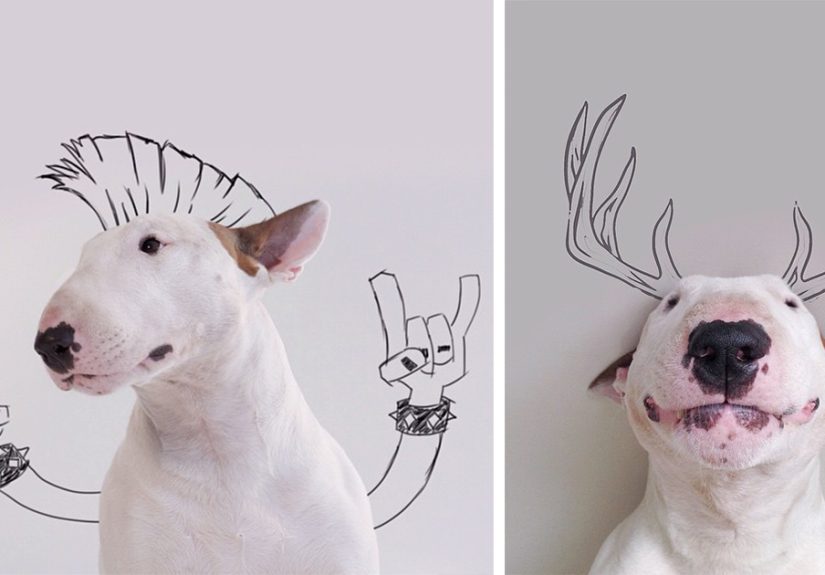
Rafael Mantesso, a Brazilian artist and creative professional, became globally known for a whimsical project featuring his English bull terrier, Jimmy Choo. The premise was simple but instantly memorable. Mantesso photographed Jimmy in an all-white apartment and then drew playful illustrations around him, transforming the dog into the star of different scenes. One moment Jimmy looked like a fashion icon. The next, he appeared to be flying, lounging, performing, or starring in a visual joke with the unbothered confidence that only a bull terrier can deliver.
The personal backstory gave the series emotional weight. Mantesso has described being left alone in a stripped-down apartment after his wife moved out, with Jimmy as the one companion who stayed. That detail turned the project from “cute dog content” into something far more compelling. These images were not random gags for clicks. They were the product of reinvention. They were funny, but they were also functional. They helped him create order, routine, and meaning in a moment that could have easily become a personal free fall.
That combination of humor and honesty is exactly why the story spread. People love a photogenic dog, obviously. But they love a comeback story even more. Especially one with ears this good.
Why This Story Connects With So Many Readers
1. It turns pain into something shareable
Stories about heartbreak usually lean dramatic. This one leaned creative. Instead of framing the end of a relationship as only devastation, the photo series offered a different possibility: grief can coexist with playfulness. That does not make pain smaller. It makes recovery more human. Many readers recognize that instinct. When life becomes too heavy, humor is not denial. Sometimes it is the first ladder out.
2. The dog is not a prop. He is a partner
Jimmy Choo is central to the appeal because he feels like an active character, not just an accessory with four legs. His stillness, expressions, posture, and general bull terrier weirdness made each image land. Pet owners understand this immediately. A good dog does not fix your life, but a good dog can absolutely keep you moving through it. They demand walks, meals, routines, eye contact, and in some cases, a full photo shoot about their imaginary DJ career.
3. Creativity becomes a survival tool
This is one of the biggest reasons the story has staying power. Creative projects can help people process change. That does not mean every bad week needs to become a coffee-table book. But making something can restore a sense of agency. When circumstances feel uncontrollable, choosing a frame, sketching a line, or developing a concept can remind you that you still have ideas, taste, humor, and forward motion.
What the Series Says About Healing After a Major Life Change
There is a reason experts often talk about the value of hobbies, creative expression, and pet companionship during stressful periods. A meaningful project gives structure to the day. A pet offers consistency and emotional presence. Together, they create a kind of accidental therapy plan, minus the clipboard and fluorescent waiting room.
In Mantesso’s case, the ingredients were almost cinematic in their simplicity. Empty space. One dog. One visual brain refusing to shut down. From a storytelling perspective, that is gold. From a human perspective, it is deeply relatable. Plenty of people have stood in a room after a breakup thinking, “Well, this looks bleak.” The difference here is that he looked at the same emptiness and thought, “This could be a background.”
That shift matters. It reflects a core truth about resilience: people do not always bounce back by feeling strong. Sometimes they bounce back by making something funny on a Tuesday. Healing is not always a grand transformation. Sometimes it is a marker line around a dog and the realization that your life is not over. It just has better content now.
The Role of Dogs in Emotional Recovery
Dog owners often describe their pets as companions, but that word can undersell what dogs actually do during difficult times. They anchor routines. They reduce isolation. They create daily tasks that matter. They pull people outside, sometimes literally. They also offer emotional steadiness that feels especially valuable when everything else is shifting.
That is part of what makes Jimmy Choo such a powerful figure in this story. He symbolizes loyalty, yes, but also momentum. A dog does not care that your life plan just exploded. Your dog still wants breakfast, movement, and maybe a dramatic starring role in your next visual masterpiece. That kind of continuity can be comforting. It keeps a person engaged with the world when retreat would be easier.
There is also the social dimension. Dogs are conversation starters, emotional softeners, and tiny fur-covered networking devices. Once Mantesso began sharing the images online, Jimmy helped bridge the gap between private pain and public connection. The project gave people something delightful to respond to, and those responses helped transform a solitary moment into a shared one.
Why the Photos Worked So Well Online
Simple concept, strong execution
The internet loves an idea that can be understood in one second and appreciated for much longer. Mantesso’s photos checked every box. Clean background. Funny visual twist. Beautiful dog. No clutter. No complicated explanation. You could scroll past one image and instantly get the joke, then stop and admire how elegantly it was made.
Aesthetic consistency
The empty white apartment became an unexpected creative advantage. It turned each image into a minimalist canvas. The sparse setting gave the illustrations room to pop and kept attention on Jimmy. In branding terms, it created a recognizable visual identity. In plain English, it looked cool and felt fresh.
Emotion beneath the humor
The best viral content often carries an emotional undercurrent. Mantesso’s work felt joyful, but viewers also sensed the origin story behind it. That combination gave the series depth. It was not only funny. It meant something. Those are the projects people remember.
From Personal Project to Cultural Moment
The photo series did not stay small. As Jimmy Choo’s fame grew, the dog and his artist-owner became the subject of international attention. The images led to broad social media visibility, publishing opportunities, and even a collaboration with the luxury brand Jimmy Choo. That twist is almost too perfect. The dog named after the shoe brand ended up helping inspire work with the actual shoe brand. Somewhere, destiny was clearly wearing expensive loafers.
What makes this development especially interesting is that it shows how authenticity often travels farther than strategy. This did not begin as a market-tested content plan. It began as a person trying to cope creatively with an unexpected new reality. The commercial opportunities arrived later because the work was original, emotionally resonant, and visually distinctive. In the crowded world of online content, that combination still wins.
Lessons Creators Can Learn From This Story
Use the space you have
Mantesso did not wait for a perfect studio or elaborate setup. He used what was available. That is a useful reminder for artists, bloggers, photographers, and creators of all kinds. Constraints are not always barriers. Sometimes they are the whole style.
Lead with personality
The photos work because Jimmy’s personality shines through. The same rule applies to digital storytelling more broadly. Whether the subject is a dog, a recipe, or a renovation project, people connect with character. Perfect polish helps, but personality is what sticks.
Do not underestimate a focused gimmick
In content terms, the idea was narrow: one dog, one apartment, one illustrated twist. That focus made it memorable. Many creators fail by trying to do everything at once. A small, consistent concept can be much stronger than a giant, messy one with twelve hashtags and no soul.
Why Readers Still Care Years Later
Because the story taps into something evergreen. People lose relationships. People start over. People cling to the beings who stay. People make strange, beautiful things in order to survive their own plot twists. And yes, people really do need more stories where the dog is both emotionally supportive and camera-ready.
There is also a universal fantasy buried in this story: the idea that the worst day of your life might secretly contain the seed of your next chapter. Not because suffering is glamorous. It is not. But because humans are resourceful in odd ways. Sometimes the thing left behind is exactly the thing that helps rebuild the future.
Final Thoughts
My Wife Left Me With Nothing But A Dog, So I Started This Fun Photo Series is more than a catchy headline. It is a story about reinvention through creativity, companionship, and visual humor. Rafael Mantesso did not just document a charming dog. He transformed loss into a body of work that made people laugh, pause, and maybe reconsider what a fresh start can look like.
At its heart, the series is about perspective. An empty apartment became a blank canvas. A lonely season became a creative era. A dog became both co-star and emotional backup generator. That is why the story continues to travel. It offers proof that even when life leaves you with less than you expected, you may still have enough to make something unforgettable.
And if that “something” happens to involve a bull terrier pretending to be a rock star, even better.
Extended Reflections: What This Kind of Experience Feels Like in Real Life
There is a specific kind of quiet that follows a breakup when a home suddenly stops feeling like a shared place and starts feeling like a set after the crew has gone home. The rooms are the same size, the windows are in the same place, the coffee maker still makes the same suspicious noise, and yet everything feels different. You start noticing absurd details. One chair looks too emotional. One hallway feels like it is judging you. The silence has personality, and frankly, it is not a very pleasant one.
That is why stories like this hit so hard. They understand that recovery is not always dramatic. It is often built from tiny acts of improvisation. You wake up. You feed the dog. You stare at the wall. The dog stares at you. At some point, one of you becomes the better influence. Hopefully it is the dog. Then a weird idea shows up. What if I take a picture? What if I draw something? What if I stop treating this chapter like wreckage and start treating it like material?
That process can be unexpectedly powerful. Creative work gives shape to time. Instead of measuring the day by what is missing, you begin measuring it by what you made. One photo becomes three. Three become a series. A private coping ritual becomes a voice. Suddenly the empty afternoon that could have swallowed you turns into a session, a concept, a joke, a small accomplishment. It is not a miracle cure. But it is movement, and movement matters.
Having a dog in that kind of season changes everything. Dogs are wonderfully rude to self-pity. They do not care that you are trying to spiral artistically on the couch. They need lunch. They need a walk. They need you to notice that they have found one sock and are now behaving like they have captured a wild beast. Their needs keep life from becoming too abstract. In emotional terms, they are grounding. In practical terms, they are furry little managers with terrible boundaries.
A photo series like Mantesso’s also reveals how humor can return before confidence does. That is important. A lot of people think healing should look noble and orderly. In reality, it often looks silly first. You laugh at something ridiculous. You make one image that pleases you. You send it to a friend. You realize your imagination still works. That discovery can be bigger than it sounds. After loss, the ability to make something playful can feel like proof of life.
There is another layer, too. Public creativity can help transform isolation into connection. Once a personal project is shared, other people bring their own stories to it. They see their divorce, their bad year, their lonely apartment, their own impossibly expressive pet. Suddenly the project is no longer only about one man and one dog. It becomes a reminder that rebuilding rarely starts with certainty. More often, it starts with whatever is still in the room with you.
Sometimes that is talent. Sometimes it is stubbornness. Sometimes it is a bull terrier named after a luxury shoe brand. Honestly, that is still a pretty solid place to begin.