
Table of Contents >> Show >> Hide
- Why “Entitled Parent” Nanny Posts Hit a Nerve
- 29 Flavors of Entitled Parent Energy (Inspired by Real Patterns)
- What Fair Nanny Hiring Looks Like (The Adult Version of “Let’s Be Normal”)
- The Legal Basics Behind the Drama (A.K.A. “Google Can’t Outvote Labor Rules”)
- How Nannies Can Respond to Red Flags Without Starting a Fight
- How Parents Can Hire Ethically (and Actually Keep a Great Nanny)
- Experiences From the Real World (500+ Words of “Yep, That Happens”)
- Conclusion: Laugh at the PostsThen Learn From Them
If you’ve ever scrolled past a nanny job post that reads like a “wanted” ad for a superhero who also irons linens and teaches Mandarin,
you already know why this topic keeps going viral. The internet loves a good “can you believe this?” momentespecially when it involves
childcare, where the emotional stakes are sky-high and the expectations can get… creatively unhinged.
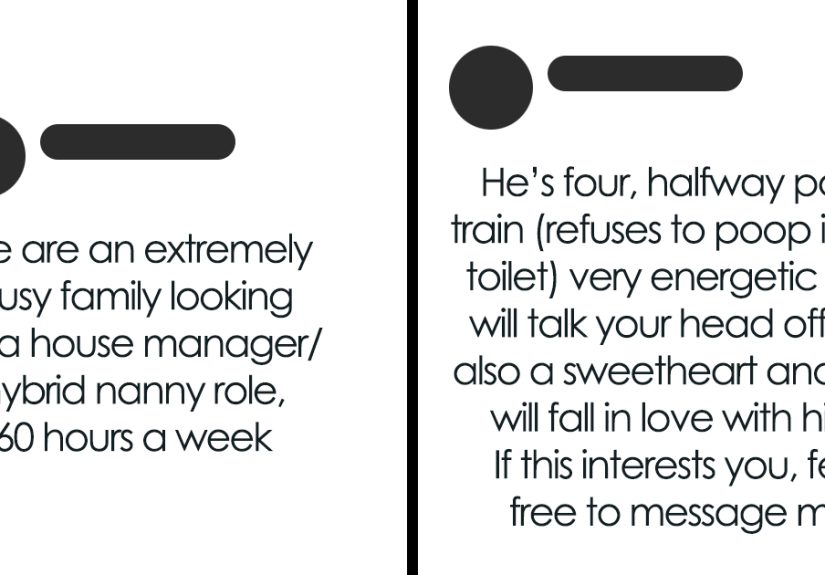
In the viral spirit of “a nanny shares 29 posts from entitled parents,” let’s translate that chaos into something genuinely useful:
what these posts actually reveal about modern childcare, what fair hiring looks like, and how families and nannies can protect
themselves from the kind of misunderstandings that turn a simple job into a three-season drama.
Why “Entitled Parent” Nanny Posts Hit a Nerve
Most parents aren’t villains twirling mustaches over a stroller. Most nannies aren’t secretly judging your snack drawer. But childcare is a
perfect storm: it happens in a private home (not an office), it’s intimate (kids!), and it’s expensive (everything!). Add schedule stress,
sleep deprivation, and a national caregiver shortage vibe, and you get job posts that sound like:
“We need help. We have no plan. Please fix our lives. Also, we pay in gratitude.”
The best “entitled” posts usually share three ingredients:
- Scope creep (nanny quietly becomes house manager, tutor, chef, and family therapist).
- Pay gymnastics (creative math where overtime disappears and “part-time” means “always available”).
- Boundary confusion (“You’re like family!” said seconds before requesting unpaid labor).
29 Flavors of Entitled Parent Energy (Inspired by Real Patterns)
Important note: the examples below are original composites based on real, widely reported issues in domestic work and nanny hiring.
They’re not copied postsjust the same patterns with the serial numbers filed off.
- The “Part-Time Hours, Full-Time Soul” Listing: “20 hours/week” but you must be available 7 days.
- The “House Manager (But Don’t Say That)” Deal: Childcare plus errands, laundry, groceries, organizing, and “light everything.”
- The $12/Hour Unicorn Hunt: Must have CPR, early childhood degree, bilingual, and 10 years’ experience. Pay: vibes.
- The “We Don’t Pay When the Baby Sleeps” Theory: Because your time apparently powers down like a laptop.
- The Unpaid Trial Day Trap: “Come for a full shift so we can see if it’s a fit.” Spoiler: work is work.
- The Surprise Third Child Reveal: “Two kids” turns into “plus our neighbor’s toddler sometimes.”
- The Flat-Fee Overnight Fantasy: “Stay 6 p.m.–7 a.m. for $50.” That’s not a shiftit’s a hostage negotiation.
- The On-Call Without Pay Plan: You must be ready at any moment, but only paid when summoned.
- The “Salary So We Can Ignore Overtime” Pitch: A classic plot twist with legal consequences.
- The Cancellation-With-No-Pay Habit: Family cancels last minute, nanny eats the lost income.
- The “Guaranteed Hours? Never Heard of Her” Approach: But you can’t take another job because “we need flexibility.”
- The “Bring Your Own Car, Gas, and Magic” Request: Driving kids everywhere with zero mileage reimbursement.
- The “Travel With Us, It’ll Be Fun” Bait: Translation: work in a new location, longer hours, unclear pay.
- The Personal Errands Pyramid Scheme: “Just quick” daily errands that swallow half the day.
- The “Light Housekeeping” Black Hole: Starts with dishes. Ends with baseboards and your will to live.
- The “Homeschool + Tutor + Nanny” Bundle: Education services tacked on without pay reflecting the skill.
- The “No Sick Days, Even When the Kids Are Sick” Rule: Because germs should respect the family calendar.
- The “We Pay Under the Table Only” Demand: Framed as convenient, but often shifts risk onto the worker.
- The Mystery Deductions: “We subtract for late arrivals,” but they don’t subtract for late paychecks.
- The “Must Be Like Family” Contract Allergy: Professional agreements called “too formal” (translation: too clear).
- The 24/7 Group Chat Expectation: Work messages at midnight as if time zones are fictional.
- The “No Screens Ever” With No Alternatives: Also: you must cook dinner, do homework, and fold laundry simultaneously.
- The “We’re Interviewing 15 People Today” Flex: Treated like a dating show, minus the roses.
- The “CPR Required, Safety Optional” Irony: Great rules, but no car seats installed correctly and no emergency plan.
- The “You Can Eat After the Kids” Policy: Weirdly medieval, wildly unnecessary.
- The “We Don’t Believe in Raises” Philosophy: But they do believe in more responsibilities.
- The “Availability on Holidays” Assumption: With no holiday pay, because apparently cheer is compensation.
- The “You’ll Pay Us Back” Energy: Training fees, “uniform costs,” or weird “rent” ideas for live-in setups.
- The “We’re Doing You a Favor” Tone: The post reads like they’re offering a once-in-a-lifetime chance to meet their dishwasher.
What Fair Nanny Hiring Looks Like (The Adult Version of “Let’s Be Normal”)
A healthy nanny-family relationship is surprisingly simple. It’s not about being cold or corporate. It’s about being clear.
Most professional guidance around domestic work points to the same basics: define the job, define the pay, define the schedule, and define the boundaries.
That structure protects everyoneincluding the children, who thrive when adults aren’t quietly resentful.
1) A Clear Role (Childcare vs. House Manager)
Childcare is a full job. House management is also a full job. Combining them can be reasonable if the hours and pay reflect it.
A fair post doesn’t hide major responsibilities behind phrases like “help out when you can.” It spells out:
children’s ages, daily routine, driving needs, meal expectations, kid laundry, and any non-child tasks (if any).
2) Guaranteed Hours (Because Bills Don’t Take Vacations)
Guaranteed hours mean: if the family schedules (and expects) the nanny to keep a certain block of time available, the nanny is paid for that block,
even if the family cancels. This is one of the biggest differences between a professional nanny job and random babysitting.
Without guaranteed hours, the nanny absorbs all the instabilityvacations, grandparents visiting, surprise work-from-home dayswhile still being asked to stay “available.”
3) Overtime and Hour Tracking (Not Optional Just Because It’s Awkward)
Household employment is real employment. That means tracking hours worked and paying correctly.
If you want a caregiver who is consistent, reliable, and not quietly updating their résumé every Tuesday, clarity on hours and overtime is essential.
4) Benefits That Match Reality
Families who retain great nannies often offer a benefits package that reflects the responsibility:
paid holidays, paid sick time, PTO, mileage reimbursement, and sometimes health stipends or transit help.
The details vary widely by state and budget, but the principle is stable: dependable care requires dependable compensation.
The Legal Basics Behind the Drama (A.K.A. “Google Can’t Outvote Labor Rules”)
This is not legal advice, but there are some widely recognized baseline rules in U.S. household employment that matter in almost every situation.
The exact details can vary by state and city (sometimes a lot), which is why reputable templates and official guidance exist.
Minimum wage and overtime
Under federal standards, many nannies and domestic service workers are entitled to at least the applicable minimum wage for all hours worked.
For many live-out nannies, overtime pay often applies after 40 hours in a workweek.
Live-in domestic service workers are treated differently under federal overtime rules, but still generally must be paid at least minimum wage.
Some states extend additional protections beyond federal rules, including overtime for live-in workers.
“Nanny taxes” and household employer responsibilities
Hiring a nanny can make a family a household employer. That can trigger payroll and tax responsibilitieslike Social Security and Medicare withholding,
unemployment taxes, and year-end forms. Thresholds change over time, so families typically rely on current IRS guidance (or a payroll service).
The key idea: paying legally protects the nanny’s work history and benefits, and it protects the family from penalties and messy disputes later.
If you’re reading this thinking, “But everyone pays cash,” you’re not aloneinformal arrangements do happen.
But informal is not the same as risk-free. When things go wrong (injury, termination, unemployment claims, tax issues), “we kept it simple”
can become “we wish we had paperwork.”
How Nannies Can Respond to Red Flags Without Starting a Fight
You don’t need to deliver a TED Talk. You need a script.
Use the “Yes, If…” method
- “Can you also do family laundry?” → “Yes, if we update the job duties and adjust the rate.”
- “Can you stay late tonight?” → “Yeswhat time, and do you want overtime paid weekly or added to the next paycheck?”
- “We might not need you during our vacation.” → “Totallythose are guaranteed hours, so I’m still paid, and I can use the time however I like.”
Ask for a written agreement early
A written agreement isn’t distrust. It’s memory support. People forget what they “said in the interview,” especially when life gets chaotic.
A simple contract outlines schedule, duties, pay rate, overtime, guaranteed hours, PTO, holidays, reimbursements, and termination notice.
It prevents the slow drift from “childcare” to “please reorganize our garage.”
Track hours like it’s your job (because it is)
Use a simple time log. When hours are tracked consistently, pay conversations are factual instead of emotional.
And that alone lowers conflict.
How Parents Can Hire Ethically (and Actually Keep a Great Nanny)
Here’s the twist: ethical hiring is not just “nice.” It’s strategic. Good nannies have options.
If you want stability, you compete with other families by offering clarity and respect.
Write a job post that doesn’t accidentally sound like a scam
- List core duties clearly (childcare first, then any extras).
- State hourly pay range honestly and mention overtime.
- Include schedule details, guaranteed hours, and start date.
- Be upfront about driving needs, pets, cameras, WFH, and household expectations.
Respect the difference between “help” and “availability”
If you need someone to reliably reserve time for you, you pay for that reserved time. That’s what guaranteed hours are for.
It’s the same logic as paying rent: you’re paying for access, not just usage.
Make “like family” a feeling, not a loophole
Treating your nanny warmly is wonderful. Using warmth to avoid fair pay or clear boundaries is not.
The healthiest relationships are often both: friendly and professional.
Experiences From the Real World (500+ Words of “Yep, That Happens”)
If you want to understand why those 29 entitled-post moments feel so familiar to so many nannies, picture the daily friction points where
good intentions meet real life.
One common experience is the “just one more thing” drift. A parent walks in at 5:00 p.m. and sees a calm house: kids are fed,
homework is handled, backpacks are ready, and everyone is alive (a win). Then the parent says, “Since you’re here… could you just start a load
of our laundry?” It sounds small. It is smallonce. The problem is that it repeats, and it rarely comes with a schedule change or pay adjustment.
Over weeks, a nanny realizes they’re doing 30–60 minutes of additional work daily, unpaid. That’s not just annoying; it changes the economics of the job.
Another frequent experience is schedule whiplash. Families sometimes assume flexibility is part of the “deal,” but flexibility goes both ways.
A nanny may be told on Sunday night that Monday starts an hour early. Or a parent cancels a shift with two hours’ notice because a grandparent is visiting.
If there’s no guaranteed-hours policy, the nanny eats that lost income. In practice, that can mean the nanny can’t budget reliably, can’t accept other work,
and can’t plan medical appointments or school. It’s the difference between a career job and a “hope you’re free” arrangement.
Then there’s the money conversation that nobody wants to have. Some families feel awkward about being “an employer,” so they try to avoid
paperwork, avoid tracking hours, and avoid defining overtime. Nannies, meanwhile, may avoid pushing because they don’t want conflict in a home setting.
That avoidance often backfires. When a payday is short, or overtime is ignored, the conversation becomes emotionalbecause it’s no longer about numbers.
It’s about trust. The smartest experience-based lesson here is simple: handle the awkward stuff early, when everyone is still trying to impress each other.
A particularly vivid “entitled post” experience is the multi-role mashup. A family posts for a nanny but interviews as if they’re hiring a
household operations director: plan meals, cook dinners, run errands, schedule repairs, organize closets, manage vendors, tutor math, and “keep the home tidy.”
In reality, these are multiple roles. Some nannies do offer household management servicesand those positions can be fantasticwhen the title and pay match.
Problems happen when a family wants a “nanny rate” but a “house manager outcome,” and the nanny slowly becomes responsible for everything that adults don’t want to do.
Finally, a real-world experience that rarely shows up in job posts: emotional labor. Nannies don’t just watch kids.
They regulate routines, handle meltdowns, teach manners, navigate separation anxiety, and sometimes absorb a family’s stress.
When parents treat that skill as replaceable, they lose good caregivers. When parents recognize it as professional workworthy of fair pay, rest, and respect
they build stable, long-term care that benefits everyone.
Conclusion: Laugh at the PostsThen Learn From Them
The funniest entitled nanny posts are funny because they’re absurd. The most viral ones are viral because they’re familiar.
But behind the screenshots is a real workplace: someone’s home, someone’s livelihood, andmost importantlysomeone’s kids.
If you’re a nanny, the takeaway is powerfully practical: insist on clarity, track your time, and treat boundaries like safety equipment.
If you’re a parent, the takeaway is just as practical: write honest job posts, pay legally and fairly, and remember that reliable childcare is not a bargain-bin purchase.
It’s a professional service that makes the rest of your life possible.