Table of Contents >> Show >> Hide
- What’s Atelier Ellis, and Why Are Designers Whispering About It?
- Why Bath? Because Some Cities Come Pre-Seasoned With Taste
- Inside the Flagship: A Townhouse Made for Daydreaming
- The “Beginnings” Collection: Birds, Migration, and the Colors We Choose When Life Changes
- Breathable, Bio-Based Paint: A Pretty Finish With Real-World Benefits
- The Rise of Hospitality Retail: Why This Flagship Feels So Good
- Steal This Approach: A U.S.-Friendly Guide to “Atelier Ellis Energy”
- Why “New Beginnings” Hits Right Now
- Experience Add-On (): A Bath Color Pilgrimage, Told Like a Daydream
- Conclusion
There are store openings, and then there are soft landingsthe kind where you step off a busy street and into a space that quietly insists you slow down,
breathe, and maybe accept a cup of tea before you make any life-altering decisions like “Should this room be blue?”
Atelier Ellis’ flagship in Bath is very much the second kind: less “retail launch,” more “color sanctuary,” tucked into a townhouse in one of England’s most
design-literate cities.
If you’ve ever stared at 87 nearly-identical paint chips and thought, “I have lost the plot and possibly my personality,” this story is for you.
Because Atelier Ellis isn’t just selling paintit’s selling a way of thinking about home: color as a compass, a comfort, and occasionally, a gentle nudge toward
becoming the version of yourself who definitely owns a linen apron and knows what an allotment is.
What’s Atelier Ellis, and Why Are Designers Whispering About It?
Atelier Ellis is an independent paint and color studio founded in 2018 by colorist Cassandra Ellis. The brand is known for its poetic, research-driven approach
to shadecolors built for real life, not just Instagram glare. Their paints are designed to be natural, breathable, and bio-based, with an emphasis on
responsible materials and that elusive “quiet-but-not-boring” depth that makes a wall feel like it belongs to a story, not a showroom.
The palette is intentionally nuancedcrafted with multiple pigments to create complex, human-feeling tones. In other words: not flat, not shouty, and not the
visual equivalent of a ringtone from 2009. It’s color meant to be lived with, not merely looked at.
Why Bath? Because Some Cities Come Pre-Seasoned With Taste
Bath is famous for honey-colored Georgian architecture, a walkable center, and the kind of heritage beauty that makes even your coffee cup feel historically
significant. It’s also a city where design doesn’t feel like a costumeit feels like culture. The flagship opens on Walcot Street, part of Bath’s artisan energy:
an eclectic strip known for independent shops, vintage finds, and creative businesses. If you’re going to introduce a color brand that treats paint like poetry,
you might as well do it somewhere that appreciates metaphor.
There’s also a practical romance to it: Bath is domestic in scale. And Atelier Ellis is intentionally human-scale. The flagship doesn’t read like a chain store
prototype. It reads like a home that decided to become a studiobecause it believes color should feel personal, not performative.
Inside the Flagship: A Townhouse Made for Daydreaming
The flagship isn’t trying to overpower you with branding. In fact, its whole vibe is: quietly confident, emotionally literate, and probably wearing cashmere.
The space is arranged like a townhouse galleryrooms you move through slowly, absorbing color the way you absorb a good novel (the kind you underline, then
insist “changed your life”).
The Welcome: Seating, Softness, and Reclaimed Details
One of the most charming details is a built-in window seat made from oak floorboards left behind by previous tenantsan on-site, low-waste flourish that says,
“We like beautiful things, but we also like not trashing the planet.” The flagship leans into hospitality on purpose: this is a place where you can sit, talk,
and take your time. It’s retail, yesbut it’s also an invitation to imagine your life in a different light.
The Front Gallery: A Dark Green That Feels Like a Deep Breath
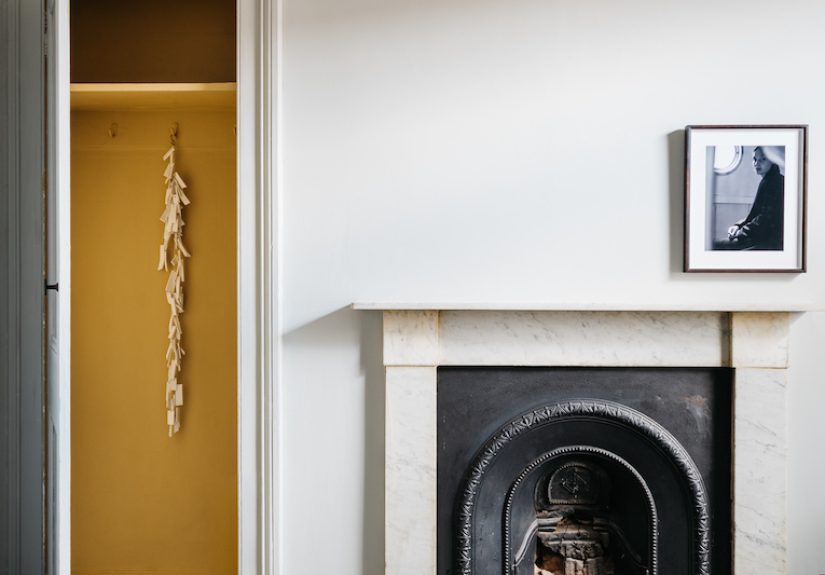
The front room sets the tone with a meditative dark green called Under Wood, paired with cabinetry and a fireplace painted Aged Black.
It’s the kind of pairing that feels grounded and grown-uplike the room has a savings account and a strong opinion about good butter.
The Back Gallery: Milky Blues, Warm Yellows, and a Color Box That Means Business
Deeper inside, walls shift into softer territory. The back gallery features Tamaki, a milky, oceanic blue that reads like a summer memory with
good lighting. Nearby, accents of Block Print Yellow add warmth without going cartoon. A color box on the desk reinforces the brand’s
“color-as-story” philosophy: you’re not picking a shade, you’re shaping a mood you’ll live inside.
Art, Objects, and the Genius of “Here, Have a Cup”
For the opening, the flagship featured a curated display of photography by Jessica MacCormick and a collection of 50 hand-thrown cups by Pottery West
(Catherine and Matt West), made in bespoke colorways developed in collaboration with Ellis. This is not random merchandising. It’s a manifesto:
the store is built around conversation, ritual, and the very normal human need to hold something warm while discussing whether your hallway should be “slightly
mushroom” or “definitely oat.”
Even the staff culture reflects that “alive” approach. The brand has an allotment, and employees are encouraged to spend paid time each week gardening or cutting
flowers so the store always contains something living. That detail tells you everything: Atelier Ellis isn’t chasing sterile perfection. It’s chasing
lived-in beauty.
The “Beginnings” Collection: Birds, Migration, and the Colors We Choose When Life Changes
The flagship opening is tied to the brand’s “Beginnings” collectionan exploration of transition, seasonality, and the emotional logic of
starting over. The palette draws inspiration from the rhythmic migration of birds and the sense of freedom they symbolize, resulting in avian-named shades like
Lark, Floof, and Hummingbird, alongside more personal, transportive colors like Tamaki.
It’s not hard to see why this resonates. When people move, renovate, or hit reset, color becomes one of the first decisions that feels both practical and
wildly intimate. We don’t just ask, “What matches the sofa?” We ask, “Who am I now, and what kind of quiet do I need?”
How to Use the “Beginnings” Palette Without Overthinking Yourself Into a Nap
- Start with your “anchor” shade. Choose one color that feels emotionally rightcalm, brave, cozy, cleanthen build outward.
- Pair avian tones with grounded neutrals. Soft bird-inspired hues shine when balanced with earthy whites, warm greiges, or deep near-blacks.
- Let one room be your “future self” room. Pick a shade you love but feel slightly nervous aboutthen use it in a smaller space like a powder room,
entry, or reading nook.
Breathable, Bio-Based Paint: A Pretty Finish With Real-World Benefits
Atelier Ellis describes its paint as natural, breathable, and bio-basedand for old homes (like many in Bath), “breathable” isn’t just marketing poetry.
Historic buildings often manage moisture differently than modern ones. Finishes that support vapor permeability can help walls perform the way they were meant to,
especially when you’re dealing with plaster, seasonal shifts, and the general reality that buildings are not robots.
For American readers, the bigger conversation is indoor air quality. The U.S. Environmental Protection Agency notes that many volatile organic compounds (VOCs)
can be higher indoors than outdoors and that products like paints and solvents can contribute to indoor VOC levels. Translation: choosing lower-emitting materials
can matter, especially if you’re painting bedrooms, nurseries, or small spaces with limited ventilation.
How to Shop “Low-VOC” Like a Person Who Reads Labels (But Still Has a Life)
- Look for transparency. Brands should disclose VOC content and safety data clearly.
- Favor third-party standards when possible. In the U.S., programs and standards (often referenced in green building frameworks) commonly use
benchmarks like Green Seal’s paint standard for VOC limits. - Remember: “low odor” isn’t the same as “low emissions.” Your nose is not a lab instrument (even if it’s dramatic).
The Rise of Hospitality Retail: Why This Flagship Feels So Good
One reason Atelier Ellis’ Bath flagship stands out is that it behaves less like a store and more like a welcoming room.
This lines up with a broader retail shift: physical spaces increasingly compete on experience, not just inventory.
In the U.S., design-forward brands have been building flagships that borrow cues from hospitalitycoffee corners, lounge seating, material libraries, and
the sense that you’re allowed to exist there without rushing.
Atelier Ellis takes that idea and makes it personal: tea, cups, flowers, art on the walls, and a pace that encourages conversation.
It’s a reminder that choosing paint is emotional labor (the good kind), and it goes better when you don’t feel like you’re being timed.
Steal This Approach: A U.S.-Friendly Guide to “Atelier Ellis Energy”
Remodelista readers love a good steal: not copying, but translating a great idea into your own context. Even if you can’t buy Atelier Ellis paint in the United
States, you can absolutely borrow the principles.
1) Build a Color Story, Not a Color Spreadsheet
Color affects mood, and your response is personal. Instead of picking “a nice neutral,” decide what you want the room to do for you:
calm you down, energize you, feel warmer, feel cleaner, feel safer. Then choose a general temperature (warm vs. cool), and let lighting do its important
chaos thing before you commit.
2) Sample Smarter (Because Tiny Chips Lie)
Test paint the way you’ll actually live with it: on multiple walls, near trim, and at different times of day. Undertones show up like uninvited guests
when the sun moves. A neutral that looked creamy at noon can look vaguely green at 4 p.m. and then somehow pink at night. Science? Sorcery? Either way:
test it.
3) Curate a “Material Moment”
Atelier Ellis pairs color with objectscups, photography, ceramicsbecause color doesn’t exist alone.
At home, do the same: gather fabric swatches, flooring samples, wood tones, and a few objects you love. If the color makes your favorite chair look sad,
it’s not the one. If it makes your room feel like a nicer version of your own life, you’re close.
4) Choose Healthier Finishes When You Can
If you’re sensitive to odor or painting frequently, look for lower-emitting options and follow basic ventilation best practices.
Let the product information guide you, not the front-label poetry. And yes, you can still have gorgeous color while being mindful about indoor air.
This is not an either/or situation. We contain multitudes. And primer.
Why “New Beginnings” Hits Right Now
There’s a reason this flagship opening feels bigger than square footage.
“New beginnings” isn’t just a collection name; it’s the mood of the decade. People are rethinking homes as sanctuaries, studios, resting places, and
sometimes offices where the video call background must not resemble a blank drywall confession.
Atelier Ellis leans into a gentle idea: your home doesn’t need to be louder to be better. It needs to be more yours.
And colorchosen slowly, with carecan be one of the most direct ways to make that happen.
Experience Add-On (): A Bath Color Pilgrimage, Told Like a Daydream
Picture arriving in Bath on a brisk morning when the sky can’t decide whether it’s pearl-gray or pale blue (classic England: emotionally complex).
The streets glow with honey stone, and everything looks like it was designed by someone who owns both a ruler and a soul.
You wander toward Walcot Street, where independent shops and vintage windows pull you along like friendly magnets. There’s no frantic neon, no flashing SALE sign
screaming at your nervous systemjust that quiet hum of places that expect you to take your time.
Then you spot it: Atelier Ellis, tucked into a townhouse like it’s always been there, like it belongs in the neighborhood the way good bookstores do.
The sign is understatedalmost shyand that’s the point. You step inside and immediately feel your shoulders drop a half inch, which is basically the
universal sign for “my brain is exiting panic mode.”
Someone offers you tea, and suddenly you’re not “a customer.” You’re a person with a life, a project, and a million tiny preferences you haven’t named yet.
You sit on a window seat (the kind that makes you want to write in a notebook even if you don’t own a notebook), and you start noticing details:
the way the light changes across the walls, the softness of a blue that doesn’t shout, the confidence of a dark green that feels like walking into a forest.
You drift room to room the way you would in a friend’s houseslowly, respectfully, curious. A cabinet holds hand-thrown cups in colors that feel
strangely familiar, like you’ve seen them in nature but never in a store. There’s photography on the walls, not as “decor,” but as an invitation to look longer.
In the back, a color box sits on a desk like a tool for translating feelings into paint. You don’t just think, “I want a blue.”
You think, “I want the room to feel cooler at night,” or “I want the hallway to feel kind,” or “I want the kitchen to look good even when I’m holding
a bag of groceries and questionable optimism.”
Someone mentions birdsmigration, season change, that sense of freedomand suddenly you understand why a paint collection might be called “Beginnings.”
Color becomes less like decoration and more like direction. You consider what you’re beginning, even if it’s small: a refreshed bedroom, a calmer home office,
a corner that finally feels like you.
When you leave, you don’t feel like you “bought paint.” You feel like you edited your life a littlegently, thoughtfully.
Outside, Bath is still Bath: lovely, historic, quietly dramatic. But now the city looks slightly more colorful, as if your eyes have been recalibrated.
You walk away thinking about light, undertones, and how a room can hold a future version of you. And yes, you also think about tea. Because apparently,
good design is sometimes just good hospitality in disguise.
Conclusion
Atelier Ellis’ Bath flagship is a reminder that the best design doesn’t bully you into a trendit invites you into a mood.
A townhouse store with tea, art, cups, flowers, and bird-inspired color names might sound whimsical, but it’s also deeply practical.
It gives people room to choose slowly, to imagine honestly, and to build homes that feel like a real refuge.
Whether you’re planning a full renovation or just trying to stop your living room from feeling like a waiting room for your own personality,
the lesson is simple: start with what you want to feel. Then find the color that helps you live there.