Table of Contents >> Show >> Hide
- Why Bauhaus glassware still feels shockingly current
- Meet Wilhelm Wagenfeld: Bauhaus-trained, kitchen-approved
- The icons: Bauhaus glassware worth watching for when it’s “on sale”
- Vintage vs. reissued: what “on sale” actually means in Bauhaus glassware
- Shopping smart: how to score Bauhaus glassware without buyer’s remorse
- How to style Bauhaus glassware so it doesn’t feel “cold”
- Care and keeping: make your design classics last
- Experience Notes: what it feels like to find Bauhaus glassware on sale (and why it’s addictive)
- Final sip
There are two kinds of “on sale” moments in life: the kind where you buy a third waffle maker you don’t need,
and the kind where you score a design classic that makes your kitchen feel like it suddenly got a graduate degree.
Bauhaus glassware falls firmly into the second categoryespecially when it comes from the clean-lined,
no-nonsense tradition shaped by the Bauhaus and its most influential designers.
The headline “glassware from a Bauhaus master” often points to one name in particular: Wilhelm Wagenfeld,
a Bauhaus-trained designer best known for making modernism feel downright usable. His glass pieces are the kind of objects
that don’t scream for attention; they quietly flex. Transparent, functional, and strangely charismatic, they’re proof that
a cup can be both a tool and a tiny manifesto.
Why Bauhaus glassware still feels shockingly current
Bauhaus design wasn’t about “pretty things.” It was about building a better everyday life through objects that worked well,
could be made efficiently, and looked honest doing it. That mindset is exactly why Bauhaus-era glassware doesn’t read as “vintage”
in the dusty senseit reads as inevitable. Put a Wagenfeld teapot on a counter next to your latest minimalist kettle,
and it won’t look like a relic. It’ll look like the original idea your kettle is still trying to become.
Three Bauhaus traits you can spot in great glassware
- Function first: every curve exists for a reasonpouring, holding, stacking, cleaning.
- Geometry, not decoration: cylinders, spheres, crisp edges, and calm proportions.
- Industrial friendliness: designs that can be produced consistently (and used daily) without drama.
Glass is a perfect Bauhaus material: it’s modern, hygienic, and visually “truthful.” You can see what’s inside. You can see how it’s made.
And if it’s heat-resistant glass (often borosilicate), you can move from steeping tea to serving it without switching vessels.
That’s not just aesthetic minimalismit’s practical minimalism. The best kind.
Meet Wilhelm Wagenfeld: Bauhaus-trained, kitchen-approved
Wagenfeld’s career sits right at the intersection Bauhaus cared about: art + industry + daily living. He helped shape the idea that
modern design should be accessiblenot locked behind velvet ropes or reserved for museums. (Though, yes, museums do love him.
And honestly? Fair.)
What makes Wagenfeld especially interesting for home use is that his objects feel “designed” in the most reassuring way.
They’re refined, but not fussy. They’re elegant, but they don’t require a special occasion. His best glass designs solve everyday problems:
how to store food neatly, how to brew tea cleanly, how to serve without clutter.
The icons: Bauhaus glassware worth watching for when it’s “on sale”
If you’re browsing a salewhether it’s a retailer clearing inventory, an online listing, an auction preview, or a vintage shop that
suddenly discovered humilitythese are the Wagenfeld pieces and categories that tend to create the biggest “wait, that’s actually affordable”
reaction.
The Wagenfeld teapot and tea service: modern tea, before modern tea was a thing
A true Bauhaus-era tea set doesn’t try to be cozy. It tries to be clearliterally and conceptually.
Wagenfeld’s heat-resistant glass teapot designs are prized because they combine a soft, bubble-like silhouette with practical details:
a lid that sits cleanly, a form that pours without theatrics, and an overall shape that still looks futuristic in the most understated way.
If you find a reissued version, it’s often sold as a “design classic” and priced accordinglybut sales do happen.
If you find a vintage set, condition matters more than you’d think: chips on rims, cloudy surfaces, and replacement parts can shift value fast.
The dream scenario is a complete grouping (teapot, cups, saucers, tray, sugar/creamer) in consistent glass tone and thickness.
The realistic scenario is: you build the set over time like it’s a beautifully transparent scavenger hunt.
Kubus stacking containers: the original “organized fridge” aesthetic
Long before “pantry restock” videos made storage containers a lifestyle, Wagenfeld designed modular, stackable glass containers commonly
associated with the Kubus system. The idea is simple and brilliant: containers and lids sized to work together, stack efficiently,
and move from cold storage to table with minimal hassle.
In other words, it’s Bauhaus meal prepminus the influencer voiceover.
Kubus pieces are often described with words like “space-saving,” “hygienic,” and “modular,” because the whole point is flexibility:
store, stack, serve, repeat. If you’re buying vintage, watch for matching lids and consistent fit; if you’re buying reissues or modern
reinterpretations, check whether sizes match what you actually store (because no one wants to discover their containers are perfect
for olives and useless for leftovers).
Cups, saucers, and trays: the quiet heroes of the set
Here’s a secret: if you want Bauhaus glassware without going full “museum acquisition,” the cups and saucers are often the smartest entry point.
They’re iconic in form, easier to store, and easier to mix with what you already own. A glass cup and saucer set pairs beautifully with
white porcelain, matte stoneware, or even a thrifted mug collection that refuses to be tamed.
Look for proportions that feel deliberate: a cup that sits confidently on its saucer, a rim that’s thin enough to feel refined but not so thin
you treat it like an endangered species. Trays are also undervalued: a simple glass tea tray can make everyday serving feel intentional,
and it’s one of those objects that guests notice because it looks “obvious” in hindsightlike your kitchen was always supposed to have one.
Egg coddlers and small utility pieces: the sleeper hits
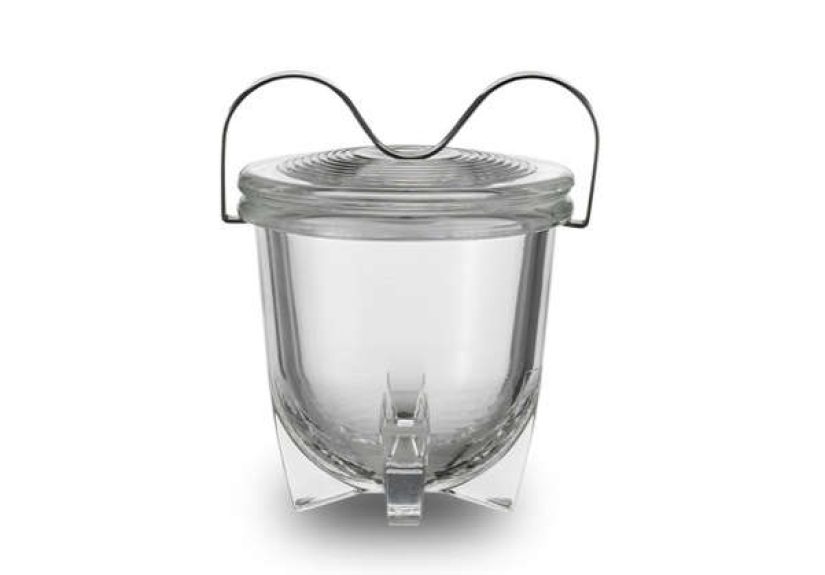
Some Wagenfeld-associated lines include small heat-resistant glass pieceslike egg coddlersthat make you wonder why we ever stopped cooking
in objects that look this clean. These are the pieces that pop up on sale because they’re niche enough to be overlooked, but charming enough
to become favorites once you actually use them.
Practical uses go beyond eggs: individual custards, small baked desserts, savory bites, or even elegant condiment service.
Just remember: not all glass is equal. If you’re buying vintage, verify heat tolerance before using it in hot water baths or ovens.
Reissued heat-resistant pieces are usually intended for that kind of usevintage pieces may have lived a long life already and deserve some caution.
Vintage vs. reissued: what “on sale” actually means in Bauhaus glassware
In the Bauhaus world, “on sale” can mean very different things:
sometimes it’s a modern reissue discounted by a retailer; sometimes it’s vintage pieces priced to move because the seller doesn’t know what they are;
and sometimes it’s an auction estimate that looks friendly until the bidding turns competitive.
How to tell what you’re looking at
- Reissues: often marketed as “Bauhaus classics” or “design icons,” usually consistent in clarity and finish, and more likely to be sold in complete sets.
- Vintage originals: may show slight variation in glass tone, minor wear, older marks, and sometimes a bit of “factory reality” (tiny bubbles, tool traces, or production quirks).
- Reproductions: can range from respectful homages to random “Bauhaus-ish” glass that borrowed the silhouette and forgot the precision.
None of this is meant to scare you offjust to help you buy with eyes open. If your goal is daily use, a reissued piece on discount is often the
sweet spot: the design language you want, with the durability you need. If your goal is collecting, vintage condition and provenance matter more,
and “on sale” might be less about discounts and more about finding a fair price.
Shopping smart: how to score Bauhaus glassware without buyer’s remorse
1) Check the details that affect usability
The most common heartbreak: buying a beautiful vintage teapot and realizing the infuser is missing, the lid is a mismatched replacement,
or the spout has a tiny chip that turns pouring into a suspense film. Read descriptions carefully. Ask for rim and base photos. Confirm measurements.
Bauhaus glassware is functionalso function should be part of the purchase decision.
2) Learn the language of condition
Words like “minor wear” can mean anything from “gentle use” to “this survived three roommates and a questionable dishwasher.”
Look for clear notes about chips, cracks, cloudiness, and scratching. Heat-resistant glass can get hazy over time, especially if it’s been run
through harsh cycles or cleaned with abrasive powders.
3) Factor in shipping like an adult (even if you feel 12 inside)
Glass and shipping are not natural friends. If a seller doesn’t describe packing methods, assume you’ll be paying for the privilege of stress.
The best listings mention double boxing, strong padding, and separation of parts. Auctions can be wonderful, but shipping costs can sneak up
especially for lots with trays, stacks, or multiple pieces.
4) Be honest about why you’re buying
If you want a showpiece, chase the most sculptural, iconic forms. If you want daily use, prioritize durability and replaceability.
If you want to build a set slowly, start with cups/saucers or storage pieces and let the teapot come later.
(This advice also applies to houseplants, but that’s a different article.)
How to style Bauhaus glassware so it doesn’t feel “cold”
Minimalist glass can look clinical if you place it in a sea of stainless steel and harsh lighting. The trick is contrast.
Bauhaus glassware shines when paired with warmer textures and a little intentional imperfection.
Easy styling combinations
- Glass + matte ceramic: the softness of stoneware makes clear glass feel inviting.
- Glass + linen: a wrinkled linen napkin next to a precise glass cup is a surprisingly great friendship.
- Glass + wood: cutting boards, trays, and warm-toned tables keep the vibe human.
- Glass + one bold color: Bauhaus loved color theoryuse a single strong accent (like cobalt, red, or mustard) to make the transparency pop.
And don’t be afraid to actually use the pieces. Bauhaus design was built for living. If your glassware never leaves the cabinet, it’s not being
honoredit’s being grounded.
Care and keeping: make your design classics last
Whether you’re buying vintage or reissued, a few habits will keep your glassware clear, strong, and less likely to meet its nemesis:
the “oops” moment.
- Avoid thermal shock: don’t move a cold glass piece directly into very hot water (or vice versa). Let it acclimate.
- Go gentle on cleaners: skip abrasive powders and rough scrubbers that can cloud or scratch surfaces.
- Mind the stacking: if stacking cups or containers, add soft separators if the fit feels tight.
- Dishwasher judgment call: reissued heat-resistant glass is often dishwasher-safe, but vintage pieces may do better with handwashing to preserve clarity.
The goal is simple: keep the glass looking like what it ishonest, precise, and beautifully uncomplicated.
Experience Notes: what it feels like to find Bauhaus glassware on sale (and why it’s addictive)
If you’ve never hunted for Bauhaus glassware, here’s the emotional timeline you can expectserved, naturally, in a clean and functional vessel.
Consider this the extra of real-world “experience” people tend to have when they fall down the Wagenfeld-shaped rabbit hole.
The first thrill: “Wait… that’s the real one?”
The magic of spotting Bauhaus glassware in the wild is that it often doesn’t look expensive at first glance. It looks simple.
That simplicity is the trapin a good way. You click a listing thinking it’s just a glass teapot, and suddenly you’re zooming into photos
like a detective in a design-themed crime drama, whispering: “Is that the right lid? Is that the right curve? Is that… a matching tray?”
The second thrill: learning to see tiny differences
After a few searches, you start noticing things. You recognize the calm geometry. You learn which pieces have the crispest proportions.
You realize some sets look “close” but not quite rightlike a cover band that nailed the outfit but forgot the melody.
This is where buyers develop the most useful skill: not just shopping for a vibe, but shopping for precision.
The moment of truth: deciding between vintage romance and reissue reliability
Vintage has a glowsometimes literally, because older glass can have subtle tonal variation. Reissues have confidence: consistent clarity,
predictable durability, and fewer missing parts. Many people end up doing a mix: reissued teapot for everyday brewing, vintage cups as “special”
pieces, and Kubus-style containers as the practical backbone. It’s less about purity and more about building a collection that fits real life.
Bauhaus would approve of that, because it’s deeply functional.
The practical joy: using it changes how your kitchen feels
Here’s the part that surprises first-time buyers: once you start using Bauhaus glassware, it subtly reorganizes your habits.
You brew tea more intentionally because you can see the color deepen. You serve more neatly because the tray makes it effortless.
You store leftovers in a container that stacks cleanly, so your fridge stops looking like it was packed during a mild earthquake.
It’s not that the objects “fix” your life. They just remove frictionone clear, well-designed piece at a time.
The collector’s spiral (gentle warning, said with love)
One discounted cup becomes two. Two becomes a set. A set becomes “I’m just looking for the matching saucers.”
Matching saucers become “I should probably get the sugar bowl so everything feels complete.”
And then, suddenly, you’re the kind of person who says, out loud, “I’m holding out for a better lid condition.”
Congratulations. You are now a design person. There is no cure, only excellent table settings.
The best part? Even if you stop at one piece, you still get what Bauhaus promised: an object that makes daily living smoother,
clearer, and a little more beautifulwithout needing decoration to prove it.
Final sip
“On sale” is the perfect entry point for Bauhaus glassware because it aligns with the original mission: great design should be part of everyday life,
not reserved for collectors with gloves and spotlights. Whether you land a reissued teapot at a discount or assemble a vintage set piece by piece,
Wagenfeld-style glassware delivers the rare combo of history, usefulness, and quiet style. It’s modernism you can actually live withpreferably
while drinking something good.