Table of Contents >> Show >> Hide
- How Psoriatic Arthritis Changes the Game for Your Feet
- Key Orthopedic Principles for Shoes With Psoriatic Arthritis
- Matching Shoes to Common Psoriatic Arthritis Foot Issues
- Smart Shopping Strategy (Online & In-Store)
- When to Call in the Pros
- Real-World Experiences: What Actually Helps in Daily Life
- 1. Rotating Pairs Is a Game Changer
- 2. “Cute but Cruel” Is Almost Never Worth It
- 3. Sizing Up (Intelligently) Helps
- 4. Insoles Turn “Meh” Shoes Into Workhorses
- 5. Easy On/Off Matters More Than You Think
- 6. Listen to the First 10 Minutes
- 7. Your Best Shoe May Be a Running Shoe (Even If You Don’t Run)
- Conclusion
If you live with psoriatic arthritis (PsA), you already know your feet didn’t sign up for this plot twist. One day it’s a normal walk to the mailbox; the next, your toes are sausages, your heels feel like they’ve been personally offended, and that one stylish pair of shoes is now the enemy.
The good news: the right shoes can make a real, evidence-backed difference for joint protection, pain relief, balance, and fatigue. This guide blends orthopedic principles, rheumatology insights, and real-world hacks to help you choose footwear that supports psoriatic arthritis instead of provoking it.
Note: This article is based on guidance from U.S. rheumatology, orthopedic, and podiatry experts and is for education, not a replacement for your medical team.
How Psoriatic Arthritis Changes the Game for Your Feet
1. It’s Not “Just” Joint Pain
Psoriatic arthritis can affect multiple structures in the foot: small joints in the toes, midfoot, ankles, and the spots where tendons and ligaments attach to bone (entheses). Common trouble zones include the Achilles tendon, plantar fascia, and joints at the ball of the foot. These areas become inflamed, stiff, and sore, especially with impact and poor support.
2. Dactylitis, Swelling, and Shape-Shifting Toes
Sausage toes (dactylitis) and chronic swelling change foot volume and shape. A shoe that fit perfectly last year may now crush your toes, rub on inflamed joints, or press on nails affected by psoriasis. That means fit is not a one-time decision; it’s an active variable.
3. Enthesitis & Plantar Pain
Enthesitis inflammation where soft tissue anchors into bone is especially common in PsA. When this hits your heel or plantar fascia, every step in a hard, unsupportive shoe becomes a mini protest. Good shock absorption and heel support aren’t “nice-to-haves”; they’re survival gear.
4. Skin & Nail Changes
Psoriasis plaques, cracked heels, fragile or thickened nails, and sensitive skin make friction, seams, and rigid materials a bigger deal. Footwear has to respect your skin barrier, not sandblast it.
Key Orthopedic Principles for Shoes With Psoriatic Arthritis
1. Fit: Wide, Deep, and Honest
- Roomy toe box: Look for shoes labeled wide or extra-wide, or visibly boxy at the front. Your toes should lie flat without stacking, curling, or imprinting on the upper.
- Depth matters: Deep toe boxes prevent rubbing over swollen joints, dorsal spurs, or lifted nails.
- Thumb-width rule: When standing, you want about a thumb’s width between your longest toe and the end of the shoe.
- Expect asymmetry: If one foot is more affected, fit to the larger foot and adjust the other with insoles or lacing.
2. Cushioning & Shock Absorption
PsA-affected joints and entheses hate impact. Choose shoes with:
- Responsive midsoles (EVA, specialty foams) that compress without feeling mushy.
- Cushioned heel and forefoot to reduce stress on heels, metatarsals, and inflamed joints.
- “Minimalist” styles are usually not your friend unless cleared by your clinician.
3. Stability: Control Without Clamping
Inflamed joints and ligament laxity can throw off alignment. Look for:
- Firm heel counter: Squeeze the back of the shoe it should be structured, not floppy.
- Supportive midfoot: You shouldn’t be able to wring the shoe like a towel. Gentle bend at the ball of the foot only.
- Stable base: Slightly wider sole helps balance and reduces fatigue.
4. Rocker-Bottom & Gait-Assisting Designs
Rocker soles and “meta-rocker” designs can reduce motion and pressure through painful toe joints and forefoot by rolling you forward with less joint bending. Many orthopedic and high-cushion walking/running shoes use this concept they can be especially helpful if your big toe or forefoot is inflamed.
5. Soft, Seam-Smart Materials
- Choose uppers made of soft mesh, knit, or padded leather that adapt to swelling.
- Avoid thick internal seams over toes, nail edges, or common plaque areas.
- Look for padded tongues and collars to limit rubbing at the ankle and instep.
6. Adjustability Is Non-Negotiable
Swelling fluctuates. Your shoes should keep up.
- Laces, straps, or BOA-style dials allow micro-adjustments during the day.
- Slip-ons are fine only if they’re structured, supportive, and not squeezing across joints.
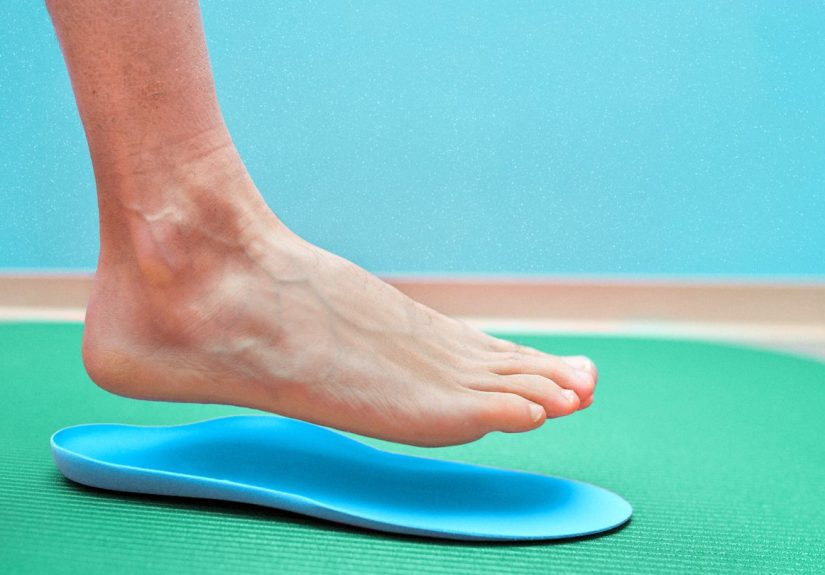
7. Orthotics & Insoles: Build Your Base
Many people with PsA benefit from:
- Custom orthotics from a podiatrist or orthotist for arch support, off-loading hotspots, and aligning ankles and knees.
- Over-the-counter insoles with real structure (not just a soft foam pad) to improve support if customs aren’t accessible yet.
Always bring your orthotics when trying on shoes if they don’t fit together, it’s not the right shoe.
Matching Shoes to Common Psoriatic Arthritis Foot Issues
1. Swollen Toes & Dactylitis
- Go for extra-wide, deep toe boxes.
- Avoid pointy, tapered, or shallow styles including many dress shoes and fashion sneakers.
- Consider open-toe or peep-front designs on low-activity days if skin allows and you still have good support underfoot.
2. Heel Pain, Plantar Fasciitis & Enthesitis
- Solid heel counter + cushioned heel to reduce strain.
- Good arch support to decrease stress at tendon/ligament insertions.
- A mild to moderate rocker sole can reduce heel strike force and forefoot push-off stress.
3. Midfoot Collapse & Ankle Instability
- Choose motion-control or stability shoes with firm midfoot support.
- A slightly higher collar or supportive walking/hiking shoe can help if your ankle feels wobbly.
- Avoid ultra-flexible soles that fold in half.
4. Nail Changes & Sensitive Skin
- Prioritize seamless or soft-lined toe boxes.
- Leave generous space above and in front of nails to avoid repeated trauma.
- Moisturize plaques and cracked skin (as advised by your dermatologist) before sliding into shoes.
Smart Shopping Strategy (Online & In-Store)
1. Timing & Testing
- Try on shoes at the end of the day when feet are naturally more swollen it’s your “worst case” fit.
- Wear the socks you actually use (or compression socks if you use them).
- Walk on hard surfaces for several minutes to test pressure points, not just two steps on carpet.
2. Quick Orthopedic “At-Home” Tests
- Bend test: Shoe should flex at the ball, not in the middle.
- Twist test: Gentle resistance is good; “dishrag twist” is bad.
- Heel test: Press the back it should be structured.
3. Look for Medical-Grade Signals (Without Getting Sold To)
- Shoes recognized by podiatry or orthopedic associations (such as those earning seals of acceptance for foot health) can be a helpful filter.
- But branding alone isn’t enough always confirm: wide toe box, cushioning, stability, adjustability, and compatibility with your orthotics.
4. Red Flags
- High heels or steep wedges that throw weight onto the forefoot.
- Very flat, unsupportive styles (thin flip-flops, ultra-flat fashion sneakers).
- Toe boxes your toes have to negotiate to enter.
- “Break-in required” your joints don’t need hazing.
When to Call in the Pros
If any of these show up, tag in your care team:
- Persistent foot pain despite supportive shoes.
- New deformities (claw toes, drifting toes, collapsed arch).
- Open cracks, ulcers, or infected skin around plaques or nails.
- Repeated tripping, balance issues, or feeling unstable when walking.
A podiatrist, orthopedic foot and ankle specialist, or rheumatologist can recommend custom orthotics, medical-grade footwear, or further imaging and treatment to prevent long-term damage.
Real-World Experiences: What Actually Helps in Daily Life
Technical checklists are great, but psoriatic arthritis lives in the real world in Target aisles, airport terminals, office hallways, playgrounds, and kitchen tiles. Here are experience-based insights inspired by people who’ve spent serious time negotiating with their joints.
1. Rotating Pairs Is a Game Changer
Many people with PsA find that having two or three reliable pairs in rotation reduces pain. One pair with a rocker sole for long walks, one ultra-cushioned sneaker for flare days, and one supportive slip-on for quick errands. Rotating lets midsoles rebound and gives your feet slightly different pressure patterns, which can calm cranky entheses.
2. “Cute but Cruel” Is Almost Never Worth It
A recurring theme: the expensive, beautiful shoes that seemed “fine for just one event” often led to three days of limping and an ice pack romance. Over time, most people learn a simple rule: if a shoe only looks good when your feet are not swollen, it’s probably not safe for a disease that loves surprise swelling.
3. Sizing Up (Intelligently) Helps
Going up half a size or choosing a wide width can create enough space to protect joints and nails. The key is pairing that extra length/width with good lockdown at the midfoot through laces or straps so your foot doesn’t slide and create new friction points. A lot of long-term PsA veterans describe this as the moment shopping got easier: “I stopped trying to squeeze into my old size and started fitting the feet I have now.”
4. Insoles Turn “Meh” Shoes Into Workhorses
Many share that neutral, well-built sneakers plus a quality supportive insole beat trendier, pricier shoes marketed as “arthritis-friendly” but lacking structure. An insole that supports the arch, cups the heel, and redistributes pressure under the forefoot can noticeably reduce evening pain. The best experiences often come when insoles are fitted or at least recommended by a clinician who understands PsA mechanics.
5. Easy On/Off Matters More Than You Think
Flare days make bending, tying, and wrestling shoes a full workout. Hands-free or minimal-bend designs structured slip-ons, rear-entry shoes, or laced shoes left partially adjusted with a strong heel tab reduce joint strain in both feet and hands. People often underestimate how much energy and pain they spend just getting shoes on; smart entry systems quietly give that energy back.
6. Listen to the First 10 Minutes
A practical “lived” rule: if a shoe creates hot spots, pressure, or weird joint sensations in the first 10–15 minutes of real walking, it usually won’t “break in” into something kind. Psoriatic joints tend to amplify small design flaws. Successful wearers return or swap quickly instead of hoping their body will adapt to bad biomechanics.
7. Your Best Shoe May Be a Running Shoe (Even If You Don’t Run)
High-quality running and walking shoes are engineered for shock absorption, stability, and efficient gait exactly what painful joints crave. Many people with PsA end up living in these for daily life, pairing them with more polished outfits up top. Comfort plus joint protection becomes non-negotiable; style gets redefined around what lets you move freely.
Bottom line from real-world experience: the “right” orthopedic shoe for psoriatic arthritis is the one that respects your anatomy, your disease activity, and your lifestyle and lets you forget about your feet for long stretches of the day. That’s the real luxury.
Conclusion
When you have psoriatic arthritis, every step is data. The right shoes use that data in your favor aligning joints, cushioning impact, protecting sensitive skin and nails, and supporting you through unpredictable flares. Focus on orthopedic fundamentals: wide and deep toe boxes, strong heel counters, structured yet cushioned soles, rocker designs when needed, and compatibility with orthotics. Combine that with a zero-guilt approach to comfort, and you turn footwear from a trigger into a treatment ally.
Before you hit “add to cart,” ask one last question: “Will my future self thank me for walking a mile in these?” If the answer isn’t a clear yes, keep scrolling.
Required SEO Fields