Table of Contents >> Show >> Hide
- Why This Conversation Keeps Going Viral
- What “Unedited” Really Means (and What It Doesn’t)
- How Photos Get “Instagram-Ready”
- What People Are Actually Reacting To
- The Bigger Issue: Beauty Standards, Mental Health, and Teens
- Media-Literacy Toolkit: How to Watch the Internet Without It Watching Your Self-Esteem
- How Brands and Influencers Fit In
- Conclusion: Better Questions Than “Is This Real?”
- Experiences People Share After Seeing Instagram vs. Reality (And Why It Sticks)
- SEO Tags
Instagram is where lighting is always golden hour, every angle is “my good side,” and your phone politely pretends it has never heard of pores.
Real life, meanwhile, is out here like: “Hi, I brought overhead fluorescents and a camera flash that feels personally disrespectful.”
That mismatch is exactly why “Instagram vs. reality” comparisons keep going viralespecially when they involve a celebrity who is photographed constantly,
posts polished content daily, and lives at the intersection of beauty, branding, and the internet’s favorite pastime: side-by-side screenshots.
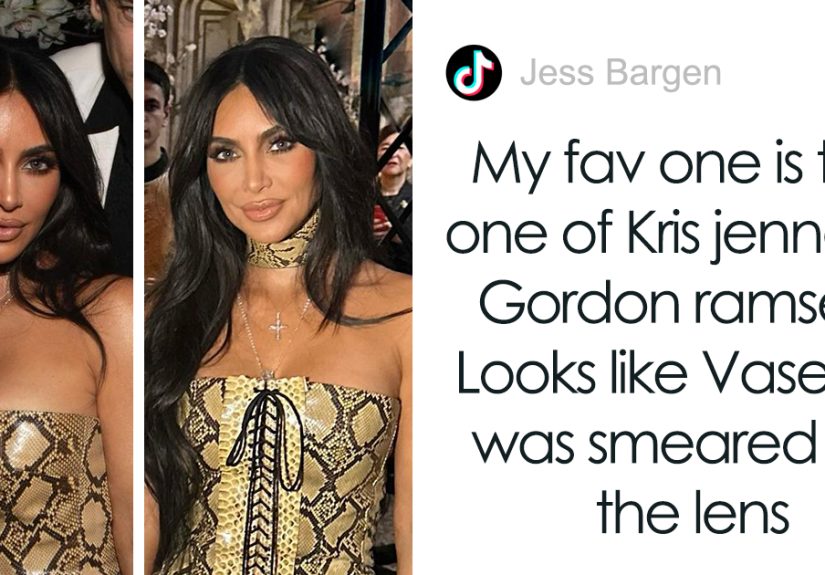
Kim Kardashian has become one of the most common “case studies” in this format, with people comparing her curated posts to candid event photos and calling it
“proof” that Instagram isn’t real.
But the real story is bigger (and way more useful) than dunking on any one person. This trend is about how modern images are made, how fast they spread,
and what happens to our brains when we treat a highlight reel like it’s a mirror.
Why This Conversation Keeps Going Viral
The “Instagram vs. reality” format is built for sharing
The format is simple: one image that looks “perfect,” another that looks “normal,” and a caption that implies the first one was a lie.
It’s easy to understand in half a second, which is basically the internet’s attention budget. Add a famous face, and you get a post that travels
across platforms faster than a meme about your Wi-Fi dying during an online exam.
Kim Kardashian is a high-profile targetbecause she’s high-profile
Kim Kardashian isn’t just famous; she’s photographed in wildly different conditions: red carpets, reality TV, paparazzi shots, professional campaigns,
selfies, and “caught in the background of someone else’s TikTok” moments. When someone has that many images floating around, the odds of mismatched lighting,
angles, and editing styles go way up. That’s not a moral failureit’s math.
One reason this topic resurfaces is that candid photos of celebrities can spark a wave of relief online. People see a close-up that shows normal skin texture
and think, “Oh… so I’m not broken. I’m just not photographed like a perfume ad.” That’s a healthier takeaway than “gotcha.”
What “Unedited” Really Means (and What It Doesn’t)
Candid doesn’t always mean “raw”
When people say “unedited,” they usually mean “not retouched to Instagram standards.” But many photosespecially from eventsstill go through processing:
sharpening, noise reduction, color correction, and compression. Even your phone’s camera app quietly tweaks contrast and smooths shadows before you ever hit “post.”
So if you’re imagining one image as “the fake one” and the other as “the absolute truth,” it helps to slow down. Both images are interpretations.
The better question is: what choices shaped each version?
Different cameras create different faces
Cameras don’t capture reality the way our eyes do. Lens choice alone can change how a face looks. A wide-angle selfie lens can exaggerate whatever is closest to it
(often the center of the face), while a longer lens (like the kind used by many photographers) tends to “flatten” perspective.
Translation: the same person can look noticeably different depending on distance, lens, and lightingbefore any editing happens. Add makeup, hair styling,
and facial expression (a totally underrated variable), and your side-by-side comparison becomes less of a courtroom exhibit and more of a physics demo.
How Photos Get “Instagram-Ready”
Filters, beauty modes, and “helpful” defaults
Filters are the obvious culprit, but the sneaky part is how many devices now apply “beauty mode” by default. Some front-facing cameras soften skin automatically.
Some apps subtly brighten under-eyes, even out tone, and reduce texture. It’s not always a big, dramatic transformationsometimes it’s death by a thousand tiny smoothings.
And because those changes are incremental, they can feel “normal.” That’s how the bar quietly rises: yesterday’s edited look becomes today’s expectation,
and tomorrow’s insecurity.
Professional retouching and selective posting
Celebrities and major influencers often have teams: photographers, stylists, glam squads, and editors. Even if a celebrity personally prefers a natural look,
brand partnerships and campaigns frequently involve retouching as part of the job. “Clean up the flyaway hair” becomes “smooth the skin” becomes “reshape the silhouette”
in the hands of someone whose paycheck depends on selling an idea.
Then there’s the simplest tool of all: selection. If you take 30 photos and post the best one, the internet sees “your face” as “your best angle under your best light.”
That’s not cheating; it’s curation. But when we forget it’s curation, we start comparing our ordinary Tuesday to someone else’s greatest-hits album cover.
Angles, lighting, and the ring-light economy
Lighting is basically makeup you don’t have to wash off. Soft, front-facing light can reduce shadows and make features look smoother. Harsh overhead lighting can
emphasize texture and cast shadows that change the look of the entire face. If you’ve ever seen yourself in a dressing-room mirror and thought,
“Who approved this lighting? I would like to speak to management,” you already understand the phenomenon.
Celebrities like Kim Kardashian often post images taken in controlled conditions. “Reality” shots are often taken in uncontrolled conditions.
That difference alone can explain a lotwithout turning the conversation into a body critique.
What People Are Actually Reacting To
Expectation mismatch, not “truth vs. lies”
Most reactions aren’t really about one celebrity’s face. They’re about the whiplash of seeing two versions of the same person and realizing how much our brains
treat photos as evidence. When one version is polished and the other is candid, people feel trickedeven if no one promised them documentary footage.
That’s why the smartest conversations that come out of these moments focus on media literacy: learning how images are made, and learning not to use them
as a measuring stick for your worth.
The “perfect skin” myth and why texture is normal
A recurring theme in viral “unedited” celebrity photos is that people act surprised by normal skin texture.
But texture is not a scandal; it’s skin doing its job. When social media trains us to expect airbrushed smoothness, normal human features start to look “wrong.”
That’s backwards.
Many commenters who see candid celebrity photos describe feeling relief rather than judgmentbecause it resets the baseline.
If someone with access to top-tier skincare, lighting, and professionals still looks human in a candid close-up, then the problem isn’t your face.
The problem is the fantasy standard.
Why this hits harder with celebrities who are also brands
With celebrities whose businesses are tied to beauty, fashion, and lifestyle, the image isn’t just personalit’s commercial.
When someone’s look is part of what they sell, the internet becomes extra sensitive to “authenticity.” People want to know whether they’re buying a product,
a vibe, or a digitally polished version of reality.
The Bigger Issue: Beauty Standards, Mental Health, and Teens
What research suggests about edited images and comparison
A growing body of research links appearance-based social media experiencesespecially editing behavior and appearance comparisonsto worse body image outcomes for some people.
This doesn’t mean every filter harms everyone. It means that when scrolling becomes constant and comparison becomes automatic, the risk goes up.
There’s also evidence that reducing social media time can improve how teens and young adults feel about their appearance in a relatively short period.
In other words: your brain can recover faster than the internet wants you to believe.
Platform changes show “filter fatigue” is real
Platforms have started acknowledging the issue in policy and product decisions. Social apps have experimented with limiting certain appearance-altering effects,
increasing transparency, and strengthening teen protections. Even when changes are driven by public pressure or regulation, they reflect a growing recognition:
people are tired of pretending digital perfection is normal.
That matters because teens and young adults live in a world where photos are social currency. If the currency is always “edited,” then “unedited” starts to feel like
showing up to a party in pajamas. The goal should be to make “normal” feel normal again.
Media-Literacy Toolkit: How to Watch the Internet Without It Watching Your Self-Esteem
Quick ways to spot heavy edits (without becoming a detective 24/7)
- Look at backgrounds: Warped doorframes, wavy tiles, and curved railings can signal reshaping tools.
- Check repeating textures: Skin that looks uniformly blurred (like a photo got ironed) may be smoothed.
- Notice edges: Hairlines, jawlines, and shoulders sometimes look oddly crisp or oddly fuzzy after edits.
- Remember compression: A low-quality repost can blur details and make everything look “airbrushed” even if it wasn’t.
The point isn’t to “catch” people. It’s to protect your perception. Once you see how often images are manipulated, you’re less likely to treat them as a standard.
Curate your feed like it’s your living room
If your living room had a speaker constantly yelling, “You should look different,” you’d kick it out. Your feed deserves the same energy.
Follow creators who show variety: different lighting, different angles, different moods. Seek content that makes you feel capable and curiousnot constantly evaluated.
And yes, sometimes that means taking breaks. Not as punishment. As maintenance. Like charging your phoneexcept the battery is your confidence.
Talk about it without turning it into a roast
“Instagram vs. reality” posts often drift into mean commentary. That’s where the conversation stops being media literacy and starts being body shaming.
A healthier version sounds like: “It’s wild how lighting and editing change photos. This is why we shouldn’t compare ourselves to posts.”
Same lesson. Less collateral damage.
How Brands and Influencers Fit In
Ads, sponsorships, and transparency
When a post is also an adskincare, makeup, shapewear, supplements, you name ittransparency matters. U.S. advertising guidance emphasizes clear disclosure of brand
relationships, so audiences understand when content is promotional.
While disclosure doesn’t solve editing, it helps audiences interpret what they’re seeing. If a “miracle” product is shown under perfect lighting with retouching,
that context is part of the truth. The more consumers understand the system, the less power the system has to mess with their self-image.
Authenticity sells (and sometimes that’s a good thing)
Interestingly, the market is shifting. Many audiences now reward creators for showing behind-the-scenes reality: unfiltered clips, makeup-free days,
“here’s what this looks like in harsh bathroom lighting” reviews. That trend doesn’t mean perfection disappearsbut it creates more room for honesty.
Conclusion: Better Questions Than “Is This Real?”
When people compare Kim Kardashian’s Instagram posts to candid photos, it can feel like a dramatic “exposed” moment. But the best takeaway isn’t,
“Celebrities look different in unedited pictures.” The best takeaway is: pictures look different under different conditionsand social media encourages
the most flattering version to rise to the top.
So the next time a side-by-side goes viral, try swapping the gotcha question (“Which one is real?”) for a smarter one:
“What choices made this image look the way it doesand how do I stop using it as a measuring stick?”
That’s not just kinder. It’s more accurate.
Experiences People Share After Seeing Instagram vs. Reality (And Why It Sticks)
If you’ve ever felt your stomach drop after scrollinglike your brain quietly filed you under “not enough”you’re not alone. A common experience people describe
after seeing “Instagram vs. reality” comparisons is a weird mix of shock and relief. Shock because the polished version can feel like the “official” one,
and relief because the candid version reminds you that humans still look human, even when they’re famous.
One of the most relatable moments happens in group chats: someone drops a side-by-side screenshot with a caption like, “Okay but HOW?”
The conversation usually starts as gossip and ends as therapy-lite. People trade stories about the time they opened their front camera by accident
(a modern jump scare), or when a friend tagged them in a photo and they thought, “Is that… me?” Then someone says the quiet part out loud:
“I compare myself to what I see online all the time.” Suddenly the topic isn’t Kim Kardashianit’s the pressure everyone feels.
Another common experience is realizing how much “invisible editing” is baked into everyday life. People talk about discovering that their phone’s selfie camera
was smoothing skin automatically, or that a social app was applying a subtle beauty filter by default. It’s not always a dramatic transformation,
but it’s enough to shift expectations. After that discovery, some people report doing a small experiment: turning off beauty settings,
using natural light, or posting a photo without editing. The first time can feel oddly vulnerablenot because the photo is “bad,” but because the internet has taught
us to treat normal as risky.
Creators share their own version of this learning curve. Many describe starting with innocent tweaksbrighten the photo, fix the colorthen noticing
how engagement spikes on posts where they look most “perfect.” That feedback loop can be powerful: the algorithm rewards polish, and the creator feels pressure to
keep polishing. Some creators say “Instagram vs. reality” posts changed how they think about their audience, because they realized followers weren’t just admiring
the aestheticthey were sometimes measuring themselves against it.
Parents and older siblings often describe a different experience: watching younger family members absorb unrealistic standards without realizing it.
They’ll mention overhearing a teen say something like, “My skin should look smoother,” or “My face looks weird today,” after a long scroll session.
Those moments can be alarming, but they also open doors for healthier conversationslike explaining lighting, filters, and why social media is designed to show
the “best version” of everything. In many families, the most helpful shift is moving from “Don’t care what people think” (easy to say, hard to feel)
to “Let’s understand what you’re looking at” (practical and empowering).
And then there’s the most underrated experience of all: the reset. People describe unfollowing accounts that make them spiral, muting topics that trigger comparison,
and intentionally following creators who show real-life varietydifferent angles, different lighting, different bodies, different moods. It’s not about forcing
yourself to love every photo of yourself. It’s about lowering the volume on a system that profits when you feel slightly dissatisfied.
Over time, many people say the “Instagram vs. reality” shock fades, because they stop expecting the internet to look like real life in the first place.
If there’s a silver lining to the Kim Kardashian side-by-side trend, it’s this: it reminds people that images are produced, not discovered.
When you truly absorb that, comparisons lose some of their power. And that’s the kind of “reality check” worth keeping.