Table of Contents >> Show >> Hide
- This Story Is Bigger Than One Woman
- What Birthmarks Actually Are, Minus the Drama
- When Treatment Is Medical, and When the Choice Is Personal
- Why People Rush To Say “You Should Remove It”
- What Embracing a Birthmark Can Change
- The Best Response Is Not Always “Be Brave”
- How Families, Schools, and Media Can Help
- Conclusion
- Experiences Related to Embracing a Birthmark
- SEO Tags
Generated with GPT-5.4 Thinking
There are few social hobbies more persistent than giving women unsolicited advice about their faces. Make your hair longer. Wear less makeup. Wear more makeup. Smile. Don’t smile like that. And if a woman has a visible birthmark? Suddenly the peanut gallery turns into a board-certified panel of people who definitely did not go to medical school but still feel wildly qualified to suggest lasers, concealer, surgery, or a quick little “fix.”
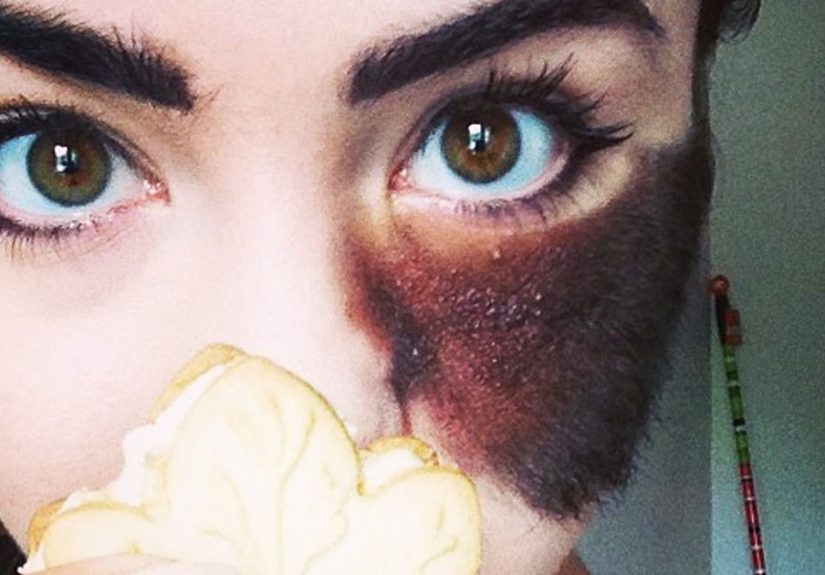
That is what makes stories about birthmark self-acceptance so powerful. They are not just about appearance. They are about identity, pressure, visibility, and the radical act of deciding that your face or body does not need to audition for public approval. In story after story, women with facial birthmarks, port-wine stains, congenital nevi, and other visible marks describe a familiar pattern: people stare, ask invasive questions, offer solutions nobody requested, and treat difference like a problem to be solved. Then, at some point, many of these women make a decision that changes everything. They stop asking, “How do I make this disappear?” and start asking, “Why should I?”
This is the deeper meaning behind the headline People Told Her To Remove Her Birthmark, But She Chose To Embrace It Instead. It is not only one woman’s story. It is a larger cultural story about birthmark acceptance, body positivity, self-image, and what happens when a person refuses to let other people define beauty for her.
This Story Is Bigger Than One Woman
The phrase “remove her birthmark” sounds simple, but the emotion behind it is anything but. For some people, that pressure starts in childhood. Classmates tease. Adults think they are being helpful. Strangers ask, “What happened?” as if a visible mark must be the result of injury, illness, or some cosmic clerical error. For girls especially, the message often arrives early and loudly: if something about your appearance stands out, you are expected to manage other people’s discomfort.
That expectation shows up again and again in real-life accounts from women with visible birthmarks. Some remember bullying at school. Some describe years of staring and comments from strangers. Others say the pressure was quieter but just as heavy: a lingering sense that makeup should cover it, styling should hide it, and beauty should mean blending in.
But the women who have spoken openly about embracing a birthmark often tell a different ending. Instead of treating the mark as an error, they eventually choose to see it as part of their story. That shift does not happen overnight, and it is usually not a cute little montage with uplifting music and perfect lighting. It is slower than that. It is a process of unlearning shame.
What Birthmarks Actually Are, Minus the Drama
Before anyone starts handing out advice about birthmark removal, it helps to understand what a birthmark actually is. Birthmarks are common. Broadly speaking, they fall into two major categories: vascular birthmarks and pigmented birthmarks. Vascular birthmarks involve blood vessels, while pigmented birthmarks involve clusters of pigment-producing cells.
Port-wine stains are one of the most recognized visible birthmarks. They are usually flat pink, red, or purple patches that are present at birth and often appear on the face, though they can show up elsewhere too. Unlike some other birthmarks, port-wine stains generally do not fade on their own. Over time, they can darken, thicken, or become more textured.
Then there are congenital nevi, which are moles present at birth. Some are small and unremarkable; others are large or even giant. Hemangiomas, another common type, are vascular marks that often appear shortly after birth and may grow for a period before shrinking over time. In other words, “birthmark” is not one thing. It is a category, not a diagnosis.
Most birthmarks are harmless. Some need monitoring, and some may need treatment depending on size, location, symptoms, or associated medical concerns. A facial port-wine stain near the eye, for example, may need evaluation because certain locations can be associated with eye complications or specific syndromes. Large congenital nevi may require dermatologic follow-up because of their elevated skin cancer risk. That is why medical advice matters more than random opinions from people who think every problem can be solved with a ring light and a skincare routine.
When Treatment Is Medical, and When the Choice Is Personal
Here is the part that gets lost in shallow conversations about visible differences: choosing not to remove a birthmark is not the same as rejecting medicine. Treatment can be absolutely appropriate in some situations. Lasers may help fade port-wine stains. Some hemangiomas need medicine or procedures if they interfere with vision, breathing, or other functions. Large congenital nevi may need careful surveillance. Real medicine has a place here.
But there is a huge difference between treatment for health and treatment for social comfort. A woman may decide to pursue laser therapy because she wants to. Another may decide to use concealer for a formal event. Another may skip both and walk into the room exactly as she is. None of those choices is morally superior by default. The issue is agency.
What becomes harmful is the assumption that visible skin difference should automatically be erased. That mindset turns a person’s body into a public renovation project. It treats “different” as a defect and confuses conformity with wellness. A birthmark does not automatically need to be fixed simply because it can be seen.
Why People Rush To Say “You Should Remove It”
Because visibility makes people weird
Humans are not always elegant around visible difference. Research on stigma and visible conditions has long shown that people can react to skin differences with avoidance, assumptions, and social discomfort. That does not make those reactions acceptable. It just explains why so many people respond clumsily, or cruelly, when they see something unfamiliar.
Visible birthmarks sit at the intersection of appearance and identity, which makes them especially loaded. They are often one of the first things strangers notice. In a culture obsessed with smooth, filtered, “corrected” skin, anything that resists the beauty template gets treated like a before photo waiting for an after.
Because beauty culture loves a “fix”
Modern beauty culture does not merely sell lipstick and moisturizer. It sells the fantasy that every visible trait can be improved, softened, removed, corrected, brightened, blurred, or strategically ignored. That logic is everywhere. A scar becomes something to fade. Texture becomes something to smooth. A birthmark becomes something to cover.
So when someone tells a woman to remove her birthmark, they often think they are offering a helpful solution. In reality, they are usually revealing how narrow their idea of beauty is. They are saying, sometimes without realizing it, “I am more comfortable when your face looks less like yours.”
Because people confuse concern with control
Some of the pressure comes dressed up as kindness. “I just want life to be easier for you.” “Kids can be mean.” “Wouldn’t you feel more confident without it?” Those statements may sound caring, but they often place the burden on the person with the birthmark rather than on the culture that stigmatizes visible difference in the first place.
That is backwards. The problem is not the birthmark. The problem is the reflex to treat it like a social emergency.
What Embracing a Birthmark Can Change
Real stories from women who embraced their birthmarks show that acceptance is not a fluffy slogan. It changes how people move through the world.
Some women describe a turning point where they stopped hiding and started explaining. Actress Paige Billiot, who was born with a facial port-wine birthmark, has spoken about being teased as a child and later realizing that when she openly explained her birthmark, people responded differently. Knowledge reduced ignorance. Confidence disrupted the script.
Ferrin Roy, who has a large facial birthmark, has shared that she considered removal but ultimately realized she would only be doing it to satisfy other people’s opinions. That insight is huge. It separates personal desire from social pressure. It says, “I am not making permanent decisions about my body to calm temporary discomfort in strangers.”
Sarah Taylor used social media to do something she did not have while growing up: provide representation. Her images did more than collect likes. They gave other people with facial birthmarks a way to see themselves reflected instead of erased.
Leanne Stuckey turned her own journey into children’s literature that helps kids understand and celebrate visible skin differences. That matters because self-image is often shaped long before adulthood. A child who sees difference normalized is less likely to grow up believing her reflection needs an apology.
Gloria Aste, who lives with giant congenital melanocytic nevus, has talked about showing her birthmark publicly because she grew up without seeing anyone like herself. That absence of representation is not a small thing. When no one looks like you, it becomes much easier to assume you are the exception, the anomaly, the one who must adapt. Visibility pushes back against that isolation.
Even Hailie Sahar’s decision to reveal her facial birthmark publicly speaks to something important: self-acceptance does not always mean public exposure from the beginning. Sometimes it means claiming the right to choose when and how you are seen. That is still power.
The Best Response Is Not Always “Be Brave”
We should be careful not to turn every woman with a birthmark into an inspirational mascot. She is not required to become a motivational poster with great lighting. Some days she may feel confident. Some days she may be tired of answering questions. Some days she may wear makeup because she wants to play with makeup, not because she is ashamed. Some days she may want no conversation at all.
That is why the healthiest version of birthmark acceptance is not performative courage. It is freedom. Freedom to treat the mark as ordinary. Freedom to discuss it. Freedom not to discuss it. Freedom to pursue treatment. Freedom to skip treatment. Freedom to be visible without becoming a public lesson.
In that sense, embracing a birthmark is less about making a grand statement and more about refusing a false premise. The false premise is that a visible difference automatically lowers a person’s beauty, confidence, or worth. It does not.
How Families, Schools, and Media Can Help
If we want fewer people growing up ashamed of a birthmark, we need better responses around them. Families can talk about a birthmark openly and matter-of-factly instead of treating it like a secret. Schools can shut down bullying instead of waiting for the child with the visible difference to become “resilient.” Media can stop presenting one narrow, edited face as the default version of beauty.
Representation helps because familiarity lowers fear and awkwardness. When children see birthmarks, scars, vitiligo, and other visible differences represented without pity or spectacle, those features become part of the normal human visual landscape. And that is exactly where they belong.
The goal is not to force everyone into a self-love speech. The goal is to make acceptance ordinary enough that it no longer feels revolutionary.
Conclusion
People Told Her To Remove Her Birthmark, But She Chose To Embrace It Instead works as a headline because it captures a collision between outside pressure and inner authority. On one side is a world that often confuses sameness with beauty. On the other is a woman who decides that her body does not need public approval to be complete.
That choice matters. It matters medically, because not every visible mark needs removal. It matters emotionally, because visible differences can shape self-esteem, relationships, and belonging. And it matters culturally, because every time someone chooses authenticity over camouflage, it widens the definition of what people are allowed to look like.
So no, the most powerful part of this story is not the birthmark itself. It is the refusal to see it as a flaw. That is where the real transformation happens. Not in removal. In reclaiming the right to be seen.
Experiences Related to Embracing a Birthmark
Across many real stories, the experience of living with a visible birthmark tends to follow a pattern that is painfully familiar. It often starts with awareness before the child even has language for it. A little girl notices that people look twice. Adults ask her parents questions in grocery store lines. Other children ask whether it hurts, whether it is dirt, or whether something happened to her. None of that sounds dramatic in isolation, but repeated over years, it can shape the way a person enters every room.
In school, the experience can become more direct. Some children get nicknames. Some are told they look scary, strange, or “different” in the tone that children use when they are still learning that difference is not a crime. Others are not openly bullied but are quietly singled out, which can be just as powerful. They become the one who is always asked about her face, the one who learns to anticipate questions before introductions are even finished.
Teenage years can make that harder. Adolescence is already one long performance review of your appearance, and having a visible birthmark can make it feel like the spotlight never shuts off. This is often the stage when covering up becomes emotionally loaded. Makeup may feel creative one day and compulsory the next. Some girls experiment with concealment because they want relief from comments. Others reject cover-up completely because they do not want to spend their lives negotiating with other people’s comfort. Both responses are understandable.
Adulthood does not magically erase the issue, but it can bring perspective. Many women describe a shift when they meet someone else with a visible skin difference, find a supportive community online, or simply get tired of shrinking. The mark they once saw as the first thing “wrong” with them becomes just one part of a much larger self. For some, that shift arrives through therapy. For others, through supportive parents, partners, or friends. For some, it comes through work that puts them in public view and forces a choice between hiding and owning what is already there.
One of the most meaningful shared experiences is representation. People who grew up never seeing anyone with a facial birthmark in magazines, movies, or social media often say that even one visible role model would have changed how they saw themselves. That is why public self-acceptance matters. It is not vanity. It is permission. When one woman shows her birthmark without apology, another person somewhere may stop thinking she is the only one.
And maybe that is the most honest version of embracing a birthmark: not loving every moment, not becoming fearless overnight, but slowly deciding that your reflection is not a problem to solve. It is yours. And that is enough.