Table of Contents >> Show >> Hide
- The Viral Edit That Flipped the Script
- Why Women Get “Fixed” and Men Get “Distinguished”
- What Retouching Actually Does (It’s More Than “Removing a Blemish”)
- The Science: What Heavy Editing Does to Real People
- Ageism Has a Gender Problem (And the Numbers Show It)
- When “Just a Filter” Becomes a Consumer Issue
- So… Is It Getting Better?
- How to Watch Media Without Letting It Rent Space in Your Head
- What Editors, Brands, and Creators Can Do (Without Canceling Beauty)
- Experiences: Where This Double Standard Shows Up in Real Life (About )
- Conclusion: The Point Isn’t to Mock MenIt’s to Expose the Rulebook
- SEO Tags
If you’ve ever seen a celebrity photo and thought, Wow, that person has the skin texture of a brand-new iPhone screen, you’re not imagining things. We live in a world where pores are treated like a public relations crisis and a forehead line is handled like an emergency recall.
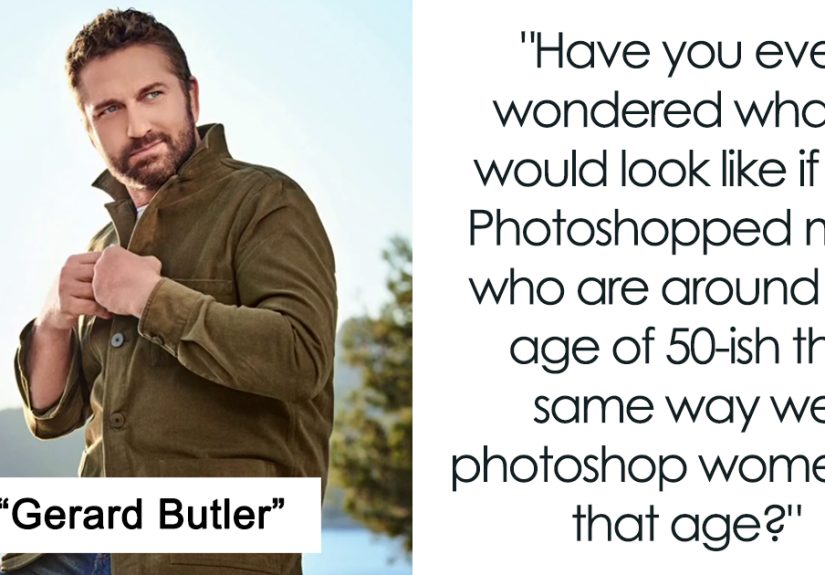
That’s why a viral Photoshop experiment hit such a nerve: a photo editor on TikTok (known as @caroline_in_thecity) took images of 50-something men and retouched them the way women are often retouchedsmoothing wrinkles, removing “imperfections,” and polishing the face into magazine-ready “perfection.” The results weren’t just funny. They were revealing. When the same beauty standards are applied to men, the whole thing suddenly looks… weird. And that “weird” is the point.
This article breaks down what that experiment shows about unfair media standards, why the double standard sticks around, how heavy retouching affects real people, and what we can dowithout throwing our phones into the ocean (tempting, though).
The Viral Edit That Flipped the Script
For decades, media editing has quietly enforced a rule: women are expected to look “effortlessly flawless,” while men are allowed to look “interestingly real.” In the viral series that inspired this headline, the creator didn’t invent a new technique. She simply applied a familiar one to an unfamiliar target: middle-aged men.
The before-and-after contrast worked like a social experiment you could scroll through in under a minute. The men’s faces became smoother, younger, and more “perfect”but also slightly uncanny, like a wax figure that started paying for premium skincare. Viewers recognized the vibe instantly because it’s the vibe women are trained to accept as normal.
It’s easy to dismiss Photoshop talk as “just internet drama,” but the reason this resonated is simple: retouching doesn’t only change pictures. It changes expectations.
Why Women Get “Fixed” and Men Get “Distinguished”
1) The beauty economy runs on dissatisfaction
A lot of media retouching isn’t about artit’s about selling. When ads and entertainment repeatedly present a narrow, edited version of beauty, it can create an “aspirational” standard that feels just out of reach. And what do people do when they feel behind? They buy solutions. That’s one reason public health experts have raised concerns about digitally manipulated advertising and its impact on body image.
2) Aging is framed as “status” for men and “problem” for women
For men, gray hair can be marketed as “salt-and-pepper leadership.” For women, gray hair can be framed as “before the makeover.” That’s not biologyit’s storytelling. The American Society on Aging has described how women face a “double bind”: they’re expected to hide signs of aging, but also to hide the work it takes to hide the signs of aging. In other words: “Look young, but don’t you dare look like you tried.”
3) The camera often treats women like decoration and men like people
Media researchers and professional organizations have long argued that objectificationfocusing on appearance over personhoodhits girls and women especially hard. When the default framing is “women are a body,” it becomes easier (and more profitable) to justify “correcting” that body in post-production.
What Retouching Actually Does (It’s More Than “Removing a Blemish”)
Let’s get specific, because “Photoshop” is an umbrella term that covers everything from basic lighting correction to turning a human being into an airbrushed concept of a human being.
Common edits in beauty-focused media
- Texture removal: smoothing pores, wrinkles, laugh lines, and under-eye creases until skin looks like it’s been laminated.
- Shape changes: slimming waistlines, tightening jawlines, lifting brows, elongating limbs, narrowing noses.
- Color “corrections” with consequences: evening skin tone, brightening eyes/teeth, and sometimes lightening skin tone to match biased beauty norms.
- “Youth cues”: reducing facial shadows, softening nasolabial folds, and erasing signs of fatigue that make a person look like they’ve lived an actual life.
Researchers note that altered images can range from subtle touch-ups (teeth whitening, wrinkle smoothing) to major body reshaping, and that exposure can shift beauty aspirations in unhealthy directions. The edits are not always obviousand that’s what makes them powerful.
The Science: What Heavy Editing Does to Real People
The uncomfortable truth: edited images don’t stay on billboards. They move into our brains. They quietly reset our “normal meter,” especially when we see them constantly and from a young age.
Body image isn’t only “a teen issue”
A lot of studies focus on adolescents (because that’s when social comparison gets extra intense), but adults aren’t immune. When the media environment is saturated with polished, unattainable beauty norms, it can affect self-perception across the lifespan. Public health researchers have linked unrealistic beauty ideals and appearance-focused culture to risks that include disordered eating and body dissatisfaction.
Photo editing behavior is associated with body concerns
Research reviews have found that more frequent photo-editing is associated with lower body image and higher body dissatisfaction in women, along with other appearance-related concerns. The issue isn’t one app or one influencerit’s repeated exposure to a standard that isn’t actually human.
“Knowing it’s edited” doesn’t fully protect you
Even when people understand images are manipulated, the visuals can still shape expectations. Warning labels and transparency measures have been studied, but the evidence is mixedsome work suggests certain labels may not help everyone and can even backfire for vulnerable viewers. That’s not an argument for secrecy; it’s a reminder that solutions have to be smarter than a tiny disclaimer no one reads.
Ageism Has a Gender Problem (And the Numbers Show It)
If you rarely see women over 50 centered in big storiesromances, adventures, leadership arcsit’s not your imagination. Multiple media watchdogs and research groups have documented how older adults are underrepresented, and how the gap widens for women as they age.
Older adults are underrepresentedespecially in prominence
One report card tracking popular films notes that people 50+ make up a large share of the U.S. population, yet appear less often in top filmsand receive even less screen time when present. The result is a quiet kind of erasure: older characters exist, but they’re less central to the story.
Women are treated as “old” earlier than men
A major study on women over 50 in entertainment highlights a persistent pattern: women are considered “old” at younger ages than their male peers. It also cites economic signals that reinforce the bias, including research suggesting women’s earnings per film rise until the mid-30s then decline, while men’s earnings peak later and stabilize. Whether you work in entertainment or just watch it, those incentives shape what ends up on screen.
Even when progress happens, older women remain the bottleneck
USC’s Inclusion Initiative has repeatedly shown that lead and co-lead opportunities skew younger for women than for men, and intersectional gaps are especially stark. When older womenparticularly women of colorrarely get centered roles, the cultural message is loud even when nobody says it out loud.
When “Just a Filter” Becomes a Consumer Issue
Retouching isn’t only a self-esteem problem. In advertising, it can become a truth problem. In the United States, the Federal Trade Commission’s core standard is that ads must be truthful, not misleading, and backed by evidence when appropriate. If an ad’s visuals imply performance results a product can’t realistically deliver, that’s where regulators and watchdogs start paying attention.
Professional medical groups have also weighed in. The American Medical Association has policy language encouraging guidelines that discourage altering photographs in ways that promote unrealistic expectations of appropriate body imageespecially in youth-oriented contexts. In other words: this isn’t just a social media debate. It’s been on the public health radar for years.
And here’s the modern twist: filters and AI-enhanced beauty editing can be easier, faster, and harder to detect than traditional Photoshop. The tech changes; the double standard often stays the same unless we challenge it.
So… Is It Getting Better?
There are real signs of improvementat least in some corners of the internet. AARP research tracking online portrayals of older adults found that negative sentiment in images declined notably over recent years, suggesting brands and publishers may be moving away from some of the most ageist visual stereotypes.
Still, “better” doesn’t mean “fixed.” A more respectful portrayal of older adults can coexist with relentless pressure on women to look younger. Progress is not a straight line. It’s more like a squiggly line drawn by a tired intern using a trackpad.
How to Watch Media Without Letting It Rent Space in Your Head
You don’t need to become a full-time detective who zooms into every cheekbone highlight. But a few habits can help you stay grounded:
1) Upgrade your “normal” on purpose
Follow creators and public figures who show texture, age, and real lighting. The fastest way to break a narrow beauty standard is to stop feeding it as if it’s the only option on the menu.
2) Notice the language that frames women as a “problem to solve”
“Anti-aging.” “Fix.” “Reverse.” “Erase.” Imagine marketing men’s faces like that: “This serum aggressively deletes evidence of your accomplishments.” Suddenly it sounds ridiculousbecause it is.
3) Choose media that treats women as protagonists, not props
The more stories you consume where women of different ages get full, complex arcs, the harder it is for “youth = value” messaging to stick. Representation isn’t a buzzword here; it’s a mental health tool disguised as entertainment.
4) Set boundaries with editing in your own life
If you edit your photos, you’re not a villain. But consider your “why.” Are you removing a spinach leaf from your teeth, or are you training yourself to dislike your actual face? One is housekeeping. The other is self-criticism in HD.
What Editors, Brands, and Creators Can Do (Without Canceling Beauty)
Nobody is asking for a world where lighting, makeup, or styling disappears. The issue is the invisible escalation the way “polish” quietly becomes “perfection,” and perfection becomes the price of entry for women.
Practical moves that shift the culture
- Set consistent retouching standards across genders and ages (and actually enforce them).
- Stop treating wrinkles as errors. They’re not typos; they’re timestamps.
- Use transparency smartly (not as a meaningless micro-disclaimer). Give audiences context: what was changed and why.
- Cast and feature women 50+ in roles that are not limited to “grandma,” “comic relief,” or “tragic backstory.”
- Fund stories by older womenwriters, directors, producersso representation isn’t a one-off event.
The goal isn’t to shame beauty. It’s to expand it, and to stop using editing as a one-way pressure system aimed mostly at women.
Experiences: Where This Double Standard Shows Up in Real Life (About )
You don’t have to work in fashion or film to feel the “men can age, women must remain unchanged” vibe. It shows up in everyday places, quietly, like a pop-up ad you didn’t invite. Consider the office headshot ritual. A man uploads a photo where he looks like a competent adult human who has attended meetings. His colleaguea woman the same agemay feel pressure to soften lines, brighten under-eyes, smooth neck skin, and “just fix a few things” until the final image looks less like her on a normal day and more like her after three weeks of sleep, hydration, and a personal lighting technician named Greg.
Then there’s the compliment economy. Men in their 50s can be labeled “distinguished” or a “silver fox,” as if aging is a luxury upgradelike leather seats. Women in their 50s are more likely to get compliments that sound like relief: “You don’t look your age!” That’s supposed to be kind, but it’s also a hint that looking your age is something to avoid. It’s a compliment with a tiny trapdoor.
Social media turns the volume up. People often describe opening an app and seeing a parade of faces with identical smoothing, identical lighting, identical poreless perfection. After ten minutes of scrolling, your brain can start treating that look as “baseline reality,” even when you logically know it’s filters and editing. Then you glance at your own reflection under kitchen lightingthe most honest lighting known to humanityand think, “Wow, I look tired.” No. You look human. Your phone just spent ten minutes showing you faces that have been digitally vacuumed.
Group photos can be a whole saga. Many people have had the experience of someone posting a picture where the men look like… men, and the women look like they were gently blurred by a benevolent ghost. Sometimes it’s done with love (“I wanted everyone to look good!”). Sometimes it’s done with habit. Either way, it sends the message that women’s real faces are negotiable, while men’s faces are simply documented.
Dating culture brings its own version. Some women talk about feeling like they have to “compete” with edited imageswhether that means using filters, choosing specific angles, or avoiding daylight photos altogether. Meanwhile, men are often socially allowed to show up in a bathroom selfie that includes a towel on the floor and still be perceived as “authentic.” (The towel remains undefeated.)
The most frustrating part is how normal it can feeluntil something breaks the spell. That’s why the “Photoshop men like women” experiment landed: it made the invisible visible. Suddenly, the same smoothing and de-wrinkling that’s been marketed as “routine” for women looked absurd on men, and people could finally see the standard for what it was: not a rule of nature, just a rule we’ve been trained to accept. And once you see it, it’s a lot harder to unsee.
Conclusion: The Point Isn’t to Mock MenIt’s to Expose the Rulebook
The viral Photoshop series didn’t succeed because it “fixed” men. It succeeded because it revealed a cultural glitch: we’ve normalized heavy retouching for women so thoroughly that we barely notice ituntil it’s applied to men and looks strange.
If media wants to keep using editing tools, fine. But fairness means the rules can’t be gendered. Women should get to be fully human on camerawrinkles, texture, laugh lines, and allwithout being treated like an “unfinished draft.” Aging isn’t a flaw. It’s proof of participation.