Table of Contents >> Show >> Hide
- What “Potence” Style Means (and Why Designers Keep Coming Back to It)
- Meet the "Potence" Style Otis Lamp: Minimalism With a Side of Muscle
- Where It Works Best: Room-by-Room Ideas
- Plug-In vs. Hardwired: Choosing the Setup That Fits Your Life
- Mounting Height: Where to Put It So It Feels Effortless
- Bulbs, Brightness, and Dimmers: The Mood-Setting Toolkit
- Styling the Otis: Minimal Doesn’t Have to Mean Cold
- Buying Checklist: What to Confirm Before You Commit
- Care and Maintenance: Keep It Looking Sharp
- Common Questions (Because Yes, Everyone Asks These)
- Conclusion: The Otis Potence Style Is Practical Drama in the Best Way
- Experiences With a Potence-Style Otis Lamp (The Extra You Actually Wanted)
- SEO Tags
Some lamps are born to sit quietly on a nightstand. Others want a bigger joblike reaching across a room, lighting up a reading nook, and still staying out of your way like a well-trained stagehand. That’s the magic of a potence-style wall lamp: long, lean, and surprisingly athletic for an object that mostly just… hangs out.
In this guide, we’ll break down what “potence” style really means, what makes the "Potence" Style Otis Lamp such a smart (and good-looking) solution, and how to choose, place, and live with one without turning your wall into a cord-themed art installation.
What “Potence” Style Means (and Why Designers Keep Coming Back to It)
“Potence” is a design term that, in lighting, typically points to a wall-mounted lamp with a long pivoting armthe kind that swings out to throw light where you need it, then tucks back in when you don’t. The appeal is straightforward: you get the reach of a floor lamp without the floor lamp footprint.
The classic potence concept is often associated with midcentury-era engineering elegance: minimal parts, strong geometry, and movement that feels satisfyingly mechanical. It’s the lighting equivalent of a well-made pocketknifesimple, purposeful, and weirdly delightful to use.
Meet the "Potence" Style Otis Lamp: Minimalism With a Side of Muscle
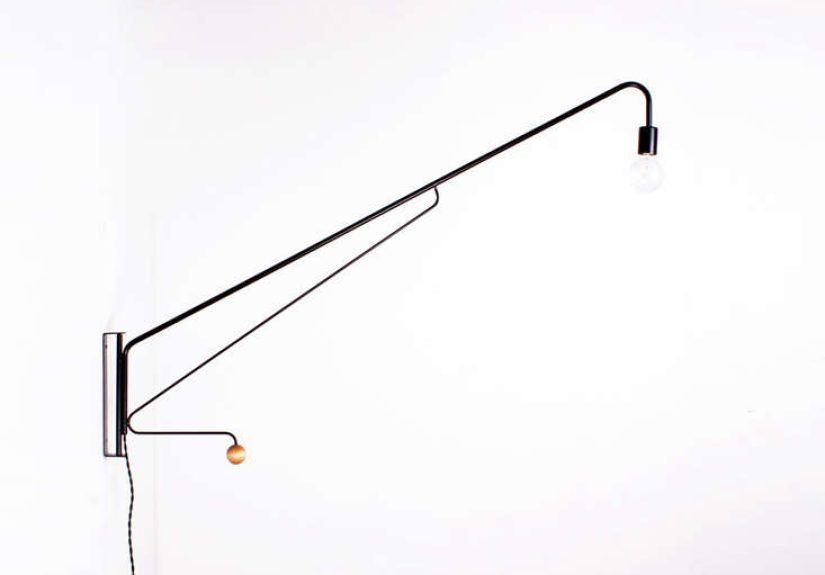
The Otis is a modern, potence-inspired wall lamp that leans into clean lines and practical movement. It’s designed to reach toward the center of a room while staying mounted on the wallideal when you want task lighting but don’t want to donate square footage to a lamp base.
Key Features at a Glance
- Long, linear arm offered in multiple lengths (commonly around 48" and 60" options).
- Pivoting motion that can swing across a wide range (often around 180° of movement).
- Powder-coated steel finish in classic neutral tones (think black or white that plays well with almost any room).
- Wood ball handle that adds warmth and makes repositioning easy (no greasy fingerprints on your finishnice).
- Plug-in convenience with a cloth-covered cord and an inline switch for quick access.
- LED-friendly and dimmable-ready for modern living (and modern electricity bills).
Why the Otis Feels So “Right” in Real Homes
Potence-style lamps shine (yes, we’re doing this) when you need flexibility: reading light one minute, ambient glow the next, and a clear tabletop all the time. The Otis nails that by combining a long reach with a pared-back silhouetteso it can be a statement piece without shouting over your sofa.
Where It Works Best: Room-by-Room Ideas
1) Bedside Reading Without the Nightstand Clutter
If your nightstand currently resembles a tiny electronics store (phone, charger, water glass, book stack, maybe a mysterious loose key), a wall-mounted Otis-style lamp is instant relief. Swing it over your pillow for reading, then pivot it away when you’re done. Bonus: you’re less likely to knock it over during that midnight “where is my water” reach.
2) Over-the-Sofa Lighting That Actually Reaches
A common living-room problem: you want light on the coffee table for games, snacks, or paperwork, but the nearest outlet is basically in another zip code. A potence-style arm can extend over the seating zone and light the center areawithout adding a floor lamp that people trip over like it’s an obstacle course.
3) A Dining Nook That Feels Designed (Not Improvised)
Small dining areas often don’t have the perfect ceiling box for a pendant. A potence-style Otis lets you mount light from the side and position it precisely over a table or banquetteespecially useful when your ceiling is low, your table is off-center, or your room is doing that open-plan “everything is everywhere” thing.
4) Home Office Task Lighting With Less Desk Chaos
A wall-mounted swing-arm lamp is a productivity cheat code: it lights your workspace without stealing desk real estate. Keep it angled down for focused work, then swing it away for a softer background glow when you’re done. It’s also great if you bounce between a desk and a nearby chair for calls.
5) Hallways, Corners, and “Dead Zones”
That one corner that always looks dim? A potence-style wall lamp can push light into awkward spots. It’s especially effective in narrow spaces where a floor lamp would feel like furniture Tetris gone wrong.
Plug-In vs. Hardwired: Choosing the Setup That Fits Your Life
The Otis-style potence lamp is often chosen as a plug-in wall lamp, and that’s a big deal for renters, DIY-friendly homeowners, or anyone who doesn’t feel like opening up drywall just to read a chapter at night.
Plug-In Pros
- Installation is simpler: mount the bracket, plug it in, live your best illuminated life.
- Renter-friendly: you can take it with you when you move.
- Switch placement flexibility: inline switches are easy to reach if you place the cord thoughtfully.
Plug-In Tradeoffs (A.K.A. The Cord Conversation)
Yes, you will have a visible cordunless you plan to train it to walk itself behind the wall (good luck). The trick is to make the cord look intentional:
- Use a paintable cord cover and match it to the wall color for a near-invisible look.
- Lean into wallpaper or pattern to visually camouflage the cord path.
- Route cleanly: straight vertical lines look calmer than a “freeform squiggle” vibe.
Hardwired Pros (If You’re Remodeling Anyway)
- Ultra-clean look: no visible cord, no inline switch.
- Wall-switch control: especially nice if you’re using it as primary lighting.
Hardwiring can be fantasticbut it’s also a bigger commitment. Wall material matters, and some surfaces (like certain masonry situations) make wire-hiding a headache. When in doubt, a licensed electrician is the grown-up choice.
Mounting Height: Where to Put It So It Feels Effortless
The “right” height depends on how you’ll use the lamp, but the goal is consistent: light where you need it, without glare in your eyes.
Common Placement Guidelines
- Bedside reading: aim for the light source to land roughly 24–30 inches above the mattress, or around seated eye level when you’re propped up.
- Sofa seating: position so the light falls onto a book or lap without shining directly into your faceoften near seated eye level, depending on shade and bulb brightness.
- Over a table: mount so the arm can extend over the center, with the bulb/shade high enough to avoid head bumps but low enough to feel intimate.
If you’re choosing between two mounting points, mock it up with painter’s tape first. It’s the easiest way to avoid the classic DIY moment of: “Why does this look… judgmental?”
Bulbs, Brightness, and Dimmers: The Mood-Setting Toolkit
A potence-style lamp is only as good as the bulb you put in it. The wrong bulb can turn a beautiful minimalist lamp into an interrogation spotlight. The right bulb makes it warm, flattering, and functional.
What to Look For in a Bulb
- Warm white (often around 2700K) for cozy spaces like bedrooms and living rooms.
- High CRI if you care about color accuracy (especially in offices or near artwork).
- Dimmable LED if your lamp or cord dimmer supports itbecause “one brightness forever” is not a vibe.
As a practical rule: if you want it mainly for reading, choose a bulb bright enough to clearly light a page. If you want it mainly for ambiance, go softer and lean on dimming for flexibility.
Styling the Otis: Minimal Doesn’t Have to Mean Cold
The Otis-style potence lamp tends to be visually spare: a long line, a bracket, and a bulb or shade. That simplicity is exactly why it works in so many interiorsyou can style it to match your room rather than rebuild your room to match the lamp.
Black vs. White Finish
- Black reads graphic and architectural. Great against white walls, wood paneling, or warm neutrals.
- White disappears into light walls for a softer lookperfect if you want the light effect more than the object itself.
Let the Wood Detail Do Its Job
That small wood handle is a big deal aesthetically: it keeps the lamp from feeling too industrial. Echo the wood tone elsewhereframes, a side table, a cutting board on an open shelfand the lamp looks “designed,” not just “installed.”
Pair It With Layered Lighting
Potence lamps are excellent task lights, but most rooms still need layers: an overhead or ceiling fixture for general illumination, plus accent lighting (like a small table lamp or picture light) to soften shadows. The Otis becomes the flexible “moveable beam” in your lighting lineup.
Buying Checklist: What to Confirm Before You Commit
- Arm length: do you need reach over a bed, sofa, or table? Measure the target zone.
- Swing range: make sure it can pivot where you actually need light.
- Cord length and switch placement: confirm the cord will reach your outlet without doing gymnastics.
- Bulb base and compatibility: verify the socket type and whether LED/dimming works with your plan.
- Wall type and anchors: drywall, plaster, brickeach needs a different approach for safe mounting.
- Clearances: consider doors, cabinets, headboards, and the occasional tall person who forgets objects exist above shoulder height.
Care and Maintenance: Keep It Looking Sharp
A potence-style Otis lamp is generally low-maintenance: dust the powder-coated surfaces with a soft cloth, keep the cord tidy, and treat the wood detail occasionally so it stays rich instead of thirsty-looking. If your lamp includes metal accents, use appropriate polish sparingly and carefully.
Common Questions (Because Yes, Everyone Asks These)
Can a potence-style lamp replace a floor lamp?
Often, yesespecially for task lighting. If your main need is reading light near seating, a wall-mounted swing-arm can do the job while freeing up floor space. For full-room lighting, you’ll still want overhead or additional sources.
Is it good for small spaces?
Potence-style lamps are great in small spaces because they don’t eat floor area. The key is choosing the right length so the arm isn’t constantly in the way. Think “useful reach,” not “indoor jousting lance.”
What if I’m renting?
A plug-in Otis-style lamp is one of the most renter-friendly ways to get high-end, functional lighting. Use a cord cover, keep the mounting neat, and save the ceiling electrical dreams for your future forever home (or at least your next lease).
Conclusion: The Otis Potence Style Is Practical Drama in the Best Way
The "Potence" Style Otis Lamp is what happens when minimalist design grows a backbone: long reach, purposeful motion, and a clean silhouette that makes a room look instantly more intentional. Whether you’re lighting a bedside, stretching light over a sofa, or upgrading a small dining nook, it’s a high-function piece that feels both modern and quietly iconic.
Choose the right length, mount it thoughtfully, pair it with a good bulb, and you’ll get the kind of lighting upgrade that makes people say, “Waitwhy does this room feel so much better?” (And you can just smile and pretend it was effortless.)
Experiences With a Potence-Style Otis Lamp (The Extra You Actually Wanted)
Living with a potence-style lamp is a little like living with a very polite, very useful mechanical arm: it’s always ready to help, but it doesn’t demand attention. The first “aha” moment usually happens on night one. You swing the lamp out over your pillow, open a book, and realize you’re not performing the classic bedside shuffle: scoot the lamp, scoot the water glass, scoot the phone, scoot the lamp again, accidentally knock something, pretend it didn’t happen. The light is where you want it, and your nightstand finally has breathing room.
The second “aha” tends to be about control. A long arm means you stop compromising. Instead of “good enough” light that’s slightly behind your shoulder, you can position the beam so it lands exactly on the page, the keyboard, the knitting, the crosswordwhatever your hands are doing. And because the movement is simple (pivot, extend, adjust), it feels natural to change it throughout the day: bright and focused in the morning, softer and angled away at night.
In living rooms, people often discover that the lamp becomes the unofficial “activity light.” Movie on? Swing it away so it’s not in your peripheral vision. Friends over for cards? Swing it out and aim it at the coffee table. Doing the dreaded laptop-on-couch session? Suddenly you have task lighting without a floor lamp looming beside you like a metal giraffe. The lamp’s long line also creates a subtle architectural effect: it visually connects wall space to the center of the room, which can make small spaces feel more designed and less like furniture was simply dropped in.
Then there’s the cord reality for plug-in versionsbecause yes, it exists. But here’s what tends to happen: once you add a neat cord cover and align it with a corner, trim line, or furniture edge, your brain stops noticing it. Even better, the cord becomes a kind of visual “grounding line” that can look intentional in minimalist rooms. In pattern-heavy spaces, it practically disappears. The only time it becomes a nuisance is when the cord path is improvised and curvy; straight lines are calmer, and calmer lines make your lamp look like it belongs there.
Finally, there’s the slightly unexpected joy of the wood handle detail. It’s small, but it changes the whole relationship with the lamp. Instead of grabbing the arm itself, you use the handle like the designer intended, which keeps the finish looking cleaner over time. It also adds a warm note to the lamp’s geometryso even in a stark, modern room, it feels human. A potence-style Otis isn’t just “a light.” It’s a tiny, daily interaction that makes a space feel more functional, more flexible, andquietlymore you.