Table of Contents >> Show >> Hide
- What Is the Quarantine Clock?
- Why the Idea Resonated So Much During Quarantine
- The Design Lesson: Essential Beats Precise (Sometimes)
- What Science and Public Health Guidance Say About “Essential” Routines
- How to Apply the Quarantine Clock Mindset Today
- Specific Examples of “Essential Time” in Real Life
- Experience Section: What the Quarantine Clock Mindset Feels Like in Practice (Extended 500+ Words)
- Conclusion
Some inventions solve huge problems. Others solve a very specific, very human problemlike staring at the wall in quarantine and wondering, “Is it Tuesday, or just emotionally Tuesday?” The “Quarantine Clock” is one of those ideas that feels funny at first and oddly wise five minutes later.
At a glance, it looks like a joke: a minimalist clock built for lockdown life that doesn’t obsess over exact minutes. But under the humor is a smart design principle: when life becomes unstable, people often need less precision and more meaning. During quarantine, many people lost the routines that normally anchor timecommutes, lunch breaks, school bells, gym sessions, evening plans. The result? Time felt both fast and slow, packed and empty, all at once.
This article explores why the Quarantine Clock idea landed so well, what science says about disrupted routines and time perception, and how a “focus on the essential” mindset can still help us todaywhether you work from home, care for family, manage burnout, or just want your schedule to stop behaving like a feral raccoon.
What Is the Quarantine Clock?
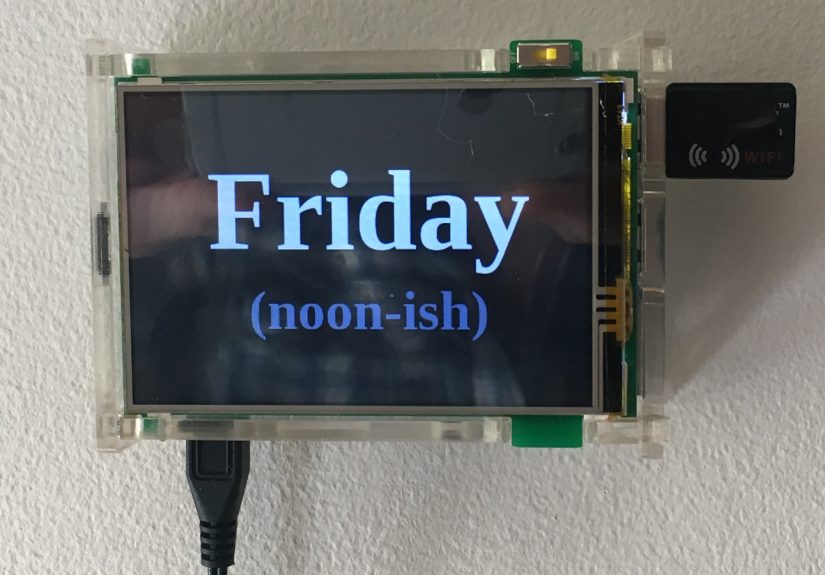
The Quarantine Clock became popular as a pandemic-era maker project highlighted by Hackaday. The concept was delightfully simple: instead of showing exact time with minute-by-minute urgency, it displayed the day of the week and a rough estimate of how far the day had progressed. In other words, it answered the questions many people actually had in lockdown: “What day is it?” and “How much day is left?”
The project itself was built around a Raspberry Pi and touchscreen setup, with a local webpage shown in Chromium kiosk mode. JavaScript handled the day/hour display logic, and a Python script linked the screen backlight to a Hue motion sensor so the display would wake when someone was around. That combination made it practical, low-friction, and surprisingly elegant for home use.
In classic maker fashion, the brilliance wasn’t in expensive hardware. It was in the interface choice: remove the unnecessary, keep the useful, and let the design match the reality of the moment.
Why the Idea Resonated So Much During Quarantine
1) Quarantine Broke the Usual “Time Markers”
Before lockdowns, many people tracked time without thinking about it. Your calendar, commute, coworkers, class schedule, coffee run, and dinner plans constantly whispered, “It’s 8:15,” “It’s Wednesday,” “It’s almost the weekend.” When quarantine flattened those cues, the days began to blur.
That blurring wasn’t just a meme. It reflected a real shift in lived experience. Scientific and clinical discussions from the pandemic period repeatedly described changes in time perception, especially when normal routines were interrupted and anxiety rose. Many people reported that time felt strange, stretched, numbing, or unpredictable.
2) Routine Disruption Changes How Time Feels
Research on psychological time during quarantine noted that interruptions to normal schedules, attention patterns, memory cues, and uncertainty can all affect how long or short time seems. Translation: if every day looks similar, your brain has fewer “chapter breaks,” and the whole week can feel like one long buffering screen.
A separate mental health perspective on routines emphasized something equally important: regular routines can help buffer stress. When life becomes unstable, structure is not boringit is protective. That is one reason the Quarantine Clock feels smarter than it looks. It doesn’t merely tell time; it restores a little structure.
3) Our Biological Clocks Still Need Signals
Human circadian rhythms are influenced by light and darkness, but also by food timing, stress, physical activity, and social environment. In normal life, these signals work together like a quiet orchestra. In quarantine, many people suddenly changed sleep times, meal timing, screen exposure, and movement patternsbasically replacing the orchestra with a kazoo solo.
Sleep science consistently points to the value of regular schedules, light cues, and daily routines for better rest. When routines collapse, sleep often suffers, and when sleep suffers, stress and focus usually follow. That cycle helps explain why a rough, human-centered clock felt emotionally useful: it highlighted the shape of the day, not just the digits.
The Design Lesson: Essential Beats Precise (Sometimes)
The Quarantine Clock is a great example of context-aware design. Under normal conditions, exact time is useful. You need it for meetings, buses, deadlines, medication timing, school pickup, and not missing your dentist appointment for the third time. But during quarantine, many people no longer needed minute-level precision every hour. They needed orientation, rhythm, and reassurance.
That design choice maps well to a broader principle in user experience: the best interface is not the one that shows the most information. It is the one that shows the right information for the user’s current decision. In a lockdown routine, “Thursday / early afternoon” may be more helpful than “14:07:32.”
This is what “focuses on the essential” really means. It is not anti-data. It is anti-noise.
Minimalist Timekeeping as a Mental Load Reducer
Minimalist displays can reduce cognitive friction, especially when people are stressed. During uncertain periods, the brain is already working overtimetracking risks, responsibilities, family logistics, and changing plans. A calmer display can gently reduce the feeling of urgency and constant micro-measurement.
That does not mean everyone should throw out their calendars and become a woodland philosopher. It means we can be intentional about where precision matters and where approximation is healthier.
What Science and Public Health Guidance Say About “Essential” Routines
One of the most practical takeaways from mental health and sleep guidance is this: when life gets chaotic, return to basics. Several health and clinical sources emphasize regular sleep, movement, nutrition, stress management, and social connection as core stabilizers. In routine science, these are often the “primary” daily routinesthe behaviors tied to biological needs and basic functioning.
In plain English: before optimizing your productivity system, make sure you are sleeping, eating, moving, and checking in with people. A color-coded task board is impressive. A consistent bedtime is often more powerful.
This mirrors the spirit of the Quarantine Clock. It strips the display down to the essentials because the essentials are what help people regain a sense of control, predictability, and momentum.
How to Apply the Quarantine Clock Mindset Today
1) Rebuild Time in Layers
If your schedule feels slippery, start with broad anchors before fine-grained planning:
- Layer 1: Wake time and sleep time
- Layer 2: Meal windows and movement
- Layer 3: Work blocks or focus blocks
- Layer 4: Meetings, errands, deadlines, and social time
Think “day shape” first, then “minute detail.” This approach aligns better with how people recover structure after disruption.
2) Use “Rough Time” for Low-Stakes Decisions
Exact clocks are essential for appointments. But for everyday self-regulation, categories can be enough:
- Early morning
- Late morning
- Early afternoon
- Late afternoon
- Evening wind-down
This makes routines easier to follow and less brittle. If your “walk at 4:00 PM” becomes “walk in late afternoon,” you are more likely to do it, and less likely to declare total failure because life happened at 3:52.
3) Protect Sleep Like It Is a Core Productivity Tool (Because It Is)
Sleep guidance from major health institutions consistently recommends regular bed/wake times, limiting bright screens before bed, and keeping a sleep environment cool, dark, and quiet. If quarantine taught us anything, it is that sleep can unravel quickly when routines vanishand everything else gets harder when that happens.
4) Keep the Display Honest
Whether it is a physical clock, a home dashboard, or your phone lock screen, ask: Does this display help me act wisely, or just feel rushed? A better design might show:
- Day of week
- Current focus block
- Next meaningful checkpoint
- Wind-down reminder
That is Quarantine Clock thinking in 2026: calm interface, useful signal, no drama.
Specific Examples of “Essential Time” in Real Life
Remote Work Teams
Teams that obsess over minute-by-minute responsiveness often create more anxiety than output. A better model is shared expectations around response windows, focus blocks, and key deadlines. People need clarity more than constant pings.
Parents and Caregivers
Anyone managing kids, elders, or both knows exact schedules can explode before breakfast. A routine based on essential anchors (wake, meals, school time, movement, bedtime) is more resilient than a perfectly timed plan written by someone who clearly has never met a toddler.
Burnout Recovery
When someone is exhausted, a highly optimized system can feel like another burden. A simple “what day is it + what part of the day is this + what is the next essential thing?” framework lowers the barrier to getting moving again.
Experience Section: What the Quarantine Clock Mindset Feels Like in Practice (Extended 500+ Words)
The most relatable part of the Quarantine Clock is not the hardware. It is the emotional accuracy. Many people experienced a version of the same strange routine during quarantine: waking up slightly later than planned, checking the phone immediately, seeing a flood of updates, then spending the next ten minutes trying to remember what day it was. Not the exact datethe day identity. Was this a workday? A weekend? A “pretend weekend” because everyone was too tired to function? The clock’s genius was that it acknowledged this reality without pretending life was still normal.
Imagine a home in lockdown where the kitchen table became an office, classroom, snack station, and occasional existential crisis booth. In that environment, a conventional clock still tells the truth, but not always the most useful truth. “11:43 AM” might be accurate, yet what people really need is something more like: “It’s Wednesday. You’re mid-day. Eat lunch. Take a walk. Start over.” That is why the Quarantine Clock idea resonates beyond noveltyit feels like a humane translation layer between time and life.
Another common experience was how quickly days could swing between drift and panic. The morning disappeared into email, dishes, and one mysterious task that somehow took 90 minutes. Then suddenly it was evening, and the brain would panic: “I did nothing today.” But that was often not true. People had done many thingscare tasks, emotional labor, adaptation work, uncertainty managementjust not the neatly visible tasks that calendars reward. A rough-progress display can act like a quiet coach, helping people notice the day as a continuum rather than a series of missed timestamps.
There was also a social dimension. During quarantine, families and roommates often developed shared phrases like “after lunch,” “before the call,” “once it cools down,” or “when the kid is asleep.” Those are not imprecise in a bad way; they are practical forms of coordination. They match how humans naturally organize daily life when circumstances are fluid. In that sense, the Quarantine Clock did not remove structureit reflected the kind of structure people were actually using.
Even now, long after peak lockdowns, the same pattern shows up in remote work, freelancing, caregiving, and recovery periods. Exact time is still necessary, of course, but many people function better when they also have a “soft time” layer: morning routine, deep work window, reset break, evening wind-down. That soft layer reduces guilt, increases consistency, and makes it easier to return to task after interruptions. It turns out discipline is often easier when it feels less like a stopwatch and more like a rhythm.
The lasting experience lesson is simple: when life becomes uncertain, people do not always need tighter control. Often, they need clearer essentials. A clock that says “what matters right now” can be more psychologically useful than one that only says “you are three minutes behind.” The Quarantine Clock, intentionally or not, captured that truth. It gave people a way to laugh at the weirdness of quarantine while also giving them a small tool for orientation, routine, and self-compassion. That is a rare combo for any designespecially one built from a Raspberry Pi and a very relatable sense of “what even is time anymore?”
Conclusion
“Quarantine Clock Focuses On The Essential” sounds like a playful maker headlineand it isbut it also points to a deeper lesson about time, stress, and design. When normal routines disappear, exactness can become less helpful than orientation. The most useful systems are often the ones that restore rhythm: what day it is, where you are in the day, and what matters next.
The pandemic made that lesson obvious, but it remains relevant in everyday life. Minimalist timekeeping, stronger routines, better sleep habits, and calmer interfaces can help people think more clearly and live with less friction. Not because precision is bad, but because context matters. Sometimes the smartest clock is the one that knows when enough information is exactly enough.