Table of Contents >> Show >> Hide
- Why Ostrich Feathers Are a Big Deal (and Not Just for Show)
- What Makes a Redecker Feather Duster Different?
- How to Use a Redecker Feather Duster Like You Know What You’re Doing
- Feather Duster vs. Microfiber vs. Disposable Dusters
- Care and Maintenance: Keep It Fluffy, Not Sad
- Is the Redecker Feather Duster Worth It?
- Buying Checklist: Pick the Right One the First Time
- Conclusion: Make Dusting Less Miserable (and More Effective)
- Experiences With the Redecker Feather Duster (Real-World Moments)
- SEO Tags
If you’ve ever looked at your bookshelf, sighed dramatically, and considered simply moving to a new home instead of dusting,
you’re not alone. Dust is basically the houseguest that never leavesquiet, persistent, and somehow always sitting on the one
surface you just cleaned. Enter the Redecker feather duster: a tool that makes dusting feel less like punishment
and more like a mildly fancy ritual. Think “old-world craft” meets “modern I-don’t-want-to-scratch-my-stuff problems.”
Redecker is known for well-made household brushes and dusters that look good enough to hang on a hook without shame. But the
real headline here is performance: a quality ostrich feather duster isn’t just decorationit can be a smart, gentle way to
keep delicate items dust-free without turning your home into a sneeze festival.
Why Ostrich Feathers Are a Big Deal (and Not Just for Show)
Dust-catching structure, not dust-pushing drama
A common complaint about cheap feather dusters is that they “just move dust around.” Sometimes trueespecially if the duster is
low-quality, you’re dusting aggressively, or the dust layer is thick enough to qualify as a second carpet. Ostrich feathers,
however, have a soft, fluffy structure with many fine filaments. Done right, that structure helps pick up and hold light dust,
rather than bulldozing it into the air like a tiny, chaotic leaf blower.
Lightweight for delicate objects (aka your “please don’t topple” zone)
Dusting fragile décor is usually a two-person job: one hand dusts, the other hand performs emergency pottery rescue. Ostrich
feather dusters are prized because they’re extremely light and gentle, making them a solid choice for items that love to wobble
picture frames, small sculptures, glassware, and the expensive candle you’re “saving for later” since 2019.
What Makes a Redecker Feather Duster Different?
Natural materials that feel (and act) premium
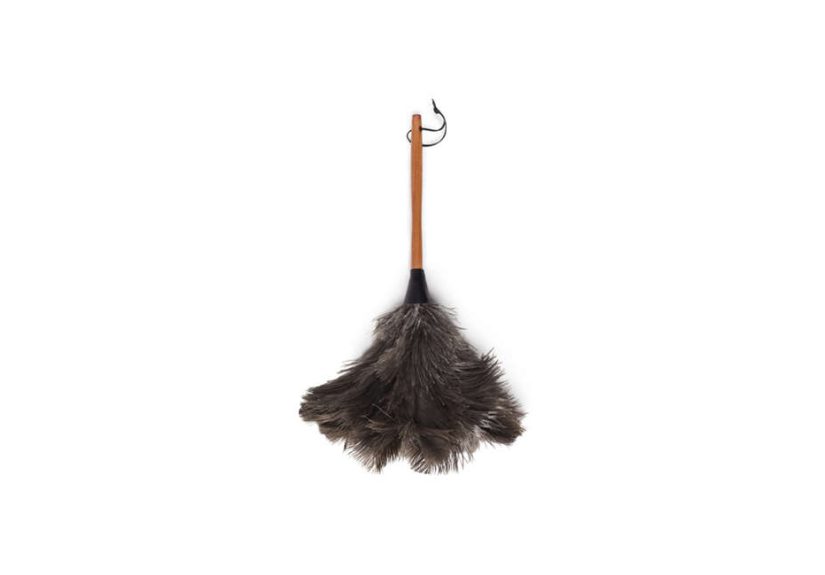
Many Redecker dusters pair soft ostrich feathers with a wooden handleoften beechwoodplus leather details like a cuff or hanging
loop. Beyond the aesthetics, these materials matter: the handle feels sturdy in your hand, the leather helps secure the feather head,
and the whole thing is built like it expects to be used for years, not just until your next big-box-store impulse buy.
Sizes and styles that match how you actually dust
Redecker feather dusters commonly come in multiple lengths. Shorter versions are great for bookshelves, plants, electronics corners,
and the “random stuff on the console table.” Longer versions (including extra-long styles) help you reach crown molding, light fixtures,
tall shelves, and ceiling cornerswithout turning “dusting” into “climbing plus regret.”
Quick rule of thumb:
- Short (around 12–20 inches): quick daily touch-ups, shelves, frames, keyboards, lampshades.
- Medium (around 30–36 inches): taller furniture, blinds, higher shelves, plant leaves.
- Long (around 40+ inches / 110 cm styles): fans, beams, tall bookcases, corners, and “how is dust up there?” places.
A brand story rooted in craft
Redecker’s reputation is tied to traditional brushmaking: natural materials, careful construction, and designs that balance function
with good looks. The vibe is “tools you keep,” not “tools you replace because the handle snapped when you looked at it.”
How to Use a Redecker Feather Duster Like You Know What You’re Doing
Use the “sweep and lift,” not the “angry scrub”
Feather dusting works best when you glide lightly and let the feathers do the collecting. The goal is to touch the dust
and lift it into the feathersnot grind it into the surface. Picture yourself petting a cat that might bite. Gentle, respectful, quick.
Always dust top to bottom
Gravity is undefeated. Start high (fans, upper shelves, frames, tops of doorways) and work downward. That way, any particles that
fall can be cleaned later instead of redecorating the surfaces you already finished.
Where it shines
- Bookshelves and décor: especially around small objects, photo frames, and collectibles.
- Plants: a gentle swipe can remove dust on sturdier leaves (test firstsome plants are dramatic).
- Lampshades and light fixtures: the soft feathers help you dust without snagging or scratching.
- Electronics nooks: use a light touch for vents and surfaces; avoid pushing dust into openings.
- Delicate surfaces: glass objects, polished wood, and items you’d rather not scratch with a stiff tool.
When to switch tools (because no single duster is the hero of every story)
For sticky grime, kitchen grease, or heavy dust build-up, a feather duster isn’t the best move. That’s microfiber territory (slightly
damp when appropriate) or a vacuum with a soft brush attachment. If you have allergies, you may also prefer tools that trap dust
more aggressively and reduce airborne particles.
Feather Duster vs. Microfiber vs. Disposable Dusters
Feather: best for light dust and delicate items
A Redecker feather duster is excellent for maintenance dustingthe “keep things nice” routine. It’s quick, gentle, and satisfying,
especially on detailed surfaces where cloths snag or feel clumsy.
Microfiber: best for dust you want truly gone
Microfiber cloths and dusters are often recommended because they grab dust effectively and can be washed. They’re also great for follow-up:
feather dust first for delicate areas, then finish with microfiber on flat surfaces where you want maximum pickup.
Disposable/electrostatic dusters: convenient, powerful, but not always eco-friendly
Many modern dusters trap dust very well and reach awkward places easily. The trade-off is ongoing replacement and waste. If you like the
“one tool that does everything fast” experience, these can be appealingespecially for deeper dusting days.
Care and Maintenance: Keep It Fluffy, Not Sad
After each use: shake it outside
The simplest care routine is also the most effective: take the duster outdoors and give it a brisk shake. You’re basically telling dust,
“You don’t live here anymore.”
Occasional deep clean: gentle wash, gentle dry
If the feathers start looking dull or clumped, a careful hand-wash can help. Use lukewarm water and a small amount of mild soap, rinse well,
and avoid twisting or crushing the feathers. Shake out excess water and let it air-dry completely. When dry, fluff it gentlysome people use
a soft brush or careful finger-fluffing to restore shape.
Storage: hang it, don’t squash it
Many Redecker dusters include a leather loop for hanging. Use it. A feather duster stuffed in a drawer under ten reusable bags and a flashlight
will eventually look like it went through a breakup.
Is the Redecker Feather Duster Worth It?
If you want a budget tool for occasional dusting, you can absolutely find cheaper options. The Redecker value proposition is different:
durability, gentle performance, and design you’ll actually want to keep. It’s a “buy once, use for years” type of tool for people
who dust regularly and care about not scratching delicate surfaces.
It’s especially worth considering if:
- You have lots of shelves, décor, or delicate objects (aka a dust museum).
- You dislike disposable refills and want a more natural cleaning tool.
- You want a duster that feels good in your hand and doesn’t look like a sad plastic wand.
- You prefer maintenance dustingquick passes more oftenover infrequent deep-clean marathons.
Buying Checklist: Pick the Right One the First Time
1) Choose your length based on your “dust map”
If your biggest dust problems live on shelves and surfaces at chest height, go short-to-medium. If your dust problems live in ceiling corners and
on top of tall furniture, you’ll appreciate a long handle.
2) Decide how “display-worthy” you want it to be
Some people keep cleaning tools hidden. Others hang them proudly like minimalist wall art that also fights allergens. Redecker dusters tend to fit
that second categoryespecially if you’re into warm wood and leather details.
3) Be realistic about your dust type
A feather duster is amazing for light, frequent dusting. If you’re tackling thick dust buildup, do a vacuum pass first or plan to follow up with microfiber.
This is not a moral failing. This is strategy.
Conclusion: Make Dusting Less Miserable (and More Effective)
The Redecker feather duster isn’t magic, but it can feel close when you use it the right way. Ostrich feathers are gentle and lightweight, making them
ideal for dusting fragile items and hard-to-reach spaces without knocking things over. Pair that with sturdy wood and leather construction, and you get a tool
that’s both functional and oddly satisfyinglike cleaning, but with fewer resentful sighs.
If you want dusting to be quick, kind to your belongings, and just a little bit classy, the Redecker feather duster is an easy upgrade. Bonus: it’s one of the
few cleaning tools that looks like it belongs in a lifestyle photo… even if your “lifestyle” is mostly snacks and unfinished laundry.
Experiences With the Redecker Feather Duster (Real-World Moments)
People often describe the first week with a Redecker feather duster as a weirdly emotional journeylike adopting a small, elegant bird whose only job is to
intimidate dust. Here are some common “yep, that happened” scenarios you’ll recognize if you live in a home where dust treats every flat surface like a VIP lounge.
The “I didn’t know my bookshelf had a color” revelation
It usually starts innocently: a quick sweep across the top shelf. Then the feathers come away with a visible layer of gray that makes you question your life
choices and your HVAC filter. The Redecker’s light touch shines hereyou can dust book spines, small frames, and little figurines without rearranging your entire
shelf like you’re staging a museum exhibit. Many people end up doing “just one shelf,” and thenthree minutes laterthey’re on shelf six, talking to themselves
like a sports commentator: “And she goes in for the top corner… magnificent form… dust eliminated.”
The houseplant moment: “Sorry, buddy, you were… dusty”
Plant leaves collect dust like they’re trying to grow a tiny sweater. A feather duster can be a gentle solution for sturdier plantsespecially broad leaves
that don’t love being wiped with a damp cloth every time you remember they exist. The experience is often surprisingly calming: a soft pass across the leaves,
a little shake outside, and suddenly your plant looks like it got better lighting and a new lease on life. (Do test first, thoughsome plants are sensitive and
will act offended.)
The delicate décor rescue mission
If you have glassware, ceramics, or a collection of “tiny things you love but never touch,” dusting can feel risky. The Redecker feather duster is frequently
praised in these situations because the feathers are so light that you can dust around fragile objects without toppling them. It’s the difference between
“careful cleaning” and “sudden pottery disaster.” People often report feeling oddly confident dusting around collectibleslike they’ve been promoted from
“clumsy homeowner” to “calm professional in a tasteful apron.”
The ceiling-corner victory (without a ladder and a prayer)
Long-handled versions are where the tool starts feeling like a superpower. Cobwebs in corners, dust on crown molding, mystery fluff above the doorframethese
are the places that make you consider ignoring the problem forever. With a long feather duster, you can handle high areas quickly and gently, especially if you
dust regularly before buildup gets heavy. The experience is often described as deeply satisfying: one pass, the corner looks clean, and you didn’t have to
balance on a chair like you’re auditioning for a slapstick comedy.
The “feather duster reality check” (aka, follow-up tools exist for a reason)
A common experience is realizing that feather dusting is best as a maintenance habit, not a once-a-year miracle. When dust is thick, the smart move is to vacuum
first (soft brush attachment), then finish with a feather duster for delicate areas, and finally wipe flat surfaces with microfiber for maximum pickup. People who
do this combo often say their home feels cleaner for longerand they sneeze less during the process. The feather duster becomes the daily or weekly “quick pass”
tool, while microfiber and vacuuming handle the heavy lifting.
In the end, the Redecker feather duster experience is less about turning you into a perfectly spotless person (we all have limits) and more about making dusting
pleasant enough that you’ll actually do it. And thatmore than any single tooltends to be the secret to a home that stays consistently cleaner.