Table of Contents >> Show >> Hide
- What got halted (and why the word “assembly” is doing a lot of work)
- Meet the referee: why regulators get a veto on a fusion experiment
- The issues that triggered the halt
- 1) Gigantic steel parts that didn’t line up the way the weld plan assumed
- 2) Radiation shielding and “radiological maps” that have to be proven, not promised
- 3) The B2 slab problem: a concrete “tabletop” that must carry the whole fusion dinner party
- 4) Earthquake planning: because physics does not accept excuses
- 5) Worker safety: the unglamorous backbone of big science
- So…is ITER “in trouble,” or is this just what responsible nuclear oversight looks like?
- What a pause like this does to schedules, costs, and global confidence
- Why the world still cares about ITER (even when it’s frustrating)
- What “success” looks like after a regulatory halt
- Zooming out: what this means for fusion’s future
- What to watch next
- Experiences from the fusion “pause button”
- Conclusion: the pause is the storyand the lesson
If you’ve ever tried to assemble IKEA furniture without reading the instructions, you already understand the vibe of this storyexcept the “bookshelf” is
a multi-billion-dollar fusion machine, the “Allen key” is a robotic welding system, and the instructions are written by nuclear safety regulators with
the power to say, “Nope. Not yet.”
That’s essentially what happened when regulators ordered a pause on a critical phase of assembly for the world’s largest tokamak reactorITER, the
International Thermonuclear Experimental Reactorbeing built in southern France. The pause wasn’t about killing fusion dreams for sport. It was about
nuclear-grade reality: radiation protection, seismic safety, heavyweight shielding, and the unforgiving math of giant steel parts that must line up
precisely before anyone makes an “irreversible” weld.
In this deep dive, we’ll unpack what was halted, why it matters, what regulators were worried about, and what a stop-work moment means for the future
of fusionplus a more human, on-the-ground set of “experiences” at the end that captures what it feels like when the biggest science project on Earth
gets told to hold its horses.
What got halted (and why the word “assembly” is doing a lot of work)
ITER is a tokamak: a doughnut-shaped magnetic confinement device designed to hold an ultra-hot plasmathink “Sun conditions,” but with much more
paperwork and dramatically less romance. Its mission is not to power your toaster. ITER is a research facility meant to demonstrate that fusion at
power-plant scale is scientifically and technologically feasible. It’s a stepping-stone: prove the plasma physics, prove the engineering, and teach the
world how to build the next machines that might generate electricity.
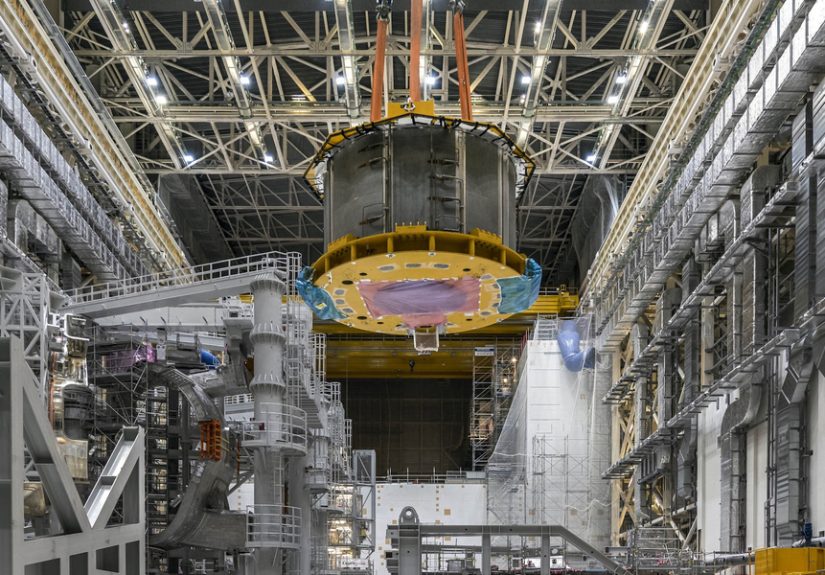
The “halt” centered on a particular assembly phase involving the tokamak’s vacuum vesselthe massive, double-walled steel chamber that surrounds the
plasma and acts as the primary confinement barrier for radioactivity. The vacuum vessel is built in huge sectors (giant curved slices), which are later
brought together in the tokamak pit and welded into a complete torus. This is where the phrase “measure twice, weld once” stops being a folksy saying
and becomes a survival strategy.
Regulators didn’t necessarily stop all work everywhere on the site. What they put on ice was the ability to proceed past a regulatory “hold point”
for certain irreversible stepsespecially welding the first major vacuum vessel sectors in the pituntil ITER could demonstrate that safety requirements
were satisfied in the “as-built” condition, not just on paper.
Meet the referee: why regulators get a veto on a fusion experiment
ITER operates under the rules of the host country (France), which means it must satisfy French nuclear safety oversight. This matters because ITER will
ultimately use tritium (a radioactive form of hydrogen) and will generate neutron radiation during deuterium-tritium operation. Even though fusion
doesn’t carry the same meltdown profile as fission, “radioactive materials + high-energy neutrons” is still a “serious adults only” category.
A key idea here is the regulatory hold point. Think of it as a safety checkpoint that must be cleared before proceeding. ITER has explained
that hold points are part of normal licensing: the project must prove that safety-relevant structures and systems conform to the approved design in the
as-built or as-installed state, then obtain regulator approval before moving on.
For ITER, a major hold point focused on the tokamak assembly step considered irreversible: welding the first sections of the vacuum vessel in the pit.
Regulators requested clarifications and additional analyses tied to structural validation and radiation protection before letting that milestone proceed.
The issues that triggered the halt
1) Gigantic steel parts that didn’t line up the way the weld plan assumed
One core concern: misalignments between welding surfaces of the first vacuum vessel sections. These aren’t dainty parts you can “encourage” into place
with a gentle shove. We’re talking ship-scale components that must match up at millimeter-level tolerances for automated welding procedures to work
safely and reliably.
Reporting around the halt described damage during shipment that contributed to misalignment between welding surfaces. When the interface geometry is
off, the project must either repair the parts, adapt the welding plan, or bothwhile proving to regulators that the final welds will meet safety and
quality requirements.
2) Radiation shielding and “radiological maps” that have to be proven, not promised
A second, highly consequential theme: radiation protection. ITER’s safety case relies on shieldingconcrete and steel barriersand on radiological
analyses (“maps”) that estimate radiation levels in areas where people could be present. Regulators wanted ITER to demonstrate that radiation levels
would be safe without requiring unexpected extra shielding.
This is where the story gets deliciously paradoxical: if your shielding is inadequate, you add more. But if you add more shielding, you add weight. And
if you add enough weight, you might exceed the foundation’s design capacityespecially under earthquake conditions. When your safety fix creates a new
safety question, regulators tend to frown in a way you can feel from space.
3) The B2 slab problem: a concrete “tabletop” that must carry the whole fusion dinner party
ITER has described a specific hold-point focus on the “B2 slab,” a massive reinforced concrete structure supporting the Tokamak Complex building. Before
welding the first vacuum vessel sections in the pit, ITER had to validate the as-built safety performance of that slabparticularly under extreme
conditions like seismic events.
In plain English: before you permanently bolt together the heart of a nuclear-regulated machine, you must prove the building and foundation can safely
carry the loads you’re actually going to place on it, not the loads you once hoped you’d place on it back when optimism was still fashionable.
4) Earthquake planning: because physics does not accept excuses
Southern France isn’t a cartoonishly seismic zone, but ITER is still designed with earthquake resistance in mind. Regulators raised concerns linked to
seismic scenarios and the interplay between shielding mass, structural loads, and safety margins. This isn’t a “maybe” topic. Earthquakes are not
impressed by press releases.
5) Worker safety: the unglamorous backbone of big science
Beyond the machine’s structural and radiological story, regulators and public reporting also highlighted worker safetyboth during construction and for
eventual operation. Fusion projects can involve toxic materials, complex industrial operations, heavy lifts, and specialized hazards. Whether the focus is
neutron radiation in operation or occupational exposure concerns during installation, safety planning has to be credible to proceed.
So…is ITER “in trouble,” or is this just what responsible nuclear oversight looks like?
Both can be true at once. A regulatory halt is a big deal because it can cascade into delays and cost increasesespecially for a project where global
supply chains deliver components on carefully sequenced schedules. But it’s also not inherently a sign the project is doomed. In nuclear-regulated
facilities, “prove it before you lock it in” is the whole point.
If anything, ITER is an extreme case study in why first-of-a-kind megaprojects are hard. Fusion isn’t just “a better kind of nuclear.” It’s plasma
physics plus cryogenics plus superconducting magnets plus precision manufacturing plus industrial assembly plus nuclear safety plus “please do all of that
with seven international partners and a thousand subcontractors.” Easy!
What a pause like this does to schedules, costs, and global confidence
When a hold point blocks an irreversible assembly step, projects often reshuffle work: keep building sub-assemblies, continue with non-blocked systems,
accelerate testing in parallel, or focus on repairs and re-verification. But certain critical path steps can’t be “worked around” foreverespecially when
the tokamak’s core can’t move forward until the regulator is satisfied.
Delays matter because ITER’s schedule has already been revised multiple times over decades. U.S. government reporting has summarized this pattern: early
projections targeted completion years earlier than today’s plan, and later baselines pushed major milestones out further. More recently, ITER publicly
shifted to a new schedule where scientific operation begins later and deuterium-tritium operation comes later still.
The ripple effects aren’t just calendar-based. They influence budgets, contracts, and political patience. They can also impact the fusion field’s
narrative. Private fusion startups often position themselves as faster and more agile than ITERand sometimes they are. But ITER’s value isn’t
“speed-running” fusion. It’s building a reference machine at unprecedented scale, under nuclear oversight, with lessons that the entire field can reuse.
Why the world still cares about ITER (even when it’s frustrating)
ITER’s promise is not a magic power plant. It’s proof of capability: sustained burning-plasma conditions, integrated tritium systems, high-field magnets,
materials performance under neutron bombardment, remote handling, maintenance strategies, and everything else a serious fusion program needs to graduate
from lab experiments to pilot plants.
The United States has real skin in the game. U.S. organizations and national labs contribute major hardware and expertise, including key magnet systems
and engineering support. That participation is often framed as an investment in capabilities, supply chains, and know-hownot just a line item.
In other words: even if ITER is late, the skills developed while building it can still be on time for whatever comes next.
What “success” looks like after a regulatory halt
A credible recovery from a regulator-imposed pause usually includes the same ingredients, every time (and yes, this is the part where the adults speak):
- A clear safety dossier that addresses the regulator’s questions with stable assumptions, not moving targets.
- Validated structural analyses based on the as-built facility and as-installed massesincluding seismic scenarios and safety margins.
- Updated radiological assessments that demonstrate safe worker access and operations without hand-wavy “we’ll add shielding later” plans.
- Qualified repair and welding procedures that handle dimensional nonconformities and prove weld integrity over the machine’s lifetime.
- Operational safety planning for tritium handling, maintenance, and remote operations that regulators can audit and trust.
When those pieces are in place, regulators can lift hold points, and assembly can proceed with the kind of confidence that keeps both workers and the
surrounding community safe. It’s not flashy, but neither is seatbelt engineering, and we’re all still glad it exists.
Zooming out: what this means for fusion’s future
The halt doesn’t prove fusion is impossible. It proves building first-of-a-kind nuclear-regulated hardware at unprecedented scale is hard. That might
sound like a downer, but it’s also the point of ITER: to identify the hard parts in a controlled, research-driven setting, and to turn unknown-unknowns
into known engineering checklists.
Fusion’s broader ecosystem is also bigger than ITER. Other tokamaks and alternative confinement concepts continue to advance plasma control, materials,
magnets, and exhaust handling. Private companies are aggressively developing compact designs, often enabled by modern superconductors, advanced modeling,
and faster iteration cycles. ITER’s job is different: prove integrated performance at the “big machine” level and build a data set the world can’t fake.
In a strange way, regulators hitting pause can even be reassuring. It signals that fusion projects are being treated with the seriousness they deserve.
The quickest way to lose public trust is to wave away safety questions as “bureaucratic obstacles.” The quickest way to keep trust is to answer those
questions thoroughlythen weld the world’s biggest tokamak together like you mean it.
What to watch next
If you’re tracking this story like it’s the season finale of “Science: The Bureaucracy Cut,” here are practical signals that matter:
- Regulatory decisions lifting (or extending) hold points tied to irreversible tokamak assembly.
- Public schedule baselines that show how repair work and safety validation are integrated into the project’s critical path.
- Evidence of resolved nonconformities in key components like vacuum vessel sectors and related welding qualifications.
- Updated safety case communications that stabilize assumptions around shielding, worker access, and seismic margins.
- Supply chain continuitycontracts, deliveries, and workforce retentionbecause people and parts have their own timelines.
Experiences from the fusion “pause button”
The headlines make it sound like someone slammed a big red stop button and stormed off in a huff. In reality, a regulator-driven halt feels less like a
dramatic breakup and more like a high-stakes group project where the strictest teammate just discovered the final slide deck has contradictory numbers.
Nobody is “winning.” Everyone is recalculating.
The engineer’s experience: You’ve spent monthsmaybe yearsdesigning a procedure that has to work the first time because the parts are too
heavy to casually reposition. Your world is tolerances, metrology, and sequencing. Then a hold point freezes the next step. Suddenly your calendar turns
into a logic puzzle: What can we assemble off-line? Which tests can we accelerate? Which tooling can we qualify now so we don’t lose more time later?
Engineers don’t stop working; they just change the whiteboard and start speaking in even more acronyms.
The project manager’s experience: You live in a universe made of dependencies. The vacuum vessel can’t be welded until the hold point is
lifted; shielding decisions affect foundation loads; foundation validation affects regulator confidence; regulator confidence affects schedule; schedule
affects contracts; contracts affect workforce; workforce affects everything. When the halt hits, the first feeling is not panic. It’s triage. You gather
every open question into a single list, assign owners, set internal deadlines, and try to make the regulator’s next review boringin the best possible
way.
The regulator’s experience: Contrary to popular belief, regulators aren’t sitting in a lair stroking a cat and whispering, “How can I
ruin science today?” Their job is to reduce uncertainty where uncertainty can harm people. They have to assume that if a scenario is physically plausible,
it will eventually happenwhether that’s a seismic event, a shielding shortfall, or a procedural error during welding. They want stable inputs, validated
models, and evidence that “as-built” matches “as-designed.” If you give them shifting assumptions, they won’t “be flexible.” They’ll ask for more proof,
because flexibility is not a safety strategy.
The scientist’s experience: Fusion researchers are used to the long game, but even they can feel the whiplash of megaproject delays.
There’s anticipationdata from ITER could reshape models, validate theories, and guide next-gen designs. A halt can feel like someone pressed pause on the
future. But it also forces a useful honesty: which physics questions can smaller machines answer now, and which questions require ITER-scale conditions?
In practice, the community keeps publishing, testing, iteratingand quietly hoping the hardware catches up with the math.
The local community’s experience: For residents near a major nuclear-regulated site, reassurance is earned, not requested. People want to
know what’s being built, what materials are involved, and how safety is maintained over decades. A regulatory pause can actually increase confidence if
it’s communicated clearly: it shows oversight is real and that safety checks are not ceremonial. Confusion and secrecy do the opposite. The lived
experience is less “fusion hype” and more “tell me exactly what you’re doing and how you know it’s safe.”
The taxpayer’s experience: If you’re helping fund this through national contributions, you want to know whether the spending buys progress
or just increasingly expensive lessons. The most constructive way to look at ITER is as a capability builder. Even if the calendar slips, the supply
chain, manufacturing techniques, QA methods, and nuclear-grade operational planning can transfer to future devicesincluding fusion pilot plants. The
frustration is real, but so is the valueprovided the project captures the lessons and applies them instead of repeating them.
The bottom line experience, across roles, is the same: a halt is exhausting, but it’s also clarifying. It forces the project to replace “we think” with
“we have demonstrated.” And when your end goal is to bottle a star in a machine humans have to maintain, that’s not red tape. That’s the price of doing
it responsibly.
Conclusion: the pause is the storyand the lesson
Regulators halting assembly of the world’s largest tokamak reactor is not a punchline; it’s a reality check. ITER sits at the intersection of ambitious
science and nuclear-grade engineering, which means progress is measured not only in milestones but also in safety validations that must hold up under
worst-case assumptions.
The good news is that the questions regulators raisedwelding alignment, radiation shielding, structural loads, seismic margins, worker protectionare
exactly the questions that must be answered before fusion can move from experimental triumphs to real-world infrastructure. If fusion is going to
earn public trust and scale globally, it has to be built safely, operated safely, and explained clearly. A regulatory pause is inconvenient. It’s also a
sign the system is working.