Table of Contents >> Show >> Hide
- The 1993 Oscars Moment That Wouldn’t Go Away
- Was Richard Gere Actually Banned?
- What Richard Gere Finally Said
- Why Tibet Was Never a Side Issue for Him
- The Career Cost of Speaking Out
- The Return in 2013 Felt Like a Quiet Plot Twist
- Why This Story Still Works in 2026
- The Experience Behind the Headline: What This Kind of Moment Really Means
- Final Thoughts
- SEO Tags
Hollywood loves a dramatic comeback. It loves a scandal even more. So when Richard Gere finally addressed the long-running story that he was “banned” from the Oscars for roughly 20 years, the internet did what the internet does best: it grabbed the popcorn, leaned forward, and said, “Wait, that actually happened?”
Well, yes and no. The short version is that Gere’s now-famous 1993 Oscars moment absolutely happened. He really did go off script while presenting an award and speak about China’s human rights abuses in Tibet. The longer version is where things get juicy. For decades, that moment became one of those Hollywood legends repeated so often it started to sound like stone-carved fact: Richard Gere criticized China on Oscar night, and the Academy froze him out for 20 years.
Now, Gere has finally spoken more openly about the fallout, and his comments reveal something more interesting than a simple blacklist story. This was not just a tale about an actor being punished for speaking up. It was also about power, image control, geopolitics, and the unwritten rules of a ceremony that wants glamour on camera and controversy kept politely off to the side.
In other words, it was classic Oscars material, just without a Best Picture envelope.
The 1993 Oscars Moment That Wouldn’t Go Away
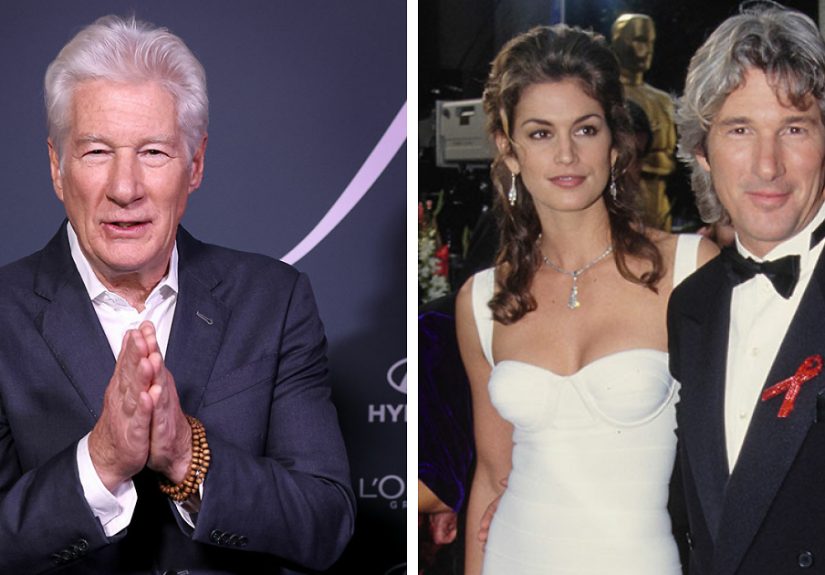
To understand why this story has lingered for so long, you have to go back to the 65th Academy Awards in 1993. Gere stepped onstage to present Best Art Direction. Instead of reading the script like a well-behaved awards-show robot, he took a detour. A major detour. He used the global broadcast to call out China’s treatment of Tibet and referenced then-Chinese leader Deng Xiaoping.
It was brief, but it landed like a cymbal crash in a string quartet. Some people in the room applauded. Others, especially the people responsible for keeping the telecast moving like a Swiss watch in a tuxedo, were not thrilled.
The Oscars, after all, are designed to celebrate movies, not suddenly transform into a geopolitical forum with better tailoring. Even in an era when celebrities frequently wore ribbons, made statements, and leaned into activism, Gere’s remarks stood out because they were unscripted, direct, and aired during one of the most watched entertainment broadcasts in the world.
That is exactly why the moment became so unforgettable. It wasn’t just political. It was disruptive. It broke the unspoken awards-show commandment: say something meaningful, sure, but please keep it elegant, short, and preferably approved by three producers and a nervous publicist.
Was Richard Gere Actually Banned?
Here is where the story gets more complicated than the headline. For years, the phrase “Richard Gere was banned from the Oscars for 20 years” circulated as if the Academy handed down a formal decree, stamped it with a gold seal, and locked it in a velvet box next to the Best Actor ballots.
But the fuller picture appears murkier. Recent reporting has pushed back on the idea of a formal Academy ban, suggesting instead that Gere was effectively sidelined from presenting for years after angering influential figures connected to the telecast, especially producer Gil Cates. That distinction matters.
A formal ban sounds like institutional punishment. An informal freeze-out sounds more Hollywood, and frankly, more believable. In the entertainment business, there are official rules, and then there are the invisible rules that matter just as much. You may not be banned from the building, but if nobody wants to put you on camera, the result looks pretty similar from the outside.
That nuance is what makes Gere’s silence for so long so fascinating. The public got the myth in clean, simple packaging. The reality was messier: he remained a major actor, continued attending high-profile events, and starred in prestige projects, yet he did not return to the Oscars stage as a presenter until 2013. In public memory, that gap became the ban.
What Richard Gere Finally Said
When Gere finally addressed the controversy more directly, his tone was not bitter, theatrical, or revenge-flavored. He did not sound like a man polishing a grudge from the Clinton era. Instead, he sounded almost serene about it.
That, more than anything, fits the Richard Gere public persona. He has spent decades aligned with Tibetan causes, Buddhist practice, and humanitarian work. So when he reflected on the Oscars fallout, he framed it less as a personal injury and more as a consequence of doing what he believed was right.
His response was striking because it lacked the usual celebrity score-settling energy. No grand “they tried to silence me” monologue. No smirking “look who came crawling back.” No memoir-style “my truth” drumroll. Instead, Gere’s comments suggested that he understood the machinery of Hollywood, understood the discomfort he caused, and never stopped believing the issue he raised was more important than his own access to a stage.
That does not make the fallout trivial. It makes it more revealing. Gere seems to have accepted that speaking openly on a glamorous, tightly controlled broadcast would have consequences. He just did it anyway.
Why Tibet Was Never a Side Issue for Him
If Gere had used the Oscars stage for some trendy cause-of-the-week soundbite, this story would not have the same weight. But Tibet was not a random political detour for him. It has been central to his life for decades.
Long before this controversy became clickbait catnip, Gere had embraced Buddhism and become deeply involved in Tibetan activism. He traveled to the region in the late 1970s, became associated with the Dalai Lama, and spent years advocating for Tibetan rights and cultural preservation. He also helped found Tibet House US and went on to play a major role with the International Campaign for Tibet.
That history matters because it changes the meaning of the 1993 speech. It was not a publicity stunt. It was not an actor freelancing a headline to prove he was serious. It was a public expression of a private commitment he had already been living for years.
And that may be part of why the Oscars moment still resonates. Even people who disagree with using the ceremony that way can recognize the difference between opportunism and conviction. Gere was not borrowing a cause. He was carrying one.
The Career Cost of Speaking Out
One reason this story keeps resurfacing is that it taps into a larger question Hollywood never fully answers in public: what happens when a star’s conscience collides with the business model?
Gere has long suggested that his activism, especially his criticism of China, affected his career in mainstream studio filmmaking. As China’s importance to the global box office grew, that idea became less far-fetched and more like the kind of thing executives would deny politely while calculating in spreadsheets.
He remained a respected actor, of course. He was still Richard Gere, not a guy doing regional mattress commercials between convention appearances. But his career did appear to move more toward independent films and away from the kind of broad studio vehicles that once made him one of Hollywood’s most bankable stars.
That shift cannot be explained by one issue alone. Careers evolve. Actors age. Tastes change. The industry gets bored and then pretends it discovered someone else first. Still, Gere’s public comments over the years have pointed to a genuine tension: when global markets, international politics, and celebrity activism overlap, stars can discover that free speech may be free, but it is not always frictionless.
That is why the Oscars story became shorthand for something bigger. It was never only about one speech. It was about whether Hollywood celebrates boldness only when it comes wrapped in acceptable packaging.
The Return in 2013 Felt Like a Quiet Plot Twist
Gere’s eventual return to the Oscars stage in 2013 carried its own kind of understated drama. He appeared with his Chicago co-stars, which felt fitting. If 1993 was the night he became a cautionary tale, 2013 was the night he became a reminder that Hollywood’s memory is long, selective, and occasionally flexible.
It was not a massive redemption narrative with a swelling orchestra and tears in close-up. No one rolled out a giant banner reading “WELCOME BACK, WEIRDLY POLITICAL KING.” But his presence said enough. He was back on the stage, back in the ceremony, and the sky did not fall.
That return also exposed the theatrical quality of the entire saga. If he had truly been permanently exiled, there would be no comeback. If he had never been meaningfully shut out, the return would not have felt so symbolic. The truth, as usual, lived in the gray space between myth and memo.
Why This Story Still Works in 2026
There is a reason people still click on this story decades later. It has all the ingredients of durable celebrity folklore: a glamorous setting, a rebellious speech, a powerful institution, a long silence, and a late-in-life reflection that adds emotional texture.
But it also sticks because it asks a modern question with no easy answer: when a celebrity uses an entertainment platform to speak about human rights, is that brave, inappropriate, effective, self-important, or all four at once?
The answer depends a lot on who is watching. Viewers who want the Oscars to remain a pure celebration of cinema may see Gere’s 1993 remarks as a hijacking of the event. Viewers who believe silence protects power may see the speech as one of the rare moments when a polished industry machine got interrupted by actual moral urgency.
Both responses are understandable. That tension is precisely why the moment endures. It sits at the crossroads of art, power, etiquette, and conscience. Hollywood talks constantly about courage on screen. Real courage off screen is messier, less cinematic, and often very inconvenient for the show rundown.
The Experience Behind the Headline: What This Kind of Moment Really Means
What makes the Richard Gere Oscars controversy so rich is not just the headline itself but the human experience inside it. Imagine the layers.
For Gere, the experience was likely a mix of clarity and consequence. He had a belief, a global audience, and a few seconds of live television. He made a choice that aligned with his values, and then he had to live with the professional chill that followed. That is one of the hardest parts of public conviction: the moment of speaking is fast, but the aftershocks can last for years.
For producers and organizers, the experience was probably the exact opposite. Their job is to make the broadcast smooth, sponsor-friendly, and carefully timed. From that perspective, an unscripted political statement is not brave or noble in the moment. It is chaos in a tuxedo. It threatens the flow, the tone, and the illusion that millions of people are simply gathered to admire cinema and expensive fabric.
For the audience in the room, meanwhile, it must have been one of those unmistakable “did that just happen?” moments. Award shows are full of planned spontaneity, which is really just choreography wearing a fake mustache. A truly unscripted statement changes the temperature immediately. Some people feel energized. Some feel uncomfortable. Some start mentally drafting the backstage damage control before the applause even ends.
Then there is the experience of viewers at home. That may be the most interesting piece of all. Many people do not remember who won Best Sound that year. They do remember Richard Gere veering off the expected script and saying something the show did not quite want said. That is the paradox of live television: the carefully engineered moments often fade, while the messy human ones burn into memory.
There is also a broader experience that belongs to anyone who has ever spoken up in the wrong room at the wrong time for the right reason. Offices have their version of this. Families do too. Schools, institutions, even friend groups. Every system has a mood, a script, and a list of topics it prefers to keep folded neatly in a drawer. The person who opens that drawer in public is often treated as the disruption, even when the issue itself is serious and real.
That is why this story feels bigger than one actor and one award show. It taps into a familiar emotional truth: people admire honesty in theory, but honesty delivered at an inconvenient moment often comes with a bill attached. Gere’s experience illustrates that dynamic in a high-gloss setting. He spoke from conviction, paid a price in access, and years later looked back without melodrama. That may be the most revealing part of all.
Not every act of public speaking changes policy. Not every protest speech reshapes history. But some moments linger because they expose how institutions react when polish meets principle. Richard Gere’s Oscars controversy still matters because it was not just a Hollywood oddity. It was a case study in what happens when conscience steps into a room that would really prefer another acceptance joke and a tasteful cut to commercial.
Final Thoughts
So, did Richard Gere finally break his silence on being banned from the Oscars for 20 years? Yes, but what he really did was something more useful: he helped separate the legend from the lived experience.
The legend says a rebellious movie star got banned and vanished from Oscar night for two decades. The lived experience is subtler. Gere made an unscripted political statement about Tibet in 1993, angered powerful people tied to the telecast, stayed away from the presenter lineup for years, and eventually returned without turning the whole thing into a personal revenge saga.
That version is less tidy, but far more interesting. It tells us something about Richard Gere, something about Hollywood, and something about the uneasy marriage between activism and entertainment. The Academy may prefer movie magic, but every now and then real-world gravity sneaks onto the stage.
And when it does, people remember it for decades.