Table of Contents >> Show >> Hide
- Why Cauliflower Steaks Work (Even If You’re Suspicious)
- Main Keywords You’re Here For
- Ingredients
- Equipment
- How to Cut Cauliflower Into Steaks (Without Turning It Into Confetti)
- Roasted Cauliflower Steak: Step-by-Step
- How to Make Chimichurri Sauce (Fast, No-Cook, Big Flavor)
- Assemble and Serve
- Flavor Variations (Pick Your Mood)
- What to Serve With Cauliflower Steaks
- Common Mistakes (And How to Avoid Them)
- Storage and Make-Ahead Tips
- FAQ: Quick Answers
- Full Recipe Card
- of Real-Life Kitchen Experiences (The Kind You’ll Actually Have)
- Conclusion
Cauliflower is the overachiever of the produce aisle. It can be pizza crust. It can be “rice.” It can pretend to be mashed potatoes without blushing. And today? It’s showing up to dinner as a cauliflower steakthick, caramelized, fork-tender, and topped with a bright-green chimichurri that tastes like summer decided to start doing stand-up comedy.
This guide is equal parts roasted cauliflower steak recipe and practical cooking therapy: how to slice it without heartbreak, how to roast it until it’s deeply browned (not sad and steamed), and how to make a punchy chimichurri sauce that turns “vegetable night” into “make this again.”
Why Cauliflower Steaks Work (Even If You’re Suspicious)
A cauliflower “steak” is simply a thick cross-section slice cut through the core so it holds together. Roasting at high heat drives off moisture and encourages browning, which is where cauliflower goes from “fine” to “whoa.” High heat + enough oil + breathing room on the pan = caramelized edges and a tender center.
Also, cauliflower steaks are secretly a two-for-one deal: you get a few beautiful slabs for plating, plus extra florets that roast alongside and become the best “chef snacks” you’ll eat while pretending you’re cleaning up.
Main Keywords You’re Here For
If you came searching for how to make cauliflower steak, oven roasted cauliflower steaks, or a cauliflower steak recipe with chimichurri, you’re in the right kitchen.
Ingredients
For the Roasted Cauliflower Steaks
- 2 large heads cauliflower (look for firm, heavy heads; bigger = sturdier “steaks”)
- 3–4 tablespoons extra-virgin olive oil (more if your cauliflower looks thirsty)
- 1 teaspoon kosher salt (plus more to taste)
- 1/2 teaspoon black pepper
- 1 teaspoon smoked paprika (optional but highly recommended for “steak vibes”)
- 1/2 teaspoon garlic powder (or 1 small grated garlic clove, if you like living boldly)
- 1 tablespoon fresh lemon juice (for finishing)
For the Chimichurri Sauce
- 1 packed cup fresh flat-leaf parsley, finely chopped
- 2–4 tablespoons fresh cilantro, finely chopped (optional, but common in many versions)
- 1–2 teaspoons dried oregano (or 1 tablespoon fresh oregano, finely chopped)
- 2–3 garlic cloves, minced
- 1 small shallot or 2 tablespoons finely minced red onion (optional, but excellent)
- 1/2 teaspoon red pepper flakes (or a finely chopped Fresno/chile for extra heat)
- 1/3 cup red wine vinegar (or swap part with lemon juice for a brighter tang)
- 1/2 cup extra-virgin olive oil
- 1/2 teaspoon kosher salt, plus more to taste
- Black pepper to taste
Equipment
- Large chef’s knife
- Cutting board (bonus points if it doesn’t cry when parsley stains it)
- Rimmed baking sheet
- Parchment paper or foil
- Wide spatula (thin edge helps with flipping)
- Small bowl + spoon/whisk
How to Cut Cauliflower Into Steaks (Without Turning It Into Confetti)
This is the part that makes people nervous, but it’s more “strategy” than “skill.” The goal is to keep the core intact so each slice holds together.
- Trim the leaves and shave the very bottom of the stem so the cauliflower sits flat.
- Slice from top to bottom through the center core into 3/4- to 1-inch slabs.
- Expect 2–3 strong steaks per head. The outer slices will crumble more easilyand that’s okay. Roast those pieces as florets right alongside the steaks.
- If a steak cracks? Press it together on the pan like it’s a puzzle piece. Once it roasts, it will “set” enough to serve confidently (or at least confidently enough to post online).
Roasted Cauliflower Steak: Step-by-Step
1) Preheat and Prep the Pan
Heat your oven to 425°F. Line a rimmed baking sheet with parchment (or foil) and brush lightly with oil. High heat helps browning; parchment helps sanity.
2) Season Like You Mean It
Arrange cauliflower steaks (and extra florets) in a single layer with space between. Brush both sides with olive oil. Mix salt, pepper, smoked paprika, and garlic powder, then sprinkle evenly on both sides.
3) Roast Until Deeply Golden
- Roast for 15 minutes.
- Flip carefully with a wide spatula (scoop from the core side).
- Roast another 10–15 minutes, until tender and caramelized.
- Optional: Broil for 1–2 minutes at the end for extra char. Watch closelybroilers go from “gorgeous” to “smoke alarm audition” fast.
4) Finish with Lemon
Right after roasting, hit the cauliflower with a squeeze of lemon juice. It wakes up the flavor like a group chat notification at 2 a.m.sudden, but effective.
How to Make Chimichurri Sauce (Fast, No-Cook, Big Flavor)
Chimichurri is a punchy herb sauce with roots in Argentina and Uruguay. Most versions revolve around parsley, garlic, oregano, vinegar, oil, and some heat. The only true rule is: it should taste bright and alive, not oily and sleepy.
Method: Classic “Chop + Rest” Chimichurri
- In a bowl, combine minced garlic, shallot/red onion (if using), red pepper flakes, salt, and red wine vinegar. Let sit 10 minutes to mellow the sharpness.
- Stir in chopped parsley, cilantro (if using), and oregano.
- Slowly whisk in olive oil. Taste and adjust: more salt, more vinegar, more pepper, or more heat.
- Let the sauce rest for 15–20 minutes before serving so flavors mingle. Serve at room temperature for best punch.
Food Processor Shortcut (When You’re Busy, Not Lazy)
You can pulse garlic/onion with vinegar and salt, add herbs, then drizzle in oil. Just don’t blend it into green salad dressing. Chimichurri is better with texturetiny herb confetti, not herb smoothie.
Assemble and Serve
- Place one cauliflower steak on each plate (plus extra roasted florets if you’re smart).
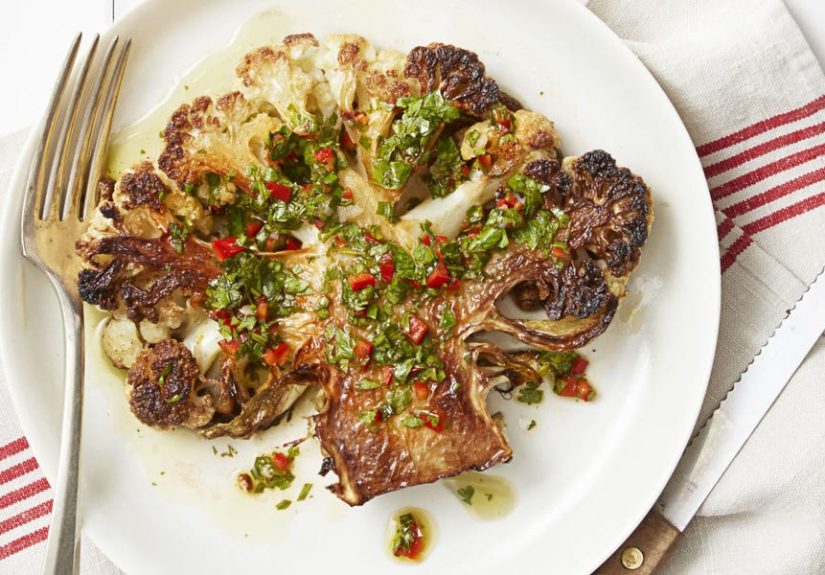
- Spoon chimichurri generously over the top.
- Finish with flaky salt (optional) and a little extra chimichurri on the side.
Flavor Variations (Pick Your Mood)
Smoky-Spicy
Add extra smoked paprika and a pinch of cumin to the cauliflower seasoning. In the chimichurri, increase red pepper flakes or use a fresno chile.
Cheesy-Crunchy (Not Vegan, Very Fun)
Sprinkle with Parmesan and panko for the last 8–10 minutes of roasting. You’ll get a golden crust that makes cauliflower feel overdressedin a good way.
Vegan “Creamy Chimichurri” Vibes
If you want a creamy drizzle, you can stir a spoonful of dairy-free yogurt into a small portion of chimichurri for a tangy, thicker sauce (keep most of it classic for brightness).
What to Serve With Cauliflower Steaks
- Grains: quinoa, farro, couscous, or rice to soak up chimichurri
- Beans: lentils, white beans, or chickpeas for a hearty vegetarian dinner
- Salads: arugula with lemon, shaved fennel, or a simple tomato salad
- Protein: grilled chicken, steak, tofu, or shrimpchimichurri plays well with everyone
Common Mistakes (And How to Avoid Them)
Mistake #1: Overcrowding the Pan
If the pan is packed, cauliflower steams instead of browns. Give pieces space and use two sheet pans if needed.
Mistake #2: Too Little Oil
Cauliflower is lean. Oil helps conduct heat and encourages browning. Brush both sides so the edges caramelize.
Mistake #3: Cutting Too Thin
Thin slices dry out and fall apart. Aim for 3/4- to 1-inch “steaks,” and embrace extra florets as a bonus.
Mistake #4: Serving Chimichurri Straight From the Fridge
Cold oil dulls flavor. Let chimichurri come to room temperature and stir before serving.
Storage and Make-Ahead Tips
- Cauliflower steaks: Store airtight up to 3–4 days. Reheat at 400°F until hot and re-crisped.
- Chimichurri: Keeps a few days in the fridge. Bring to room temp and stir to recombine.
- Make-ahead move: Chop chimichurri ingredients (except oil) earlier; whisk in oil before serving.
FAQ: Quick Answers
Can I grill cauliflower steaks instead?
Yes. Grill over direct heat to char, then move to indirect heat to cook through. The two-zone method helps you avoid raw centers and scorched outsides.
How do I know when they’re done?
The edges should be browned and the center should be tender when pierced with a knife. If it still feels crunchy in a stubborn way, give it 5 more minutes.
Do I have to use cilantro?
Nope. Parsley-forward chimichurri is classic. Cilantro is optionaluse it if you like that extra green pop.
Full Recipe Card
Roasted Cauliflower Steaks with Chimichurri (Serves 4)
Prep: 15 minutes | Cook: 25–30 minutes | Total: about 45 minutes
Ingredients
- 2 large heads cauliflower
- 3–4 tbsp olive oil
- 1 tsp kosher salt
- 1/2 tsp black pepper
- 1 tsp smoked paprika (optional)
- 1/2 tsp garlic powder
- 1 tbsp lemon juice
- Chimichurri: 1 cup parsley, 0–1/4 cup cilantro, 1–2 tsp oregano, 2–3 cloves garlic, 1/3 cup red wine vinegar, 1/2 cup olive oil, 1/2 tsp salt, pepper, chili flakes
Instructions
- Preheat oven to 425°F. Line a sheet pan with parchment.
- Trim cauliflower leaves; slice into 3/4- to 1-inch steaks through the core. Keep extra florets.
- Brush both sides with oil. Season with salt, pepper, paprika, and garlic powder.
- Roast 15 minutes. Flip. Roast 10–15 minutes more until browned and tender. Optional broil 1–2 minutes.
- Finish with lemon juice.
- Make chimichurri: mix vinegar + garlic + onion/shallot (optional) + chili + salt; rest 10 minutes. Stir in herbs. Whisk in oil. Rest 15–20 minutes.
- Serve cauliflower steaks topped with chimichurri.
of Real-Life Kitchen Experiences (The Kind You’ll Actually Have)
Here’s what tends to happen the first time someone makes cauliflower steaks: optimism, followed by a brief moment of betrayal when the outer slices crumble. That is not failureit’s cauliflower being cauliflower. The core is the glue, and only the center slices get the full “steak” treatment. The good news is the crumble pieces roast even faster and get those crisp little browned tips that mysteriously disappear before dinner. If you’ve ever wondered where your food goes while you cook, it’s probably in your mouth. Consider it quality control.
Another very normal experience: you’ll underestimate how much seasoning a thick slab of cauliflower can absorb. Cauliflower is polite; it will not demand salt. It will simply taste faintly like “warm water” if you don’t season it. The fix is easyoil both sides, salt with intention, and use a spice (smoked paprika, cumin, or even a steak-style spice blend) that gives the surface a little personality. Think of it like dressing for the weather: cauliflower needs a jacket.
Then there’s the sheet pan situation. Everyone wants to fit everything on one pan because dishes are the enemy, but overcrowding is the quickest route to steamed cauliflower and disappointment. The moment you give the pieces space, you’ll notice the difference: browning becomes effortless, edges crisp, and your kitchen smells like something you’d pay $18 for at a trendy restaurant with tiny chairs. If you do end up with a crowded pan anyway, roast in two batches or use a second sheet. Future-you will be grateful.
Chimichurri brings its own set of delightful, very human moments. You’ll chop a heroic amount of parsley and immediately find it everywhere: on the counter, on your sleeve, somehow in your phone case. The sauce will look aggressively green, and you’ll wonder if you’ve made salad in liquid form. Then you’ll taste itand suddenly you’ll want to put it on everything: roasted vegetables, eggs, sandwiches, grilled tofu, even leftover rice that had given up on being exciting.
The biggest “aha” experience is learning that chimichurri improves when it sits for a bit. Right after mixing, it tastes sharp and separatevinegar shouting, garlic doing push-ups. Give it 15–20 minutes and it settles into a bold, balanced sauce that feels intentional. If you’ve ever had a conversation that went better after everyone took a breath, chimichurri understands that vibe.
Finally, there’s the plating glow-up. A cauliflower steak on its own can look like a respectable side dish. Add chimichurri and it becomes a main-character entrée. The green sauce drips into the nooks and crannies, the roasted edges look dramatic, and suddenly you’re serving something that feels specialwithout needing fancy techniques, rare ingredients, or a culinary degree. Just a hot oven, a sharp knife, and the confidence to call a vegetable a steak.
Conclusion
A great cauliflower steak recipe isn’t about pretending it’s beefit’s about treating cauliflower like the delicious ingredient it is. Roast it hot and roomy, season it well, and finish with chimichurri that’s bright, garlicky, and unapologetic. Once you get the hang of slicing and flipping, this becomes one of those reliable “wow” meals you can pull off on a weeknight.